Stiftskirche (Église Collégiale)
Dans les murs gothiques de l'église principale de Neustadt, un secret monumental résonne, littéralement.
L'histoire complète se débloque dans le tour
 JopkeB / CC BY-SA 4.0, via Wikimedia Commons
Visite audio autoguidée de Neustadt an der Weinstraße — parcours GPS à pied, lecture hors ligne, narration en 32 langues.
“Là où la démocratie est née au milieu des vignes.”
Pas les cartes postales. Les histoires que même les habitants ignorent — soufflées à l'oreille, là où elles se sont passées.
Dans les murs gothiques de l'église principale de Neustadt, un secret monumental résonne, littéralement.
Ce château, surplombant les vignobles, n'est pas seulement une jolie vue ; c'est là qu'un moment charnière de l'histoire allemande s'est déroulé, façonnant les aspirations démocratiques de la nation.
Promenez-vous dans la vieille ville et vous découvrirez peut-être une fontaine dédiée à des créatures qui n'existent que dans le folklore local.
Découvrez tous les secrets de Neustadt an der Weinstraße
Chaque adresse, chaque révélation en entier — dans ton oreille, là où elle s'est passée.
Tu choisis tes lieux. Tu marches. La voix te révèle ce que les autres ignorent.
Votre visite audioguidée de Neustadt an der Weinstraße vous attend — choisissez vos lieux, votre langue, et lancez-vous dès votre arrivée.
AcheterNeustadt an der Weinstraße, un nom qui se traduit par 'Nouvelle Ville sur la Route du Vin', est plus qu'une simple ville allemande ; c'est un témoignage de la viticulture, de l'histoire et de l'esprit de la démocratie. Située en Rhénanie-Palatinat, au cœur même de la célèbre Route des Vins Allemande, Neustadt est entourée d'une mer de vignobles et sert de point d'entrée au vaste Parc Naturel de la Forêt du Palatinat.
Avec une population d'environ 53 000 habitants, Neustadt mêle harmonieusement son passé médiéval à un présent animé. Sa vieille ville historique, remarquablement préservée au fil des siècles, invite à l'exploration avec ses rues étroites, ses maisons à colombages et ses places pittoresques. Au-delà de la beauté architecturale, la ville vibre d'un lien profond avec le vin, accueillant de nombreux festivals et offrant une atmosphère chaleureuse et hospitalière qui célèbre l'or liquide de la région.
Du symbolique château de Hambach, un phare de la démocratie allemande, à la mythique fontaine Elwedritsche, Neustadt offre un mélange unique de découvertes culturelles, de beauté naturelle et de délices gastronomiques. Que vous soyez un passionné d'histoire, un connaisseur de vin ou simplement à la recherche d'une évasion tranquille au milieu de paysages magnifiques, Neustadt an der Weinstraße promet une expérience à la fois enrichissante et totalement captivante.
## Des Racines Romaines aux Résidences Royales L'histoire de Neustadt an der Weinstraße remonte plus loin que ne le suggère son surnom de 'Nouvelle Ville'. Des découvertes archéologiques, y compris des artefacts celtiques datant d'aussi loin que 150 av. J.-C., indiquent une habitation ancienne dans la région. La présence romaine remonterait à 20 ap. J.-C., suivie par les Alamans en 400 ap. J.-C. et les Francs germaniques en 500 ap. J.-C. Le prédécesseur de la ville moderne, le village de Winzingen, a été documenté pour la première fois en 774 ap. J.-C., ce qui en fait la partie la plus ancienne de Neustadt.
La ville elle-même a été fondée entre 1220 et 1230 sous le nom de 'Nova civitas' ou 'Nuwenstat' sur des terres auparavant non colonisées, et a finalement obtenu les droits de cité du roi Rodolphe Ier de Habsbourg en 1275. Sa situation stratégique à la jonction de la Forêt du Palatinat et de la fertile plaine du Rhin supérieur, contrôlant d'importantes routes, a été un facteur clé de son développement. Le climat doux a également favorisé l'agriculture, en particulier la culture des raisins, des amandes et des figues, qui est devenue centrale pour l'économie de la ville.
## Un Centre de Pouvoir et de Progrès Neustadt est devenue une résidence importante pour les Comtes Palatins du Rhin, assurant un afflux de fonds et la construction de fortifications. L'Électeur Ruprecht Ier, une figure clé de son histoire médiévale, a fait de Neustadt sa résidence et a initié la construction de l'église collégiale gothique (Stiftskirche) au XIVe siècle, qui a servi de lieu de sépulture pour la famille Wittelsbach. En 1578, le Comte Palatin Johann Casimir a fondé une académie calviniste, le Casimirianum, transformant la ville en un important centre éducatif et théologique européen.
## Tumulte et Transformation La ville a subi d'importants bouleversements pendant la Guerre de Trente Ans, étant conquise six fois par diverses forces. Cependant, contrairement à de nombreuses autres villes palatines, Neustadt a largement survécu indemne à la Guerre de Succession du Palatinat (1689-1697). Napoléon lui-même est passé en 1808. Après le Congrès de Vienne en 1815, Neustadt est passée sous contrôle bavarois, le restant jusqu'à la fin de la Seconde Guerre Mondiale.
Un moment charnière de l'histoire allemande s'est produit à proximité en 1832 avec le Festival de Hambach, une grande manifestation pour la démocratie et l'unité nationale, valant au château de Hambach le titre de 'berceau de la démocratie allemande'. En 1847, Neustadt a été connectée au réseau ferroviaire en plein essor par le chemin de fer Palatin Ludwig. Le nom officiel de la ville a évolué au fil du temps, de Neustadt an der Haardt à son nom actuel Neustadt an der Weinstraße en 1936, un nom reflétant son lien profond avec la Route des Vins Allemande.
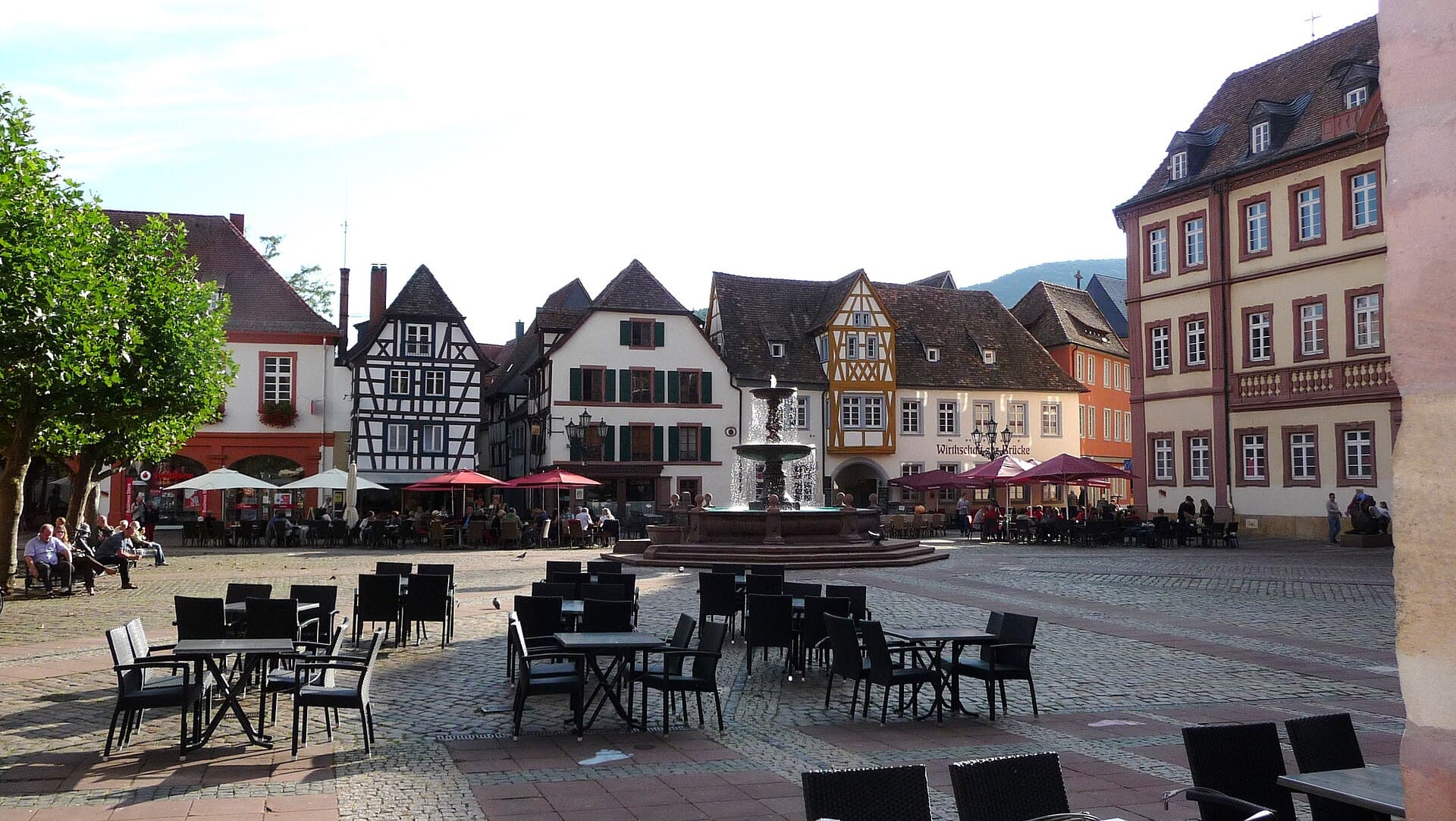
Commencez votre exploration dans la Vieille Ville Historique (Altstadt) de Neustadt, un labyrinthe de rues étroites et de places encadrées par des maisons à colombages séculaires. La Marktplatz (Place du Marché), avec son bâtiment municipal baroque et le Königsbrunnen (Fontaine du Roi), est un point central naturel. Dominant l'horizon, la Protestantische Stiftskirche (Église Collégiale), un chef-d'œuvre gothique abritant la plus grande cloche d'église en fonte du monde. Ne manquez pas la Fontaine Elwedritsche unique, dédiée aux créatures mythiques locales.
Un court trajet depuis le centre-ville mène au Château de Hambach (Hambacher Schloss), souvent appelé le 'berceau de la démocratie allemande'. Ce site historique offre non seulement une expérience historique profonde mais aussi des vues imprenables sur la vallée du Rhin et les vignobles environnants. Pour les amateurs de vin, une promenade à pied ou à vélo le long de la Route des Vins Allemande est essentielle, avec de nombreux domaines viticoles proposant des dégustations. Envisagez de visiter l'un des neuf villages viticoles environnants de Neustadt, tels que Haardt ou Mußbach, pour une expérience plus intime de la viticulture locale. Le Musée du Chemin de Fer de Neustadt/Weinstraße offre un aperçu fascinant de l'histoire ferroviaire de la région avec sa collection de locomotives historiques. La Villa Böhm et le Musée Otto Dill offrent d'autres aperçus culturels.
Neustadt an der Weinstraße bénéficie d'un climat tempéré avec des saisons distinctes, ce qui en fait une destination agréable presque toute l'année. La meilleure période pour visiter est généralement de mai à septembre, avec des journées chaudes et agréables et des températures moyennes autour de 20,5°C (69°F) en juillet et août, parfaites pour les activités de plein air et les promenades dans les vignobles. Le printemps (mars-mai) apporte les magnifiques fleurs d'amandier et les festivals associés, tandis que l'automne (septembre-novembre) est la saison des vendanges, offrant un feuillage coloré, des fêtes du raisin et la possibilité de déguster le Federweißer (vin nouveau). Bien que les hivers soient plus frais, ils sont généralement doux, avec des températures diurnes moyennes restant au-dessus de zéro, et des pluies légères et brèves sont fréquentes tout au long de l'année.
Neustadt est bien desservie et facilement accessible. En train, des services régionaux et longue distance réguliers arrivent à Neustadt (Weinstr) Hbf, reliant la ville à Mannheim, Karlsruhe et Stuttgart. En voiture, la ville est proche des autoroutes A65 et B39, avec de nombreuses options de location disponibles. L'aéroport de Francfort (FRA) est à environ 82 km, avec des liaisons en train et en voiture, et l'aéroport de Baden Airpark (FKB) près de Karlsruhe est à environ 64 km au sud.
Le centre historique est mieux exploré à pied. Pour une exploration plus large, des bus locaux sont disponibles, et la location d'une voiture est recommandée pour découvrir la Route des Vins Allemande et les villages environnants. La monnaie est l'Euro (EUR) ; les principales cartes de crédit sont largement acceptées, mais l'argent liquide est utile pour les petits achats. Il est d'usage de laisser un pourboire de 5 à 10 % pour un bon service dans les restaurants. Neustadt est généralement sûre, et les pharmacies sont facilement identifiables par une croix verte. Des chaussures confortables sont indispensables pour marcher dans les rues pavées et les vignobles.
Neustadt an der Weinstraße en coréen, en chinois ou en hébreu — et dans 29 autres langues, chaque étape narrée par une voix native. La plus large gamme de langues de tous les audioguides autoguidés.
Disponible en :