Château de Schönburg
Le formidable château de Schönburg, aujourd'hui un hôtel accueillant, recèle un détail intrigant sur ses anciens habitants.
L'histoire complète se débloque dans le tour
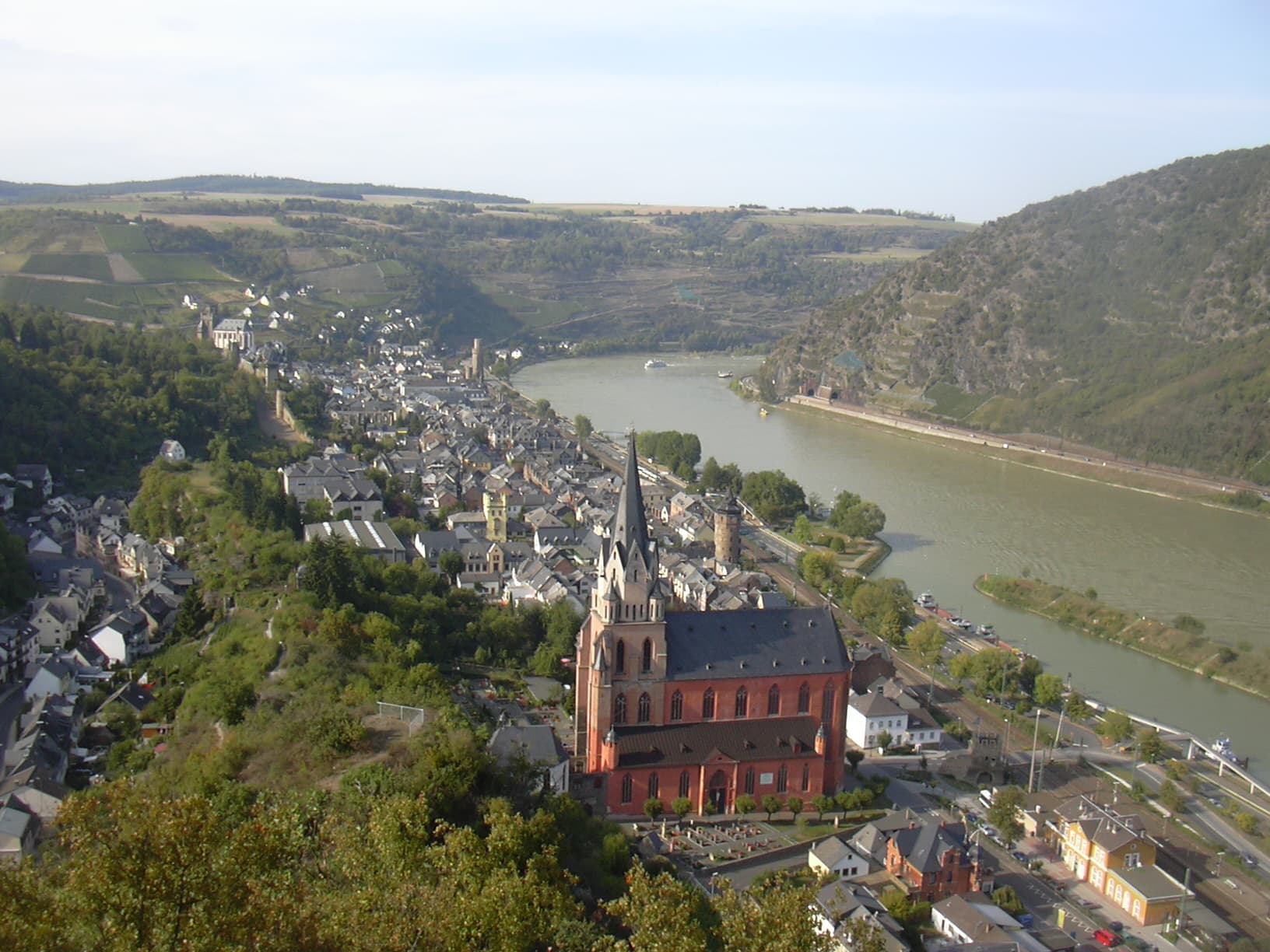 Gabriele Delhey / CC BY-SA 3.0, via Wikimedia Commons
Visite audio autoguidée de Oberwesel — parcours GPS à pied, lecture hors ligne, narration en 32 langues.
“Là où les murs anciens résonnent avec l'héritage du vin et d'un esprit indomptable.”
Pas les cartes postales. Les histoires que même les habitants ignorent — soufflées à l'oreille, là où elles se sont passées.
Le formidable château de Schönburg, aujourd'hui un hôtel accueillant, recèle un détail intrigant sur ses anciens habitants.
Parmi les imposantes tours médiévales d'Oberwesel, l'Ochsenturm offrait autrefois un confort surprenant à ses gardiens.
Cette remarquable église gothique, souvent appelée l'« Église Rouge », possède une explication simple pour sa teinte distinctive.
Découvrez tous les secrets de Oberwesel
Chaque adresse, chaque révélation en entier — dans ton oreille, là où elle s'est passée.
Tu choisis tes lieux. Tu marches. La voix te révèle ce que les autres ignorent.

Votre visite audioguidée de Oberwesel vous attend — choisissez vos lieux, votre langue, et lancez-vous dès votre arrivée.
AcheterLume intègre un guide en réalité augmentée. Levez votre téléphone : sa caméra montre la rue devant vous, avec une flèche lumineuse posée sur l'image réelle qui pointe toujours vers votre prochain arrêt — aucune carte à déchiffrer, aucun mauvais virage. Comme tout dans Lume, ça fonctionne entièrement hors-ligne.
Oberwesel, une ville située sur la rive gauche du Rhin, dans la vallée du Haut-Rhin moyen, classée au patrimoine mondial de l'UNESCO en Allemagne, est souvent célébrée comme la « Ville des Tours et du Vin ». C'est un lieu où les récits médiévaux ne sont pas seulement préservés, mais activement rencontrés, grâce à ses remparts remarquablement intacts et à ses nombreuses flèches défensives. Le profil de la ville est marqué par deux églises gothiques proéminentes, la Liebfrauenkirche et la Martinskirche, et l'imposant château de Schönburg, qui veille sur le Rhin.
Faire un pas à Oberwesel, c'est voyager dans le temps. Les passages étroits et les structures à colombages de la vieille ville invitent à l'exploration, dévoilant des siècles d'histoires. Au-delà de ses merveilles architecturales, Oberwesel est profondément liée à la viticulture, avec ses coteaux environnants couverts de vignobles en terrasses, cultivant principalement des raisins Riesling. La prospérité historique de la ville s'est construite sur le commerce, la pêche et les exportations de vin, un héritage qui continue de façonner son identité.
## D'un ancien établissement à une ville impériale Les origines d'Oberwesel remontent probablement à un établissement celtique, peut-être nommé Vosavia ou Volsolvia, vers 400 av. J.-C. Plus tard, les Romains y établirent un avant-poste militaire et une station de relais de chevaux. Après le déclin de l'Empire romain, la région devint un domaine royal franc. En 966, l'empereur Otton Ier céda le domaine à l'archevêché de Magdebourg.
En 1220, l'empereur du Saint-Empire romain germanique Frédéric II déclara Oberwesel ville impériale libre, un statut qui apporta une prospérité considérable grâce au commerce, aux exportations de vin et à la pêche. Cette opulence fut évidente dans la construction de ses formidables remparts, qui débuta en 1220 et prit plus d'un siècle à achever. En 1255, Oberwesel rejoignit la Ligue rhénane des villes, formant des alliances avec d'autres villes importantes le long du Rhin.
## Sous l'Électorat de Trèves et les conflits L'indépendance de la ville en tant que ville impériale libre prit fin en 1309, lorsqu'elle passa sous la domination de l'Électorat de Trèves, une seigneurie qui dura près de 500 ans jusqu'en 1802. Malgré les efforts pour regagner son autonomie, comme la « Guerre de Wesel » en 1390-1391, la ville resta sous la gouvernance de Trèves. La période médiévale vit également l'établissement de neuf monastères à Oberwesel, illustrant davantage sa prospérité.
La fin du XVIIe siècle apporta une destruction généralisée pendant la Guerre de Neuf Ans (également connue sous le nom de Guerre de la Succession Palatine). En 1689, les forces françaises de Louis XIV dévastèrent en grande partie Oberwesel et le château de Schönburg, marquant la fin de l'âge d'or médiéval de la ville. Une grande partie de ce qui subsiste aujourd'hui a été reconstruite après ce conflit, bien que la ville ait conservé son caractère médiéval.
## Gouvernance prussienne et ère contemporaine En 1802, Oberwesel passa sous contrôle français, et après la défaite de Napoléon en 1815, elle fit partie de la Prusse. La ville devint finalement une partie de l'État allemand de Rhénanie-Palatinat après l'unification allemande en 1871. Aujourd'hui, Oberwesel continue d'embrasser son passé durable, avec ses fortifications bien conservées et ses bâtiments historiques attirant les visiteurs pour découvrir un lien tangible avec le Moyen Âge.
Commencez votre exploration d'Oberwesel par une promenade le long de ses remparts médiévaux, reconnus comme l'une des fortifications urbaines les mieux conservées d'Allemagne. Vous pouvez accéder aux murs à divers points, avec des sections offrant des vues imprenables sur la ville et le Rhin. Seize des 22 tours défensives originales sont toujours debout, chacune possédant son propre caractère distinct. Parmi les tours notables figurent la Zehnerturm (Tour des Dîmes), qui abrite une exposition, et l'imposante Ochsenturm (Tour des Bœufs) à l'extrémité nord du mur.
Montez au château de Schönburg, qui domine la ville. Cette forteresse millénaire, aujourd'hui un hôtel et un restaurant, propose un musée de la tour détaillant son histoire de 700 ans et offre des vues imprenables sur la vallée du Rhin. De retour en ville, visitez la Liebfrauenkirche (Église Notre-Dame), une importante église gothique consacrée en 1331, reconnue pour son extérieur rouge, ses fresques médiévales et un autel doré de 1331. La Martinskirche (Église Saint-Martin) est une autre église impressionnante, présentant des peintures murales médiévales.
Explorez la Marktplatz, la place centrale de la ville, et observez le monument du verre de vin surdimensionné, un hommage à l'héritage viticole d'Oberwesel. Pour une compréhension plus approfondie de l'histoire locale, le Kulturhaus Oberwesel (Stadtmuseum) offre un aperçu du passé de la vallée du Rhin, de l'époque romaine au mouvement romantique du Rhin du XIXe siècle.
La période la plus agréable pour visiter Oberwesel pour les activités par temps chaud s'étend de fin juin à début septembre. Juillet apporte généralement les conditions les plus chaudes, avec des maximales moyennes autour de 23°C (73°F). Septembre offre un temps agréable, moins de foule et l'occasion d'observer les vendanges. Le printemps (mars à mai) et l'automne (septembre à novembre) sont également de bons choix, offrant des températures douces et des paysages de vignobles colorés. Bien que décembre soit frais, avec des températures allant de -1 à 4°C (31 à 40°F), la ville offre toujours des attractions et une atmosphère festive pendant la période de l'Avent.
Oberwesel est idéalement située sur la rive ouest du Rhin, entre Coblence et Mayence. La ville est facilement accessible en train, sa gare se trouvant à environ dix minutes à pied du centre-ville, sur la ligne reliant les grandes villes comme Cologne et Francfort. L'aéroport de Francfort (FRA) est le principal aéroport le plus proche, avec un trajet direct en train d'environ une heure. Les bateaux fluviaux exploités par Köln-Düsseldorfer (KD) desservent également Oberwesel, offrant un itinéraire pittoresque pour l'arrivée.
À Oberwesel même, la ville est très agréable à parcourir à pied, permettant aux visiteurs d'explorer ses remparts médiévaux, ses églises et ses rues accueillantes. L'Office de Tourisme local sur la Marktplatz fournit des cartes et des itinéraires de promenade suggérés. Pour ceux qui voyagent en voiture, la route B9 suit le Rhin entre Coblence et Bingen, en passant par Oberwesel. Des parkings sont disponibles dans la ville.
Oberwesel en coréen, en chinois ou en hébreu — et dans 29 autres langues, chaque étape narrée par une voix native. La plus large gamme de langues de tous les audioguides autoguidés.
Disponible en :