Ciudad del Libro de Paju
Imagina una ciudad donde los edificios están diseñados no solo por su función, sino para encarnar la esencia misma de los libros.
La historia completa se desbloquea en el tour
 Kanchi1979 from jawp / CC BY-SA 3.0, via Wikimedia Commons
Tour de audio autoguiado de Paju — ruta GPS a pie, reproducción offline, narración en 32 idiomas.
“Donde las historias se desarrollan, el arte florece y los susurros de paz perduran cerca de una frontera silenciosa.”
No las postales. Las historias que ni los locales conocen — al oído, justo donde ocurrieron.
Imagina una ciudad donde los edificios están diseñados no solo por su función, sino para encarnar la esencia misma de los libros.
Dentro de Paju, hay un pueblo donde más de 500 artistas, músicos y arquitectos han diseñado colectivamente sus espacios de vida y trabajo.
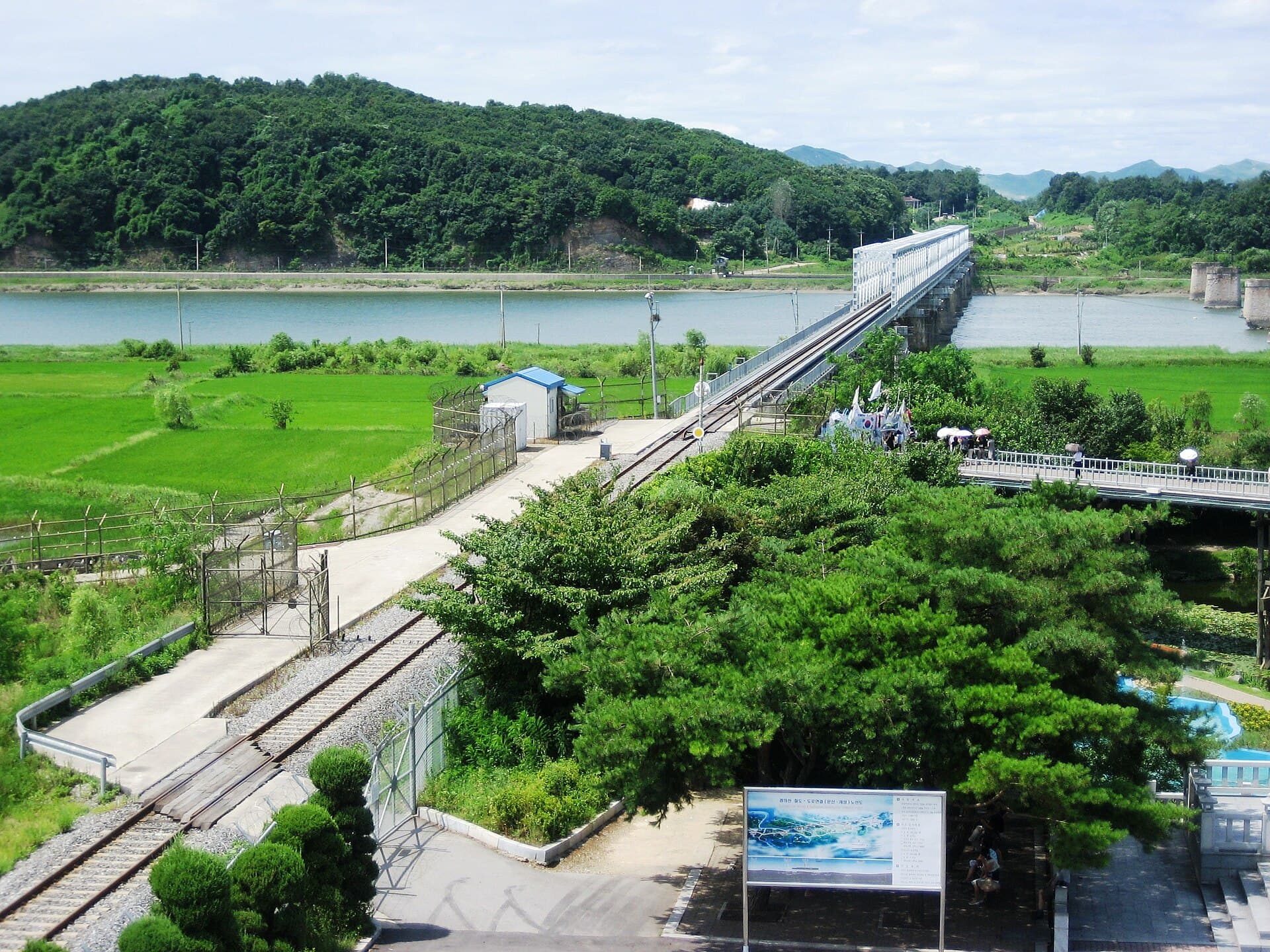
Un puente en Paju lleva un nombre que dice mucho sobre un pasado doloroso, utilizado para un emotivo intercambio al final de una guerra.
Descubre todos los secretos de Paju
Cada dirección, cada revelación al completo — a tu oído, justo donde ocurrió.
Eliges tus paradas. Caminas. La voz te revela lo que los demás ignoran.


Tu tour de audioguía por Paju te espera — elige tus lugares, tu idioma y empieza al llegar.
ComprarLume incluye una guía de realidad aumentada. Levanta el móvil y su cámara muestra la calle que tienes delante, con una flecha luminosa sobre la imagen real que siempre apunta a tu próxima parada — sin mapas que descifrar, sin giros equivocados. Como todo en Lume, funciona completamente sin conexión.
Paju, una ciudad en la provincia de Gyeonggi, Corea del Sur, se despliega como un destino atractivo a solo una hora en coche al noroeste de Seúl. Su posición geográfica única, bordeando la Zona Desmilitarizada (DMZ), le otorga una profunda resonancia histórica, convirtiéndola en un punto focal para comprender el intrincado pasado de la Península Coreana y sus aspiraciones duraderas de armonía. Sin embargo, Paju es mucho más que un solemne eco de conflicto; se ha transformado en un animado centro donde el arte, la cultura y la naturaleza se entrelazan con gracia, atrayendo a los visitantes con sus pintorescos parques, espacios creativos y aclamadas zonas comerciales.
Con una población que supera los 500.000 habitantes, Paju conserva el encanto de una ciudad provincial al tiempo que ofrece una rica variedad de experiencias. Es una ciudad donde grupos culturales cuidadosamente planificados como la Ciudad del Libro de Paju y el Valle del Arte de Heyri son testigos de la creatividad y el diseño coreanos contemporáneos. Desde contemplativos monumentos cerca de la DMZ hasta dinámicas instalaciones artísticas y santuarios literarios, Paju invita a los viajeros a descubrir una faceta diferente de Corea del Sur, una llena de inspiración, quietud y un suave sentido de propósito.
La historia de Paju se remonta a siglos atrás, con la primera mención escrita de un asentamiento, entonces llamado Sulihol-hyeon, que data del 475 d.C. como parte del Reino de Goguryeo. A lo largo de los siglos, su nombre y estatus cambiaron a través de varias dinastías, incluyendo Bongseong-hyeon durante Silla Unificada (757), Seowon-hyeon en Goryeo (1174), y Wonpyeong en Joseon (1398), antes de recibir finalmente su nombre moderno, Paju, en 1459.
Su ubicación estratégica ha colocado consistentemente a Paju en el centro de eventos históricos fundamentales. A finales del siglo XVI, el área se convirtió en un sitio de acontecimientos significativos, y su proximidad al paralelo 38 la convirtió en una zona crucial durante la Guerra de Corea (1950-1953). El conflicto dejó una marca indeleble, con la ciudad sirviendo como un conmovedor símbolo de división y un sitio de feroces batallas.
La segunda mitad del siglo XX trajo una transformación fundamental. En 1972, el Parque Imjingak fue fundado como un sitio conmemorativo para las familias separadas por la frontera, encarnando el anhelo de reunificación. Paju alcanzó oficialmente el estatus de ciudad en 1996, marcando una nueva etapa de desarrollo administrativo y económico. A finales de la década de 1980 y 1990, se iniciaron ambiciosos proyectos de planificación urbana que redefinieron la identidad de Paju. En 1989, se lanzó la visión de la Ciudad del Libro de Paju, con el objetivo de crear un complejo cultural e industrial dedicado a la publicación. A esto le siguió la planificación del Valle del Arte de Heyri en 1998, un pueblo diseñado para reunir a artistas, músicos y arquitectos.
En el siglo XXI, Paju continuó abrazando su papel como centro de 'turismo de paz' y cultura. La Estación de Dorasan, la estación más al norte de Corea del Sur, se inauguró en 2002 como un símbolo de esperanza para una futura conexión intercoreana. El Parque de la Paz Pyeonghwa Nuri, que consolidó la imagen de Paju como un centro de armonía, le siguió en 2005. Hoy, Paju es un testimonio de resiliencia, habiendo curado las heridas de la guerra a través de la cultura y las artes, evolucionando de una zona fronteriza aislada a un paisaje urbano sofisticado e inspirador.
Paju ofrece una diversa gama de atracciones que combinan historia, arte y naturaleza. Una visita a la Zona Desmilitarizada (DMZ) es a menudo un atractivo principal, con sitios como el Parque Imjingak que ofrecen una profunda mirada a la Guerra de Corea y la esperanza de la reunificación. Aquí, puedes ver el Puente de la Libertad y el Altar Conmemorativo Mangbaedan, donde los desplazados de Corea del Norte rinden homenaje a su patria. La Estación de Dorasan y el Observatorio Dora ofrecen perspectivas únicas de la frontera, con vistas a Corea del Norte.
Para una inmersión profunda en la cultura, la Ciudad del Libro de Paju es una parada esencial. Esta maravilla arquitectónica alberga cientos de editoriales, librerías y estudios de diseño, incluido el impresionante Bosque de la Sabiduría, una biblioteca abierta las 24 horas. Cerca, el Valle del Arte de Heyri es una extensa comunidad artística que cuenta con numerosas galerías, museos, talleres y cafeterías, mostrando el arte y el diseño coreanos contemporáneos.
Más allá de esto, Paju también ofrece belleza natural y experiencias distintivas. El Puente Colgante del Embalse de Majang ofrece emocionantes paseos sobre el agua, mientras que el Jardín Botánico de Byeokchoji cultiva 1.420 especies de plantas en jardines especializados. Para un toque de encanto europeo, Provence Village presenta edificios, tiendas y cafeterías de colores pastel.
Las épocas más cómodas y populares para visitar Paju son durante la primavera (abril a principios de junio) y el otoño (mediados de septiembre a noviembre). Durante estas estaciones, el clima es templado, seco e ideal para actividades al aire libre y exploración.
La primavera trae temperaturas agradables y flores en flor, con los cerezos en flor apareciendo desde finales de marzo hasta principios de abril. El otoño ofrece cielos despejados y nítidos, temperaturas agradables y un hermoso follaje otoñal, particularmente en octubre.
Los veranos (julio y agosto) son calurosos y húmedos con lluvias frecuentes debido a la temporada de monzones, mientras que los inviernos (diciembre a febrero) son fríos y secos, con temperaturas que a menudo caen por debajo del punto de congelación.
Paju es fácilmente accesible desde Seúl. La opción más conveniente para áreas culturales y comerciales como la Ciudad del Libro de Paju y el Valle del Arte de Heyri es el Autobús 2200 desde la Estación de Hapjeong, con trayectos que suelen durar de 45 minutos a 1,5 horas. Para el centro de Paju o Imjingak, la línea de metro Gyeongui-Jungang desde Seúl (por ejemplo, la Estación de Yongsan) es una buena opción.
La moneda local es el Won surcoreano (KRW). Las tarjetas de crédito (Visa, Mastercard) son ampliamente aceptadas. Las tarjetas T-money son esenciales para el transporte público y se pueden comprar y recargar en tiendas de conveniencia y estaciones de metro.
Al visitar sitios cerca de la DMZ, se recomienda encarecidamente reservar una visita guiada con antelación, ya que el acceso está estrictamente regulado y a menudo requiere controles de documentos. Los lugareños son generalmente amables y hospitalarios, y aunque el inglés puede no hablarse universalmente, muchos están acostumbrados a los turistas, especialmente en las zonas populares.
Paju en coreano, en chino o en hebreo — y 29 idiomas más, cada parada narrada por una voz nativa. La mayor variedad de idiomas de cualquier audioguía autoguiada.
Disponible en: