The name Penonomé
The city's name isn't merely a label; it's a somber narrative etched into the very language of the land.
Full story unlocks in the tour
 Jaime Massot Hernández / CC BY-SA 4.0, via Wikimedia Commons
Self-guided audio walking tour of Penonomé — GPS route, offline playback, story-driven narration in 32 languages.
“Where Panama's heart beats with ancient echoes and enduring traditions.”
Not the postcards. The stories even locals don't know — whispered in your ear, right where they happened.
The city's name isn't merely a label; it's a somber narrative etched into the very language of the land.
One might assume Panama's core is its canal, but its true geographic center is marked in a less expected location.
This provincial town once held Panama's highest office, though only for a fleeting interval.
Discover every secret of Penonomé
Every address, every reveal in full — in your ear, right where it happened.
You pick your stops. You walk. The voice reveals what the others miss.


Your self-guided audio tour of Penonomé is ready — pick your landmarks, choose your language, and start the moment you arrive.
BuyLume has a built-in augmented-reality guide. Hold your phone up and its camera shows the street ahead of you, with a glowing arrow laid over the real view that always points to your next stop — no map to puzzle over, no wrong turns. Like everything in Lume, it works fully offline.
Penonomé, the capital of Panama's Coclé Province, rests almost precisely at the geographic center of the country, a bustling hub along the Inter-American Highway. This working market and administrative town of approximately 22,000 people offers a genuine glimpse into Panamanian life, often passed by travelers hurrying to coastal resorts.
Yet, Penonomé is far more than a convenient stop. It's a place where centuries of history, from indigenous resistance to colonial influence, have shaped a distinct cultural identity. The fertile lowlands surrounding the city contribute to its role as a vital agricultural center, with local markets and festivals celebrating the region's bounty. While it may not offer the typical tourist infrastructure, Penonomé provides an authentic and welcoming experience for those seeking to delve deeper into Panama's heartland.
Penonomé's origins trace back to 1581, making it one of the older Spanish settlements in Panama's interior. The city's name itself, translating to 'where Nomé suffered' or 'Nomé was punished,' is a direct testament to the fierce indigenous resistance against Spanish conquistadors. Nomé, a local tribal chief, led a successful stand against the invaders before his eventual capture and torture. This foundational story is a powerful reminder of the deep pre-colonial history of the Coclé region, a land once home to advanced indigenous cultures known for their ceramics, metallurgy, and trade networks.
In a surprising turn of events, Penonomé briefly held the prestigious title of Panama's capital. In 1671, the infamous pirate Henry Morgan sacked and destroyed the original Panama City (Panamá Viejo). With the colonial administration forced inland, Penonomé, strategically located and well away from the vulnerable coast, served as the seat of government until a new, more defensible Panama City could be established.
Over the centuries, Penonomé has evolved into a diverse community. While its Spanish colonial charm is evident in its architecture and central plaza, the city's population reflects a broader global array. Descendants of Chinese, Turkish, and Arab immigrants have made Penonomé their home, contributing to its rich cultural landscape. The Chinese community, for instance, began to settle in the 1910s, becoming an important pillar in the city's development.
The fertile lowlands of Coclé Province, with Penonomé as its capital, have long been an agricultural powerhouse. The region produces a variety of crops, including rice, sugarcane, corn, coffee, cacao, and oranges. This agricultural heritage is not just an economic backbone; it's deeply woven into the local culture, celebrated through numerous festivals and daily life in the bustling markets.
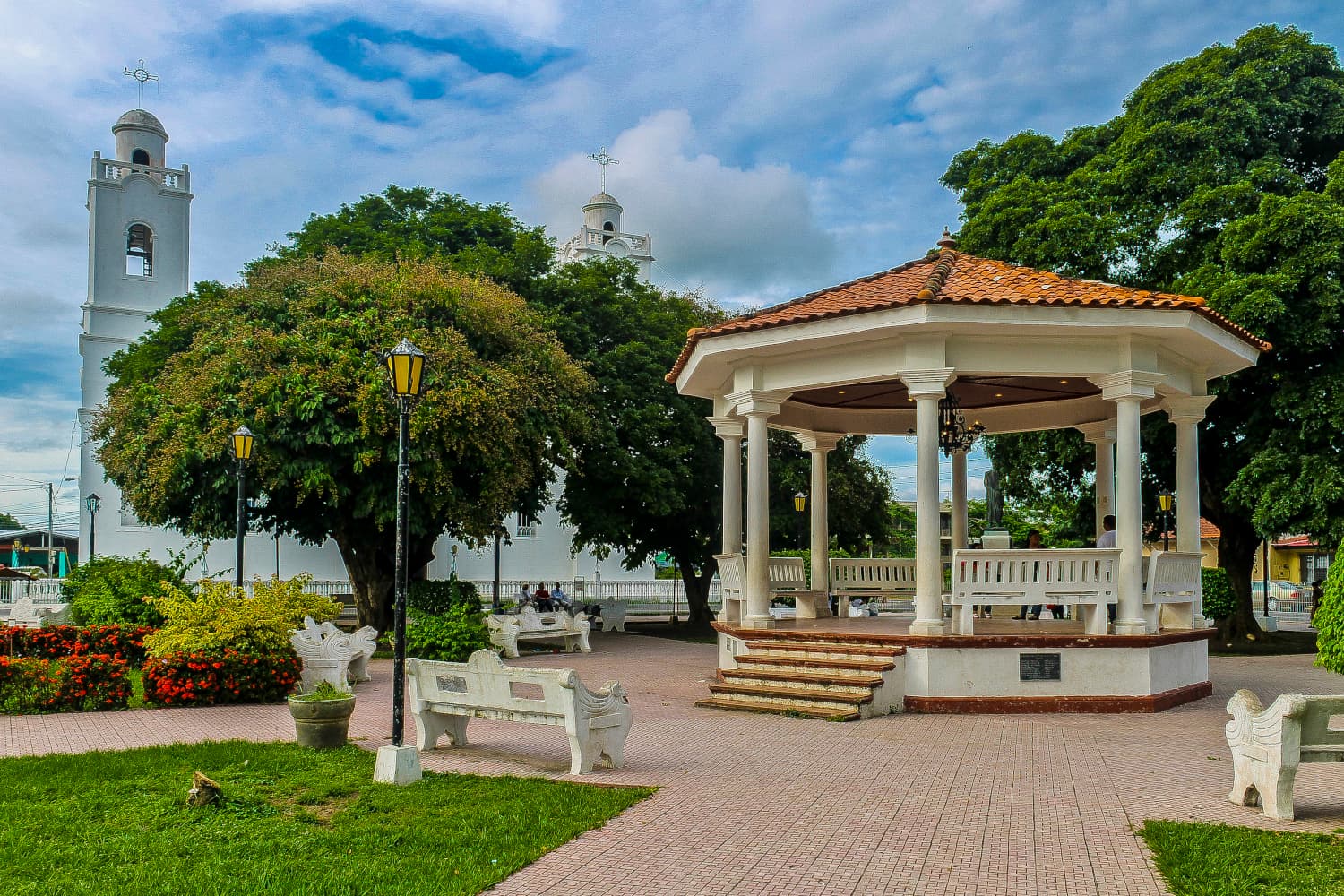
Begin your exploration in Penonomé's central plaza, a shaded oasis where you'll find the white-washed Catedral de Penonomé (Catedral de San Juan Bautista). This beautiful church, constructed in the mid-1500s, features colorful stained-glass windows. Adjacent to the cathedral is the Casa de Gobierno, the main government office, notable for its finely-made wrought-iron grillwork. Observe the monument beside the downtown park that marks the exact geographic center of Panama.
For a deeper dive into the region's past, consider a visit to El Caño Archaeological Park, a short drive from Penonomé. This significant site showcases pre-Columbian artifacts and extensive burial grounds, offering a glimpse into an ancient civilization. The nearby town of La Pintada is recognized for its artisans' market, where you can find the distinctive sombrero pintao, and a thriving cigar factory. The area also holds petroglyphs, ancient rock engravings that speak to the indigenous history.
Penonomé's main shopping streets, Avenida Juan Demóstenes Arosemena and the Inter-American Highway, offer a lively atmosphere with fruit and vegetable stands, local eateries, and shops. Look for vendors selling a wide variety of Panama hats, as Penonomé is known as one of the finest places to purchase these iconic accessories.
The ideal time to visit Penonomé, and Panama generally, is during the dry season, which extends from mid-December to April. During these months, anticipate warm, sunny days with minimal rainfall, perfect for exploring the town and its surrounding natural attractions. Temperatures typically range from 73°F to 91°F. The wet season, from May to November, brings more overcast skies and higher precipitation, though mornings are often still sunny. Visiting during the dry season also aligns with some of Penonomé's most spirited festivals, such as Carnival in February and the National Orange Fair, usually held in late January or early February.
Penonomé is situated directly on the Inter-American Highway, making it easily accessible by car or bus. Buses frequently stop here, connecting it to Panama City (approximately a two to three-hour drive) and other western provinces. While the town itself is walkable, having a car offers more flexibility for exploring the wider Coclé Province, including nearby beaches and natural parks. Accommodations in Penonomé include a decent selection of basic hotels. You'll find ample amenities such as grocery stores, banks, internet cafés, and a variety of local restaurants and cantinas. The local currency is the US dollar, making transactions straightforward for many international visitors.
Penonomé in Korean, in Chinese or in Hebrew — and 29 more languages, every stop narrated by a native voice. The widest language range of any self-guided audio tour.
Available in: