Forteresse de Krakra
La forteresse médiévale de Pernik porte le nom d'un formidable boyard bulgare qui a défié un empereur connu comme le « Tueur de Bulgares ».
L'histoire complète se débloque dans le tour
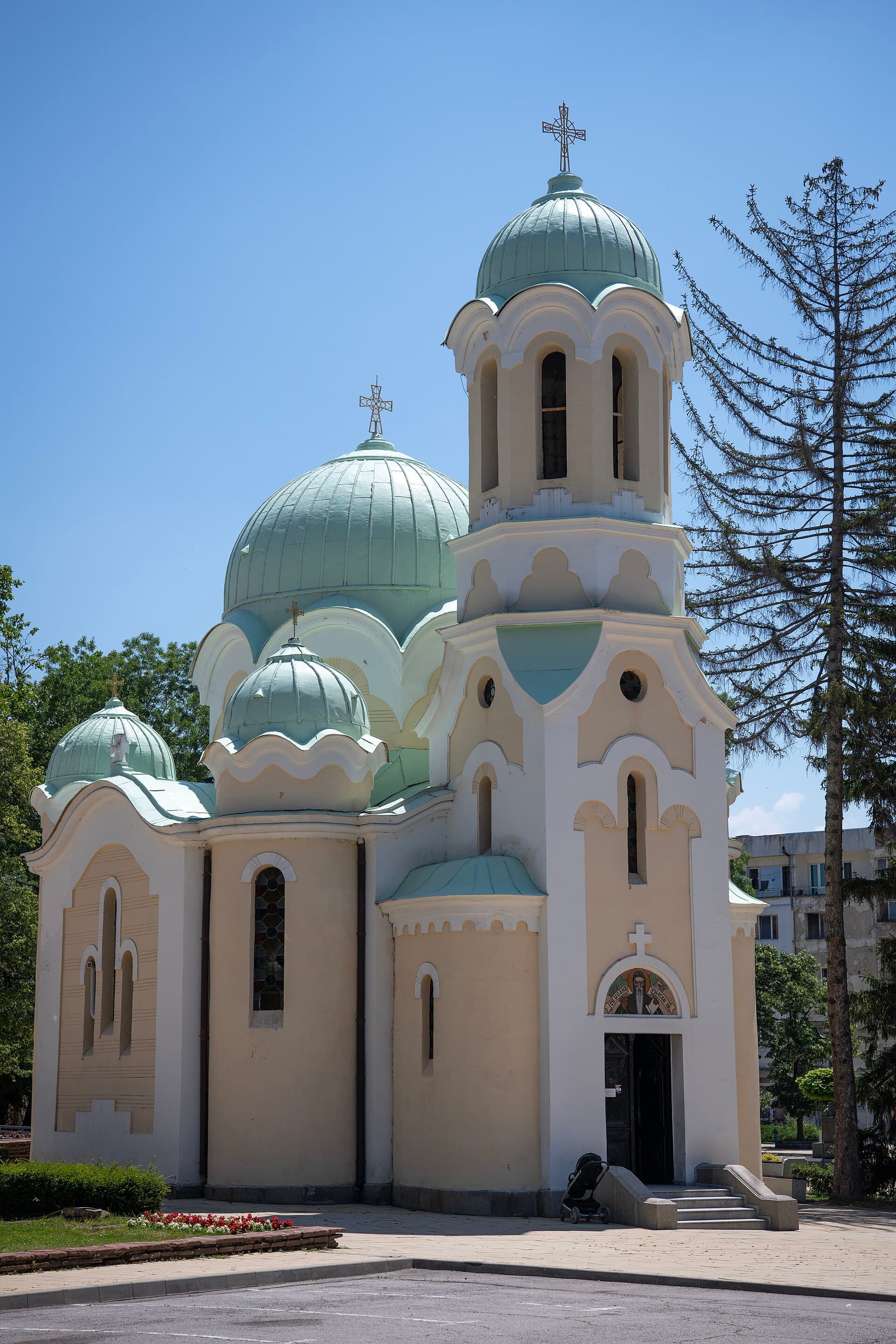 Владимир Kaladan Петков / CC BY-SA 4.0, via Wikimedia Commons
Visite audio autoguidée de Pernik — parcours GPS à pied, lecture hors ligne, narration en 32 langues.
“Pernik : Là où la ténacité industrielle rencontre l'ancienne résilience.”
Pas les cartes postales. Les histoires que même les habitants ignorent — soufflées à l'oreille, là où elles se sont passées.
La forteresse médiévale de Pernik porte le nom d'un formidable boyard bulgare qui a défié un empereur connu comme le « Tueur de Bulgares ».
Sous les rues de la ville se trouve un musée européen unique qui vous permet de marcher sur les traces du passé industriel de la Bulgarie.
Une grande déclaration architecturale au centre-ville évoque une ère spécifique et ambitieuse de l'histoire de la Bulgarie.
Découvrez tous les secrets de Pernik
Chaque adresse, chaque révélation en entier — dans ton oreille, là où elle s'est passée.
Tu choisis tes lieux. Tu marches. La voix te révèle ce que les autres ignorent.


Votre visite audioguidée de Pernik vous attend — choisissez vos lieux, votre langue, et lancez-vous dès votre arrivée.
AcheterLume intègre un guide en réalité augmentée. Levez votre téléphone : sa caméra montre la rue devant vous, avec une flèche lumineuse posée sur l'image réelle qui pointe toujours vers votre prochain arrêt — aucune carte à déchiffrer, aucun mauvais virage. Comme tout dans Lume, ça fonctionne entièrement hors-ligne.
Pernik, une ville de l'ouest de la Bulgarie, offre un voyage captivant au cœur industriel du pays et une histoire profonde, souvent négligée. À seulement 30 kilomètres au sud-ouest de Sofia, c'est une destination accessible qui récompense les voyageurs curieux par une expérience authentique et tranquille. La ville s'installe dans la vallée de Pernik le long de la rivière Struma, nichée entre les montagnes Vitosha, Lyulin et Golo Bardo, offrant un cadre pittoresque à son paysage urbain.
Connue comme la capitale minière de la Bulgarie, l'identité de Pernik est profondément liée à son industrie du charbon, qui a propulsé son développement rapide au XXe siècle. Au-delà de son héritage industriel, la ville révèle un passé médiéval, évident dans la formidable forteresse de Krakra, et une scène culturelle animée, notamment le festival annuel de Surva. Pernik présente un mélange distinct de couches historiques, des anciennes colonies thraces à la grande architecture de l'ère communiste, toutes attendant d'être découvertes.
La région autour de Pernik est habitée en continu depuis la période thrace, avec des preuves d'une colonie datant de la fin du Néolithique. L'importance stratégique de la ville a considérablement augmenté pendant les empires bulgares médiévaux. Au début du XIe siècle, la forteresse de Pernik est devenue un bastion essentiel, défendue de manière célèbre par le boyard bulgare Krakra Pernishki contre le formidable empereur byzantin Basile II. La résistance prolongée de Krakra, même après des victoires byzantines dévastatrices ailleurs, a cimenté la place de Pernik dans l'histoire médiévale bulgare.
Après cinq siècles de domination ottomane de 1396 à 1878, le destin de Pernik a radicalement changé avec la découverte de gisements de charbon à la fin du XIXe siècle. Cela a marqué le début de son ère industrielle moderne. La première mine de charbon d'État, « Les Vieilles Mines », a ouvert ses portes en 1891, et la ville s'est rapidement transformée d'un petit village agricole en un centre industriel majeur. La population a augmenté, et en 1929, Pernik a été officiellement déclarée ville en raison du boom économique alimenté par son industrie minière.
Au cours de l'ère communiste au milieu du XXe siècle, le développement industriel de Pernik s'est encore intensifié. Elle est devenue l'une des villes les plus stratégiquement importantes de Bulgarie, saluée comme une communauté ouvrière exemplaire. Cette période a vu la construction de plus d'usines, y compris celles de machines lourdes et de métallurgie, et l'expansion de ses mines de charbon, faisant de Pernik le centre énergétique de la Bulgarie pendant des décennies. L'architecture de son centre-ville, avec de larges places et des bâtiments civiques néoclassiques comme le Palais de la Culture, reflète l'ambition de cette époque.
Commencez votre exploration à la Forteresse de Krakra, une place forte médiévale du IXe siècle située sur un plateau rocheux au sud-ouest du centre-ville. Une marche de 20 minutes mène à des murs défensifs et des fondations, avec des panneaux d'information détaillant sa signification militaire et la vie quotidienne. Au centre-ville, la rue Targovska est la principale artère piétonne, reliant les principaux points d'intérêt. L'imposant Palais de la Culture, ouvert en 1957, est un exemple notable d'architecture baroque stalinienne.
Plongez dans le passé industriel de Pernik au Musée souterrain de la mine, une attraction unique construite dans les tunnels mêmes des « Vieilles Mines » de 1891. Ici, vous pouvez marcher 630 mètres sous terre, observant l'équipement original et les scènes de travail recréées. À proximité, le Musée régional d'histoire abrite une collection diversifiée, y compris des artefacts d'un sanctuaire de l'époque romaine et de la poterie préhistorique, offrant un aperçu de l'histoire plus large de la région. Observez le Bâtiment de la Direction des Mines, une structure architecturalement impressionnante de 1932, et l'Église Saint-Ivan Rilski, connue comme l'église des mineurs. Pour une pause tranquille, le Parc Central le long de la rivière Struma offre un espace vert et une atmosphère locale.
Les meilleurs moments pour visiter Pernik sont au printemps (avril à juin) et en automne (septembre à octobre), lorsque le temps est doux et agréable pour l'exploration. Cependant, si vous recherchez une expérience culturelle unique, planifiez votre voyage pour les trois derniers jours de janvier afin d'assister au Festival international des jeux de mascarade de Surva. Cette ancienne tradition met en scène des milliers de participants costumés, connus sous le nom de Koukeri, qui exécutent des danses masquées pour chasser le mal et accueillir une bonne récolte. Préparez-vous à des températures froides si vous visitez en hiver.
Pernik est facilement accessible depuis Sofia, située à seulement 30 kilomètres au sud-ouest. Des trains directs circulent environ toutes les heures depuis la gare centrale de Sofia, avec un temps de trajet de 42 à 53 minutes. Alternativement, des bus partent de la gare d'Avtogara Zapad (Ovcha Kupel) à Sofia. Une fois à Pernik, le centre-ville est accessible à pied, avec la rue Targovska servant d'artère piétonne principale. Les restaurants locaux, en particulier sur et autour de la rue Targovska, proposent des plats bulgares traditionnels comme le kavarma et le kebapche à des prix très abordables. Pernik est l'une des villes les plus abordables de Bulgarie, ce qui permet de vivre une journée complète d'activités pour moins de 30 € par personne. Bien que généralement sûre, les précautions de sécurité standard sont toujours conseillées.
Pernik en coréen, en chinois ou en hébreu — et dans 29 autres langues, chaque étape narrée par une voix native. La plus large gamme de langues de tous les audioguides autoguidés.
Disponible en :