Khum Chao Luang (Phrae Governor's Residence)
This grand teak mansion, once home to Phrae's last ruler, holds a chilling secret beneath its elegant facade.
Full story unlocks in the tour
 LannaPhoto / CC BY-SA 4.0, via Wikimedia Commons
Self-guided audio walking tour of Phrae — GPS route, offline playback, story-driven narration in 32 languages.
“Where teak shapes the skyline and indigo colors the everyday.”
Not the postcards. The stories even locals don't know — whispered in your ear, right where they happened.
This grand teak mansion, once home to Phrae's last ruler, holds a chilling secret beneath its elegant facade.
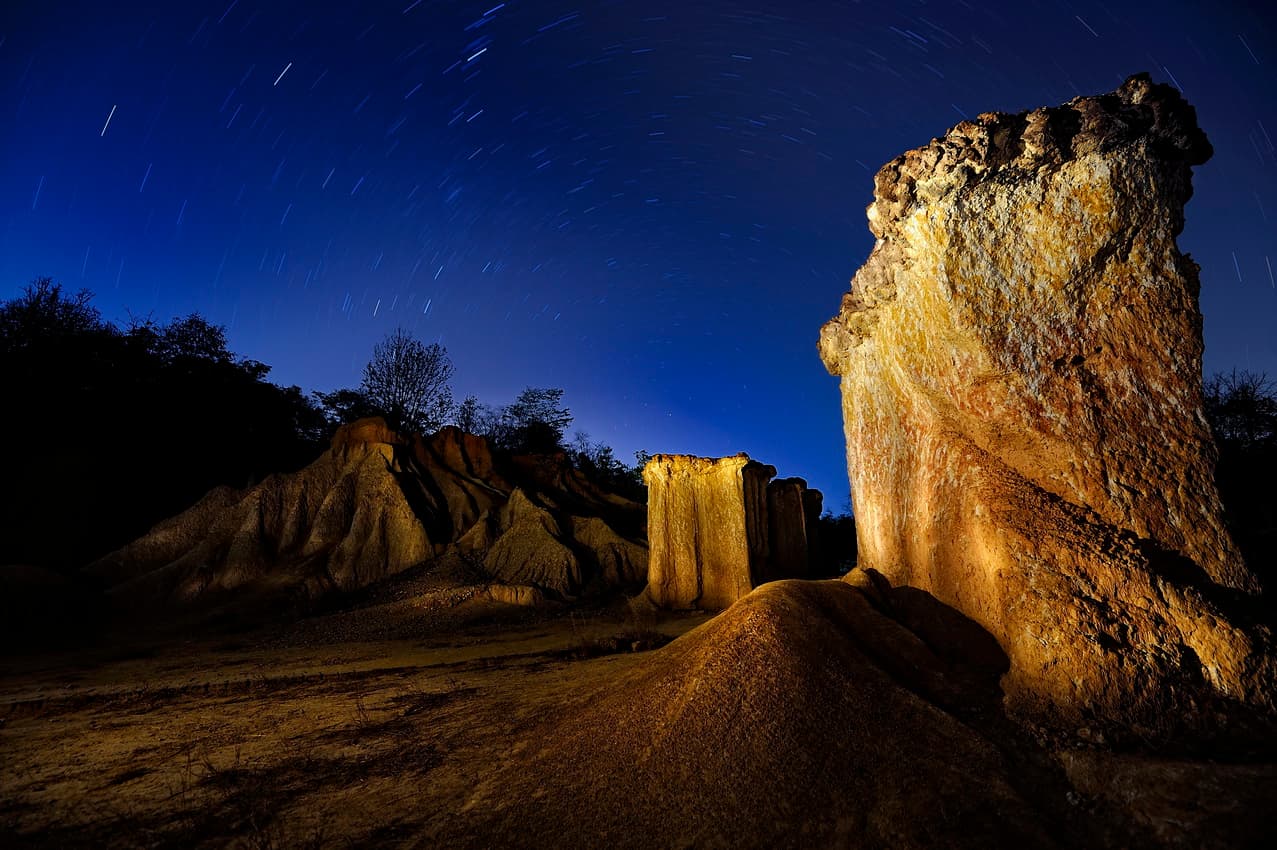
Local legends say that if you find treasure in this 'Ghost Town Grove,' the spirits will ensure you never leave with it.
The name of Phrae's most sacred temple is linked to a delicate fabric from a distant kingdom.
Discover every secret of Phrae
Every address, every reveal in full — in your ear, right where it happened.
You pick your stops. You walk. The voice reveals what the others miss.


Your self-guided audio tour of Phrae is ready — pick your landmarks, choose your language, and start the moment you arrive.
BuyLume has a built-in augmented-reality guide. Hold your phone up and its camera shows the street ahead of you, with a glowing arrow laid over the real view that always points to your next stop — no map to puzzle over, no wrong turns. Like everything in Lume, it works fully offline.
Phrae, a serene city in northern Thailand, offers a captivating glimpse into a past shaped by the lucrative teak trade and ancient Lanna traditions. Often overlooked by mainstream tourism, Phrae retains an authentic allure, characterized by its well-preserved wooden architecture, tranquil temples, and a palpable sense of local pride. It's a place where the rhythm of life feels slower, allowing for a deeper immersion into Thai culture and history.
The city's unique identity is woven from a blend of influences—from its early Mon and Hariphunchai origins to its time as a Lanna outpost, and later, the significant impact of European timber companies. Visitors can wander through streets lined with magnificent teak mansions, explore ancient city walls, and discover a lively local craft scene, particularly known for its indigo-dyed textiles. Phrae is an ideal destination for those seeking an off-the-beaten-path experience, offering a rich collection of stories, from tales of rebellious governors to the legends of a 'ghost town grove.'
## From Ancient Roots to Teak Capital Phrae's history stretches back to ancient times, with its origins believed to lie within the influence of the Mon civilization and the Hariphunchai Kingdom between the 7th and 9th centuries. Ancient chronicles often refer to the city as Wiang Kosai, meaning 'City of Silk Cloth.' By the late 13th century, Phrae became a fortified city and an important defensive and trading center within the burgeoning Lanna Kingdom under King Mengrai.
The city experienced a period under Burmese rule in 1558 before being liberated in 1770 and brought under the protectorate of Siam. However, it was the late 19th and early 20th centuries that marked Phrae's 'Golden Age,' transforming it into a crucial hub for the teak industry. European companies, predominantly British and Danish, established operations, drawn by the abundant teak forests. This influx of foreign capital and influence led to significant economic growth and a unique architectural transformation, giving rise to the distinctive 'Gingerbread House' style seen in many of the town's luxurious teak mansions.
Phrae functioned as a semi-independent kingdom until the late 19th century, when it came under increasing Siamese influence. A notable event in its modern history was the Shan-led Ngiao rebellion in 1902, which aimed to overthrow Central Thai rule. The rebellion was crushed, and central Thai authority was reestablished. During World War II, Phrae also played a role as a safehouse for members of the Free Thai movement. Today, Phrae has reinvented itself as a craft city, celebrated for its natural-dyed textiles and exceptional culinary experiences, while still preserving its extensive historical and architectural heritage.
Begin your exploration with a tram tour of the city center, offering a quick overview of Phrae's highlights. Wander the ancient city walls, particularly the leafy path from Pratu Chai ancient East Gate, for a sense of the city's historical layout. Delve into the past at Khum Chao Luang, the former residence of Phrae's last ruler, an architectural masterpiece built in 1892. Nearby, the pink and white Khum Vongburi Museum, a gingerbread-style mansion from 1897, offers another glimpse into the opulent lives of local rulers.
For a spiritual journey, visit Wat Phra That Cho Hae, home to a sacred gilded pagoda believed to house relics of Lord Buddha. Do not miss Wat Phong Sunan, with its impressive golden reclining Buddha and an enormous golden turtle statue. Explore the Teak Museum, located on the former estate of the East Asiatic Company, to understand Phrae's logging heritage. Immerse yourself in local craftsmanship at Baan Thung Hong Village, renowned for its traditional Mo Hom indigo dyeing, where you can even participate in a tie-dye workshop. For a unique natural spectacle, venture to Phae Mueang Phi Forest Park, known for its unusual sandstone formations carved by erosion, often referred to as 'Ghost Town Grove.'
The best time to visit Phrae for comfortable warm-weather activities is from late November to late February. During these months, the weather is pleasant with cooler temperatures (averaging 23-25°C), low humidity, and minimal rainfall, making it ideal for exploring on foot and outdoor excursions. The hot season runs from March to May, with April being the hottest month, where temperatures can exceed 35°C. The rainy season typically occurs from May to October, with September experiencing the highest rainfall.
Phrae is a small city that is less frequented by foreign tourists, offering a more authentic local experience. While there isn't a dedicated tourist police or a wide array of English-speaking staff in all hotels, communication is generally manageable. Getting to Phrae can be done by flying to nearby Lampang or Nan airports, followed by a 1.5 to 2-hour drive. Alternatively, the Northern railway line from Bangkok to Chiang Mai stops at Den Chai station, about a 30-minute drive from Phrae. Buses also connect Phrae to other northern provinces and Bangkok.
Within the city, local transport options include motorcycle taxis, tricycles, and 'songtaew' vehicles. For longer distances or exploring the surrounding areas, hiring a songtaew and agreeing on the price beforehand is recommended. Renting a scooter can be challenging for foreigners. Phrae is known for its excellent food culture, with lively local markets offering diverse and authentic Thai cuisine.
Phrae in Korean, in Chinese or in Hebrew — and 29 more languages, every stop narrated by a native voice. The widest language range of any self-guided audio tour.
Available in: