La Casa de Grillos de Qibao
Qibao es conocido por una afición distintiva que una vez cautivó a emperadores y aún atrae a entusiastas.
La historia completa se desbloquea en el tour
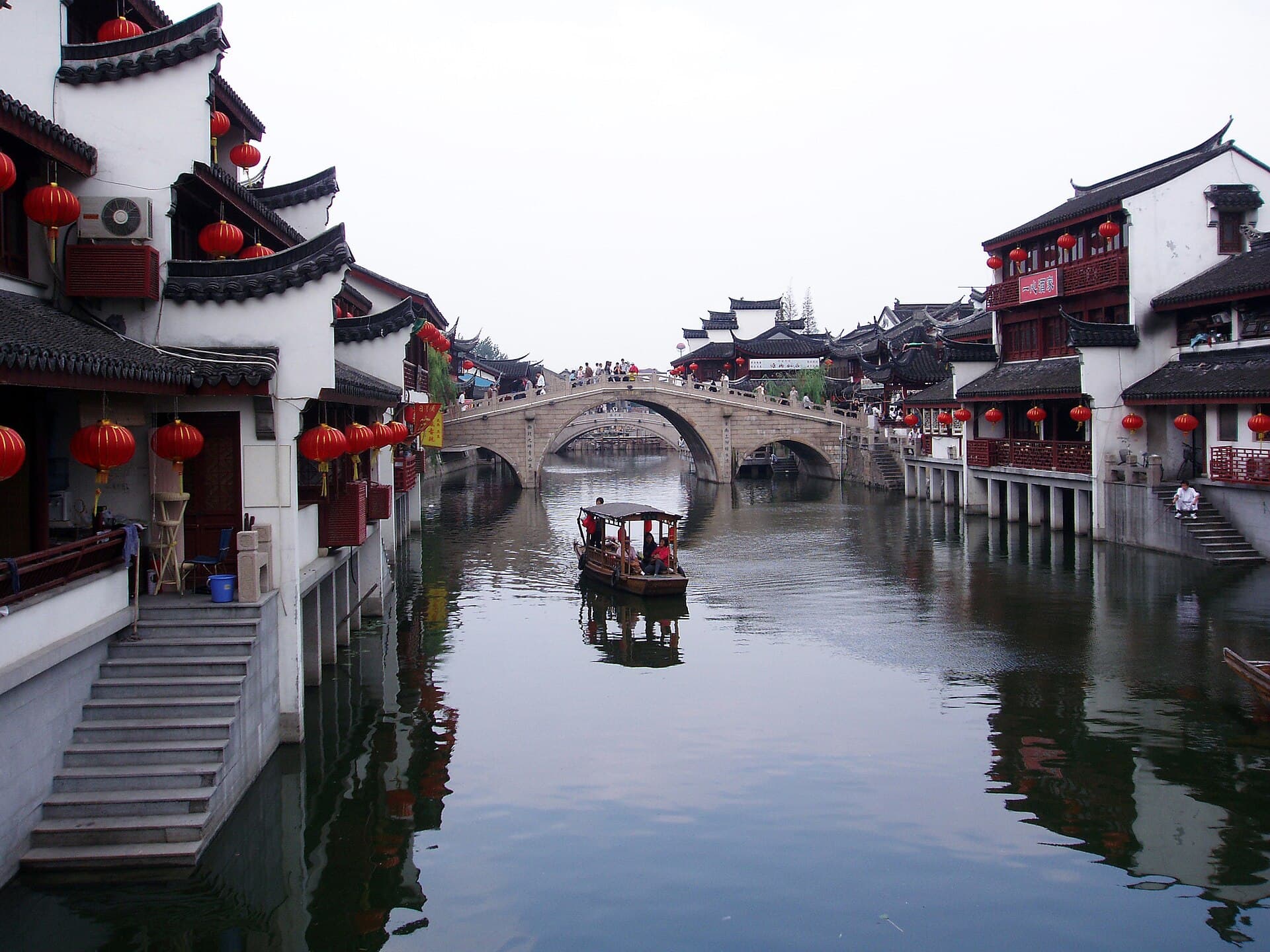 Taken by Fanghong / CC BY 2.5, via Wikimedia Commons
Tour de audio autoguiado de Qibao — ruta GPS a pie, reproducción offline, narración en 32 idiomas.
“Donde las antiguas vías fluviales trazan caminos a través de un vivo cuadro de la gracia de las dinastías Ming y Qing.”
No las postales. Las historias que ni los locales conocen — al oído, justo donde ocurrieron.
Qibao es conocido por una afición distintiva que una vez cautivó a emperadores y aún atrae a entusiastas.
La designación del pueblo, 'Siete Tesoros', alude a una colección de artefactos legendarios, pero solo unos pocos perduran.
Más allá de los animados puestos de comida, los antiguos pasajes de Qibao llevaban nombres que reflejaban la vida diaria y los oficios de sus habitantes.
Descubre todos los secretos de Qibao
Cada dirección, cada revelación al completo — a tu oído, justo donde ocurrió.
Eliges tus paradas. Caminas. La voz te revela lo que los demás ignoran.


Tu tour de audioguía por Qibao te espera — elige tus lugares, tu idioma y empieza al llegar.
ComprarLume incluye una guía de realidad aumentada. Levanta el móvil y su cámara muestra la calle que tienes delante, con una flecha luminosa sobre la imagen real que siempre apunta a tu próxima parada — sin mapas que descifrar, sin giros equivocados. Como todo en Lume, funciona completamente sin conexión.
La Ciudad Antigua de Qibao, un asentamiento acuático milenario, ofrece un vistazo al pasado de Shanghái, contrastando marcadamente con el moderno horizonte de la ciudad. Situada a solo 18 kilómetros (11.18 millas) del centro de Shanghái en el Distrito de Minhang, es la única ciudad antigua completamente integrada en el área metropolitana de Shanghái. Su fácil acceso a través de la Línea 9 del Metro la convierte en un escape favorito para aquellos que buscan arquitectura tradicional china, canales tranquilos y una rica experiencia cultural sin un viaje prolongado.
El atractivo de la ciudad radica en sus edificios bien conservados de las dinastías Ming y Qing, intersectados por dos canales y adornados con puentes de piedra. Qibao, que significa 'Siete Tesoros', deriva su designación del venerado Templo de Qibao o de una leyenda local de siete artefactos preciosos. Un paseo por sus calles antiguas revela una atmósfera animada, con una profunda escena culinaria, artesanías tradicionales y espectáculos culturales que unen siglos.
## Orígenes y Desarrollo Temprano La historia de Qibao se remonta a más de mil años, con su formación rastreable al período de las Cinco Dinastías y los Diez Reinos (907-960 d.C.) y su establecimiento durante la Dinastía Song del Norte (960-1126 d.C.). Se cree que la designación de la ciudad, Qibao, que significa 'Siete Tesoros', se originó en el estimado Templo de Qibao, que desempeñó un papel significativo en la expansión y evolución cultural de la ciudad. Una teoría alternativa, más folclórica entre los lugareños, habla de siete tesoros específicos: un Buda de hierro, una campana de bronce, un Sutra del Loto con escritura de oro, un árbol de catalpa chino milenario, un hacha de jade, un gallo de oro y un par de palillos de jade. De estos, solo el Sutra del Loto con escritura de oro y la campana de bronce son verificables y han perdurado.
## Florecimiento como Centro Comercial Durante las dinastías Ming (1368-1644) y Qing (1644-1911), Qibao se transformó en un floreciente centro de negocios, atrayendo a comerciantes de toda China. Su ubicación estratégica en un afluente del Gran Canal facilitó el comercio de bienes como seda, arroz y artesanías. El auge comercial de la ciudad llevó al desarrollo de calles especializadas; por ejemplo, Diandang Street fue nombrada por sus muchas casas de empeño, reflejando la activa industria textil de algodón local. Nanbei Street, ahora conocida como Qibao Old Street, era una concurrida vía con más de 100 tiendas antes de la década de 1950, posteriormente revitalizada para convertirse en un animado centro de aperitivos y pequeños productos.
## Patrimonio Cultural y Preservación Moderna El profundo patrimonio cultural de Qibao es evidente en sus artes y oficios tradicionales. El teatro de sombras, una antigua forma de arte introducida en Shanghái por Mao Gengyu de Qibao, forma una parte significativa del patrimonio cultural inmaterial de la ciudad, con representaciones que muestran eventos históricos en dialecto local. La ciudad también es reconocida por su conexión histórica con la lucha de grillos, con una Casa de Grillos dedicada. En los últimos años, Qibao ha abrazado el turismo cultural, organizando eventos como el Festival de Grillos y el Festival de Títeres de Sombras, mientras mantiene su arquitectura tradicional de losas de piedra azul, paredes blancas y tejas negras junto a sus vías fluviales. El Templo de Qibao, reconstruido en 2002, sigue siendo un ancla espiritual, mostrando estilos arquitectónicos de las dinastías Han y Tang.
La Calle Antigua de Qibao sirve como el corazón de la ciudad antigua, dividida en una Calle Sur conocida por los aperitivos locales y una Calle Norte que ofrece recuerdos turísticos, antigüedades, caligrafía y pinturas. Aquí, puedes probar delicias tradicionales como Qibaogao (pasteles de arroz glutinoso), Hebao doufugan (tofu seco en hojas de loto) y Tanghulu (frutas confitadas en palitos). Asegúrate de probar el célebre cerdo estofado rojo (hong shao rou) o los tangyuan (dumplings dulces) de Qibao.
El Templo de Qibao, que da nombre a la ciudad, data del período de las Cinco Dinastías y los Diez Reinos y fue objeto de una importante renovación en la Dinastía Ming. Reconstruido en 2002, presenta estilos arquitectónicos de las Dinastías Han y Tang. Otros puntos de interés cultural incluyen el Museo del Teatro de Sombras de Qibao, donde puedes observar representaciones de esta antigua forma de arte, y la Casa de Grillos, dedicada al tradicional pasatiempo chino de la lucha de grillos. El Salón Conmemorativo de Zhang Chongren honra al notable pintor y amigo del dibujante Hergé. También puedes explorar el Museo de Cultura Popular de Qibao y el Museo en Miniatura de Zhou. Para una perspectiva diferente, considera un breve paseo en barco por el canal para experimentar la ciudad acuática desde sus vías fluviales.
La Ciudad Antigua de Qibao es un destino adecuado para visitar durante todo el año. Sin embargo, los momentos más agradables son durante las cómodas estaciones de primavera (marzo a mayo) y otoño (septiembre a noviembre), cuando el clima es ideal para caminar. Para evitar las mayores aglomeraciones, es aconsejable visitar un día de semana, especialmente por la mañana o a última hora de la tarde, ya que los fines de semana y los días festivos chinos pueden ser bastante concurridos. La mayoría de los visitantes dedican de 2 a 4 horas a explorar la ciudad.
Se puede llegar fácilmente a la Ciudad Antigua de Qibao tomando la Línea 9 del Metro de Shanghái hasta la estación de Qibao. Desde la Salida 2, el casco antiguo está a unos diez minutos a pie. Si bien la entrada a la ciudad en sí es gratuita, las atracciones individuales como museos y el templo tienen tarifas de entrada separadas, que suelen oscilar entre 5 y 10 CNY. Hay un boleto combinado para múltiples atracciones disponible por alrededor de 30 CNY. Los cruceros por el canal suelen costar entre 15 y 20 CNY por persona para un viaje de 20 a 30 minutos. Use zapatos cómodos para caminar por los caminos de piedra irregulares. Hay Wi-Fi gratuito disponible en las plazas principales, accesible a través de "Qibao-FreeWiFi". El alojamiento está fácilmente disponible en el centro de Shanghái, particularmente a lo largo de la Línea 9 del Metro, ofreciendo una base conveniente para una excursión de un día a Qibao.
Qibao en coreano, en chino o en hebreo — y 29 idiomas más, cada parada narrada por una voz nativa. La mayor variedad de idiomas de cualquier audioguía autoguiada.
Disponible en: