La cascada de Leukbach
Imagina un pueblo donde una poderosa cascada no solo está cerca, sino que se precipita por su corazón mismo.
La historia completa se desbloquea en el tour
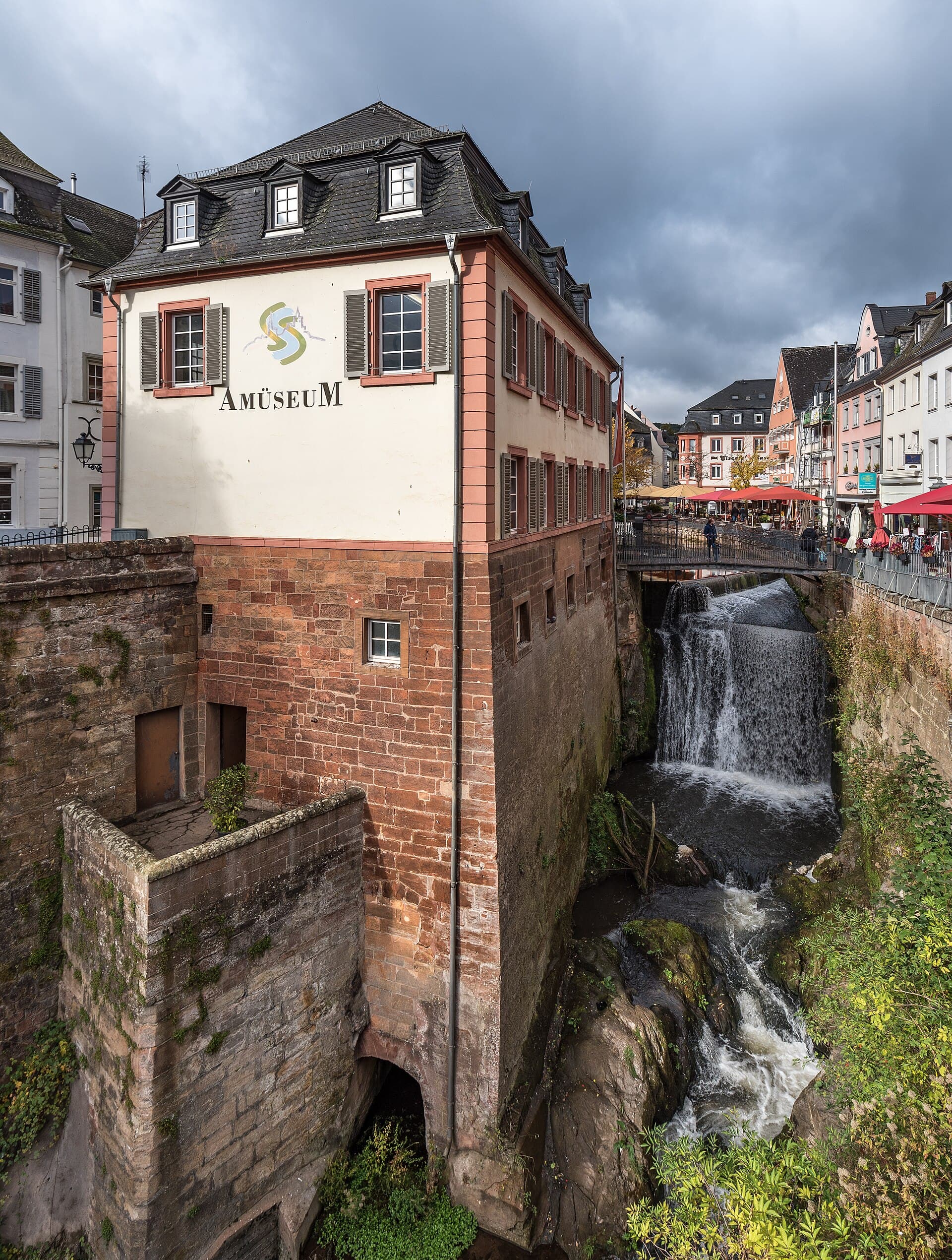 Tuxyso / CC BY-SA 3.0, via Wikimedia Commons
Tour de audio autoguiado de Saarburg — ruta GPS a pie, reproducción offline, narración en 32 idiomas.
“Donde una cascada medieval se precipita a través de sueños de entramado de madera.”
No las postales. Las historias que ni los locales conocen — al oído, justo donde ocurrieron.
Imagina un pueblo donde una poderosa cascada no solo está cerca, sino que se precipita por su corazón mismo.
Durante siglos, Saarburg moldeó discretamente los sonidos de las grandes catedrales de Europa.
Hay una razón por la que parte de Saarburg se siente distintivamente veneciana, más allá del agua.
Descubre todos los secretos de Saarburg
Cada dirección, cada revelación al completo — a tu oído, justo donde ocurrió.
Eliges tus paradas. Caminas. La voz te revela lo que los demás ignoran.

Tu tour de audioguía por Saarburg te espera — elige tus lugares, tu idioma y empieza al llegar.
ComprarSaarburg, un pintoresco pueblo en Renania-Palatinado, Alemania, cautiva a los visitantes con su mezcla única de carácter medieval y drama natural. Situado a orillas del río Sarre, cerca de las fronteras con Francia y Luxemburgo, es un destino que se siente tanto histórico como vivo. La característica definitoria del pueblo es, sin duda, la cascada de 20 metros del arroyo Leukbach, que cae directamente por el corazón del casco antiguo, creando un espectáculo hipnotizante entre casas de entramado de madera y bulliciosos cafés.
A menudo llamado cariñosamente 'Pequeña Venecia' debido a sus cursos de agua y encantadora arquitectura, Saarburg invita a la exploración. Sobre el pueblo, las ruinas del Castillo de Saarburg, uno de los castillos en la cima de una colina más antiguos del oeste de Alemania, se erigen como testimonio de siglos de historia, ofreciendo amplias vistas del valle del Sarre y los viñedos circundantes. Más allá de su atractivo visual, Saarburg está profundamente arraigado en la región vinícola del Sarre, reconocida por sus exquisitos vinos Riesling.
Este pueblo milenario ofrece un escape tranquilo, donde el tiempo parece ralentizarse. Desde paseos tranquilos por callejuelas estrechas hasta emocionantes paseos en una pista de trineo de verano, Saarburg ofrece una rica variedad de experiencias para aquellos que buscan una mezcla de cultura, naturaleza y relajación.
La historia de Saarburg comienza en el año 964 d.C. con la construcción de su castillo homónimo por el conde Siegfried de Luxemburgo. Esta fortaleza estratégica, en lo alto de la confluencia del río Sarre y el arroyo Leukbach, se convirtió rápidamente en una fortificación importante, particularmente para los arzobispos de Tréveris a principios del siglo XII. La presencia del castillo fomentó la prosperidad, atrayendo a artesanos y comerciantes que se establecieron dentro de sus muros protectores.
El pueblo recibió su carta oficial en 1291, solidificando su estatus como centro regional. Un momento crucial en el desarrollo de Saarburg fue la redirección deliberada del arroyo Leukbach a través del centro del pueblo en los siglos XI o XII. Esta ingeniosa hazaña de ingeniería medieval sirvió para un doble propósito: impulsó numerosos molinos para curtidores y molineros de grano, y, crucialmente, proporcionó una fuente de agua fácilmente disponible para la protección contra incendios.
A lo largo de los siglos XIV y XV, Saarburg floreció, como lo demuestra la construcción de los distintivos edificios de entramado de madera y barrocos que aún bordean sus estrechas calles hoy en día. La vida económica del pueblo era robusta, con registros del siglo XIX que detallan numerosas fábricas de curtidos, telares, molinos de grano, destilerías de aguardiente y una diversa gama de artesanos, incluyendo pescadores, panaderos, carniceros y herreros. La Fundición de Campanas Mabilon, establecida a finales del siglo XVIII, consolidó aún más la reputación industrial de Saarburg, fundiendo campanas para catedrales de toda Europa hasta su cierre en 2002.
A pesar de los períodos de conflicto y destrucción, incluyendo ser incendiada por las tropas en 1552 y luego volada por los franceses en 1705, el espíritu resiliente de Saarburg perduró. El castillo finalmente cayó en ruinas en el siglo XVIII, y el pueblo adquirió los restos en 1860, transformándolos en un popular mirador. Después de la Segunda Guerra Mundial, Saarburg experimentó un período de ocupación por tropas luxemburguesas y luego francesas hasta 1955. Hoy en día, el centro bien conservado del pueblo, con su icónica cascada y el encantador barrio de la 'Pequeña Venecia', se erige como un testimonio vivo de su perdurable historia.
La vida en Saarburg y sus pueblos circundantes en siglos pasados estuvo marcada por los ritmos de la agricultura y la industria local. Las descripciones del siglo XIX pintan un cuadro de calles de pueblos con superficies irregulares y convexas y cunetas abiertas, donde se vertían aguas residuales y alcantarillado, lo que provocaba olores desagradables en verano. Los inodoros solían ser pequeñas letrinas cerca de montones de estiércol o pozos negros, y el agua provenía de pozos comunales. Las casas estaban amuebladas de forma sencilla, con chimeneas abiertas utilizadas para cocinar y ahumar carne, un método de conservación crucial. La dieta de los residentes más pobres a menudo consistía en albóndigas de trigo sarraceno con leche, mientras que los más acomodados podían disfrutar de tocino.
La vida comunitaria también estuvo marcada por eventos como la exhibición de la 'Santa Túnica' de Cristo en la Catedral de Tréveris, que atrajo a numerosos peregrinos a través de los pueblos del Sarre. La región también sufrió su cuota de dificultades, como el devastador incendio en Irsch en 1842, que destruyó docenas de casas y establos, dejando a muchos sin refugio. A pesar de estos desafíos, Saarburg mantuvo su papel como ciudad mercado, con varios mercados que dieron nombre a sus calles y plazas, como el Buttermarkt en la ciudad alta.
Saarburg ofrece una cautivadora variedad de lugares de interés, muchos de ellos a poca distancia. La pieza central innegable es la Cascada de Saarburg, donde el arroyo Leukbach se precipita dramáticamente 20 metros entre edificios históricos en el casco antiguo. Junto a esto, explore la plaza Buttermarkt, a menudo llamada 'Pequeña Venecia', con sus coloridas casas, puentes y cafés.
Ascienda a las ruinas del Castillo de Saarburg, uno de los castillos en la cima de una colina más antiguos del oeste de Alemania, para disfrutar de vistas panorámicas del pueblo, el río Sarre y los viñedos circundantes. En la base de la cascada, adéntrese en la historia local en el Amüseum (en el antiguo Molino Electoral) y el Hackenberger Mühle, ambos ahora museos que exhiben artesanías tradicionales e historia de los molinos.
Para una perspectiva diferente, tome el Saarburg Sesselbahn (telesilla) hasta la montaña Warsberg, deslizándose silenciosamente sobre los viñedos. En la cima, encontrará una cafetería y la emocionante pista de trineo de verano Saar-Rodel. No se pierda el Museo de la Fundición de Campanas Mabilon, que ofrece una visión de siglos de fabricación de campanas. Pasee por el Barrio de Staden, la parte más antigua de la ciudad baja, con sus históricas casas de pescadores y barqueros. La Iglesia de San Lorenzo también merece una visita por su arquitectura neogótica y la singular estatua de la 'Virgen de la Uva'.
Más allá del pueblo, considere una excursión de un día a Tréveris, la ciudad más antigua de Alemania, a solo 20-25 minutos, conocida por sus ruinas romanas y sitios declarados Patrimonio de la Humanidad por la UNESCO.
La mejor época para visitar Saarburg para disfrutar de un clima agradable y actividades al aire libre es desde finales de junio hasta principios de septiembre. Durante estos meses, las temperaturas son cálidas, con máximas diarias promedio superiores a 20 °C (68 °F), siendo julio el mes más caluroso con alrededor de 23 °C (74 °F). Este período ofrece cielos más despejados y es ideal para explorar el pueblo, disfrutar de los cafés al aire libre y participar en actividades como el telesilla y la pista de trineo.
La primavera (abril-mayo) y principios de otoño (septiembre-octubre) también son hermosos, con paisajes florecientes o un vibrante follaje otoñal, respectivamente, y temperaturas generalmente buenas. Aunque puede haber algunas lluvias durante estos meses, por lo general no restan encanto. El invierno trae temperaturas más frías y más nubosidad, siendo enero el mes más frío.
Saarburg es de fácil acceso y muy transitable, lo que lo hace perfecto para explorar a pie. Si llega en tren, Saarburg tiene una estación con buenas conexiones a ciudades más grandes como Tréveris (aproximadamente a 20 minutos) y Saarbrücken. Para quienes conducen, se llega fácilmente en coche, y tener un vehículo permite una exploración más amplia de la región vinícola circundante. El aeropuerto principal más cercano es el de Luxemburgo (LUX), a unos 45 minutos en coche. El aeropuerto de Fráncfort-Hahn (HHN) es otra opción, que atiende principalmente a aerolíneas de bajo coste, mientras que el aeropuerto internacional de Fráncfort (FRA) es adecuado para vuelos de larga distancia.
Se puede obtener información para visitantes en la oficina de turismo local, que también puede proporcionar mapas y detalles para paseos autoguiados. El pueblo ofrece una variedad de cafés y restaurantes, particularmente alrededor de la plaza Buttermarkt, perfectos para disfrutar de la cocina local y los famosos vinos Riesling del Sarre. Muchas bodegas más pequeñas y familiares de la región tienen salas de degustación abiertas a los visitantes.
Saarburg en coreano, en chino o en hebreo — y 29 idiomas más, cada parada narrada por una voz nativa. La mayor variedad de idiomas de cualquier audioguía autoguiada.
Disponible en: