Valère Basilica
Within the fortified walls of Valère, a medieval instrument continues to sing.
Full story unlocks in the tour
 Christian David / CC BY-SA 4.0, via Wikimedia Commons
Self-guided audio walking tour of Sion — GPS route, offline playback, story-driven narration in 32 languages.
“Where ancient castles stand guard over sun-drenched vineyards.”
Not the postcards. The stories even locals don't know — whispered in your ear, right where they happened.
Within the fortified walls of Valère, a medieval instrument continues to sing.
Beneath the stones of Sion's historic core lies a much deeper past.
The mighty Rhône, a constant presence, once shaped the city's fate in an unexpected way.
Discover every secret of Sion
Every address, every reveal in full — in your ear, right where it happened.
You pick your stops. You walk. The voice reveals what the others miss.


Your self-guided audio tour of Sion is ready — pick your landmarks, choose your language, and start the moment you arrive.
BuyLume has a built-in augmented-reality guide. Hold your phone up and its camera shows the street ahead of you, with a glowing arrow laid over the real view that always points to your next stop — no map to puzzle over, no wrong turns. Like everything in Lume, it works fully offline.
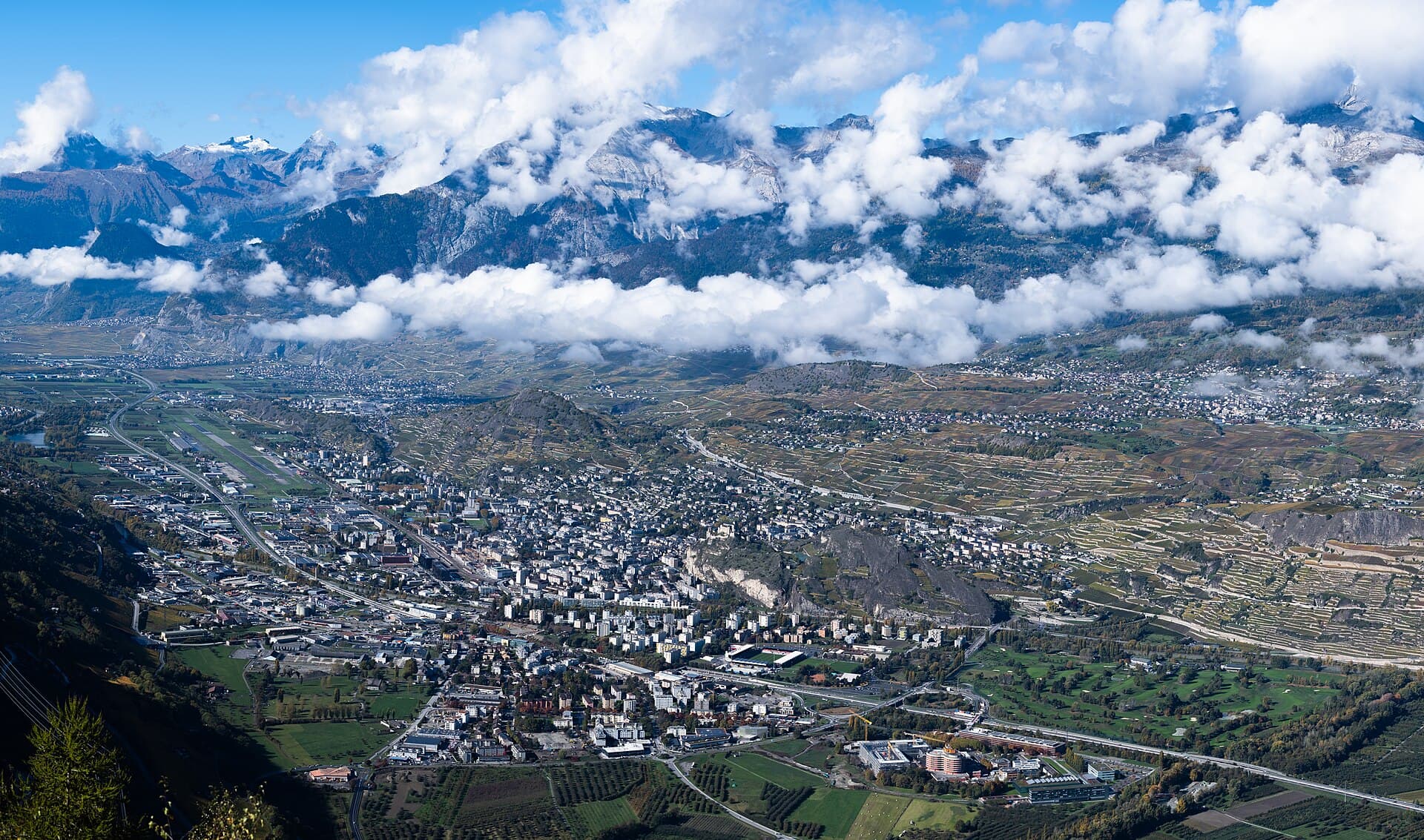
Sion, the capital of the Valais canton in southwestern Switzerland, presents a striking silhouette against the Alpine backdrop, defined by its two prominent hilltop fortifications: Tourbillon Castle and Valère Basilica. This city, often described as one of Switzerland's sunniest, blends a profound, multi-layered history with a relaxed, small-town atmosphere. Its strategic position in the Rhône Valley, near the borders of France and Italy, has shaped its identity over millennia.
Beyond its ancient landmarks, Sion is the heart of Switzerland's primary wine-producing region. Terraced vineyards climb the steep slopes surrounding the city, yielding renowned local varietals. The city's pedestrian-friendly Old Town invites exploration, with its medieval architecture, active cafes, and a bustling Friday market showcasing local produce. Sion serves as an ideal base for exploring the wider Valais region, offering access to hiking trails, nearby ski resorts, and other natural wonders.
## From Celtic Settlement to Episcopal Seat Sion's history stretches back an extraordinary 7,000 years, with evidence of continuous human settlement since the late Mesolithic period around 6200 BC. Early Neolithic farmers from the Mediterranean settled here around 5800 BC. By the end of the 1st century BC, Sion, then known as Sedunum, was the capital of the Seduni, one of the four Celtic tribes of the Valais, before being conquered by the Romans in the 10s BC.
## The Rise of the Prince-Bishops Sion became the seat of a bishop in the late 6th century, a significant move from its original location in Martigny (Octodurum) due to frequent flooding. This established Sion as the main spiritual center of the Rhône Valley. A pivotal moment arrived in 999 AD when King Rudolf III of Burgundy granted the Bishop of Sion temporal power over Valais, effectively making him a prince-bishop and uniting both secular and ecclesiastical authority. This era saw the construction of the iconic fortifications that define Sion's skyline today. Tourbillon Castle, the residence of the bishops, was completed by the end of the 13th century, while the fortified church of Valère dates back to the 1100s.
## Wars, Fires, and Modernity The late Middle Ages were marked by conflicts and destruction, including a conquest by Savoyard forces in 1352. A devastating fire in 1788 damaged both Tourbillon and Majoria castles and destroyed a significant portion of the city's houses. Despite these challenges, Sion endured. The 19th century brought urbanization, with the city expanding into the valley and the construction of wider streets and administrative buildings. In 1815, Valais officially joined the Swiss Confederation, and Sion remained its capital. Today, Sion seamlessly blends its ancient past with its role as the economic center of Valais and an important transportation hub.
Sion's most striking features are its two hilltop landmarks: the ruined Château de Tourbillon and the fortified Valère Basilica. A hike up to these sites is rewarded with sweeping views of the city, the Rhône Valley, and surrounding vineyards. Valère Basilica, a Swiss Heritage Site of National Significance, houses the History Museum of Valais and one of the world's oldest playable organs.
In the Old Town, explore the winding streets, discover medieval architecture, and visit the Cathédrale Notre-Dame du Glarier, recognizable by its large orange clock. The Sorcerer's Tower, once part of the city's defense, later served as a prison during witch trials. On Fridays, the Old Town hosts a lively market with local produce, cheeses, crafts, and international cuisine.
Beyond the city center, consider a wine tour through the surrounding vineyards, which are known for producing Fendant white wine and Dôle red wine. For a unique experience, take a boat trip on the Lac Souterrain de St-Léonard, Europe's largest underground lake. The Domaines des Iles, a large park just outside Sion, offers lakes for swimming, green spaces for picnics, and an adventure park.
Sion enjoys a mild climate and is one of Switzerland's sunniest cities, making it a pleasant destination year-round. The best time to visit for warm weather and outdoor activities, including hiking and wine tasting, is from mid-May to mid-September, when temperatures are generally pleasant. Summer (June to August) is the busiest season, so booking accommodations in advance is advisable. Autumn (September to November) offers beautiful fall foliage and fewer crowds. Winter (December to February) is chilly but ideal for those interested in skiing at nearby resorts.
Sion is easily accessible by public transport, with excellent train connections from major Swiss cities like Bern, Geneva, and Zurich. It also contains Switzerland's largest bus station, facilitating travel throughout the Valais canton. If driving, Sion is located on the E2 highway. The city center and its main attractions are largely walkable, though the climbs to Tourbillon and Valère require comfortable shoes.
Free Wi-Fi spots are available throughout the city, and public water fountains offer free refills. Many clean public toilets are also readily available. While Sion is generally very safe, public transport frequency decreases late at night, so consider taxis if out after hours. The Sion Tourist Information Office is located on Place de la Planta.
Sion in Korean, in Chinese or in Hebrew — and 29 more languages, every stop narrated by a native voice. The widest language range of any self-guided audio tour.
Available in: