Mårten Trotzigs Gränd, Gamla Stan
Entre los sinuosos callejones de Gamla Stan, un pasaje tan estrecho que podría pasar desapercibido ofrece un apretado recorrido a través de siglos.
La historia completa se desbloquea en el tour
 Steven Lek / CC BY-SA 4.0, via Wikimedia Commons
Tour de audio autoguiado de Estocolmo — ruta GPS a pie, reproducción offline, narración en 32 idiomas.
“Donde las islas se encuentran con la innovación y la historia resuena a través de pasajes antiguos.”
No las postales. Las historias que ni los locales conocen — al oído, justo donde ocurrieron.
Entre los sinuosos callejones de Gamla Stan, un pasaje tan estrecho que podría pasar desapercibido ofrece un apretado recorrido a través de siglos.
Este grandioso edificio, famoso por su Banquete Nobel, esconde una obra artística con un propósito histórico bastante severo.
En las profundidades de la ciudad, una estación de metro trasciende una mera galería de arte, revelándose como un peculiar refugio ecológico.
Descubre todos los secretos de Estocolmo
Cada dirección, cada revelación al completo — a tu oído, justo donde ocurrió.
Eliges tus paradas. Caminas. La voz te revela lo que los demás ignoran.


Tu tour de audioguía por Estocolmo te espera — elige tus lugares, tu idioma y empieza al llegar.
ComprarLume incluye una guía de realidad aumentada. Levanta el móvil y su cámara muestra la calle que tienes delante, con una flecha luminosa sobre la imagen real que siempre apunta a tu próxima parada — sin mapas que descifrar, sin giros equivocados. Como todo en Lume, funciona completamente sin conexión.
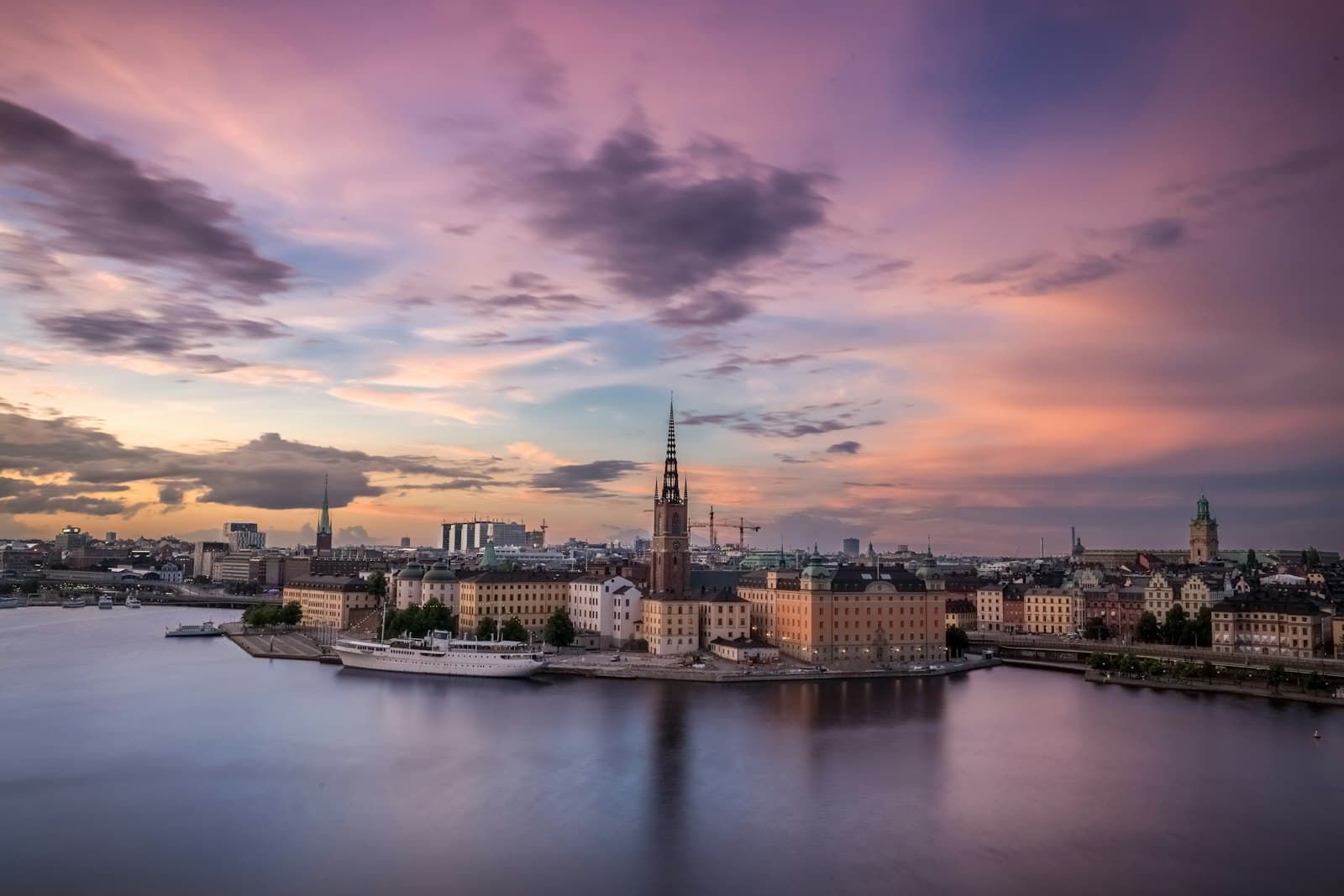
Estocolmo, la capital de Suecia, es una ciudad elegantemente distribuida en 14 islas, donde el lago Mälaren se encuentra con el mar Báltico. A menudo llamada la 'Venecia del Norte' o 'Belleza sobre el Agua', su geografía única se define por una cautivadora mezcla de tierra y mar, conectada por 57 puentes. Desde el encanto medieval de Gamla Stan hasta el diseño vanguardista de sus distritos modernos, Estocolmo ofrece un viaje cautivador a través de la historia, la cultura y la innovación.
Esta ciudad transitable, hogar de aproximadamente un millón de personas, combina a la perfección hitos históricos con atracciones contemporáneas. Ya sea que estés explorando antiguas piedras rúnicas, adentrándote en la historia marítima o experimentando la galería de arte más larga del mundo en su sistema de metro, Estocolmo promete una experiencia rica y variada. Es una ciudad que sorprende continuamente, invitando a los visitantes a descubrir sus muchas capas y secretos.
## De Puesto Vikingo a Capital Real Los orígenes de Estocolmo se remontan a la Edad de Piedra, con asentamientos que existieron ya en el sexto milenio a.C. Sin embargo, su fundación oficial como ciudad se atribuye a Birger Jarl en 1252. La ubicación estratégica, actuando como una 'cerradura' para el lago Mälaren y protegiéndolo de invasiones marítimas, fue crucial para su desarrollo temprano. La fortaleza inicial, conocida como Tre Kronor (Tres Coronas), se encontraba donde hoy está el Palacio Real.
Durante finales del siglo XIII, Estocolmo creció rápidamente en prominencia, convirtiéndose en la ciudad más grande de Suecia y el centro político y real de facto. Su ascenso fue significativamente influenciado por la Liga Hanseática y el floreciente comercio báltico, estableciendo fuertes lazos económicos y culturales con ciudades como Lübeck y Hamburgo. Los comerciantes alemanes desempeñaron un papel vital en la fundación y la economía temprana de la ciudad, muchos de ellos formando una élite política y económica. A finales del siglo XV, la población de Estocolmo alcanzó un estimado de 5.000 a 7.000 habitantes, lo que la hacía considerablemente más grande que cualquier otra ciudad sueca.
Los siglos XVI y XVII vieron las fortificaciones de Estocolmo reforzadas, y en 1634, se convirtió oficialmente en la capital de Suecia. La ciudad experimentó un crecimiento significativo durante la industrialización del siglo XIX, transformándose en un importante centro comercial y de servicios. Esta era trajo nuevas industrias, infraestructuras como fábricas de gas, alcantarillado y el ferrocarril, y un dramático aumento de la población, en gran parte debido a la inmigración. Finales del siglo XIX también marcó el establecimiento de importantes instituciones científicas y universidades.
En la segunda mitad del siglo XX, Estocolmo abrazó la modernidad. Aunque algunos distritos históricos fueron controvertidamente reurbanizados, muchos edificios antiguos y paisajes urbanos en áreas como Gamla Stan, Södermalm y Östermalm fueron preservados. Hoy en día, Estocolmo sigue siendo una ciudad moderna y étnicamente diversa, reconocida por su innovación, sostenibilidad y animada escena cultural.
Comienza tu exploración en Gamla Stan, el Casco Antiguo de Estocolmo, un distrito peatonal de pasajes antiguos y coloridos edificios medievales. Aquí descubrirás el Palacio Real, uno de los palacios más grandes de Europa, y el Museo del Premio Nobel, que celebra logros innovadores. No pases por alto el callejón más estrecho, Mårten Trotzigs Gränd, para una oportunidad fotográfica única.
Cruza a Djurgården, una isla rica en museos y espacios verdes. El Museo Vasa alberga el buque de guerra Vasa del siglo XVII, notablemente conservado, una vista verdaderamente impresionante. Cerca, el Museo ABBA ofrece un viaje interactivo a través de la historia de la icónica banda, y Skansen es el museo al aire libre y zoológico más antiguo del mundo. Para los amantes de la emoción, el parque de atracciones Gröna Lund ofrece atracciones y entretenimiento.
Explora Södermalm, una isla de moda conocida por su ambiente bohemio, tiendas vintage y galerías de arte. Busca miradores como Monteliusvägen para disfrutar de amplias vistas de la ciudad. Para una experiencia artística única, adéntrate en el Metro de Estocolmo, a menudo llamado la 'galería de arte más larga del mundo', con más de 90 estaciones adornadas con diversas obras de arte.
Estocolmo ofrece encantos distintos durante todo el año, por lo que la 'mejor' época depende de tus preferencias. El momento más popular para visitar es durante el verano (junio a agosto), cuando los días son largos, soleados y cálidos (15-20°C), ideales para actividades al aire libre y festivales. Sin embargo, esta también es la temporada alta de turismo, con precios de alojamiento más altos.
La primavera (marzo a mayo) y el otoño (septiembre a octubre) se consideran temporadas intermedias, ofreciendo un clima más templado, menos multitudes y, a menudo, precios más asequibles. La primavera trae cerezos en flor, mientras que el otoño muestra un follaje vívido. El invierno (noviembre a marzo), aunque frío y oscuro, transforma Estocolmo en un paisaje mágico con atmosféricos mercados navideños y acogedores cafés, especialmente en diciembre.
Estocolmo es una ciudad muy transitable a pie, especialmente en sus zonas céntricas. El transporte público, gestionado por SL (Storstockholms Lokaltrafik), es eficiente y extenso, abarcando el metro (Tunnelbana), autobuses, tranvías y transbordadores de cercanías, conectando las numerosas islas de la ciudad. El metro es particularmente famoso por sus estaciones adornadas con arte. Los billetes sencillos son válidos durante 75 minutos en todos los modos de transporte, pero las tarjetas de viaje de 24 horas, 72 horas o 7 días suelen ofrecer una mejor relación calidad-precio para los visitantes. Puedes comprar billetes a través de la aplicación de SL, en las máquinas expendedoras de las estaciones o tocando una tarjeta bancaria sin contacto en las puertas.
Estocolmo es en gran medida una ciudad sin efectivo, por lo que las tarjetas de crédito y débito son ampliamente aceptadas. También se habla mucho inglés, lo que facilita la comunicación para los visitantes internacionales. El principal aeropuerto internacional es Estocolmo Arlanda (ARN), siendo Bromma Estocolmo (BMA) más cercano al centro de la ciudad para aviones más pequeños.
Estocolmo en coreano, en chino o en hebreo — y 29 idiomas más, cada parada narrada por una voz nativa. La mayor variedad de idiomas de cualquier audioguía autoguiada.
Disponible en: