Little Carrie's Grave Marker at Mount Hope Cemetery
A child's grave in Topeka's Mount Hope Cemetery has a peculiar, recurring tradition that has puzzled cemetery workers for decades.
Full story unlocks in the tour
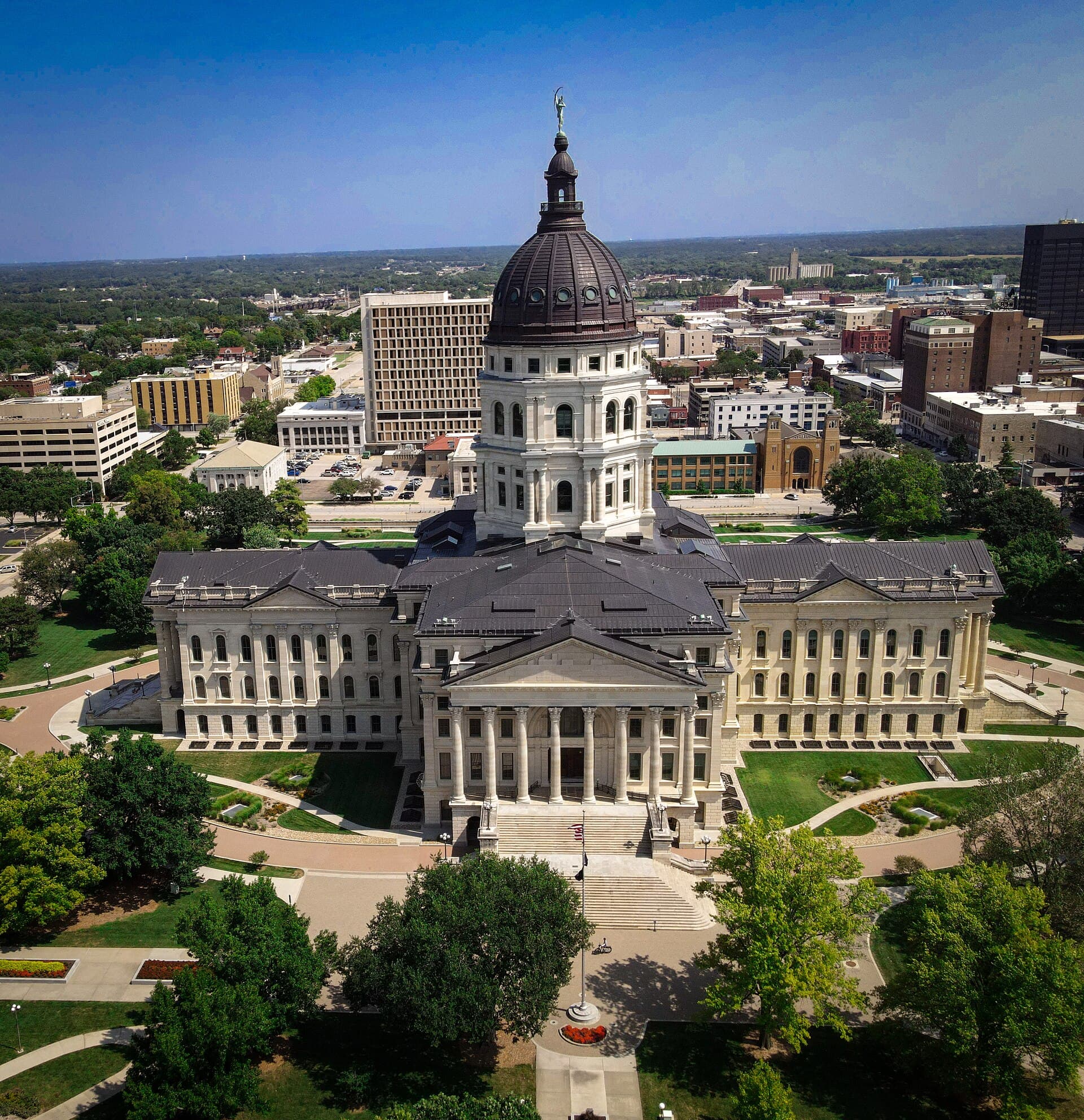 Srudisell / CC BY-SA 4.0, via Wikimedia Commons
Self-guided audio walking tour of Topeka — GPS route, offline playback, story-driven narration in 32 languages.
“Where prairie winds carry whispers of pivotal history and unexpected charm.”
Not the postcards. The stories even locals don't know — whispered in your ear, right where they happened.
A child's grave in Topeka's Mount Hope Cemetery has a peculiar, recurring tradition that has puzzled cemetery workers for decades.
This Topeka biker bar displays a unique form of decor that grows with every new female patron.
A prominent Topeka landmark carries a Potawatomi chief's warning about disturbing sacred land, a warning some believe was tragically validated.
Discover every secret of Topeka
Every address, every reveal in full — in your ear, right where it happened.
You pick your stops. You walk. The voice reveals what the others miss.

Your self-guided audio tour of Topeka is ready — pick your landmarks, choose your language, and start the moment you arrive.
BuyLume has a built-in augmented-reality guide. Hold your phone up and its camera shows the street ahead of you, with a glowing arrow laid over the real view that always points to your next stop — no map to puzzle over, no wrong turns. Like everything in Lume, it works fully offline.
Topeka, the capital city of Kansas, offers a compelling blend of historical significance, particularly in the American Civil Rights movement, and a relaxed, Midwestern charm. Situated along the Kansas River, the city is surrounded by the expansive natural landscapes characteristic of the Great Plains. Visitors will find a city that has played a pivotal role in shaping the nation, while also offering a diverse array of cultural and recreational experiences.
Beyond its political importance, Topeka reveals itself as a destination with a unique character, from its dedication to green spaces and public parks to its thriving arts scene in the NOTO Arts & Entertainment District. Whether exploring the solemn grounds of a national historical park or discovering unexpected local oddities, Topeka invites a deeper look into its past and present.
Topeka's origins are deeply intertwined with the fervent anti-slavery sentiments that defined pre-Civil War Kansas. Founded in 1854 by Eastern abolitionists, it was one of several "Free-State" towns established in the wake of the Kansas-Nebraska Bill, which allowed residents to decide on the legality of slavery. The city was formally chartered in 1857, and its significance grew rapidly.
When Kansas officially joined the Union as the 34th state in 1861, Topeka was designated as its capital, a testament to the Free-State victory. This early history established Topeka as a place where fundamental rights were fiercely debated and defended. The Kansas State Capitol Building, a prominent landmark, stands as a symbol of this enduring legacy.
Over a century later, Topeka once again found itself at the epicenter of a national struggle for equality with the landmark U.S. Supreme Court case Brown v. Board of Education of Topeka. This pivotal 1954 decision challenged racial segregation in public schools and ultimately led to their desegregation, profoundly impacting civil rights across the United States. The Brown v. Board of Education National Historical Park now preserves and interprets this crucial chapter in American history, allowing visitors to explore the legacy of the case and the fight for desegregation.
Topeka's commitment to civil rights continues to be recognized, with sites like the Equality House celebrating LGBTQ+ rights. The city's historical narrative, from its Free-State beginnings to its central role in the Civil Rights Movement, underscores a persistent dedication to freedom and equality.
Begin your exploration at the Kansas State Capitol, where guided tours offer insights into its architecture, murals, and the opportunity to ascend to the cupola for panoramic city views. Delve into a pivotal moment in American history at the Brown v. Board of Education National Historical Park, which chronicles the struggle for school desegregation.
For a journey into local history, Old Prairie Town at Ward-Meade Park provides a glimpse into pioneer life with its historic buildings and botanical garden. The Kansas Museum of History offers a broader narrative of the state's past through engaging exhibits. Families will enjoy the Topeka Zoo with its diverse animal collection and the Kansas Children's Discovery Center, featuring interactive indoor and outdoor play areas.
Art enthusiasts can explore the NOTO Arts & Entertainment District, known for its galleries and murals. For outdoor recreation, Lake Shawnee provides opportunities for boating, fishing, hiking, and gardens. Don't miss the unique Truckhenge, an outdoor art installation featuring elevated trucks and glass bottle exhibits, a testament to local folk art.
The most pleasant times to visit Topeka are during the spring (mid-April to June) and fall (September to mid-October). During these months, temperatures are mild, and humidity is lower, creating ideal conditions for outdoor activities and sightseeing. Spring brings lively prairie grasses and trees, often accompanied by local festivals. Early fall offers comfortable weather and moderate precipitation. Summers can be warm and muggy, particularly in July and August, while winters are cold with light to moderate snowfall, making it a quieter season suitable for indoor attractions.
Topeka is easily accessible by car, situated at the crossroads of several major highways and interstates, including I-70, I-335, and I-470. I-70 east of Topeka and I-335 are toll roads. Kansas City International Airport (MCI) is less than an hour's drive away, offering connections to various destinations. For those preferring rail, Amtrak serves the Topeka area, with a station located at 500 SE Holliday Place. Greyhound Bus Lines also provides service to the city.
Within Topeka, public transportation is available through Topeka Metro, offering fixed-route bus service and paratransit within city limits Monday through Saturday. Taxi services like Capitol City Taxi and Yellow Cab Company are also available. For personalized ground transportation, Cortez Transportation offers chauffeured services. The Topeka Visitor Center, at 719 S. Kansas Ave, Suite 100, is a valuable resource for local information and tips.
Topeka in Korean, in Chinese or in Hebrew — and 29 more languages, every stop narrated by a native voice. The widest language range of any self-guided audio tour.
Available in: