You might expect to see dinosaur bones and ancient artifacts, but there's a surprisingly small, yet significant, exhibit that often goes unnoticed.
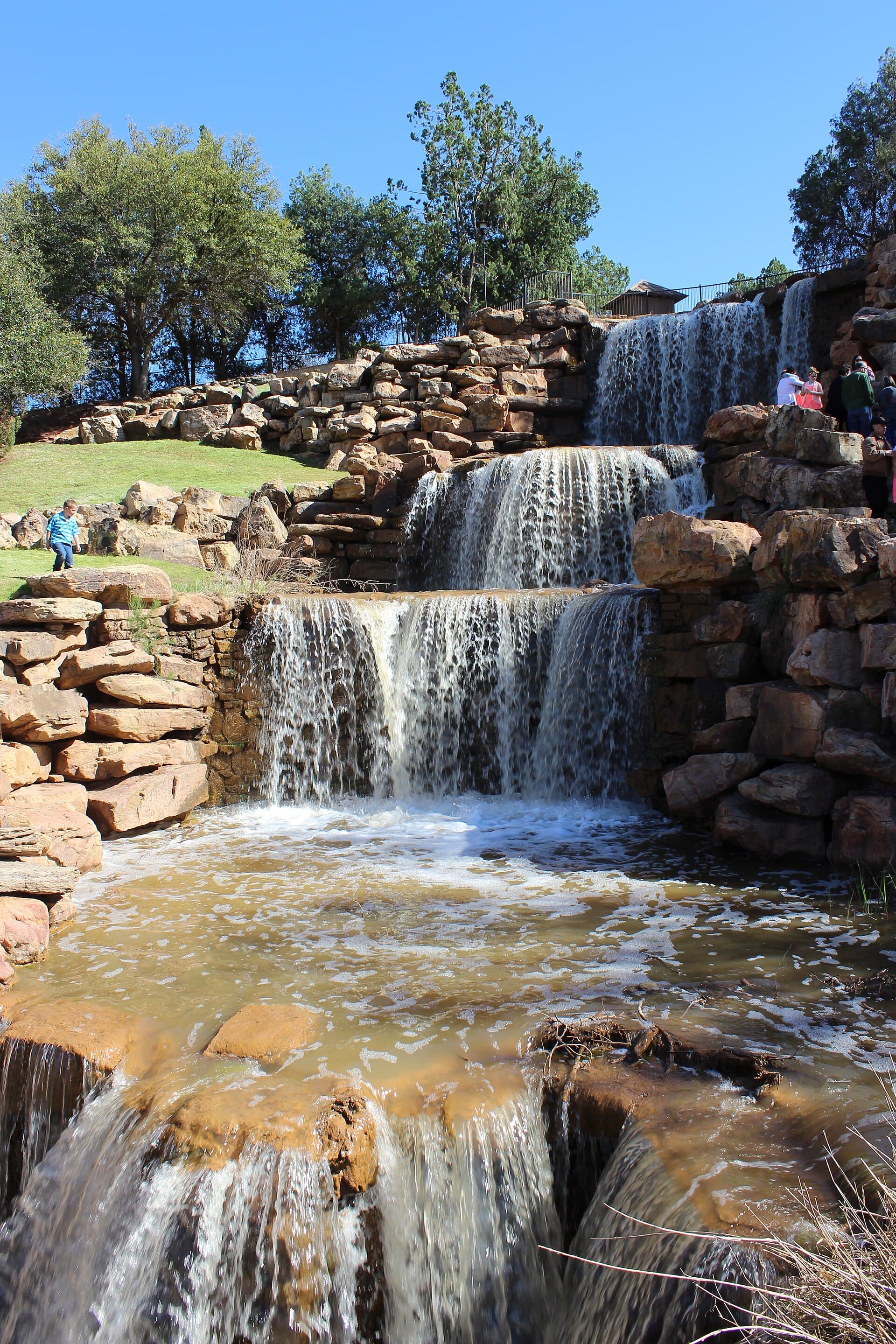
© Travis K. Witt / CC BY-SA 4.0, via Wikimedia CommonsWichita
Self-guided audio walking tour of Wichita — GPS route, offline playback, story-driven narration in 32 languages.
“Where prairie winds carry the scent of innovation and untold stories.”
Wichita, as no one tells it.
Not the postcards. The stories even locals don't know — whispered in your ear, right where they happened.
Look closely at the sidewalk outside, and then venture inside. You'll find some unusual animal sculptures with a charitable secret.
Beyond the usual park attractions, there's a peculiar arrangement of stones and glass that functions as more than just public art.
Discover every secret of Wichita
Every address, every reveal in full — in your ear, right where it happened.
You pick your stops. You walk. The voice reveals what the others miss.
How long do you have in Wichita?
Your self-guided audio tour of Wichita is ready — pick your landmarks, choose your language, and start the moment you arrive.
BuyThe story of Wichita
Wichita, the largest city in Kansas, offers a compelling blend of frontier history, aviation innovation, and a developing arts scene. Known as the 'Air Capital of the World,' it's where a significant percentage of U.S.-made general aviation aircraft are manufactured. But beyond its industrial prowess, Wichita holds a unique allure, from its origins as a trading post on the Chisholm Trail to its lively downtown districts.
The city's name itself, 'Wichita,' is derived from the Wichita Indians and can be interpreted as either 'scattered lodges' or 'painted faces.' This deep heritage is woven into the fabric of the city, inviting visitors to explore its past and present. Whether you're drawn to historical reenactments, interactive science exhibits, or simply a stroll along the Arkansas River, Wichita provides a distinctive experience that often surprises first-time visitors.
Wichita is also the birthplace of two iconic fast-food chains, Pizza Hut and White Castle, adding a quirky footnote to its diverse history. With over 220 sunny days a year and more than 100 miles of walking and biking trails, the city encourages exploration and engagement with its particular energy and identity.
From Cowtown to Air Capital
Wichita's story begins in 1868 with the organization of the Wichita Town Company. Soon after, in 1870, the city was officially incorporated. Its early prosperity was largely fueled by its role as a crucial destination for cattle drives traveling the Chisholm Trail from Texas, earning it the nickname 'Cowtown.' This period of rapid growth saw Wichita become one of the fastest-growing cities in the U.S. in the 1880s.
The turn of the 20th century brought a new era of innovation. In 1894, A.A. Hyde discovered Mentholatum in Wichita, a product still recognized today. The city also played a pioneering role in music history, with the first electric guitar being played by Wichitan Gage Brewer at the Shadowland Ballroom in 1932.
Wichita's most enduring legacy, however, lies in aviation. The city's connection to flight began as early as 1924, and it quickly became known as the 'Air Capital of the World.' Today, Wichita manufactures 35% of all U.S.-made general aviation aircraft. Major aviation companies like Cessna and Beechcraft have their roots and operations here. The Wichita Dwight D. Eisenhower National Airport (ICT) itself played a significant role in WWII and the development of aircraft like the B-47 Stratojet.
Beyond industry, Wichita also holds a place in the American Civil Rights Movement. In 1958, the city was the site of the first successful student-led lunch counter sit-in by African Americans, a pivotal moment recognized by the NAACP in 2008. This progressive history, coupled with its industrial achievements and frontier past, paints a picture of a city constantly evolving and contributing to the broader American narrative.
Begin your exploration at the confluence of the Arkansas and Little Arkansas rivers, where the Keeper of the Plains stands. This 44-foot Cor-Ten steel sculpture by Kiowa-Comanche artist Blackbear Bosin is a powerful tribute to Native American culture and a symbol of Wichita. At night, the 'Ring of Fire' ignites around its base, creating a dramatic spectacle.
Step back in time at the Old Cowtown Museum, a living history museum showcasing a Kansas cattle town from 1865-1880. With 54 authentic and recreated buildings, it offers a unique 360-degree immersion into the Old West.
For a dose of art, visit the Ulrich Museum of Art at Wichita State University. It features the only glass and marble mosaic by Surrealist artist Joan Miró, titled 'Personnages Oiseaux,' displayed outdoors. The Wichita Art Museum also houses a nationally recognized collection, focusing on American artists.
Families will find plenty to do at Exploration Place, a science and discovery center with interactive exhibits, including a new aviation exhibit. The Sedgwick County Zoo is another highlight, home to over 3,000 animals and notable for its elephant exhibit. For a more hands-on animal encounter, Tanganyika Wildlife Park offers unique interactions like feeding giraffes.
Do not overlook Old Town, a 20-block district where historic warehouses have been repurposed into a lively area of shops and restaurants. And for a sweet treat, the Nifty Nut House, in operation since 1937, is a local favorite.
The best times to visit Wichita for comfortable weather are during the spring (April to May) and fall (mid-September to October). During these months, you'll find mild temperatures, lower humidity, and moderate precipitation, making it ideal for outdoor activities and sightseeing. Summers (June to August) can be hot, with average daily highs often exceeding 83°F (28°C) and occasional spikes to 100°F (38°C) or more. Winters (December to February) are cold, with average lows around 25°F (-4°C) in January. While winter offers holiday events, the spring and fall provide the most pleasant conditions for exploring the city.
Wichita Dwight D. Eisenhower National Airport (ICT) is Kansas's largest and busiest airport, located about 7 miles west of downtown. It offers nonstop service to 16 destinations on six airlines: Alaska, Allegiant, American, Delta, Southwest, and United. The airport code 'ICT' is also a common nickname for the city, stemming from historical FCC regulations that prohibited airport codes from starting with 'K' or 'W'.
Getting around Wichita is facilitated by several transportation options. The Q-LINE is a free shuttle service that operates in downtown and surrounding neighborhoods during peak daytime and evening hours, connecting visitors to restaurants, hotels, and venues. Wichita Transit provides public bus services with 17 fixed routes. Standard bus fare is $1.75, and exact change is required. For more flexible exploration, Bike Share ICT is available, and electric scooters can be rented through a pilot program by the City of Wichita.
- What is Wichita known for?
- Wichita is widely recognized as the 'Air Capital of the World' due to its significant role in aviation manufacturing, producing 35% of all U.S.-made general aviation aircraft. It's also the birthplace of Pizza Hut and White Castle.
- Why is Wichita called ICT?
- ICT is the airport code for Wichita Dwight D. Eisenhower National Airport. The code was assigned when FCC regulations prohibited airport codes from starting with 'K' or 'W', leading to the use of 'ICT' as a recognizable abbreviation for the city.
- Is Wichita a walkable city?
- Downtown Wichita's eclectic neighborhoods, including Old Town and Delano, are easily explored on foot. Additionally, the city offers over 100 miles of bicycle and walking paths.
- What is the Keeper of the Plains?
- The Keeper of the Plains is a 44-foot Cor-Ten steel sculpture by Kiowa-Comanche artist Blackbear Bosin, standing at the confluence of the Arkansas and Little Arkansas rivers. It's a symbol of Wichita and a tribute to Native American tribes, known for its nightly 'Ring of Fire' display.
- What are the best months to visit Wichita?
- The most pleasant times to visit Wichita are in the spring (April to May) and fall (mid-September to October) due to mild temperatures and lower humidity, which are ideal for outdoor activities.
- Does Wichita have public transportation?
- Yes, Wichita Transit operates fixed-route bus services throughout the city. Additionally, the free Q-LINE shuttle provides convenient transportation within downtown. Bike Share ICT and electric scooters are also available.