Site militaire de Fort Point
Ce promontoire offre des vues imprenables sur la baie de la Trinité, mais son objectif initial était bien plus stratégique que pittoresque.
L'histoire complète se débloque dans le tour
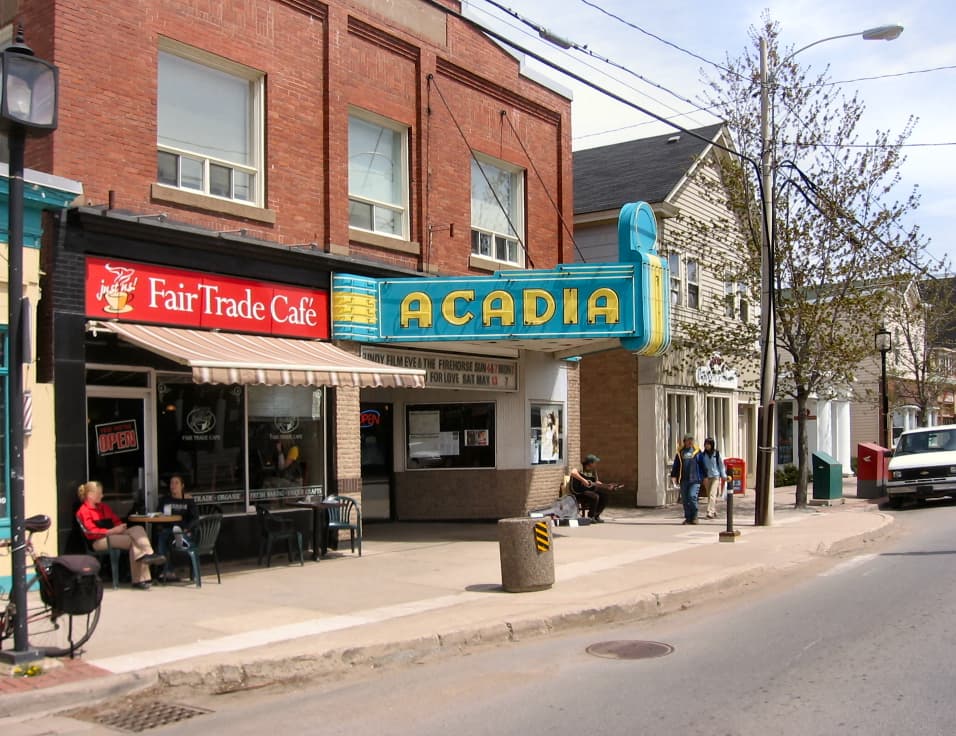 Photo of Wolfville, via Wikimedia Commons
Visite audio autoguidée de Trinity — parcours GPS à pied, lecture hors ligne, narration en 32 langues.
“Là où les maisons aux couleurs vives racontent des siècles d'histoires océaniques.”
Pas les cartes postales. Les histoires que même les habitants ignorent — soufflées à l'oreille, là où elles se sont passées.
Ce promontoire offre des vues imprenables sur la baie de la Trinité, mais son objectif initial était bien plus stratégique que pittoresque.
Bien qu'apparaissant aujourd'hui comme une crique tranquille, le port de la Trinité avait autrefois une capacité qui pourrait vous surprendre.
Au-delà d'offrir des séjours confortables, un détail particulier de cette auberge se connecte directement au caractère durable de la ville.
Découvrez tous les secrets de Trinity
Chaque adresse, chaque révélation en entier — dans ton oreille, là où elle s'est passée.
Tu choisis tes lieux. Tu marches. La voix te révèle ce que les autres ignorent.


Votre visite audioguidée de Trinity vous attend — choisissez vos lieux, votre langue, et lancez-vous dès votre arrivée.
AcheterLume intègre un guide en réalité augmentée. Levez votre téléphone : sa caméra montre la rue devant vous, avec une flèche lumineuse posée sur l'image réelle qui pointe toujours vers votre prochain arrêt — aucune carte à déchiffrer, aucun mauvais virage. Comme tout dans Lume, ça fonctionne entièrement hors-ligne.
Trinity, une petite ville située sur la baie de la Trinité à Terre-Neuve-et-Labrador, au Canada, est une destination captivante où des siècles d'efforts humains sont visiblement tissés dans le paysage. Cette communauté, avec ses maisons en bois peintes de couleurs vives et ses ruelles sinueuses, offre un aperçu du passé colonial de Terre-Neuve et de son lien durable avec la mer. Souvent décrite comme l'une des plus jolies villes de la province, l'attrait de Trinity réside dans son caractère magnifiquement préservé du XIXe siècle et la gentillesse authentique de ses habitants.
L'atmosphère unique de la ville transporte les visiteurs dans le temps, invitant à l'exploration de ses bâtiments historiques, de ses sentiers côtiers pittoresques et de sa scène culturelle. Trinity fait également partie du Géoparc mondial UNESCO Discovery, une région célébrée pour son histoire géologique extraordinaire s'étendant sur plus de 580 millions d'années, présentant d'anciens fossiles et des paysages glaciaires. Que vous soyez attiré par son patrimoine maritime, ses paysages côtiers spectaculaires ou l'opportunité de rencontrer la faune, Trinity offre une expérience mémorable sur la péninsule de Bonavista à Terre-Neuve.
## Débuts et établissement européen Le port de Trinity a accueilli des navires de pêche dès le XVIe siècle. L'explorateur portugais Gaspar Corte-Real est crédité d'avoir nommé le lieu « Trinity » après y être arrivé le dimanche de la Trinité en 1500 ou 1501. Des pêcheurs de l'ouest de l'Angleterre ont commencé à utiliser Trinity comme station estivale pour la pêche migratoire dans les années 1570. Cette utilisation saisonnière s'est poursuivie, principalement par des pêcheurs des îles Anglo-Normandes et de Weymouth, Dorset, jusqu'à ce qu'une colonie permanente soit établie.
## Un centre mercantile florissant Au XVIIIe siècle, des marchands de Poole, en Angleterre, se sont installés à Trinity, attirés par son port facilement défendable et son vaste espace côtier pour les installations de pêche. Trinity est devenu un centre important pour la pêche à Terre-Neuve, ces entreprises contrôlant le commerce et approvisionnant les pêcheurs locaux en échange de morue séchée. Le commerce marchand de la ville était si important qu'il dominait la vie sociale et économique d'une vaste zone, de Baie Verte à White Bay. À son apogée, les marchands de Trinity exportaient un remarquable 30 à 40 % de la morue, de l'huile de phoque et des phoques de Terre-Neuve.
## Premières judiciaires et patrimoine durable Trinity a la particularité d'être le site où Sir Richard Whitbourne a tenu le premier tribunal de l'Amirauté en 1615, établissant le premier tribunal de justice en Amérique du Nord. Ce précédent juridique souligne l'importance précoce de la ville et sa structure communautaire organisée. Aujourd'hui, Trinity conserve une grande partie de son caractère du XIXe siècle, avec de nombreux bâtiments méticuleusement reconstruits ou restaurés. La ville a été incorporée en 1969 et continue de préserver son patrimoine bâti et culturel par le biais d'organisations comme la Trinity Historical Society.
## Reconnaissance moderne et vie culturelle L'importance historique de Trinity est reconnue par de nombreux bâtiments désignés comme structures patrimoniales enregistrées par la Heritage Foundation of Newfoundland and Labrador. La ville a également servi de lieu de tournage pour des productions comme le film de 2001 The Shipping News et la mini-série de 2002 Random Passage. Au-delà de son attrait historique, Trinity est devenue un centre culturel, avec le Rising Tide Theatre qui donne vie à l'histoire à travers la narration et les spectacles, attirant des milliers de visiteurs chaque année.
Commencez votre exploration au Centre d'accueil de Trinity, où des expositions interactives donnent un aperçu de l'histoire et des habitants de la ville. Promenez-vous dans le village historique, admirez les bâtiments du XIXe siècle magnifiquement restaurés et ayez l'impression de remonter le temps. Les sites historiques clés comprennent la Lester-Garland House, une reconstruction de la première maison en briques de Terre-Neuve, et la Hiscock House, un site historique provincial présentant la vie de la fin du XIXe et du début du XXe siècle.
Pour les amateurs de plein air, le réseau de sentiers de randonnée Hike Discovery offre un éventail de chemins, des promenades faciles aux randonnées plus difficiles. Le sentier Skerwink, près de Port Rexton et Trinity East, est particulièrement réputé, serpentant sur un cercle de 5,3 kilomètres avec des vues sur des stacks marins, une côte accidentée et des observations potentielles de baleines et d'icebergs. Montez à Gun Hill pour des vues panoramiques sur le village et la baie de la Trinité. Le site militaire de Fort Point, avec son phare, offre des aperçus historiques et des vues imprenables sur le port.
Plongez dans la culture locale en visitant la Green Family Forge, où vous pouvez observer un forgeron au travail, ou la Cooperage pour en apprendre davantage sur la fabrication de barils. Le Rising Tide Theatre propose des dîners-spectacles et des performances qui donnent vie aux histoires locales. Pour des aventures marines, envisagez une excursion d'observation des baleines ou des icebergs depuis Trinity, car la baie est connue pour les rencontres rapprochées avec les baleines à bosse et est un endroit privilégié pour observer diverses espèces de baleines et des icebergs pendant certaines saisons.
Le meilleur moment pour visiter Trinity est pendant les mois d'été, de la mi-juin à fin septembre, lorsque le temps est généralement agréable et que tous les hébergements, restaurants et voyagistes sont ouverts. Cette période offre également les meilleures opportunités d'observation des baleines. Début à mi-juin est idéal pour voir à la fois les baleines et les icebergs, car la saison des icebergs culmine généralement en mai et juin. Juillet apporte les fleurs sauvages en fleurs, créant un paysage coloré.
Bien que les saisons intermédiaires de mai et octobre puissent être plus fraîches, elles offrent une expérience plus calme avec moins de monde et des séjours potentiellement plus abordables. L'automne, en particulier, présente des couleurs automnales spectaculaires et un calme rafraîchissant.
Trinity est située sur la route panoramique Discovery Trail, à environ 2,5 heures (259 kilomètres) de St. John's. Bien que Trinity n'ait pas son propre aéroport, vous pouvez prendre l'avion jusqu'à l'aéroport international de St. John's (YYT) et louer une voiture pour le trajet panoramique. Les transports en commun vers Trinity ne sont pas disponibles, une voiture est donc essentielle pour explorer la région.
La ville elle-même est assez petite pour être explorée à pied, la plupart des rues étant accessibles en une heure. De nombreux sites historiques de Trinity sont gérés par la Trinity Historical Society, et un pass peut être disponible pour accéder à plusieurs sites. Il est conseillé de vérifier les heures d'ouverture des attractions spécifiques, surtout si vous visitez pendant les saisons intermédiaires, car certaines entreprises peuvent avoir des horaires limités. Les hébergements vont des auberges historiques aux locations de vacances, avec des options comme l'Artisan Inn et Eriksen Premises étant des choix populaires.
Trinity en coréen, en chinois ou en hébreu — et dans 29 autres langues, chaque étape narrée par une voix native. La plus large gamme de langues de tous les audioguides autoguidés.
Disponible en :