Parque del Muelle de Wolfville
Las extraordinarias mareas de la Bahía de Fundy son un espectáculo, pero pocos se dan cuenta de lo drásticamente que una vez moldearon la identidad de Wolfville.
La historia completa se desbloquea en el tour
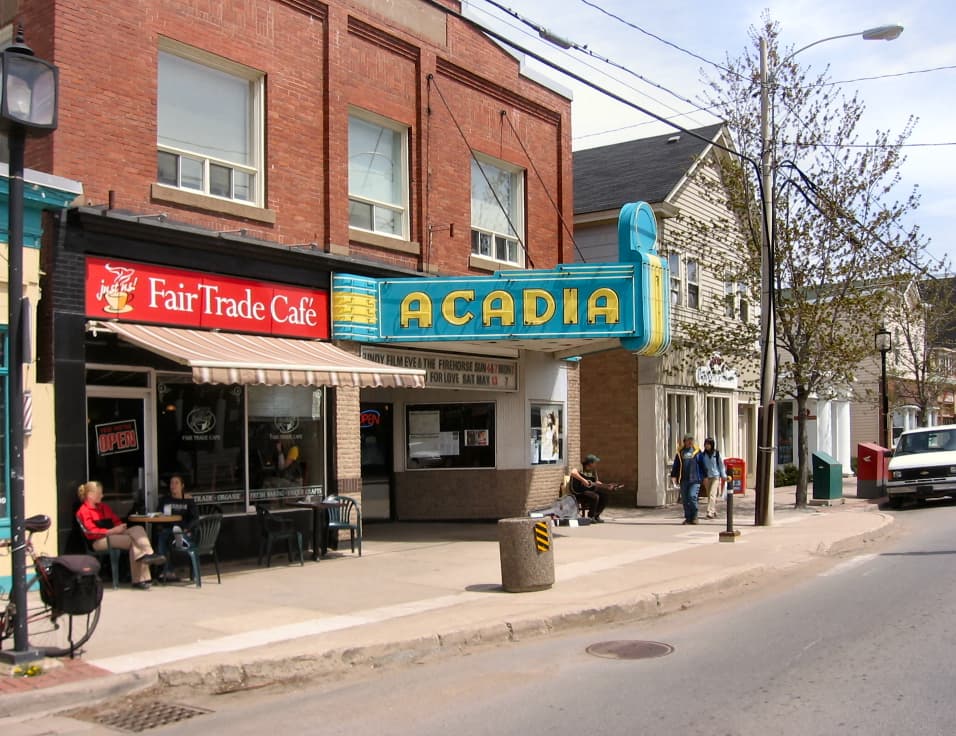 Verne Equinox at English Wikipedia / CC BY-SA 3.0, via Wikimedia Commons
Tour de audio autoguiado de Wolfville — ruta GPS a pie, reproducción offline, narración en 32 idiomas.
“Donde el aliento de la Bahía de Fundy se encuentra con hileras de viñedos y perduran los recuerdos acadios.”
No las postales. Las historias que ni los locales conocen — al oído, justo donde ocurrieron.
Las extraordinarias mareas de la Bahía de Fundy son un espectáculo, pero pocos se dan cuenta de lo drásticamente que una vez moldearon la identidad de Wolfville.
Este edificio aparentemente ordinario guarda un dulce secreto sobre el pasado agrícola de Wolfville.
Más allá de su reputación académica, la Universidad Acadia ostenta una distinción progresista y menos conocida en la educación superior canadiense.
Descubre todos los secretos de Wolfville
Cada dirección, cada revelación al completo — a tu oído, justo donde ocurrió.
Eliges tus paradas. Caminas. La voz te revela lo que los demás ignoran.

Tu tour de audioguía por Wolfville te espera — elige tus lugares, tu idioma y empieza al llegar.
ComprarLume incluye una guía de realidad aumentada. Levanta el móvil y su cámara muestra la calle que tienes delante, con una flecha luminosa sobre la imagen real que siempre apunta a tu próxima parada — sin mapas que descifrar, sin giros equivocados. Como todo en Lume, funciona completamente sin conexión.
Wolfville, una animada ciudad universitaria en el Valle de Annapolis de Nueva Escocia, ofrece una convincente mezcla de esplendor natural, un profundo sentido de la historia y una floreciente escena vinícola. Situada a unos 100 kilómetros al noroeste de Halifax, sirve como portal a los dramáticos paisajes de la Bahía de Fundy, hogar de las mareas más extremas del mundo. El encanto de la ciudad se amplifica por su centro transitable, bordeado de acogedores cafés, tiendas únicas y venerables edificios patrimoniales, todo ello en un lienzo de ondulantes tierras de cultivo y viñedos bañados por el sol.
Más allá de su pintoresco entorno, Wolfville pulsa con la energía de la Universidad Acadia, una de las instituciones de artes liberales más antiguas de Canadá. Esta presencia académica contribuye a un paisaje cultural dinámico, atrayendo a una población diversa y fomentando una atmósfera animada que se extiende más allá del año académico. Ya sea que le atraiga el encanto de los vinos excepcionales, los ecos de la historia acadiana o el puro espectáculo de la Bahía de Fundy, Wolfville presenta un destino convincente para el descubrimiento y la contemplación.
La posición única de la ciudad permite a los visitantes experimentar tanto la tranquilidad de la vida rural como la emoción de una comunidad próspera. Desde explorar sitios históricos hasta deleitarse con las delicias culinarias locales, Wolfville ofrece una experiencia memorable para aquellos que buscan una conexión más profunda con el patrimonio y las maravillas naturales de Nueva Escocia.
La historia de Wolfville comienza mucho antes del asentamiento europeo, como parte de Mi'kma'ki, el territorio ancestral del pueblo Mi'kmaq. Los Mi'kmaq se sintieron atraídos por la zona por el salmón en el río Gaspereau y la piedra de ágata en Cape Blomidon, que utilizaban para herramientas. Eran cazadores estacionales, utilizando perros y raquetas de nieve para cazar ciervos y recolectando varias piedras semipreciosas para puntas de flecha.
El asentamiento francés en el área de Wolfville comenzó alrededor de 1680, cuando Pierre Melanson estableció a su familia en Grand-Pré. Estos primeros colonos franceses, conocidos como Acadios, transformaron ingeniosamente las marismas salobres estuarinas en fértiles tierras de cultivo mediante la construcción de intrincados sistemas de diques. Esta prosperidad agrícola continuó hasta 1710, cuando Acadia fue cedida a los británicos.
Mediados del siglo XVIII trajo un capítulo profundo y trágico en la historia de Wolfville: la Expulsión Acadiana, también conocida como el Grand Dérangement. En 1755, aproximadamente 2.000 Acadios del área de Wolfville, junto con decenas de miles de toda la península de Nueva Escocia, fueron deportados por la fuerza por los británicos. Sus aldeas fueron quemadas y muchos edificios fueron destruidos durante la guerra de guerrillas que siguió hasta 1758.
Alrededor de 1760, los Planters de Nueva Inglaterra comenzaron a asentarse en el Valle de Annapolis, atraídos por la promesa de tierras fértiles. Repararon y expandieron las tierras de diques acadios, notablemente construyendo el Dique Wickwire de tres millas de largo en 1808, que añadió 8.000 acres de tierra agrícola. El asentamiento fue inicialmente conocido como Mud Creek. En 1830, la ciudad fue rebautizada como Wolfville en honor a Elisha DeWolf, el jefe de correos local.
La llegada del ferrocarril Windsor y Annapolis en 1868 transformó aún más Wolfville, convirtiéndola en un importante puerto marítimo para la exportación de manzanas del fértil Valle de Annapolis. La ciudad fue incorporada oficialmente el 20 de marzo de 1893. La conexión de Wolfville con las manzanas es profunda; el Valle de Annapolis es la región productora de manzanas más antigua de América del Norte, con los primeros árboles plantados por colonos franceses en 1605. Este patrimonio agrícola se sigue celebrando, notablemente con el Festival Anual de la Flor del Manzano.
En la historia más reciente, Wolfville ha obtenido distinciones como ser declarada zona libre de armas nucleares en 1985 y la primera ciudad de comercio justo de Canadá en 2007. En 2016, se convirtió en la tercera ciudad Cittaslow de Canadá, un movimiento que promueve un ritmo de vida más lento. Hoy en día, Wolfville prospera como un centro cultural y educativo, con la Universidad Acadia en su corazón, y su historia sigue siendo visible en su arquitectura y los paisajes perdurables moldeados por generaciones.
Wolfville ofrece una variedad de atracciones que combinan el esplendor natural con experiencias culturales. Comience su exploración en el Sitio Histórico Nacional Grand-Pré, un sitio del Patrimonio Mundial de la UNESCO que conmemora al pueblo acadiano y los trágicos eventos del Grand Dérangement. Aquí, puede explorar hermosos jardines, una iglesia conmemorativa y exposiciones informativas.
Para una muestra de la academia y la horticultura local, visite la Universidad Acadia. El campus cuenta con edificios históricos y los Jardines Botánicos Harriet Irving, un espacio de seis acres que exhibe la flora nativa de la Región Forestal Acadiana, completo con senderos serpenteantes y un invernadero.
Experimente las dramáticas mareas de la Bahía de Fundy en el Parque del Muelle de Wolfville, donde podrá presenciar el increíble ascenso y descenso del agua y disfrutar de las vistas de los diques acadios y Cape Blomidon. Para vistas panorámicas del Valle de Annapolis, incluyendo tierras de cultivo, huertos y la Cuenca de Minas, diríjase a The Look-Off.
Explore el centro de Wolfville por su variedad de cafés, tiendas y el Teatro Al Whittle, un cine y sala de espectáculos sin fines de lucro. No se pierda el Mercado de Agricultores de Wolfville, que se celebra durante todo el año en un antiguo almacén de manzanas, ofreciendo productos locales, artículos artesanales y alimentos preparados.
Finalmente, el Valle de Annapolis es famoso por sus bodegas. Considere un recorrido en el Magic Winery Bus para una experiencia de subir y bajar en varios viñedos locales, o visite establecimientos individuales como Luckett Vineyards o Lightfoot & Wolfville Vineyards para catas y recorridos.
Wolfville experimenta cuatro estaciones distintas, cada una ofreciendo un carácter único. El momento ideal para visitar para actividades de clima cálido y para disfrutar plenamente de las atracciones al aire libre, incluyendo las bodegas y el mercado de agricultores, es desde finales de junio hasta principios de septiembre. Durante estos meses de verano, los patios de los restaurantes están activos y los eventos al aire libre son frecuentes.
El otoño, de mediados de septiembre a noviembre, es particularmente pintoresco ya que los bosques circundantes muestran un brillante follaje otoñal, lo que lo convierte en un momento ideal para paseos en coche y para disfrutar del Festival del Vino de Otoño de Nueva Escocia. La primavera, de abril a mediados de junio, trae las flores de los manzanos y una refrescante variedad de floraciones. Si bien los inviernos (de noviembre a marzo) son fríos y tranquilos, con temperaturas que oscilan entre -9 y -1 °C (16-30 °F), ofrecen una atmósfera pacífica y oportunidades para practicar raquetas de nieve o fotografiar águilas calvas.
Wolfville se encuentra en el Valle de Annapolis, aproximadamente a una hora en coche al noroeste de Halifax a través de la Carretera 101. Aunque Wolfville no tiene su propio aeropuerto, el Aeropuerto Internacional de Halifax (YHZ) está a unos 70 kilómetros de distancia. Se recomienda alquilar un coche para explorar el Valle de Annapolis en general, aunque el centro de Wolfville es fácilmente transitable a pie.
La moneda local es el dólar canadiense (CAD). Wolfville opera en hora del Atlántico (UTC-4), con ajustes por horario de verano. El Centro de Información Turística de Wolfville, abierto estacionalmente, ofrece mapas, folletos y asesoramiento en persona, junto con baños y duchas gratuitos. Tenga en cuenta que algunos negocios, especialmente bodegas y senderos, pueden tener horarios estacionales, por lo que es aconsejable verificar con antelación. Para emergencias médicas, marque el 911, y el Hospital Regional de Valley está a 15 minutos en coche de la ciudad.
Wolfville en coreano, en chino o en hebreo — y 29 idiomas más, cada parada narrada por una voz nativa. La mayor variedad de idiomas de cualquier audioguía autoguiada.
Disponible en: