Villa Romana del Casale, ItalyRobur.q / CC BY-SA 3.0, via Wikimedia Commons
IT

Villa Romana del Casale

Self-guided audio walking tour of Villa Romana del Casale — GPS route, offline playback, story-driven narration in 32 languages.

Walk through the preserved grandeur of a Roman aristocrat's country estate, where daily life unfolds in intricate mosaic.

The secrets of Villa Romana del Casale

Villa Romana del Casale, as no one tells it.

Not the postcards. The stories even locals don't know — whispered in your ear, right where they happened.

3 secrets below. Many more wait inside the tour.
The Great Hunt Corridor

This sixty-meter mosaic illustrates a global quest for exotic animals. Observe one particular scene closely, and a surprising detail about ancient hunting methods emerges.

Full story unlocks in the tour
The Room of Ten Maidens

Among the many depictions of daily existence and mythology, one mosaic distinguishes itself with its portrayal of women. It offers a rare glimpse into female activities that might challenge contemporary assumptions about Roman society.

Full story unlocks in the tour
The Basilica

Unlike other chambers, this grand hall lacks the vivid mosaic floors for which the villa is celebrated. Its distinct flooring choice speaks volumes about the original owner's standing and the room's intended purpose.

Full story unlocks in the tour
The full tour

Discover every secret of Villa Romana del Casale

Every address, every reveal in full — in your ear, right where it happened.

Get the key to Villa Romana del Casale

You pick your stops. You walk. The voice reveals what the others miss.

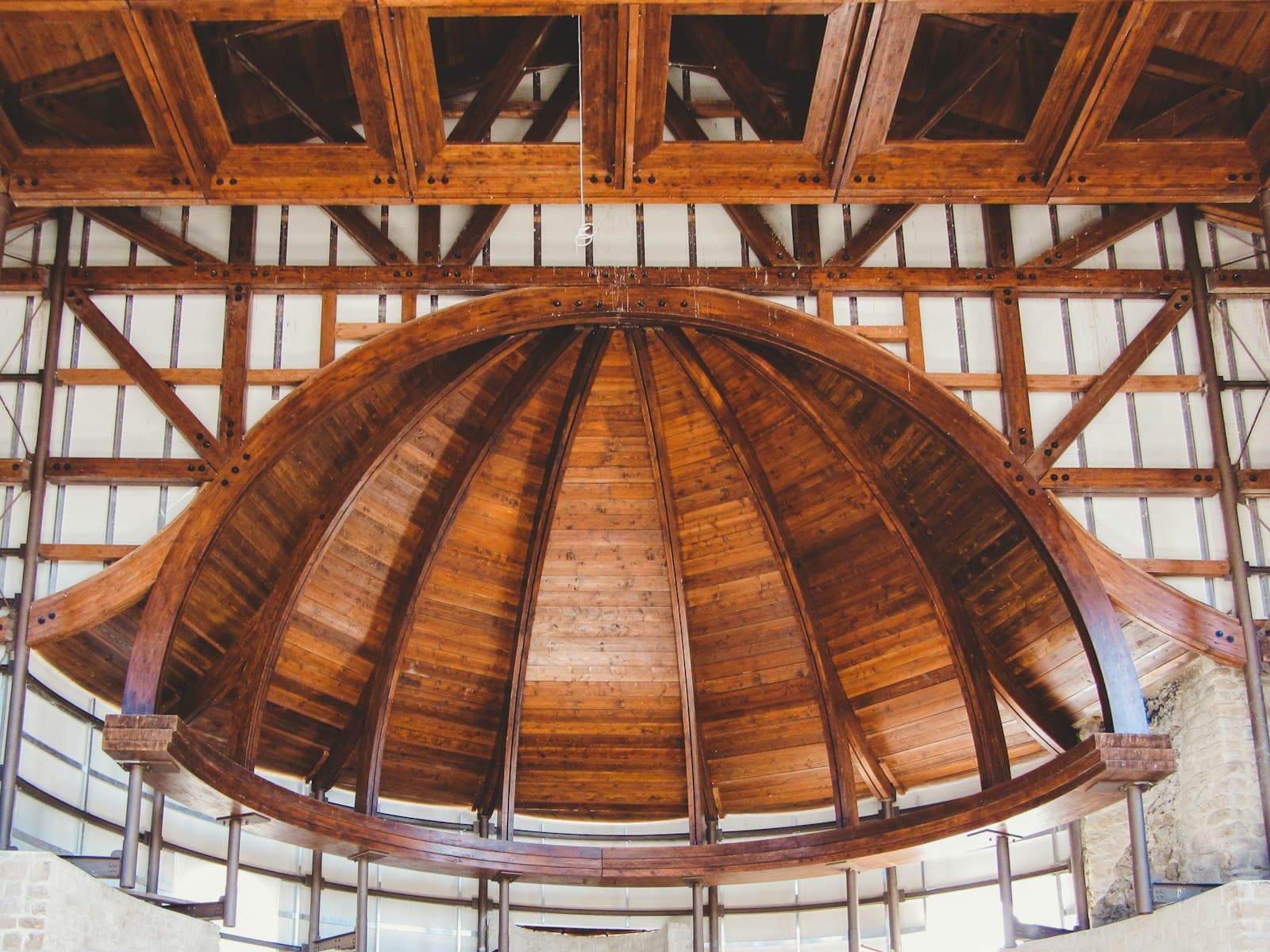
Villa Romana del Casale — a large wooden spiral staircase
Photo: Casey Lovegrove / Unsplash
Choose your time

How long do you have in Villa Romana del Casale?

Your self-guided audio tour of Villa Romana del Casale is ready — pick your landmarks, choose your language, and start the moment you arrive.

Buy
About Villa Romana del Casale

The story of Villa Romana del Casale

The Villa Romana del Casale, near Piazza Armerina in central Sicily, is an extraordinary archaeological site celebrated for its remarkably preserved Roman mosaics. This expansive late Roman villa, constructed between 320 and 350 AD, offers an unparalleled window into the opulent lifestyle of the Roman elite. Recognized as a UNESCO World Heritage Site since 1997, the villa's historical and artistic significance resides not only in its extensive and intricate artworks but also in its grand architecture.

Covering approximately 3,500 square meters, the mosaics at Villa Romana del Casale are considered among the most extensive, largest, and diverse collections remaining from the Roman world. These vivid floor coverings depict a wide range of subjects, from mythological narratives and heroic endeavors to scenes of daily life, hunting, and athletic competitions. Walking through the villa's many rooms feels like stepping back into the 4th century, where art, power, and everyday existence merged seamlessly within a luxurious country estate.

History

From Opulent Estate to Buried Treasure

The Villa Romana del Casale was constructed in the early 4th century AD, atop the remains of an earlier villa that had been destroyed by an earthquake. While the exact identity of its owner remains a subject of scholarly discussion, the villa's immense scale and lavish decoration strongly suggest it belonged to a highly influential figure within the Roman senatorial aristocracy. Some theories propose it was commissioned by a governor of Rome under Emperor Constantine, or even by Maximian Herculean, a co-emperor with Diocletian. Another compelling theory suggests the owner was a prominent Roman senator and governor of Sicily, possibly Lucius Aradius Valerius Proculus, who also dealt in exotic animals, a profession alluded to by the villa's extensive hunting mosaics.

The villa functioned as both a luxurious residence and the administrative center of a vast agricultural estate, known as a latifundium, producing goods such as oil, wine, and cereals. Its architectural design, with monumental entrances, ceremonial halls, and private apartments, was intended to impress guests and assert the owner's power and refined taste.

The villa remained inhabited through the Byzantine and Arab periods. However, around 1160, it sustained damage from the Normans. The site was ultimately abandoned in the 12th century after a massive landslide from nearby Mount Mangone buried much of the complex under layers of mud and earth. This natural disaster, while destructive at the time, ironically played a crucial role in preserving the villa's extraordinary mosaics for centuries, shielding them from the elements and from looting.

Interest in the buried villa re-emerged in the 19th century with the discovery of mosaic fragments and columns. Major archaeological excavations, particularly those led by Gino Vinicio Gentili in the 1950s, brought the villa's spectacular mosaics to light, revealing their incredible artistry and detail to the world. Since 2004, further excavations and systematic restoration programs have continued to uncover more residential sectors, frescoes, and a clearer understanding of the villa's complexity and its post-Roman occupation, including a medieval village that grew on top of the villa between the 10th and 12th centuries.

What to see

The primary allure of Villa Romana del Casale is its expansive collection of mosaics, covering approximately 3,500 square meters. A visit typically follows a set route, ensuring you experience the most significant areas.

Begin at the Monumental Entrance, a grand triple-arched gate that once led to a courtyard with marble columns. From here, explore the Thermal Baths, a complex featuring changing rooms, warm and hot baths, and even massage areas, reflecting the Roman devotion to bathing rituals.

The Peristyle Courtyard is a central feature, once adorned with 32 Corinthian columns and a fountain, with its floor mosaics depicting animal heads surrounded by wreaths. Leading off this is the Corridor of the Great Hunt, a 60-meter-long mosaic portraying armed hunters capturing a diverse array of wild animals, including tigers, ostriches, elephants, and rhinos, destined for games in Rome. In contrast, the Little Hunting Scene offers a more pastoral depiction, concluding with a picnic.

Do not overlook the Room of Ten Maidens, famed for its mosaic portraying young women in 'bikinis' engaged in various athletic competitions. The Basilica, a majestic hall for official audiences, features impressive porphyry and polychrome marble floors. The Triclinium, or formal dining room, is decorated with mythological motifs, including the apotheosis of Hercules. Take your time to observe the intricate details and diverse themes, from mythology to everyday life, that these remarkable mosaics reveal.

When to visit

The best times to visit Villa Romana del Casale are during spring and autumn. During these seasons, the weather is mild, and the crowds are generally smaller, allowing for a more peaceful exploration of the mosaics. Summer months can be very warm and crowded. The villa is open daily, with hours typically from 9:00 AM to 7:00 PM in summer and until 5:00 PM in winter. It is advisable to check the official website for the most current opening hours before your visit. Allow at least 2–3 hours to thoroughly explore the site.

Practical

The Villa Romana del Casale is located about 5 km from Piazza Armerina in Sicily. While renting a car offers flexibility, local buses connect Piazza Armerina town center to the villa several times a day. If arriving from Palermo, you can take a bus or train via Enna, or drive for approximately 2 hours. Organized excursions are also available from cities like Taormina.

Tickets are typically €14 for adults, with reduced prices for those aged 18-24 (€5) and free entry for EU citizens under 18 and over 65. Free entry is also available on the first Sunday of each month. Pre-booking tickets online is recommended to skip potential queues. Comfortable shoes are essential, as you will be walking on elevated pathways throughout the large site. Audio guides are available and highly recommended for a deeper understanding of the mosaics and history. The site has a visitor center, café, restrooms, and souvenir shops, and some areas are accessible for visitors with limited mobility.

Good to know
What are the opening hours of Villa Romana del Casale?
The Villa Romana del Casale is generally open daily from 9:00 AM to 7:00 PM during summer and until 5:00 PM in winter. It is best to check the official website for the most up-to-date schedule.
How much does it cost to enter Villa Romana del Casale?
Adult tickets are typically €14. There are reduced fees for those aged 18-24 (€5), and admission is free for EU citizens under 18 and over 65. Free entry is also offered on the first Sunday of each month.
How long does it take to visit Villa Romana del Casale?
It is recommended to allocate at least 2 to 3 hours to thoroughly explore the Villa Romana del Casale and appreciate its extensive mosaics.
Are there guided tours available?
Yes, guided tours are offered in several languages and are highly recommended for a more in-depth understanding of the mosaics and the villa's history. Audio guides are also available.
Is Villa Romana del Casale accessible for visitors with limited mobility?
Some areas of the Villa Romana del Casale are accessible for visitors with limited mobility. It is advisable to check with the site directly for specific accessibility information.
How do I get to Villa Romana del Casale?
The villa is located near Piazza Armerina. You can reach it by local bus from Piazza Armerina, by car, or via organized excursions from other Sicilian cities like Palermo or Taormina.
On the map
Villa Romana del Casale
€9.90
No booking · activate anytime · 12h to walk it
Load on Wi-Fi, then walk offline — no roaming abroad
Get the key to Villa Romana del Casale