La Fontaine aux Cochons
Les cochons de bronze au centre-ville de Zons ne sont pas seulement décoratifs ; ils commémorent une légende locale particulière.
L'histoire complète se débloque dans le tour
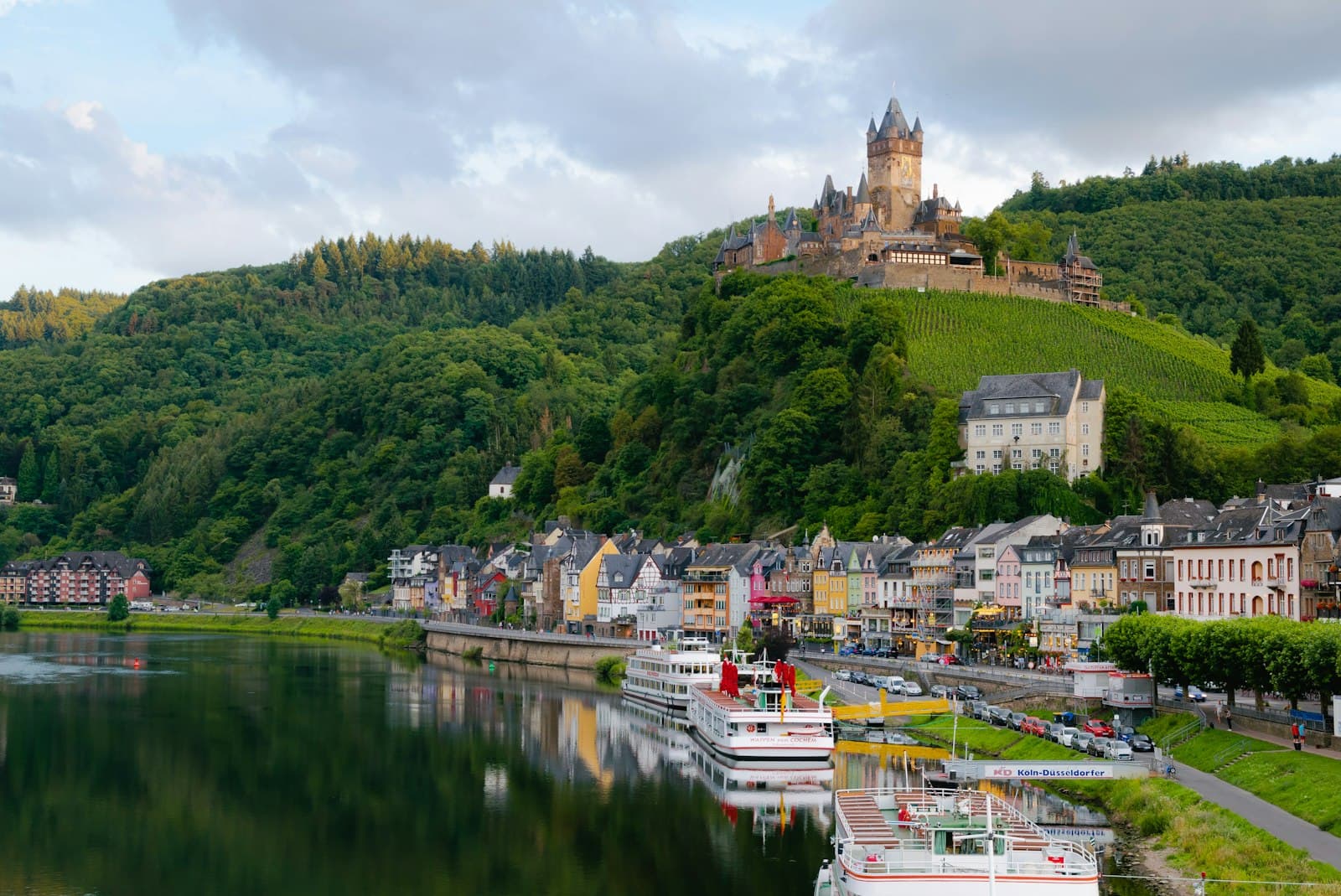 Photo: Kai Pilger / Unsplash
Visite audio autoguidée de Zons — parcours GPS à pied, lecture hors ligne, narration en 32 langues.
“Là où les murs anciens rencontrent le doux courant du Rhin.”
Pas les cartes postales. Les histoires que même les habitants ignorent — soufflées à l'oreille, là où elles se sont passées.
Les cochons de bronze au centre-ville de Zons ne sont pas seulement décoratifs ; ils commémorent une légende locale particulière.
Zons se trouve sur une ligne de faille culturelle unique, un lieu où convergent des traditions brassicoles rivales.
Parmi les structures historiques de Zons, un bâtiment particulier recèle un secret étonnamment pratique, et plutôt peu glamour.
Découvrez tous les secrets de Zons
Chaque adresse, chaque révélation en entier — dans ton oreille, là où elle s'est passée.
Tu choisis tes lieux. Tu marches. La voix te révèle ce que les autres ignorent.


Lume intègre un guide en réalité augmentée. Levez votre téléphone : sa caméra montre la rue devant vous, avec une flèche lumineuse posée sur l'image réelle qui pointe toujours vers votre prochain arrêt — aucune carte à déchiffrer, aucun mauvais virage. Comme tout dans Lume, ça fonctionne entièrement hors-ligne.
Zons, officiellement connue sous le nom de Stadt Zons, est une ville médiévale remarquablement préservée sur la rive ouest du Bas-Rhin, située entre les grandes villes de Cologne et Düsseldorf. Souvent appelée la « Rothenburg du Bas-Rhin » ou « Rothenburg de la Rhénanie », ses fortifications intactes du XIVe siècle, complètes avec des murs d'enceinte, des tours et des douves, transportent les visiteurs dans une époque révolue. Le cœur historique compact de la ville présente un plan de rues en damier, témoin de ses origines en tant que ville territoriale planifiée.
Franchir le Rheintor (Porte du Rhin) donne l'impression d'entrer dans un musée vivant, où les rues pavées mènent à des maisons accueillantes, des cafés en plein air et des monuments historiques. Zons offre une évasion sereine de l'agitation de la vie moderne, permettant des promenades tranquilles le long de ses murs anciens et des vues pittoresques sur la rivière. C'est une destination qui récompense ceux qui prennent le temps d'explorer son caractère unique et son passé fascinant.
Bien que faisant désormais partie de Dormagen depuis 1975, Zons conserve son identité distincte en tant que centre culturel et touristique. Son ambiance médiévale bien entretenue, associée à son emplacement pittoresque sur le Rhin, en fait une destination d'excursion populaire.
L'histoire de Zons remonte à l'époque romaine, avec des preuves d'un cimetière à urnes datant d'environ 2 000 ans à proximité d'anciens établissements comme Durnomagus (l'actuelle Dormagen) et Novaesium (Neuss). Elle fit ensuite partie du royaume mérovingien, avec des premières mentions dans un document du VIIe siècle comme propriété de l'archevêque de Cologne. À la fin du VIIIe siècle, une église se tenait dans la région.
Après la bataille de Worringen en 1288, un château fut brièvement construit à Zons mais fut ensuite détruit, la laissant comme un village rural. La fortune de la ville changea radicalement au XIVe siècle. En 1372, l'archevêque Frédéric III de Sarrewerden de Cologne déplaça stratégiquement le poste de péage du Rhin de Neuss à Zons. Pour protéger cet atout économique vital, il accorda à Zons les droits de cité en 1373 et initia la construction de formidables fortifications, y compris des murs d'enceinte et des douves.
Zons fut conçue comme une petite ville territoriale planifiée, présentant un plan de rues distinctif en damier et de robustes structures défensives. La construction de la forteresse de péage et des murs de la ville fut probablement achevée au XVe siècle. En son cœur se trouvait le château fortifié de Friedestrom, qui servait de centre administratif et protégeait la perception du péage. Ces fortifications s'avérèrent cruciales, protégeant Zons à travers des incendies dévastateurs en 1464, 1547 et 1620, ainsi que des épidémies au XVIIe siècle et la guerre de Trente Ans.
En 1648, la population de Zons était tombée à 172 habitants en raison de ces difficultés, avec 255 décès supplémentaires enregistrés lors d'une grave épidémie de peste en 1666. Cependant, la population commença à se redresser vers 1700, atteignant 1 054 habitants en 1799. De 1463 à 1794, Zons et sa paroisse furent hypothéquées au chapitre de la cathédrale de Cologne.
La fin du XVIIIe siècle apporta des changements importants avec l'occupation du territoire à l'ouest du Rhin par l'armée révolutionnaire française. Zons devint une municipalité et un canton français de 1798 à 1814, faisant partie du canton de Dormagen au sein de l'arrondissement de Cologne. Les propriétés locales, y compris le château et la tour des douanes, furent séquestrées et vendues aux enchères pendant cette période. Après le Congrès de Vienne en 1815, Zons fut attribuée au Royaume de Prusse.
Vers 1900, Zons acquit une reconnaissance en tant que destination d'excursion populaire en raison de son emplacement pittoresque sur le Rhin et de ses structures médiévales préservées, attirant artistes et touristes. Cette appréciation croissante conduisit à des efforts de préservation, y compris l'octroi de ses propres armoiries en 1904. En 1975, Zons fut incorporée à la ville de Dormagen dans le cadre des réformes municipales de l'Allemagne de l'Ouest, bien qu'elle ait conservé son identité distincte. Une rénovation complète de la vieille ville, un projet pilote financé par le gouvernement fédéral et l'État, commença en 1972, restaurant ses bâtiments et ses murs historiques. En 1993, Zons fut redésignée « Stadt Zons » (Ville de Zons) en reconnaissance de ses privilèges de ville de 1373.
Commencez votre exploration au Rheintor (Porte du Rhin), l'une des principales entrées de la ville fortifiée, et envisagez d'arriver en ferry pour une approche pittoresque. De là, longez les murs de la ville remarquablement préservés, qui encerclent le cœur historique, offrant des vues sur le Rhin et la campagne environnante. Le long des murs, vous rencontrerez diverses tours, dont la tour de guet Pfefferbüchse et la tour du château Juddeturm, cette dernière dotée d'un moulin à vent et d'un dôme baroque.
Au centre de la ville se trouve le château de Friedestrom, un complexe restauré qui servait autrefois de cœur administratif à la forteresse douanière. Dans la zone de l'avant-château de Friedestrom, vous trouverez le Kreismuseum Zons, qui fonctionne comme le centre culturel du district rhénan de Neuss. Le musée, en partie logé dans un bâtiment de plus de 400 ans de l'ancien château douanier, présente des expositions temporaires sur l'histoire de la ville de Zons et la culture régionale, ainsi qu'une collection remarquable d'arts textiles et d'objets en étain Art Nouveau.
Découvrez le Mühlenturm (Tour du Moulin), un moulin à vent historique construit en 1745, qui moulait autrefois le grain pour la ville. Bien qu'il ne soit pas toujours ouvert à l'escalade, il reste un point de repère important. Promenez-vous dans les charmantes ruelles étroites, découvrez des maisons historiques et cherchez la Fontaine aux Cochons au centre-ville. Pour un moment de recueillement, visitez St. Martinus Zons, une église dont les origines remontent au XIIIe siècle. En dehors des murs, la réserve naturelle de Zonser Grind offre des prairies inondables et d'anciens vergers, un havre de biodiversité idéal pour la randonnée ou le vélo le long du Rhin.
Zons est une destination qui peut être appréciée toute l'année, chaque saison offrant une atmosphère différente. Le temps le plus agréable pour explorer les attractions extérieures et la promenade du Rhin se situe généralement de mai à septembre, avec des températures maximales moyennes allant de 20 à 25°C (68 à 77 degrés Fahrenheit). Le printemps (mars à mai) et l'automne (septembre à novembre) offrent un bon équilibre entre un temps agréable et moins de foule. Les matins ou les fins d'après-midi en semaine sont généralement les moments les plus calmes pour visiter. Les week-ends d'été sont animés, mais aussi les plus fréquentés. Si vous êtes intéressé par les marchés de Noël, l'Allemagne les accueille de fin novembre à décembre, offrant une expérience festive, bien que plus froide.
Zons est située dans le district de Rhein-Kreis Neuss en Rhénanie-du-Nord-Westphalie, en Allemagne, à environ 15 kilomètres au nord-ouest de Cologne et 10 kilomètres au sud de Düsseldorf. Bien que les détails spécifiques des transports en commun puissent varier, son emplacement sur le Rhin suggère des connexions potentielles en bus ou en train vers les zones voisines. Le réseau de bus local à Dormagen est fiable, et louer un vélo est souvent un moyen agréable d'explorer, surtout le long de la promenade pittoresque du Rhin. Un moyen unique et pittoresque d'arriver est par le ferry du Rhin, « Fritz Middelanis », qui relie Zons à la rive opposée et transporte à la fois les piétons et les véhicules.
Pour ceux qui arrivent en voiture, des parkings publics sont disponibles à quelques minutes à pied de l'entrée de la ville, et des places de stationnement dans la rue peuvent être trouvées dans les rues environnantes. La monnaie locale est l'euro (€). Bien que les grands établissements acceptent les cartes, il est conseillé d'avoir de l'argent liquide pour les petits achats dans les cafés, les boulangeries ou les kiosques à billets, car l'Allemagne est encore assez axée sur l'argent liquide. Le pourboire est d'usage ; arrondir l'addition ou laisser 5 à 10 % est poli. Lorsque vous faites vos bagages, pensez à vous habiller en couches car le temps peut être changeant, et des chaussures de marche confortables et robustes sont recommandées pour les rues pavées et les murs anciens irréguliers.
Zons en coréen, en chinois ou en hébreu — et dans 29 autres langues, chaque étape narrée par une voix native. La plus large gamme de langues de tous les audioguides autoguidés.
Disponible en :