Les deux manoirs
La plupart des villages de pêche de cette région étaient sous l'influence d'une seule famille puissante, mais Å abritait une rivalité singulière.
L'histoire complète se débloque dans le tour
 User:Sveter (Please credit as "Petr Šmerkl, Wikipedia" in case you use this outside WMF projects.) / CC BY-SA 3.0, via Wikimedia Commons
Visite audio autoguidée de Å i Lofoten — parcours GPS à pied, lecture hors ligne, narration en 32 langues.
“Là où la route s'achève et la grandeur sauvage des Lofoten se révèle.”
Pas les cartes postales. Les histoires que même les habitants ignorent — soufflées à l'oreille, là où elles se sont passées.
La plupart des villages de pêche de cette région étaient sous l'influence d'une seule famille puissante, mais Å abritait une rivalité singulière.
Le parfum du pain frais a embaumé ce village pendant près de deux siècles, bien que la façon de le rencontrer ait changé.
Les eaux juste au large de Å ont inspiré des récits littéraires de tourbillons colossaux.
Découvrez tous les secrets de Å i Lofoten
Chaque adresse, chaque révélation en entier — dans ton oreille, là où elle s'est passée.
Tu choisis tes lieux. Tu marches. La voix te révèle ce que les autres ignorent.
Votre visite audioguidée de Å i Lofoten vous attend — choisissez vos lieux, votre langue, et lancez-vous dès votre arrivée.
AcheterLume intègre un guide en réalité augmentée. Levez votre téléphone : sa caméra montre la rue devant vous, avec une flèche lumineuse posée sur l'image réelle qui pointe toujours vers votre prochain arrêt — aucune carte à déchiffrer, aucun mauvais virage. Comme tout dans Lume, ça fonctionne entièrement hors-ligne.
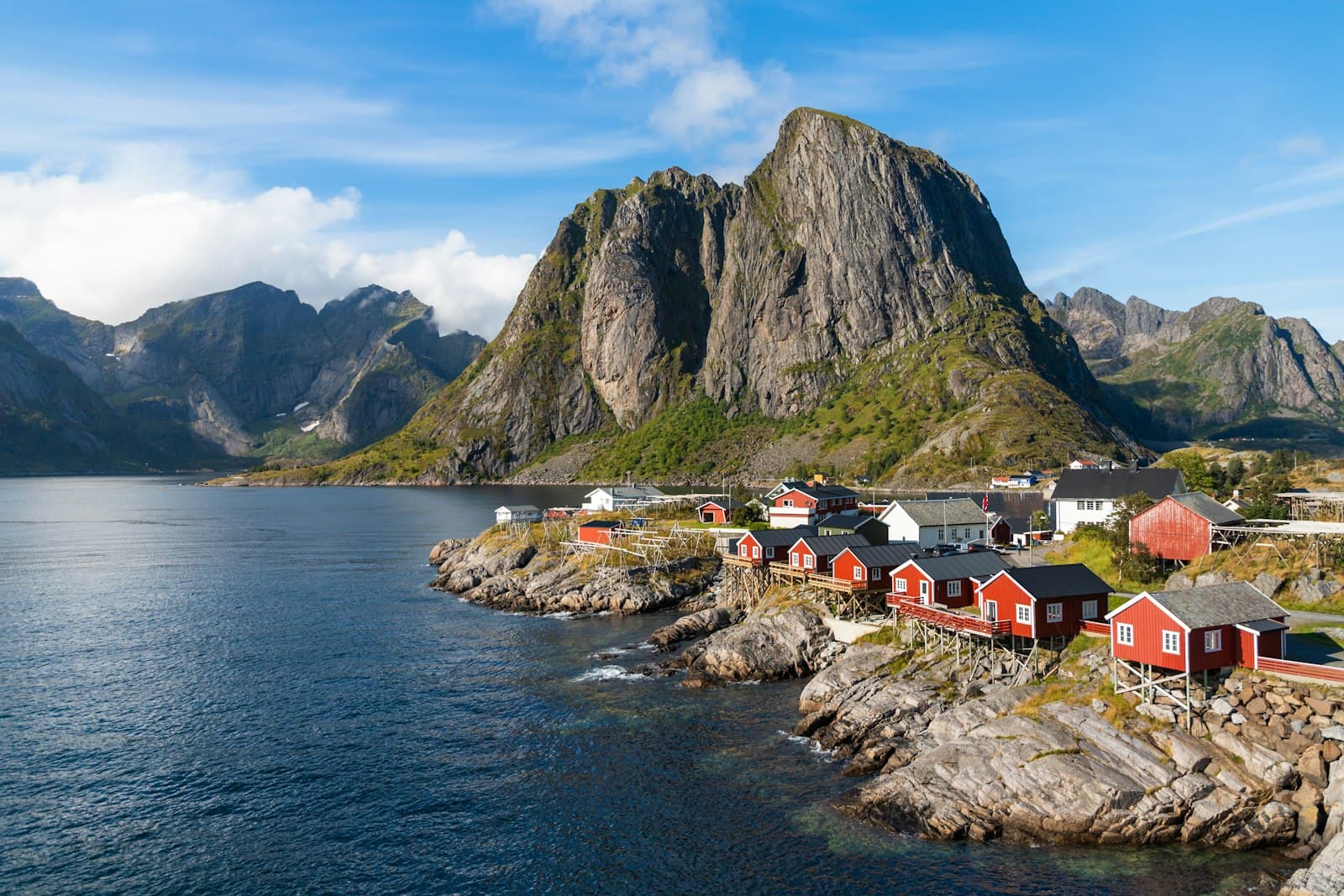
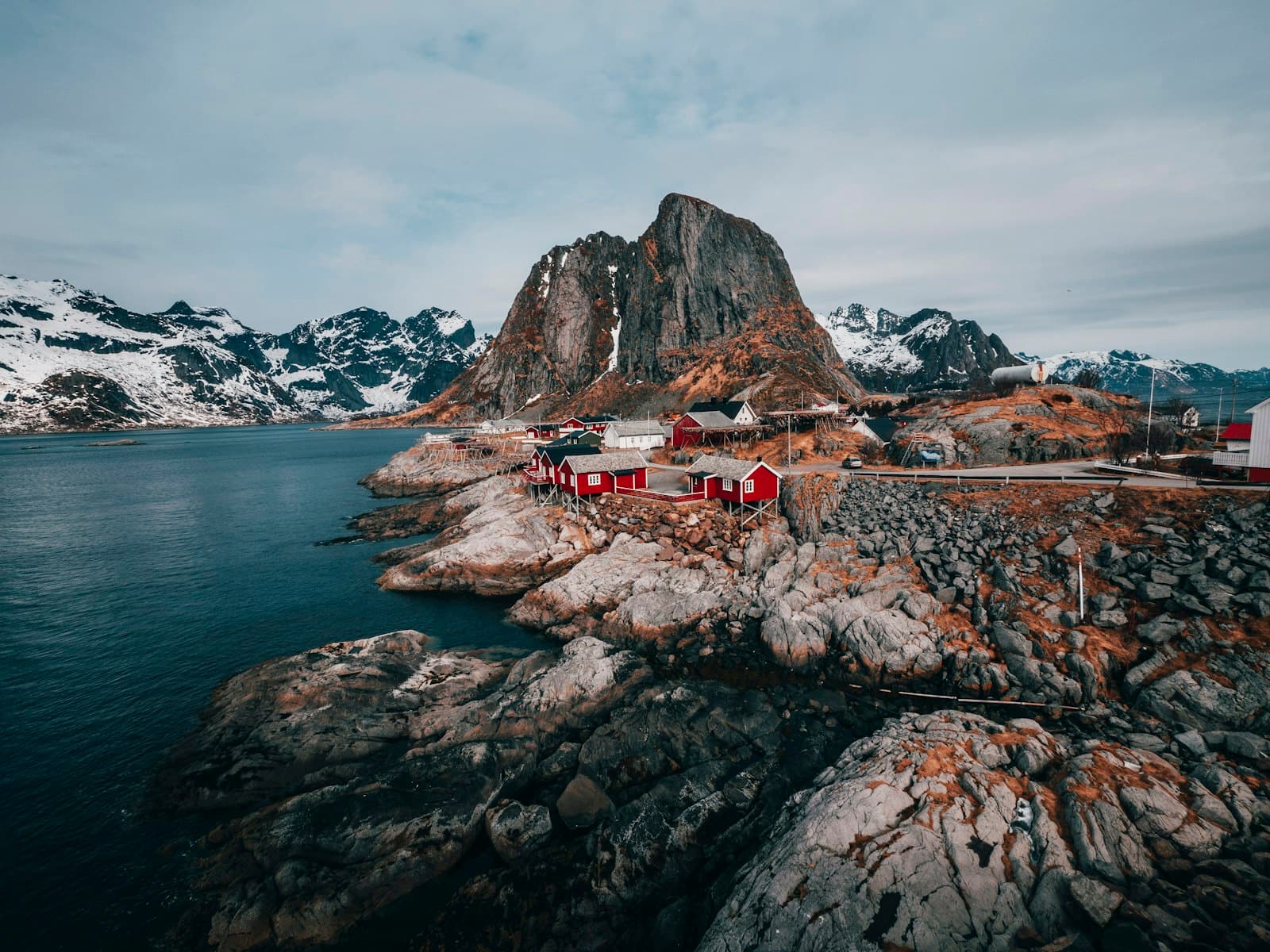
Å i Lofoten, souvent simplement appelé Å, est un village de pêche remarquablement préservé situé à l'extrémité sud des îles Lofoten en Norvège. Son nom d'une seule lettre, prononcé 'o', reconnaît sa signification en vieux norrois de 'petite rivière' ou 'ruisseau', et il détient la distinction d'être l'un des noms de lieux les plus courts du monde. Ce village serein offre une fenêtre tangible sur le profond héritage maritime de la Norvège, avec ses rorbuer rouges caractéristiques (cabanes de pêcheurs traditionnelles) s'étendant sur pilotis au-dessus de l'eau et ses séchoirs en bois chargés de stockfish.
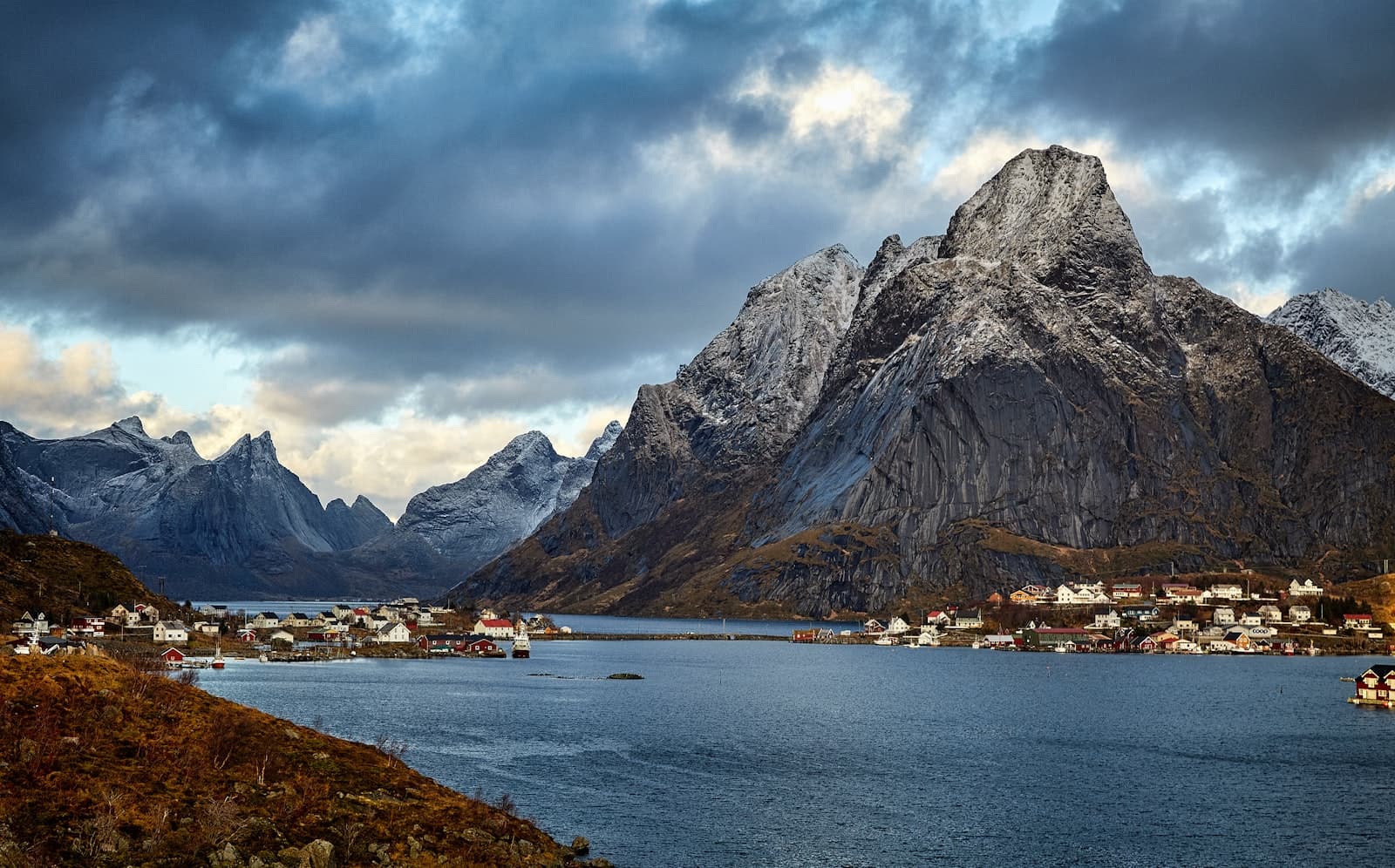
Se promener dans Å, c'est comme remonter le temps, car de nombreux bâtiments du XIXe siècle ont été méticuleusement préservés et transformés en musée en plein air. Le village marque la conclusion officielle de la route européenne E10, ce qui en fait un aboutissement spectaculaire pour tout voyage à travers l'archipel des Lofoten. Entouré de montagnes abruptes et de l'Atlantique sauvage, Å présente une harmonie de grandeur naturelle et d'histoire culturelle qui est vraiment singulière.
L'histoire de Å i Lofoten est profondément liée aux pêcheries des Lofoten, une tradition qui remonte à des siècles. Le village est apparu pour la première fois dans les registres historiques en 1567. Pendant une période du XIXe siècle, Å est devenu l'un des plus grands villages de pêche de l'archipel des Lofoten.
Ce qui distinguait Å de nombreux autres villages de pêche était la présence de deux familles influentes : la famille Ellingsen et la famille Nilsen/Hennum. Cette dynamique unique a conduit au développement d'infrastructures parallèles au sein du village, notamment deux quais, deux usines d'huile de poisson et même deux grands manoirs qui se dressent toujours côte à côte aujourd'hui. La famille Ellingsen, en particulier, exerçait un pouvoir et une influence considérables, souvent appelée 'Ness Konger' ou 'petits rois' des Lofoten. Ils contrôlaient l'importation et l'exportation de marchandises et de poisson séché, fournissant des provisions aux pêcheurs et acquérant leurs prises. Ce système entraînait souvent les pêcheurs à être endettés envers les Ellingsen, assurant leur retour continu à Å pour la saison de pêche.
Å est resté un village de pêche florissant jusqu'aux années 1960, après quoi une grande partie de l'industrie de la pêche a migré vers d'autres régions des Lofoten. Cependant, le dévouement du village à la préservation de son patrimoine est évident dans les nombreux bâtiments distinctifs qui ont été maintenus. Ceux-ci comprennent un bateau à vapeur de morue de 1850, une boulangerie de 1844, de nombreuses cabanes de pêcheurs et un ancien environnement commercial. Plusieurs de ces structures font maintenant partie du musée norvégien du village de pêche, qui dépeint de manière vivante les pêcheries des Lofoten au cours des deux derniers siècles. L'ensemble du village de pêche est protégé par un ordre de conservation, garantissant la pérennité de son caractère historique.
De manière intrigante, certains des rorbuer traditionnels trouvés à Å n'ont pas été construits sur place à l'origine. Ils ont été déplacés de l'ancien village de pêche de Helle après que ses habitants aient reçu des subventions gouvernementales pour déménager en 1949 en raison de conditions de vie difficiles. Cet acte de préservation par la relocalisation souligne davantage l'engagement de Å envers son passé, permettant aux visiteurs de découvrir le mode de vie traditionnel qui a façonné ce coin remarquable de la Norvège pendant des générations.
Å i Lofoten offre une rencontre concentrée avec la vie traditionnelle d'un village de pêche norvégien. Le village entier fonctionne comme un musée en plein air, avec de nombreux bâtiments historiques préservés et accessibles.
Commencez votre exploration au Musée norvégien du village de pêche (Norsk Fiskeværmuseum), qui s'étend sur plusieurs bâtiments du XIXe siècle. Ici, vous pouvez vous promener dans un hangar à bateaux, une usine d'huile de foie de morue, une forge de forgeron et diverses cabanes de pêcheurs, obtenant un aperçu des routines quotidiennes de ceux qui travaillaient les pêcheries des Lofoten entre 1840 et 1960.
À côté de cela, le Musée du stockfish des Lofoten (Lofoten Tørrfiskmuseum) plonge dans l'histoire et la création du stockfish, l'une des plus anciennes et des plus importantes marchandises d'exportation de la Norvège. Vous apprendrez le processus de séchage et observerez l'équipement utilisé au fil des ans.
Ne manquez pas la Boulangerie de Å, établie en 1844, où vous pouvez toujours acquérir du pain traditionnel cuit au feu de bois et les célèbres brioches à la cannelle. Bien que la boulangerie elle-même n'autorise plus l'entrée directe du public, ses délicieux produits sont disponibles à la boutique du musée.
Pour ceux qui recherchent un peu d'activité, une ascension modérée jusqu'à Tindstind offre des vues imprenables sur le village et les paysages dramatiques environnants. Le sentier s'étend sur environ 2 km et nécessite environ 1,5 heure.
Å i Lofoten accueille les visiteurs tout au long de l'année, chaque saison offrant une atmosphère distincte. L'été (juin à août) est la période la plus prisée, apportant des températures douces (10-15°C, dépassant occasionnellement 20°C) et près de 24 heures de lumière du jour, y compris le soleil de minuit éthéré de fin mai à mi-juillet. Cette saison est idéale pour la randonnée, le kayak et d'autres activités de plein air, bien que les lieux populaires puissent être fréquentés et les prix des hébergements atteignent leur sommet. L'automne (septembre à novembre) introduit un paysage coloré et la réapparition des aurores boréales, visibles à partir de fin août. Septembre offre un bon équilibre entre lumière du jour et obscurité pour l'observation des aurores, avec moins de foules et des températures confortables. L'hiver (décembre à mars) est parfait pour découvrir des paysages enneigés spectaculaires et les aurores boréales, surtout de fin septembre à début avril. Janvier à avril marque également la saison de pointe pour la pêche à la morue. Cependant, la nuit polaire signifie une lumière du jour limitée de mi-novembre à début janvier, et le temps peut être imprévisible. Le printemps (avril à mai) est une période de transition, avec la fonte des neiges et le retour des collines verdoyantes, offrant moins de foules et d'excellentes opportunités de randonnée.
Pour atteindre Å i Lofoten, il faut généralement combiner ferry, bus ou voiture. Une option consiste à prendre un ferry de Bodø à Moskenes, qui se trouve à quelques kilomètres de Å, suivi d'un bus en direction du sud. Alternativement, vous pouvez prendre l'avion pour les aéroports de Leknes ou Svolvær aux Lofoten et prendre un bus jusqu'à Å. L'autoroute E10 relie les îles au continent, ce qui fait de la conduite un choix viable. La location d'une voiture offre la plus grande flexibilité pour explorer les îles, car les transports en commun peuvent être limités, en particulier en dehors de la route principale E10 et le week-end.
L'hébergement à Å se compose principalement de rorbuer modernisés (cabanes de pêcheurs), offrant un mélange unique de vie traditionnelle et de conforts contemporains. Il est fortement conseillé de réserver bien à l'avance, surtout pour les voyages en été. Il y a un restaurant dans le village, le Brygga Restaurant de Å Rorbuer, servant des plats locaux. Il est prudent d'emporter des vêtements chauds et imperméables et des chaussures de randonnée robustes, car le temps aux Lofoten est notoirement imprévisible toute l l'année. Les banques aux Lofoten n'offrent généralement pas de service de change, il est donc préférable de le faire avant votre arrivée ; les cartes bancaires sont largement acceptées.
Å i Lofoten en coréen, en chinois ou en hébreu — et dans 29 autres langues, chaque étape narrée par une voix native. La plus large gamme de langues de tous les audioguides autoguidés.
Disponible en :