Trondenes Church
This ancient stone church holds a secret within its walls, a testament to its enduring strength against more than just the elements.
Full story unlocks in the tour
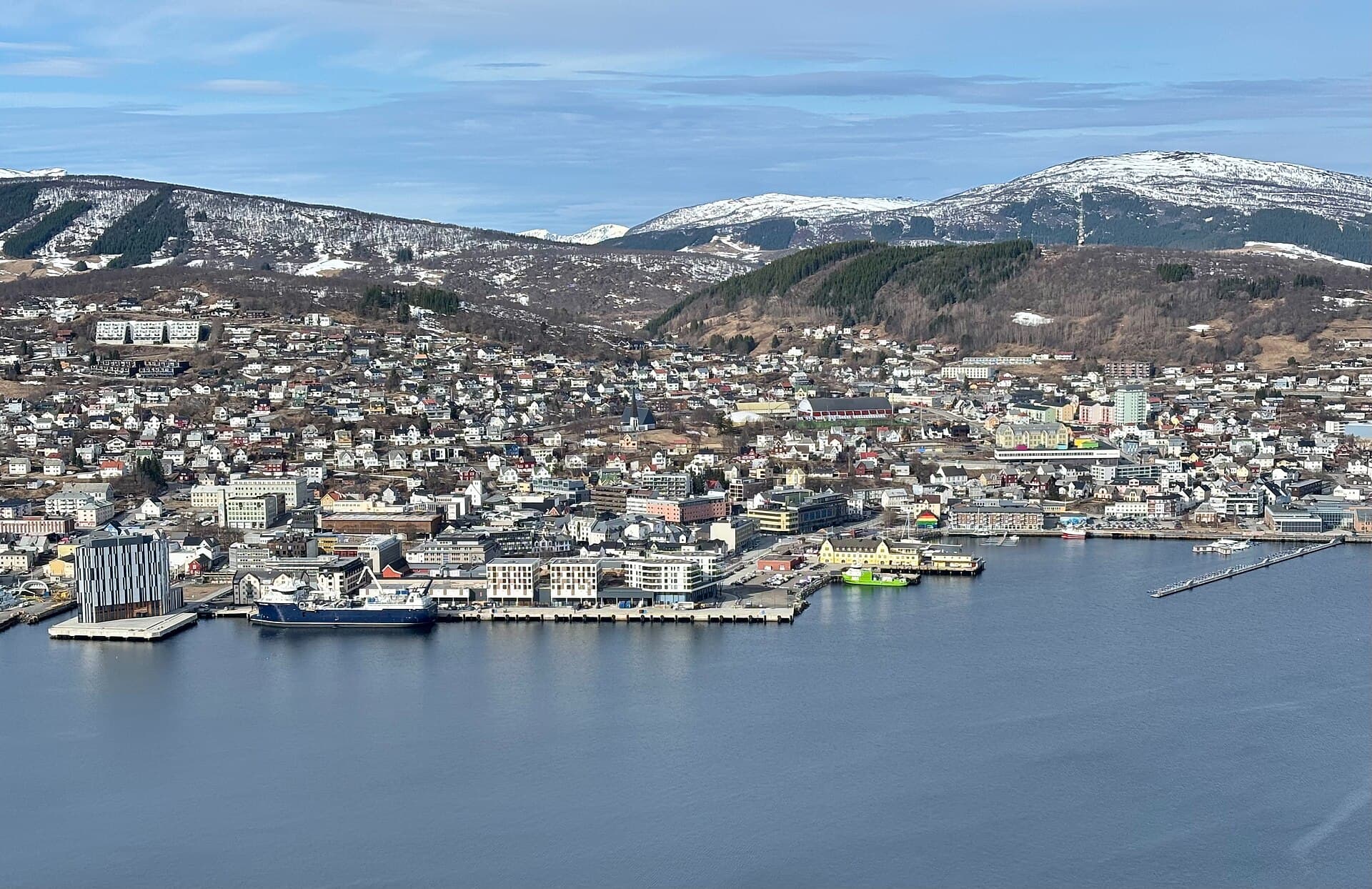 kallerna / CC BY-SA 4.0, via Wikimedia Commons
Self-guided audio walking tour of Harstad — GPS route, offline playback, story-driven narration in 32 languages.
“Where Viking sagas meet Arctic light, Harstad is a northern port with unexpected depths.”
Not the postcards. The stories even locals don't know — whispered in your ear, right where they happened.
This ancient stone church holds a secret within its walls, a testament to its enduring strength against more than just the elements.
Near a serene historical center, a colossal relic of WWII stands, originally destined for a much larger, more destructive purpose.
Beneath the city streets, a world of aquatic adventure awaits, carved directly into the Arctic bedrock.
Discover every secret of Harstad
Every address, every reveal in full — in your ear, right where it happened.
You pick your stops. You walk. The voice reveals what the others miss.


Your self-guided audio tour of Harstad is ready — pick your landmarks, choose your language, and start the moment you arrive.
BuyLume has a built-in augmented-reality guide. Hold your phone up and its camera shows the street ahead of you, with a glowing arrow laid over the real view that always points to your next stop — no map to puzzle over, no wrong turns. Like everything in Lume, it works fully offline.
Harstad, a captivating coastal city on Hinnøya, Norway's largest island, offers a unique blend of Arctic nature and cultural heritage. Located approximately 300 kilometers above the Arctic Circle, it serves as a vital hub in Northern Norway, balancing its role as a regional center with its natural surroundings of dramatic fjords, towering mountains, and lush forests.
Often overlooked by travelers rushing to more famous destinations like Lofoten and Tromsø, Harstad rewards those who linger with a city center featuring a mix of Art Nouveau, traditional wooden Scandinavian, and modern architecture. It's a place where Viking sagas and World War II history intertwine with a lively contemporary arts scene and a deep connection to the sea, evident in its bustling fish markets and maritime traditions.
The story of Harstad is a journey spanning from ancient Viking settlements to a modern cultural and industrial capital. The historical core of the area is the Trondenes peninsula, which was a significant center of power as early as the Viking Age and is mentioned in Norse sagas. This region was the northernmost Viking power center in Norway, leveraging fertile farmland and crucial trade connections with the Sami people for valuable pelts and furs.
Around 1250, the construction of the stone Trondenes Church was completed, serving as a spiritual and defensive stronghold for centuries. This medieval church, the world's northernmost, stands as a testament to the region's wealth and political importance long before modern urban infrastructure.
Modern Harstad began to take shape in the late 19th century. Its inclusion in regular steamship routes in 1848 significantly improved connections with the rest of the country. The founding of a mechanical workshop and shipyard by Rikard Kaarbø spurred industrialization, and Harstad officially received city status in 1904, separating from the Trondenes municipality.
During World War II, Harstad's strategic location made it a key naval base and it was heavily fortified by German forces. Remnants of this era, such as the colossal Adolf Gun, can still be explored today. Following the war, the city actively developed as an important garrison and trade hub.
In 1964, an administrative merger united Harstad with the neighboring municipalities of Sandtorg and Trondenes. The city further cemented its status as a cultural capital with the first Festival of Arts of North Norway in 1965. Today, Harstad continues to evolve, known for its focus on education, culture, and its role as a gateway to the Lofoten and Vesterålen archipelagos.
Begin your exploration at the Trondenes Peninsula, just north of the city center. Here, you'll find the majestic Trondenes Church, the world's northernmost medieval stone church, dating back to the 13th century. Adjacent to it, the Trondenes Historical Centre offers a deeper dive into the region's Viking heritage through interactive exhibits. Also on the peninsula is the imposing Adolf Gun, a massive World War II coastal artillery piece, which can be visited with a guided tour.
For panoramic views of Harstad, Hinnøya, and the surrounding fjords, take an easy walk up to Gangsåstoppen Viewpoint. In the city center, wander through the streets to admire the colorful blend of Art Nouveau, traditional wooden, and modern Scandinavian architecture. Don't miss the unique Grottebadet, an adventure waterpark built directly into a mountain. Art enthusiasts should visit Gallery Northern Norway, housed in a notable post-war building designed by Jan Inge Hovig. For a taste of local life and culinary delights, explore the cafes and bakeries, and keep an eye out for fresh Arctic seafood and traditional dishes.
The best time to visit Harstad depends on your desired experience. For warm-weather activities and the Midnight Sun, plan your trip between mid-July and mid-August, when temperatures are mild and daylight is nearly constant. During this period, the sun remains visible from late May to mid-July. If witnessing the enchanting Northern Lights is your goal, the winter months offer the best chances, though be prepared for colder temperatures and shorter days. October is typically the wettest month, while May sees the least precipitation.
Harstad is located on Hinnøya, Norway's largest island, and is accessible by air, road, and sea. The nearest airport is Harstad/Narvik Airport (EVE) at Evenes, approximately 45 minutes away by airport bus or car, with regular flights connecting via Oslo. While there is no direct train access, Harstad is a port of call for the coastal ferry, Hurtigruten, and express boats connect from Tromsø.
Within Harstad, many attractions in the town center are easily explored on foot. Public transportation, including an efficient bus system, is available for reaching sights outside the immediate center, such as Trondenes. Renting a car provides flexibility for exploring the wider region, including Hinnøya and nearby islands. When packing, remember that weather conditions can change quickly in the Arctic, so layering clothing and bringing rain gear is advisable, especially for outdoor activities.
Harstad in Korean, in Chinese or in Hebrew — and 29 more languages, every stop narrated by a native voice. The widest language range of any self-guided audio tour.
Available in: