Belfry of Aalst
This UNESCO-listed tower holds a secret about its bells, a sound that has echoed through centuries of Aalst's story.
Full story unlocks in the tour
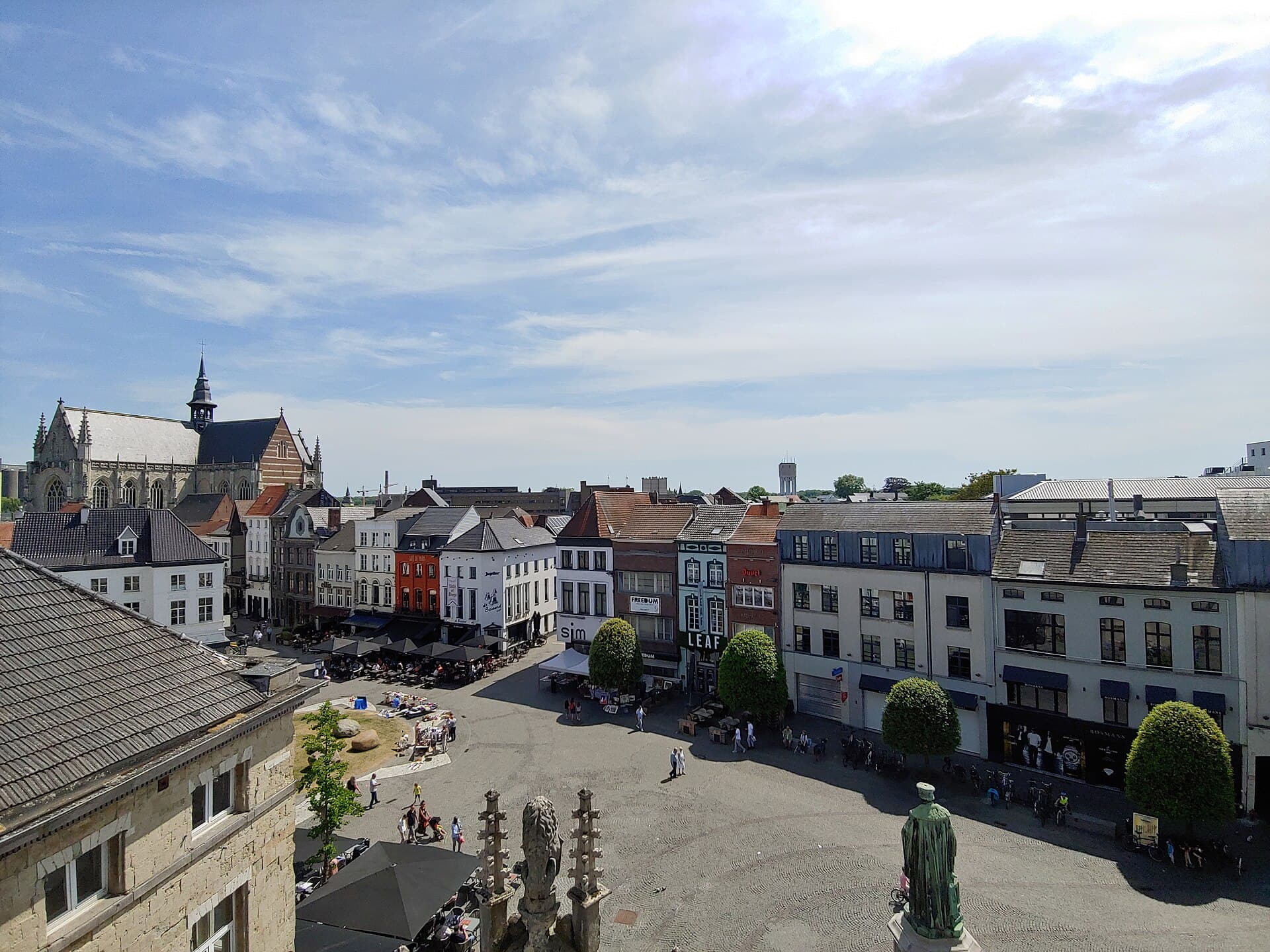 Jaronax (Jari Asselman) / CC BY-SA 4.0, via Wikimedia Commons
Self-guided audio walking tour of Aalst — GPS route, offline playback, story-driven narration in 32 languages.
“Beyond the carnival masks, a city of quiet defiance and unexpected firsts.”
Not the postcards. The stories even locals don't know — whispered in your ear, right where they happened.
This UNESCO-listed tower holds a secret about its bells, a sound that has echoed through centuries of Aalst's story.
Once known by a rather stark nickname, this 16th-century castle has a surprising connection to the city's past.
Look closely at the art within this Gothic church, and you'll find a masterpiece by a world-renowned artist, alongside a lesser-known work by the sculptor of Brussels' famous Manneken Pis.
Discover every secret of Aalst
Every address, every reveal in full — in your ear, right where it happened.
You pick your stops. You walk. The voice reveals what the others miss.


Your self-guided audio tour of Aalst is ready — pick your landmarks, choose your language, and start the moment you arrive.
BuyLume has a built-in augmented-reality guide. Hold your phone up and its camera shows the street ahead of you, with a glowing arrow laid over the real view that always points to your next stop — no map to puzzle over, no wrong turns. Like everything in Lume, it works fully offline.
Aalst, a city along the Dender River in East Flanders, Belgium, offers a blend of medieval allure and a lively contemporary spirit. Often in the shadow of its larger neighbors, Brussels and Ghent, Aalst holds its own with a distinct character, a deep history, and a famously irreverent carnival. It's a place where historic landmarks stand alongside bustling squares, offering a glimpse into authentic Flemish life without the overwhelming crowds.
Known for its UNESCO-recognized Carnival, Aalst transforms into a spirited hub of parades, elaborate costumes, and satirical floats each year. Beyond the festivities, the city invites exploration of its Gothic architecture, serene river walks, and a culinary scene that celebrates traditional Flemish cuisine and local brews. Aalst presents itself as a practical and appealing stop, revealing its unique charm to those who take the time to peel back its layers.
The origins of Aalst trace back to the 9th century, first documented as villa Alost, a dependency of the Abbey of Lobbes. Its strategic location on the Dender River, where a vital road connecting Bruges to Cologne crossed, allowed it to flourish as an important town and port during the Middle Ages. Aalst even served as the capital of the Flemish part of the Holy Roman Empire, a historical connection still evident in its coat of arms.
Construction of Aalst's town hall began in the mid-12th century, making it the oldest surviving town hall in Belgium. However, a devastating fire in 1360 razed much of the city, including the town hall. Aalst quickly rebuilt, and the 15th century marked a golden age, characterized by the rise of a new Gothic belfry and the prosperity of its powerful weavers' guild. It was during this period, in 1473, that Dirk Martens established the first printing press in the Southern Netherlands, printing significant works, including those by Christopher Columbus.
Over subsequent centuries, Aalst endured periods of foreign control, including Spanish, German, French, and Dutch rule. The city suffered considerably during the Eighty Years' War and was occupied by France from 1667 to 1706. The textile industry flourished under French influence, and the Industrial Revolution in the 1800s brought further changes. A local priest, Father Adolf Daens, became a hero for his fight for workers' rights, even inspiring an Oscar-nominated film. In both World Wars, Aalst was bombed and occupied by German forces. Today, the textile industry remains important, alongside hop cultivation for brewing and cut flower farming.
Begin your exploration at the Grote Markt, Aalst's central square, a lively hub surrounded by historic buildings, shops, and cafes. Here, you'll find the impressive Belfry of Aalst, a UNESCO World Heritage site and a striking symbol of the city's medieval past, featuring a 52-bell carillon. Adjacent to it is the Aldermen's House, a 13th-century Gothic structure that served as the city's former town hall.
A short walk leads to the Church of Saint Martin, a remarkable example of Gothic architecture. Inside, marvel at a painting by Rubens, "Saint Roch beseeching Christ to terminate the Plague at Aalst," and a notable tabernacle with sculptures by Hiëronymus Duquesnoy the Elder. For a deeper dive into local history and folklore, including carnival masks, visit 't Gasthuys - Stedelijk Museum, housed in the former city hospital.
Beyond the city center, consider a visit to Castle Terlinden, a 16th-century castle with public grounds. For a touch of contemporary culture, the Netwerk Contemporary Art Centre, located in a former tobacco building, hosts a variety of exhibitions and events. If you're interested in the region's brewing heritage, the Hop Museum provides insights into Belgium's famed beer industry. For a relaxing escape, the City Park offers walking trails, abundant vegetation, and ponds.
The best time to visit Aalst largely depends on your interests. To experience the renowned Aalst Carnival, plan your trip for February or March. For pleasant weather ideal for exploring the city and enjoying outdoor activities, spring and summer (late May through September) are recommended, with temperatures between 15-22°C (59-72°F). Autumn brings a quieter atmosphere and scenic foliage. If you prefer fewer crowds and potentially better value, the quieter months of November through February are a good option.
Aalst is easily accessible, situated between Brussels and Ghent. It's just a 30-minute train ride from Brussels and 25-30 minutes from Ghent, with frequent services. The city center is compact and very walkable, making it easy to explore on foot. For longer distances or excursions, public buses connect to surrounding areas, and cycling is a popular way to get around, especially along the Dender River. If driving, the E40 expressway passes through the city.
While Dutch is the primary language, many people in the service industry will speak English. The city offers a range of dining options, from traditional Flemish cuisine like waterzooi and stoofvlees to international choices. Do sample local Belgian beers, including those made with regional hops, and artisanal chocolates or waffles. Shopping streets like Kapellestraat offer boutiques and local specialty shops, and the weekly Saturday market on the Grote Markt is a fine place to find fresh produce and artisanal goods.
Aalst in Korean, in Chinese or in Hebrew — and 29 more languages, every stop narrated by a native voice. The widest language range of any self-guided audio tour.
Available in: