Cerro de los Frailes
The very name of Álamos hints at a monastic presence, but the 'friars' here are not what you might expect.
Full story unlocks in the tour
 Microstar / CC BY-SA 4.0, via Wikimedia Commons
Self-guided audio walking tour of Álamos — GPS route, offline playback, story-driven narration in 32 languages.
“Where silver built empires and legends linger in the Sonoran sun.”
Not the postcards. The stories even locals don't know — whispered in your ear, right where they happened.
The very name of Álamos hints at a monastic presence, but the 'friars' here are not what you might expect.
Álamos's immense wealth didn't come from a single strike, but from a concentrated area of valuable veins.
The elegant kiosk at the heart of Álamos's main plaza has traveled further than many realize.
Discover every secret of Álamos
Every address, every reveal in full — in your ear, right where it happened.
You pick your stops. You walk. The voice reveals what the others miss.



Your self-guided audio tour of Álamos is ready — pick your landmarks, choose your language, and start the moment you arrive.
BuyLume has a built-in augmented-reality guide. Hold your phone up and its camera shows the street ahead of you, with a glowing arrow laid over the real view that always points to your next stop — no map to puzzle over, no wrong turns. Like everything in Lume, it works fully offline.
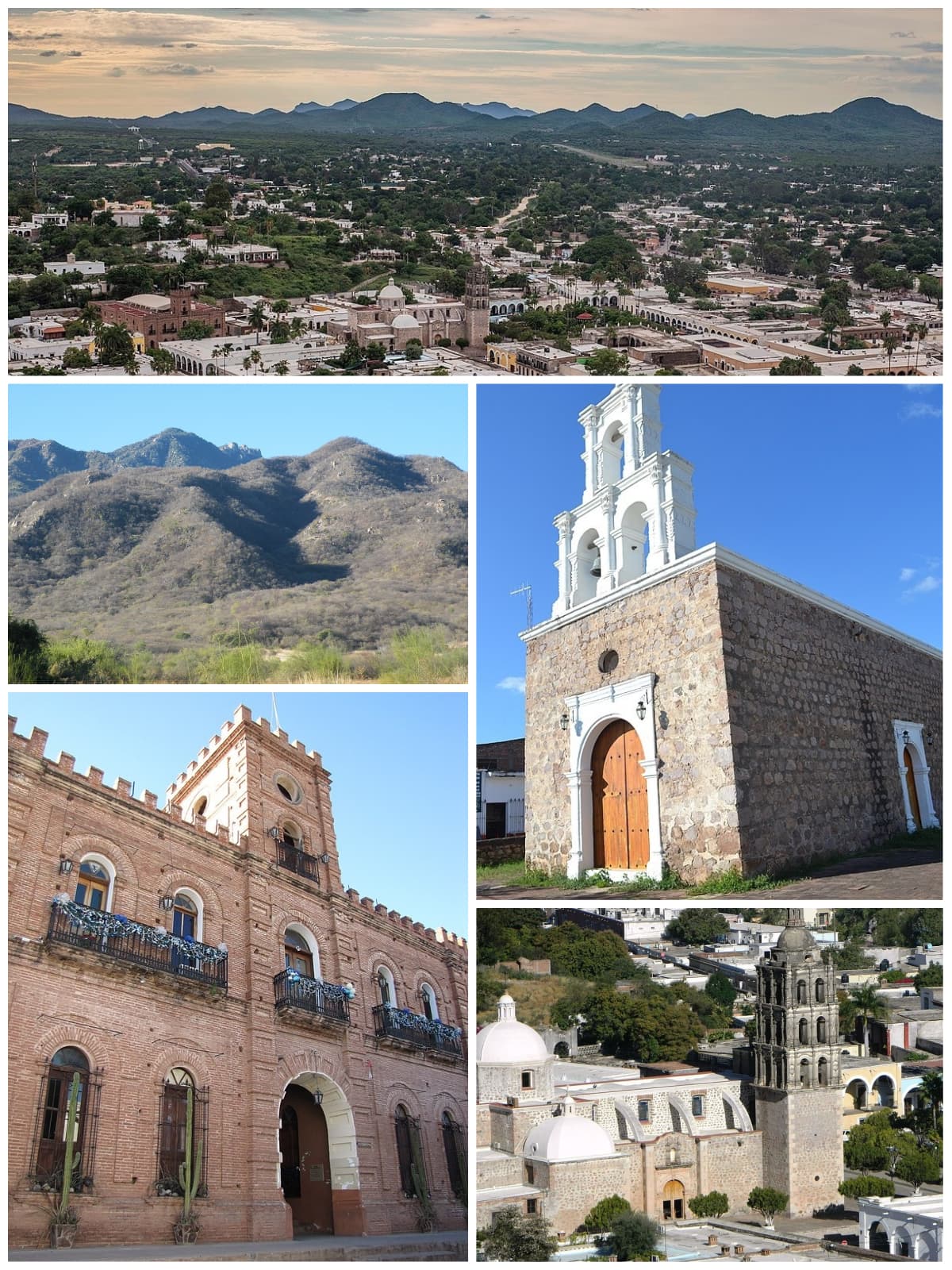
Álamos, a designated Pueblo Mágico in the state of Sonora, Mexico, is a town where the echoes of a prosperous silver mining past resonate through stone streets and colonial architecture. Often called 'The City of Portals' due to the arcaded walkways fronting many of its buildings, Álamos offers a captivating blend of Spanish Baroque and indigenous influences.
Found in the southern foothills of the Sierra Madre Occidental, Álamos lies in a unique ecological transition zone where the Sonoran Desert meets the Sinaloa tropical deciduous forest. This convergence creates a rich biodiversity, making the surrounding area a haven for birdwatchers and nature enthusiasts.
Today, Álamos is a tranquil escape, inviting visitors to wander its well-preserved historic center, explore grand mansions, and immerse themselves in a culture deeply rooted in its storied past. It's a place that feels like stepping back in time, offering a serene pace of life amidst its architectural and natural beauty.
## Silver Boom and Colonial Grandeur Álamos's story began in the late 17th century with the discovery of valuable silver deposits in the nearby Cerro de los Frailes mountain, leading to its founding in 1685. Originally named 'Real de la Limpia Concepción de los Álamos' or 'Real de los Frailes,' it quickly became the wealthiest city in Mexico north of Guanajuato. Andalusian architects brought their designs, leading to the construction of the magnificent mansions, churches, and palaces that define its colonial aesthetic. The town's prosperity was so significant that silver from Álamos mines helped fund expeditions that established missions in Pimería Alta (northern Sonora and southern Arizona) and even distant places like Los Angeles, San Francisco, and Monterey.
## Capital and Decline By the early 1800s, Álamos's economic strength and influential families led to it becoming the capital of the Estado Libre de Occidente, a state encompassing present-day Sonora, northern Sinaloa, and parts of Baja California and southern Arizona. However, the 19th and early 20th centuries brought significant challenges. Following Mexican Independence in 1821, the state of Occidente dissolved, and Álamos eventually became part of Sonora. The mint closed in 1896, and the Mexican Revolution, with multiple attacks on the town and the Cristero War, severely impacted its heritage and economy. By the late 1920s, with mines closed and its population decimated, Álamos was left as virtually a ghost town.
## Rebirth and Pueblo Mágico Status The turning point arrived in the 1940s when American farmer William Levant Alcorn visited the town, bought and restored a decaying mansion, and opened a hotel. This initiative sparked a resurgence, attracting American and Canadian citizens who began restoring many of the viceregal-style houses. In 2000, President Ernesto Zedillo Ponce de León declared Álamos a Zone of Historical Monuments, recognizing its architectural and cultural significance. Further cementing its importance, Álamos was designated a Pueblo Mágico (Magical Town) in 2005, a title awarded to towns with significant cultural heritage, beauty, and historical importance. Today, Álamos thrives as a tourist destination, celebrated for its preserved colonial charm, tranquil atmosphere, and lively cultural life.
The heart of Álamos is its Plaza de Armas, a picturesque square ideal for leisurely strolls and people-watching, shaded by impressive álamo (cottonwood) trees. Dominating the plaza is the Iglesia de la Purísima Concepción, an 18th-century Baroque-style stone church with a striking three-tiered bell tower. Adjacent to the plaza, the Museo Costumbrista de Sonora offers insights into the town's boom times and regional traditions through its exhibits and art galleries.
Wander through the narrow, stone streets to admire the well-preserved colonial buildings and colorful facades, many featuring the characteristic portales or arcaded walkways that give Álamos its nickname, 'The City of Portals.' Architectural enthusiasts will appreciate the Palacio Municipal, a Porfirian-era architectural marvel. For a glimpse into the opulent past, consider a historic house and garden tour, revealing the meticulously restored interiors and courtyards of former silver barons' mansions, such as the Hacienda de los Santos.
Ascend to El Mirador for panoramic views of Álamos and the surrounding Sierra Madre mountains. Don't miss the charming Callejón del Beso (Kissing Alley) for a touch of local romance. The Municipal Cemetery is also a unique historical site, offering a glimpse into the town's deep past through its historic graves.
The best time to visit Álamos for pleasant weather and outdoor activities is during the cooler, drier winter months, from November to March. During this period, daytime temperatures are comfortable, ranging from 27°C (81°F) in January to 31°C (88°F) in March, with cooler nights. This season is also ideal for birdwatching in the surrounding natural areas. The annual Festival Cultural Alfonso Ortiz Tirado (FAOT), a significant international music and arts festival, takes place in late January and is a major draw, though accommodations should be booked well in advance. While July and August are popular with Mexican families for summer holidays, this is also the rainy season, with heavy precipitation and muggy conditions.
The closest airports to Álamos are in Los Mochis and Ciudad Obregón. From either airport, you'll need to travel by bus or car. Regular buses run from Navojoa to Álamos, typically every hour between 6 AM and 6 PM. Driving from the US border at Nogales takes approximately 8 hours via Highway 15D (a toll road) to Navojoa, then east to Álamos. Renting a car offers more flexibility for exploring the region.
Álamos is a pedestrian-friendly town, with many attractions within walking distance of the historic center. The town maintains a tranquil atmosphere, and it is considered a safe destination. For medical needs, a local clinic is available for minor issues, with more comprehensive services at the Clinical Hospital of San Jose in Navojoa, about 30 minutes away. Many old mansions have been converted into hotels and restaurants, offering a range of accommodations and dining experiences.
Álamos in Korean, in Chinese or in Hebrew — and 29 more languages, every stop narrated by a native voice. The widest language range of any self-guided audio tour.
Available in: