Las Piedrotas (Valle de los Enigmas)
Imagina un paisaje donde las fuerzas primigenias jugaron, dejando atrás sus juguetes colosales.
La historia completa se desbloquea en el tour
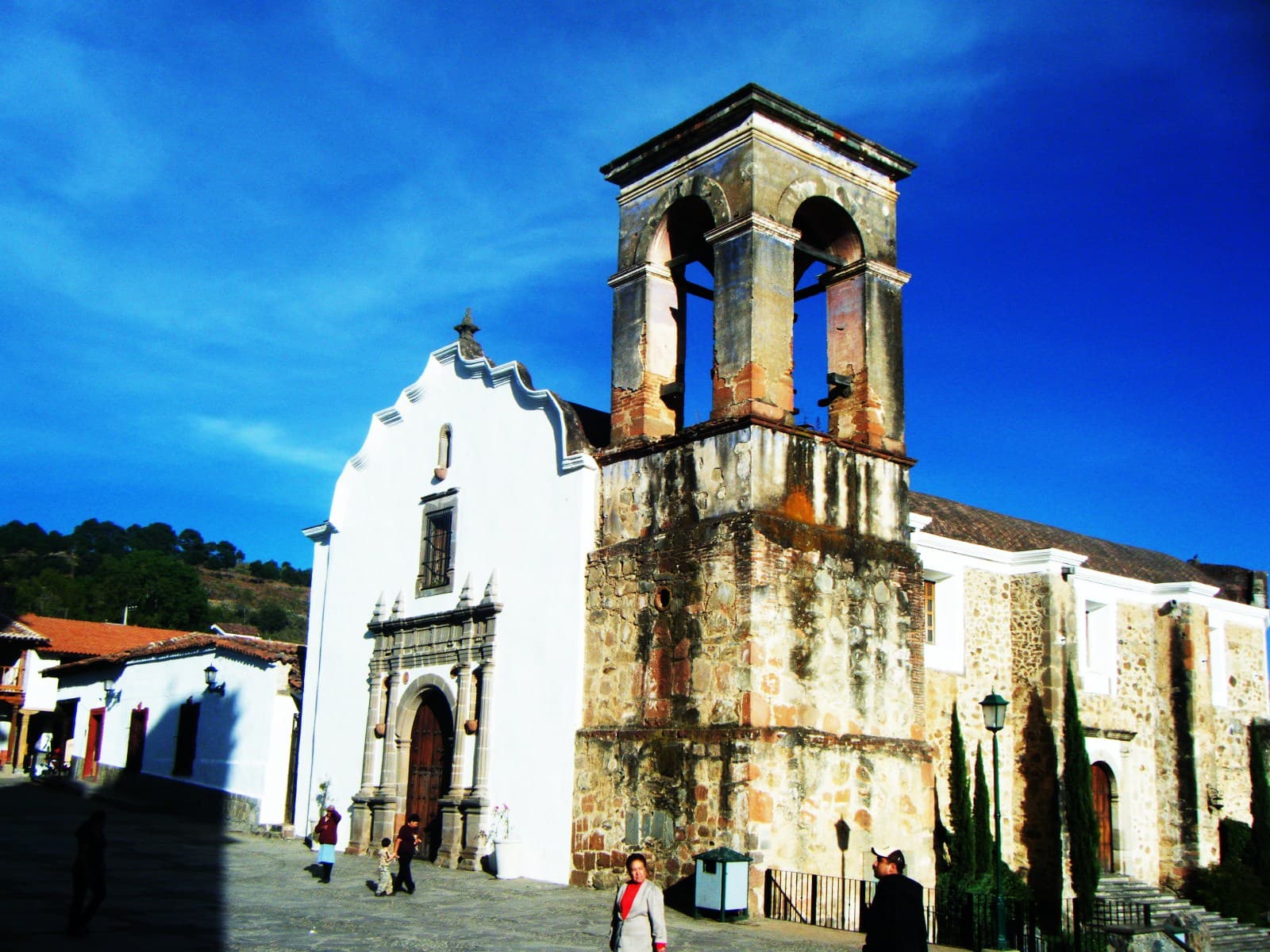 Pabloangulo84 / CC BY-SA 3.0, via Wikimedia Commons
Tour de audio autoguiado de Tapalpa — ruta GPS a pie, reproducción offline, narración en 32 idiomas.
“Donde las piedras colosales susurran secretos ancestrales y el aire de montaña vigoriza el espíritu.”
No las postales. Las historias que ni los locales conocen — al oído, justo donde ocurrieron.
Imagina un paisaje donde las fuerzas primigenias jugaron, dejando atrás sus juguetes colosales.
Una tranquila ruina en las afueras del pueblo guarda el zumbido olvidado del amanecer industrial de América Latina.
Observa de cerca los edificios del pueblo y discernirás una característica arquitectónica distintiva poco común en muchos otros pueblos mexicanos.
Descubre todos los secretos de Tapalpa
Cada dirección, cada revelación al completo — a tu oído, justo donde ocurrió.
Eliges tus paradas. Caminas. La voz te revela lo que los demás ignoran.


Tu tour de audioguía por Tapalpa te espera — elige tus lugares, tu idioma y empieza al llegar.
ComprarLume incluye una guía de realidad aumentada. Levanta el móvil y su cámara muestra la calle que tienes delante, con una flecha luminosa sobre la imagen real que siempre apunta a tu próxima parada — sin mapas que descifrar, sin giros equivocados. Como todo en Lume, funciona completamente sin conexión.
Enclavada en las montañas boscosas de pinos de la Sierra Madre de Jalisco, Tapalpa es un Pueblo Mágico que hace honor a su nombre, que significa "Tierra de Colores" en náhuatl. Este cautivador pueblo, aproximadamente a 120 kilómetros al suroeste de Guadalajara, ofrece un escape tranquilo con sus sinuosas calles empedradas, casas tradicionales encaladas adornadas con techos de teja roja y balcones desbordantes de flores vívidas.
A más de 2.000 metros sobre el nivel del mar, Tapalpa disfruta de un clima constantemente fresco y templado, un bienvenido cambio del calor de las elevaciones más bajas. Es un lugar donde el tiempo parece ralentizarse, invitando a los visitantes a sumergirse en la auténtica cultura mexicana, explorar tiendas de artesanías locales y saborear la cocina tradicional de montaña. Ya sea que se busque una relajación pacífica o una aventura al aire libre, la mezcla única de belleza natural y carácter colonial de Tapalpa brinda una experiencia inolvidable.
Tapalpa ostenta la distinción de ser uno de los primeros "Pueblos Mágicos" de México, designado en 2002 por su belleza natural, profundidad cultural e importancia histórica. Aunque popular entre los visitantes mexicanos, particularmente de Guadalajara, sigue siendo un delicioso descubrimiento para los viajeros internacionales que buscan un camino menos transitado.
La historia de Tapalpa se remonta a la antigüedad, con su nombre, "Tlapalpan", arraigado en la lengua náhuatl, que significa "Tierra de Colores" o "Lugar de Tierra de Colores". Antes de la llegada de los europeos, el pueblo otomí habitaba este territorio, que formaba parte del señorío de Tzaulan.
La conquista española de la región comenzó alrededor de 1523, liderada por el Capitán Alonso de Ávalos. La tribu nativa Atlacco, encontrada por los españoles, no resistió a los colonizadores. Los misioneros franciscanos llegaron entre 1531 y 1533, iniciando la evangelización de la población local y sentando las bases de las tradiciones católicas en la zona.
Factores clave en el establecimiento de Tapalpa incluyeron su ubicación estratégica en lo alto de las montañas de la Sierra Madre, ofreciendo protección natural, y los densos bosques que proporcionaban materiales de construcción y combustible esenciales. La fundación de la parroquia y la construcción de templos, como el Templo de San Antonio que comenzó en 1650, se convirtieron en centrales para consolidar la presencia española y la comunidad local.
Tapalpa fue reconocida oficialmente como pueblo en 1825 y declarada municipio en 1869. La economía temprana y el modo de vida cultural fueron moldeados por el clima de montaña, con los residentes dedicándose a la agricultura (cultivando papas y maíz) y la ganadería. Este período también vio el surgimiento del estilo arquitectónico único de Tapalpa, combinando paredes de piedra blanca, techos de madera oscura y techos de teja, una firma que persiste hoy.
Un avance industrial significativo ocurrió en 1840 con la apertura de una fábrica de papel en las afueras del pueblo, considerada una de las primeras en América Latina. Esta empresa utilizó los abundantes recursos forestales y hídricos de la región, creando empleos y estimulando el crecimiento de la población, antes de cerrar finalmente en 1923 debido a la Revolución Mexicana. Como testimonio de la modernización temprana, Tapalpa también inauguró una de las primeras centrales eléctricas del país en 1896, proporcionando electricidad antes que muchas ciudades mexicanas más grandes.
En el siglo XX, Tapalpa continuó su desarrollo. La construcción de la monumental Iglesia de Nuestra Señora de Guadalupe de ladrillo rojo comenzó en 1950, convirtiéndose en un punto focal arquitectónico del centro del pueblo. Tapalpa alcanzó el estatus de ciudad en 1961, reflejando su creciente importancia regional. Un momento crucial para su perfil turístico llegó en 2002 cuando la Secretaría de Turismo de México designó a Tapalpa como uno de los "Pueblos Mágicos" iniciales, reconociendo su carácter histórico conservado, belleza natural y profundidad cultural.
Comienza tu exploración en el cautivador centro de Tapalpa, donde las calles empedradas serpentean entre edificios tradicionales encalados con techos de teja roja y detalles de madera. La plaza principal alberga dos iglesias prominentes: el histórico Templo de San Antonio, que data de 1650, y la más moderna y llamativa Iglesia de Nuestra Señora de Guadalupe, de ladrillo rojo, construida a mediados del siglo XX. Pasea por el mercado municipal para descubrir comidas locales y artesanías, incluyendo productos de madera y lana.
A poca distancia del pueblo se encuentra el cautivador Valle de los Enigmas, o Las Piedrotas. Este paisaje único presenta colosales rocas misteriosamente colocadas, algunas ideales para escalar o incluso lanzarse en tirolesa. La zona es perfecta para picnics y para disfrutar de la energía especial del lugar.
Para los amantes de la naturaleza, El Salto del Nogal es un destino gratificante. Esta impresionante cascada, de 105 metros, es la más alta del estado de Jalisco y ofrece una satisfactoria caminata por senderos pintorescos. También puedes explorar las ruinas de La Fábrica de Papel, una de las primeras fábricas de papel de América Latina, que operó de 1840 a 1923. Para vistas panorámicas, considera visitar el mirador La Ceja. Parques de aventura como Parque Natural Los Frailes y Ekoparque ofrecen actividades como tirolesa, rapel y senderismo.
Tapalpa ofrece un clima agradable, templado y confortable durante todo el año debido a su altitud montañosa, con temperaturas diurnas promedio que suelen oscilar entre 17°C y 23°C. La estación seca, de noviembre a mayo, ofrece muchos días soleados y mínimas precipitaciones, lo que la hace ideal para actividades al aire libre y exploración. Mayo suele ser el mes más cálido, con máximas alrededor de 31°C. La estación lluviosa suele ir de junio a octubre, con julio y agosto experimentando la mayor precipitación, a menudo diaria. Incluso durante los meses más cálidos, las tardes y noches pueden ser frescas, por lo que siempre se recomienda llevar capas.
Para actividades en clima cálido, principios de mayo a principios de junio se considera el momento más favorable. Si prefieres evitar las multitudes, especialmente las de Guadalajara, considera visitar entre semana. Las celebraciones del Día de la Independencia el 15 y 16 de septiembre ofrecen un ambiente animado y festivo si no te importa un pueblo bullicioso.
Tapalpa se encuentra a unos 120 kilómetros al suroeste de Guadalajara. La forma más común de llegar a Tapalpa es en coche, un pintoresco viaje de dos horas desde Guadalajara por la Carretera 54D. Alternativamente, los autobuses operados por Sur de Jalisco salen regularmente de la Nueva Central Camionera de Guadalajara, con un viaje que dura aproximadamente de 2 a 3.5 horas. Una vez en Tapalpa, el centro histórico se explora fácilmente a pie. Para aventurarse a atracciones como Las Piedrotas o El Salto del Nogal, hay taxis locales disponibles, o puedes alquilar un coche si planeas una exploración extensa de la región circundante de Jalisco. Alquilar cuatrimotos o jeeps también es una opción popular para explorar áreas naturales.
La moneda oficial es el Peso Mexicano (MXN). Si bien el pueblo es generalmente seguro, siempre es prudente estar atento a tu entorno. El clima de montaña significa un clima cambiante, así que empaca ropa en capas, incluyendo suéteres o chaquetas ligeras para las noches frescas, y zapatos cómodos para caminar por calles empedradas y senderos. También es recomendable protector solar y un sombrero debido al sol activo de montaña.
Tapalpa en coreano, en chino o en hebreo — y 29 idiomas más, cada parada narrada por una voz nativa. La mayor variedad de idiomas de cualquier audioguía autoguiada.
Disponible en: