Fort Victoria
Imagine a fortress captured without a single shot fired, yet it became the heart of a vast spice empire.
Full story unlocks in the tour
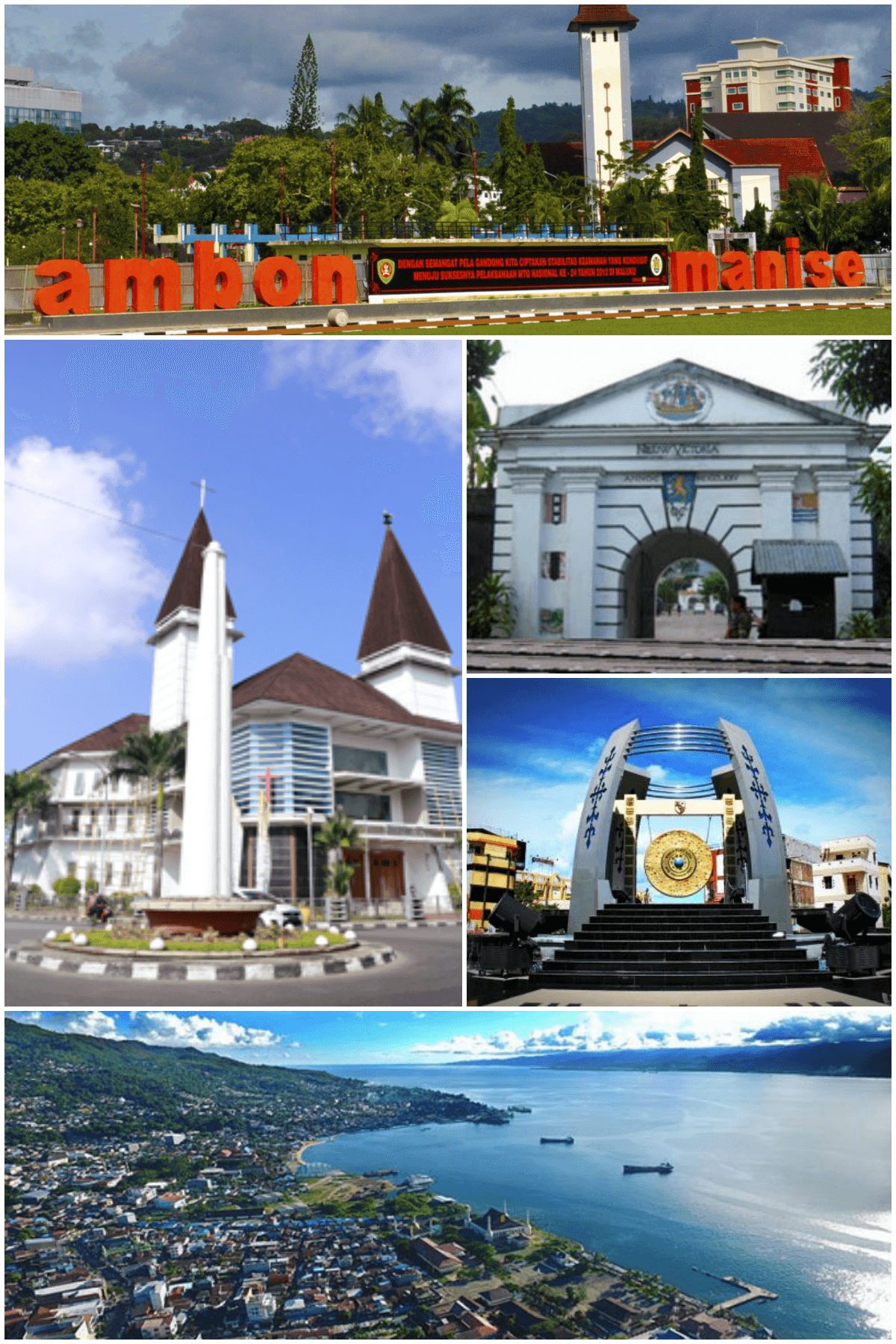 Kementerian Koordinator Bidang Pembangunan Manusia dan Kebudayaan Republik IndonesiaDinas Komunikasi, Informatika, dan Persandian Kota AmbonKPDE Kota AmbonPusat Penelitian Laut Dalam - LIPIKPDE Kota AmbonUser:Elbert Ziv Hitipeuw / Public domain, via Wikimedia Commons
Self-guided audio walking tour of Ambon — GPS route, offline playback, story-driven narration in 32 languages.
“Ambon: Where the scent of cloves still lingers, and every breeze carries a melody.”
Not the postcards. The stories even locals don't know — whispered in your ear, right where they happened.
Imagine a fortress captured without a single shot fired, yet it became the heart of a vast spice empire.
Beneath the calm surface of Ambon Bay lies a secret world, attracting a very specific kind of underwater enthusiast.
There's a local snack so beloved at Natsepa Beach, songs have been written about it.
Discover every secret of Ambon
Every address, every reveal in full — in your ear, right where it happened.
You pick your stops. You walk. The voice reveals what the others miss.


Your self-guided audio tour of Ambon is ready — pick your landmarks, choose your language, and start the moment you arrive.
BuyLume has a built-in augmented-reality guide. Hold your phone up and its camera shows the street ahead of you, with a glowing arrow laid over the real view that always points to your next stop — no map to puzzle over, no wrong turns. Like everything in Lume, it works fully offline.
Ambon, the capital of Indonesia's Maluku province, is often called 'Ambon Manise,' meaning 'Sweet Ambon,' a nod to both its captivating landscapes and the warmth of its people. This island city, strategically situated on Ambon Island and wrapping around a deep natural bay, offers a fascinating blend of urban energy and tranquil tropical beauty. Far from the more trodden paths of Indonesian tourism, Ambon presents an authentic experience, where history whispers from ancient forts and a lively culture pulses with an undeniable musicality.
Known as the 'Island of Spices,' Ambon's past is inextricably linked to the global spice trade that lured European powers to its shores centuries ago. Today, it is also celebrated as Indonesia's first UNESCO City of Music, a designation that speaks to the deep-rooted musical talent and passion of its inhabitants. From pristine beaches with flour-like sand and crystal-clear waters to lush rainforests and a unique culinary scene, Ambon invites exploration beyond the usual, promising unforgettable memories.
## The Spice Trade Epicenter Ambon's story began long before European arrival, but its destiny was irrevocably shaped by the allure of spices. In 1513, the Portuguese were the first Europeans to land, drawn by the island's abundant cloves. They established a trading post and a fort, Nossa Senhora de Anunciada, in 1526, though their control was often contested by local Muslim communities.
## Dutch Dominance and the Amboyna Massacre The Portuguese dominance was short-lived. In 1605, the Dutch East India Company (VOC) seized the Portuguese fort without a single shot, renaming it Fort Victoria. Ambon then became the main citadel and administrative center of the VOC in the region, solidifying its status as a key commercial and political hub. The Dutch fiercely protected their spice monopoly, even resorting to extreme measures. In 1623, the infamous 'Amboyna Massacre' saw the Dutch execute English, Japanese, and Portuguese traders on charges of conspiracy, effectively strengthening their hold on the spice trade.
## Shifting Colonial Hands and World War II Over the centuries, Ambon changed hands several times between the Dutch and the British. The British captured it in 1796 and again in 1810, only for it to be restored to the Dutch in 1814. This prolonged European presence profoundly impacted Ambon's culture, leading to the emergence of a distinct colonial ethnicity and the widespread adoption of Christianity. During World War II, Ambon became a significant naval base and was occupied by Japan in 1942 after the Battle of Ambon, a conflict that saw the tragic Laha massacre of Allied prisoners of war.
## Post-Independence Conflicts and the Path to Peace After Indonesia declared independence in 1945, Ambon faced further turmoil. In 1950, a short-lived independence movement led to the proclamation of the Republic of South Moluccas, which was subsequently suppressed by the Indonesian army. Towards the end of the 20th century, sectarian violence between Christian and Muslim communities escalated, resulting in significant loss of life and displacement. However, since the abatement of civil conflict in 2002, Ambon has made a remarkable recovery and is now considered a peaceful and safe place, symbolized by the installation of the World Peace Gong.
Ambon offers a diverse range of attractions, blending historical sites with natural beauty. Begin your exploration at Fort Victoria (Benteng Victoria), the island's most important historical monument, originally built by the Portuguese and later expanded by the Dutch. For a deeper dive into local culture and history, the Siwalima Museum is an essential stop, with exhibits on maritime history and ethnography.
Those who appreciate nature will find solace on Ambon's many picturesque beaches. Liang Beach, also known as Hunimua Beach, is celebrated for its soft white sand and clear waters, perfect for swimming and relaxation. Natsepa Beach is another popular spot, known for its calm waters and local rujak fruit salad stalls. For wide-reaching views, consider a trip to Hatu Peak, offering panoramic vistas of Ambon Bay and the surrounding islands.
Ambon's unique musical heritage is best experienced at the World Peace Gong, a symbol of unity and a lively gathering place, especially at sunset. The city's traditional markets, like Pasar Mardika, provide a lively atmosphere to experience local life and discover regional produce. For those seeking adventure beneath the waves, Ambon Bay is a renowned muck diving paradise, while the south coast offers striking wide-angle reefs and sites like Pintu Kota Marine Park with its iconic underwater arch.
The best time to visit Ambon for warm-weather activities and calm seas is generally from late July to late October, or more broadly, from September to May. During these months, you can expect average air temperatures around 27°C (80°F) and water temperatures around 28°C (82°F), ideal for diving and beach activities. The drier season typically runs from October through April, offering peak dive visibility. The rainy season in Ambon generally occurs from June to August.
Pattimura International Airport (AMQ) serves Ambon with daily flights from major Indonesian cities like Jakarta, Surabaya, and Makassar. Public buses (Damri) are available from the airport to the city center, or taxis can be hired. Within Ambon city, local transport options include angkot (minibuses), ojek (motorbike taxis), and becak (bicycle carriages). Ferries and speedboats connect different points across Ambon Bay and to surrounding islands.
Accommodation ranges from budget guesthouses to more expensive hotels, with prices for mid-range hotels typically between IDR 400,000 and 800,000 per night. Indonesian Rupiah (IDR) is the local currency, and ATMs are available in the city center. While Ambon is generally safe, it's advisable to exercise caution with valuables and in unfamiliar areas, especially after dark. Bottled water is recommended for drinking.
Ambon in Korean, in Chinese or in Hebrew — and 29 more languages, every stop narrated by a native voice. The widest language range of any self-guided audio tour.
Available in: