Bena Village
In Bena, the houses tell a story not just of families, but of a deeper, more primal connection to the land and its creatures.
Full story unlocks in the tour
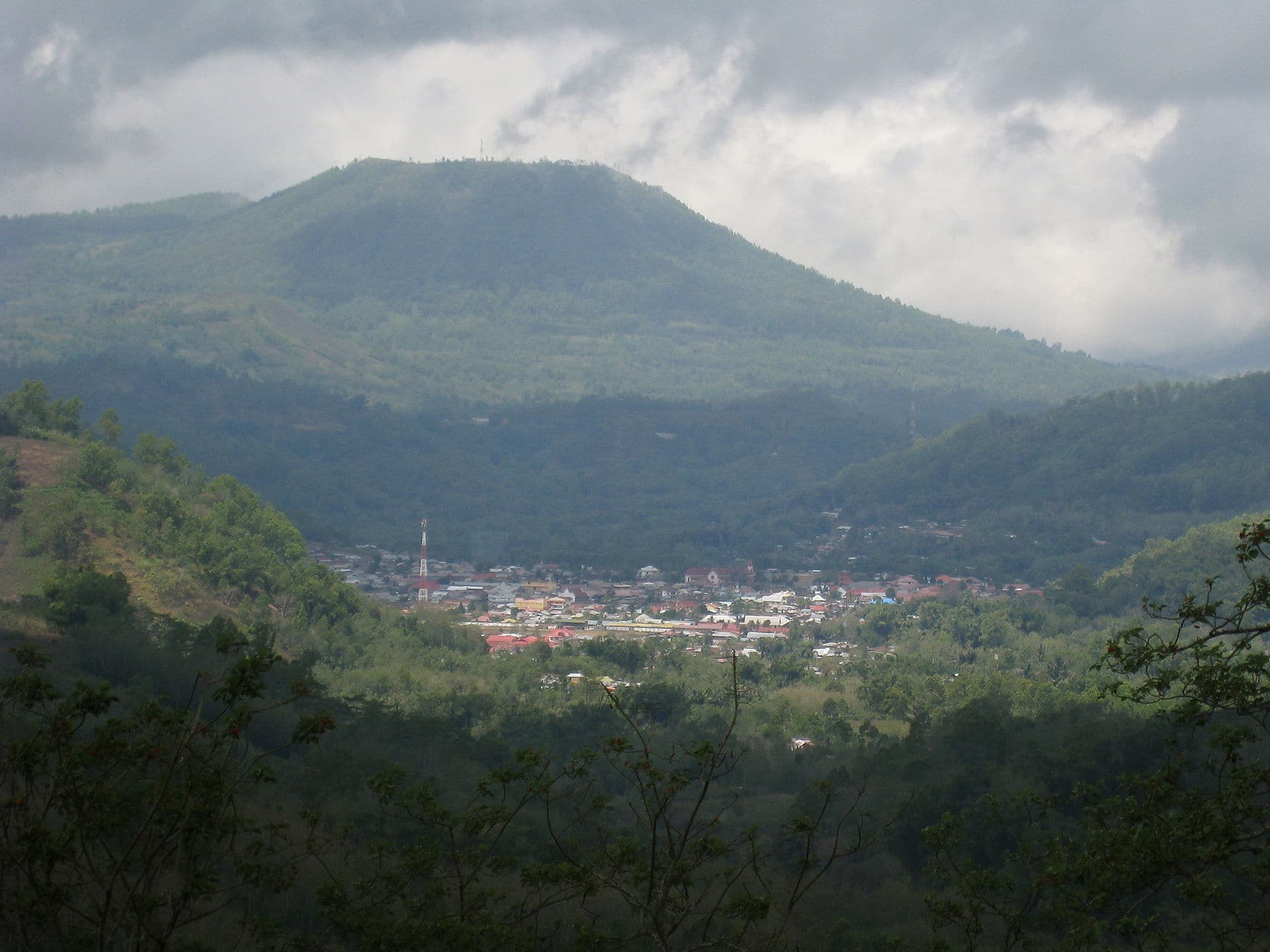 Petter Lindgren / CC BY-SA 3.0, via Wikimedia Commons
Self-guided audio walking tour of Bajawa — GPS route, offline playback, story-driven narration in 32 languages.
“Where ancient traditions meet volcanic landscapes.”
Not the postcards. The stories even locals don't know — whispered in your ear, right where they happened.
In Bena, the houses tell a story not just of families, but of a deeper, more primal connection to the land and its creatures.
The unique architecture of the Ngada villages isn't just for shelter; it's a constant dialogue between the living and the spirit world.
The rich aroma of Bajawa coffee carries a secret about its journey from bean to cup, one that speaks of both nature and tradition.
Discover every secret of Bajawa
Every address, every reveal in full — in your ear, right where it happened.
You pick your stops. You walk. The voice reveals what the others miss.

Your self-guided audio tour of Bajawa is ready — pick your landmarks, choose your language, and start the moment you arrive.
BuyLume has a built-in augmented-reality guide. Hold your phone up and its camera shows the street ahead of you, with a glowing arrow laid over the real view that always points to your next stop — no map to puzzle over, no wrong turns. Like everything in Lume, it works fully offline.
In the volcanic highlands of central Flores, Bajawa is a town that offers a profound immersion into Indonesia's living cultural heritage. Unlike many destinations where traditions are performed for tourists, the Ngada people surrounding Bajawa continue their ancestral ways as an integral part of daily existence. The cool mountain air, a welcome change from the tropical heat of the lowlands, sets the stage for exploring a landscape dominated by dramatic volcanoes and verdant valleys.
Bajawa serves as a gateway to a world where ancient animist beliefs harmoniously coexist with Catholic faith, evident in the unique architecture of its traditional villages. Here, megalithic monuments stand as testaments to ancestral veneration, and the rhythm of life is deeply connected to the land and its spirits. Beyond cultural encounters, Bajawa also offers natural wonders, from therapeutic hot springs to sweeping viewpoints, all framed by the majestic presence of Mount Inerie.
Bajawa's history as an organized settlement began in the early 20th century, during the period of Dutch colonial rule in Indonesia. The Dutch administration strategically chose this highland plateau, approximately 1,100 meters above sea level, to establish a stronghold in the interior of Flores Island. Its cooler climate, a distinct advantage over the hot coastal regions, attracted settlers and facilitated its development as a regional administrative and communication hub at the foot of Mount Inerie.
Prior to colonial influence, the mountain plateau was inhabited by various clans of the Ngada people, who lived in scattered villages and practiced traditional animistic cults. The Dutch military campaign to subdue the interior territories of Flores began in 1907, leading to the formal founding of Bajawa as a strategic center in the 1910s.
The arrival of Catholic missionaries in 1914 marked a significant turning point, initiating the mass Christianization of the local population and the construction of churches. Despite the introduction of Catholicism, the Ngada people largely maintained their ancestral heritage, integrating animistic beliefs and rituals into their daily lives. Megalithic shrines and traditional houses, symbolizing a connection with ancestral spirits, remained central to their cultural landscape.
The fertile volcanic soils of the region fostered a thriving agrarian economy. The colonial period saw the introduction of coffee plantations, which laid the foundation for Bajawa's reputation as a hub for high-quality Arabica coffee. Today, Bajawa continues to be a blend of these historical layers: a town with colonial-era buildings and a lively market, surrounded by ancient villages that steadfastly preserve traditions spanning centuries.
Bajawa offers a compelling mix of cultural immersion and natural exploration. The traditional Ngada villages, such as Bena, Luba, and Gurusina, are paramount. Bena Village, arguably the most famous, is a megalithic settlement at the foot of Mount Inerie, featuring U-shaped rows of high-roofed houses and ancient stone altars. Luba, often less visited, provides a more intimate look at daily life and ikat weaving. Gurusina offers a similar authentic experience with fewer crowds.
For natural wonders, the Malanage Hot Springs are a compelling visit, unique for their blend of hot and cold water streams. Other hot springs like Mangeruda and Soa also offer therapeutic relaxation. The majestic Mount Inerie, a perfectly conical active volcano, dominates the skyline and can be admired from viewpoints like Wolobobo Hill, which provides panoramic vistas of the surrounding fields and villages. While climbing Inerie is an option for trekkers, the views from its base are equally captivating. Don't miss the chance to try Kopi Bajawa, a locally grown, award-winning Arabica coffee, available at the morning market or small cafes. You can also visit local coffee plantations to learn about the production process.
The best time to visit Bajawa is during the dry season, which runs from June to September. During these months, you can expect clear blue skies, minimal rainfall, and comfortable average temperatures around 23°C (73°F), ideal for exploring villages and trekking. The period from late April to mid-November is generally favorable for warm-weather activities. While the rainy season (November to March) brings lush green landscapes, it also means frequent heavy rains and higher humidity.
Bajawa has a small airport with flights to Labuan Bajo and Kupang, though schedules can change. Many travelers opt for overland journeys by bus or shared car from Labuan Bajo (approximately 10 hours) or Ende (around 4 hours). Renting a motorbike is the most popular way to explore the surrounding areas and villages, or you can hire an ojek (motorbike taxi) or a car with a driver. ATMs are available in Bajawa town, but it's wise to carry cash for smaller villages and hot springs. Bahasa Indonesia is the official language, and English is not widely spoken outside of tourist areas. Dress in light, comfortable clothing for the day, but bring warmer layers for the cooler evenings, and sturdy shoes for trekking. Remember to drink bottled water and use insect repellent.
Bajawa in Korean, in Chinese or in Hebrew — and 29 more languages, every stop narrated by a native voice. The widest language range of any self-guided audio tour.
Available in: