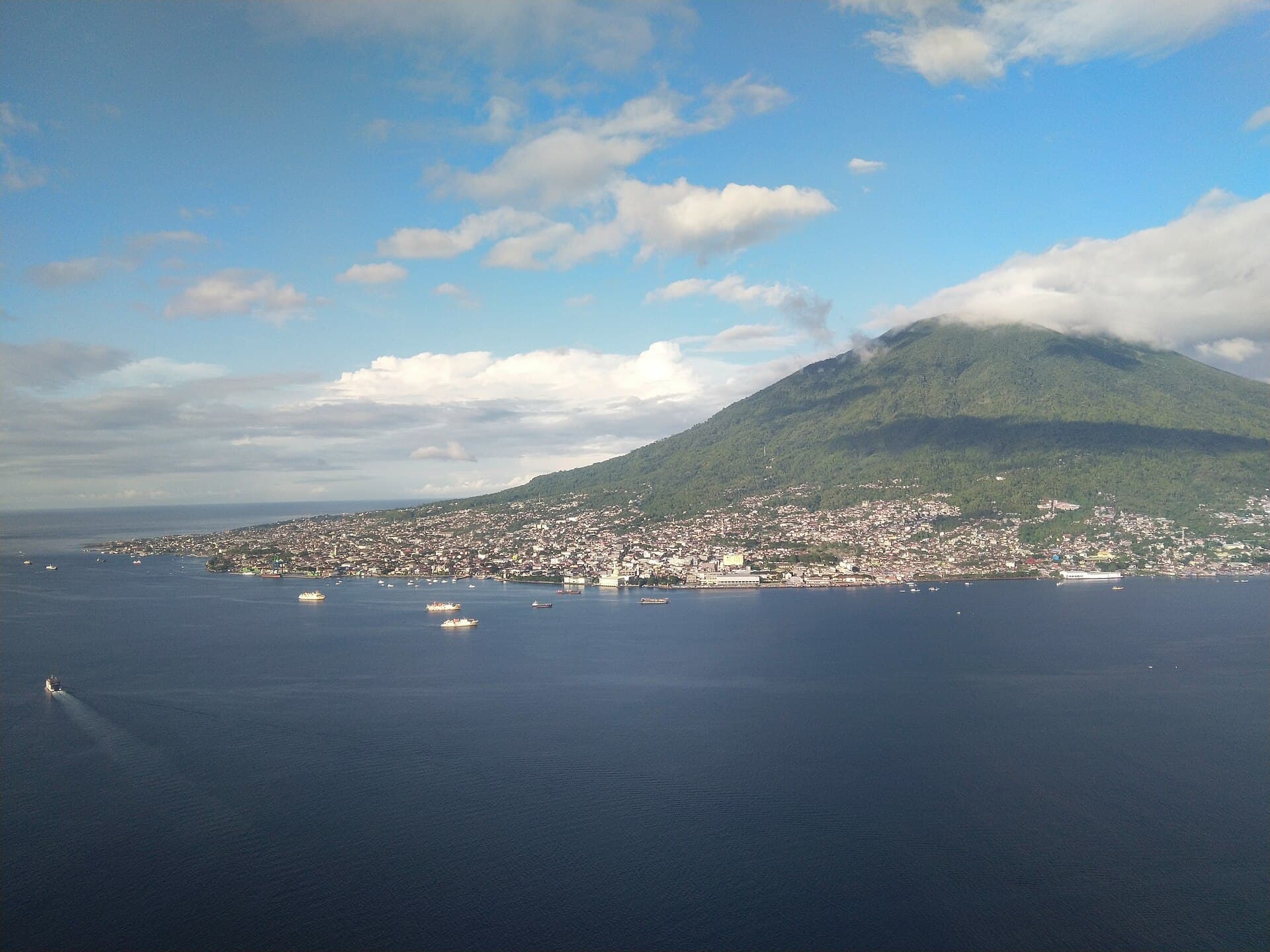
Ternate, IndonesiaFdprasetyo / CC BY-SA 3.0, via Wikimedia Commons
ID

Ternate

Self-guided audio walking tour of Ternate — GPS route, offline playback, story-driven narration in 32 languages.

Where volcanoes ascend and empires once flourished for the fragrance of a spice.

The secrets of Ternate

Ternate, as no one tells it.

Not the postcards. The stories even locals don't know — whispered in your ear, right where they happened.

3 secrets below. Many more wait inside the tour.
Afo Clove Tree

Ternate holds a secret that predates colonial ambitions and modern farming. Deep in its volcanic slopes, a living relic quietly testifies to the island's ancient claim to fame.

Full story unlocks in the tour
Sultan's Palace (Kedaton)

While the Sultanate of Ternate no longer holds political power, its legacy endures in a grand residence. But what if you could do more than just observe its history from afar?

Full story unlocks in the tour
Fort Oranje

Ternate is marked by European forts, each recounting a tale of fierce competition. But one in particular, a Dutch stronghold, has a surprising connection to a groundbreaking scientific theory.

Full story unlocks in the tour
The full tour

Discover every secret of Ternate

Every address, every reveal in full — in your ear, right where it happened.

Get the key to Ternate

You pick your stops. You walk. The voice reveals what the others miss.

Choose your time

How long do you have in Ternate?

Your self-guided audio tour of Ternate is ready — pick your landmarks, choose your language, and start the moment you arrive.

Buy
About Ternate

The story of Ternate

Ternate, a small, cone-shaped volcanic island off the west coast of Halmahera, presents a captivating blend of dramatic natural beauty and a history intertwined with global trade and colonial rivalries. Dominated by the active Mount Gamalama, the island rises majestically from the Maluku Sea, its fertile volcanic soil once yielding the world's most desired cloves.

Once the seat of one of Indonesia's most powerful Muslim sultanates, Ternate was a pivotal player in the 15th to 17th-century spice trade, drawing traders and colonial powers from across the globe. Today, it remains the largest and most densely populated city in North Maluku, serving as a bustling hub for economics, culture, and education, offering travelers a unique window into a past that shaped world history.

History

The Ascent of the Spice Sultanate

The history of Ternate is synonymous with the allure of spices. The Sultanate of Ternate, initially known as the Kingdom of Gapi, was established by Momole Cico in 1257. By the 15th and 16th centuries, Ternate, alongside its fierce rival Tidore, became the world's primary producer of cloves, making its rulers among the wealthiest and most influential in the Indonesian archipelago. This immense prosperity, however, often fueled intense conflicts between the two sultanates.

European Arrival and Colonial Strife

The fragrance of cloves drew European powers to Ternate's shores. The Portuguese were the first Western visitors in 1512, quickly establishing a fort in 1522 to secure their share of the lucrative spice trade. Their ruthless control, however, led to their expulsion by the Ternatan people in 1574. The Dutch followed, forming an alliance with Ternate in 1606 and eventually gaining a spice monopoly. This monopoly, enforced by restricting clove production to maintain high prices, sparked revolts in the 17th century and ultimately led to the decline of clove cultivation in the northern Moluccas. Ternate's Sultan became a vassal of the Dutch East India Company (VOC), and the Dutch maintained executive power until Indonesia's independence after World War II.

A Legacy That Endures

Despite the decline of the spice trade's global importance in the 19th century, Ternate's historical significance remains profound. The sultanate, though stripped of political power, continues to exist today with titular rulers serving as cultural figures. The island's rich and turbulent past is still evident in its numerous colonial forts and the enduring cultural traditions of its people, who largely embraced Islam from Java in the late 15th century, making Ternate one of the earliest Islamic kingdoms in the region.

What to see

Ternate offers a captivating blend of historical sites and natural wonders. Begin your exploration at the Sultan's Palace (Kedaton), an 1813 edifice offering insights into the island's royal heritage and housing a museum of artifacts. Nearby, the imposing Fort Oranje, a well-preserved Dutch fort, stands as a testament to European colonial presence and the fierce competition for spices. Other significant forts include the Portuguese-built Fort Tolukko (1540) and Kalamata Fort, each offering expansive views.

Nature lovers will be drawn to the island's volcanic landscapes. The active Mount Gamalama dominates the island, and its slopes are home to verdant clove plantations, including the ancient Afo Clove Tree. Explore the unique crater lakes: Lake Tolire, a bright green volcanic lake with local legends, and Ngade Lake, offering striking views with the volcanic peak of Tidore Island in the distance. For coastal beauty, visit Sulamadaha Bay for clear waters and coral reefs, or seek out the secluded Jikomalamo Beach for a more private snorkeling experience. The island's distinctive black sand beaches, like Takome Beach, are also worth a visit.

When to visit

Ternate experiences a tropical climate, with consistently warm temperatures averaging 27°C (80°F) year-round. The most favorable time to visit for dry weather and outdoor activities is generally from September to March. While some sources suggest the dry season runs from May to September, and the rainy season from October to April, the clearer part of the year for Ternate typically begins around February and extends until November. For warm-weather activities like beach visits and swimming, the periods from mid-February to mid-March and late June to late October are ideal. Rainfall is lowest in September.

Practical

Ternate is a relatively small island, making it easy to navigate. A paved road circles the island, allowing for a complete loop in about 1.5 hours by vehicle. You can rent a scooter from your hotel or hire a private car with a driver for greater flexibility. The Grab app is also available for short-distance trips. Public transport options include angkot (minibuses) and ojek (motorcycle taxis).

Accommodation on Ternate is generally more modest, with luxury hotels being a rarity. Options range from budget-friendly hotels with ocean views to eco-friendly guesthouses and homestays, which offer an authentic local experience. While English speakers may be less common than in more mainstream tourist destinations, locals are known for their friendliness and curiosity towards foreign visitors.

To reach Ternate, fly into Sultan Babullah Airport (TTE), with direct flights available from major Indonesian cities like Jakarta, Surabaya, Makassar, Manado, and Ambon. Alternatively, ferries connect Ternate with other islands, including Halmahera and Bitung.

Good to know
How do I get to Ternate?
The easiest way to reach Ternate is by flying into Sultan Babullah Airport (TTE). Direct flights are available from Indonesian cities such as Jakarta, Surabaya, Makassar, Manado, and Ambon. You can also take a speedboat from Sofifi, Halmahera, which takes about 45 minutes.
What is Ternate known for?
Ternate is primarily known for its historical role as a major producer of cloves and a central hub in the global spice trade. It was once the seat of a powerful sultanate and is recognized for its volcanic landscapes and numerous colonial forts.
Is Ternate safe for tourists?
Ternate is generally considered a safe and welcoming destination for tourists. Locals are known to be hospitable and curious towards foreign visitors.
What are the main attractions in Ternate?
Key attractions include the Sultan's Palace, historical forts like Oranje and Tolukko, the active Mount Gamalama, and unique crater lakes such as Tolire Lake and Ngade Lake. Black sand beaches and snorkeling spots like Sulamadaha Bay are also popular.
What is the best way to get around Ternate?
Due to its small size, Ternate is easy to navigate. You can rent a scooter, hire a private car with a driver, use public minibuses (*angkot*), or motorcycle taxis (*ojek*). The Grab app is also available for convenient short trips.
What kind of accommodation is available in Ternate?
Ternate offers a range of accommodation options, primarily consisting of budget-friendly hotels, eco-friendly guesthouses, and homestays. Luxury hotels are rare, but many places offer authentic local experiences and ocean views.
On the map
Ternate
€9.90
No booking · activate anytime · 12h to walk it
Load on Wi-Fi, then walk offline — no roaming abroad
Get the key to Ternate