Bogoda Wooden Bridge
Imagine a bridge that has stood for centuries, not built with stone or steel, but entirely of wood, complete with a tiled roof.
Full story unlocks in the tour
 L Manju / CC BY-SA 4.0, via Wikimedia Commons
Self-guided audio walking tour of Badulla — GPS route, offline playback, story-driven narration in 32 languages.
“Where emerald hills cradle ancient tales and mist-kissed mountains whisper secrets.”
Not the postcards. The stories even locals don't know — whispered in your ear, right where they happened.
Imagine a bridge that has stood for centuries, not built with stone or steel, but entirely of wood, complete with a tiled roof.
What if a revered Buddhist temple in the heart of Badulla holds a relic blessed by Lord Buddha himself?
There is a waterfall near Badulla so delicate and misty that locals gave it a poetic name.
Discover every secret of Badulla
Every address, every reveal in full — in your ear, right where it happened.
You pick your stops. You walk. The voice reveals what the others miss.


Your self-guided audio tour of Badulla is ready — pick your landmarks, choose your language, and start the moment you arrive.
BuyLume has a built-in augmented-reality guide. Hold your phone up and its camera shows the street ahead of you, with a glowing arrow laid over the real view that always points to your next stop — no map to puzzle over, no wrong turns. Like everything in Lume, it works fully offline.
Badulla, the capital of Sri Lanka's Uva Province, offers a refreshing escape into the country's central hills. Surrounded by rolling tea plantations, mist-kissed mountains, and cascading waterfalls, it presents a compelling blend of natural beauty, ancient cultural sites, and a quieter pace than some of its more bustling neighbors. The city is almost encircled by the Badulu Oya River and lies about 680 meters above sea level, providing a cooler climate that stands out in tropical Sri Lanka.
Often described as an underrated destination, Badulla provides a genuine glimpse into Sri Lankan life, away from the more crowded tourist trails. It is a place where the grandeur of nature takes center stage, complemented by a deep current of history and tradition. From sacred Buddhist temples to colonial-era architecture, Badulla invites travelers to explore its diverse attractions and immerse themselves in the serene landscapes of the hill country.
## Ancient Roots and Royal Connections Badulla's history stretches back thousands of years, with evidence of ancient settlements dating to the Anuradhapura Kingdom. Before British rule, it served as a base for a pre-colonial Sinhalese local prince, who governed the area under the main King in Kandy. The Uva Province, where Badulla is situated, is sometimes considered the original home of the Kandyan civilization, with river valleys serving as natural migration routes into the hills.
## British Colonial Influence The city's character was profoundly shaped by British colonial rule. Badulla remained an isolated village until the mid-19th century when the British constructed roads from Kandy and Nuwara Eliya, integrating it into the burgeoning plantation economy. It quickly became an important administrative and commercial hub, serving as the capital of Uva Wellassa (now Uva Province). The British also established Badulla as the terminus of the upcountry railway line, primarily to transport tea plantation products to Colombo. Many colonial-era buildings, such as the Badulla railway station, St. Mark's Church, and the Old Welekade Market, still stand today, silent witnesses to this period.
## A Hub of Resistance Beyond its administrative and economic significance, Badulla played a pivotal role in Sri Lanka's struggle for independence. The city served as a bastion for nationalist leaders, and in 1817, it was the site of the famous Uva Wellassa rebellion, where local warriors bravely fought against British rule.
## Modern Day Badulla Today, Badulla is a fast-developing city, blending its historical legacy with modern infrastructure. Its economy remains largely rooted in agriculture, with tea, rubber, and vegetable cultivation as mainstays. The city's diverse cultural heritage, influenced by both Sinhalese and Tamil communities, is celebrated through various festivals and events, including the lively Esala Perahera.
Badulla offers a variety of sights, from ancient religious sites to natural wonders. The Muthiyangana Raja Maha Vihara is a sacred Buddhist temple believed to have been visited by Lord Buddha, featuring intricate carvings and serene stupas. Just a short drive from town, the majestic Dunhinda Falls, known as 'Bride's Veil Falls,' cascades gracefully, often adorned with rainbows in its mist. For a glimpse into ancient engineering, visit the Bogoda Wooden Bridge, a remarkably preserved 16th-century structure made entirely of wood.
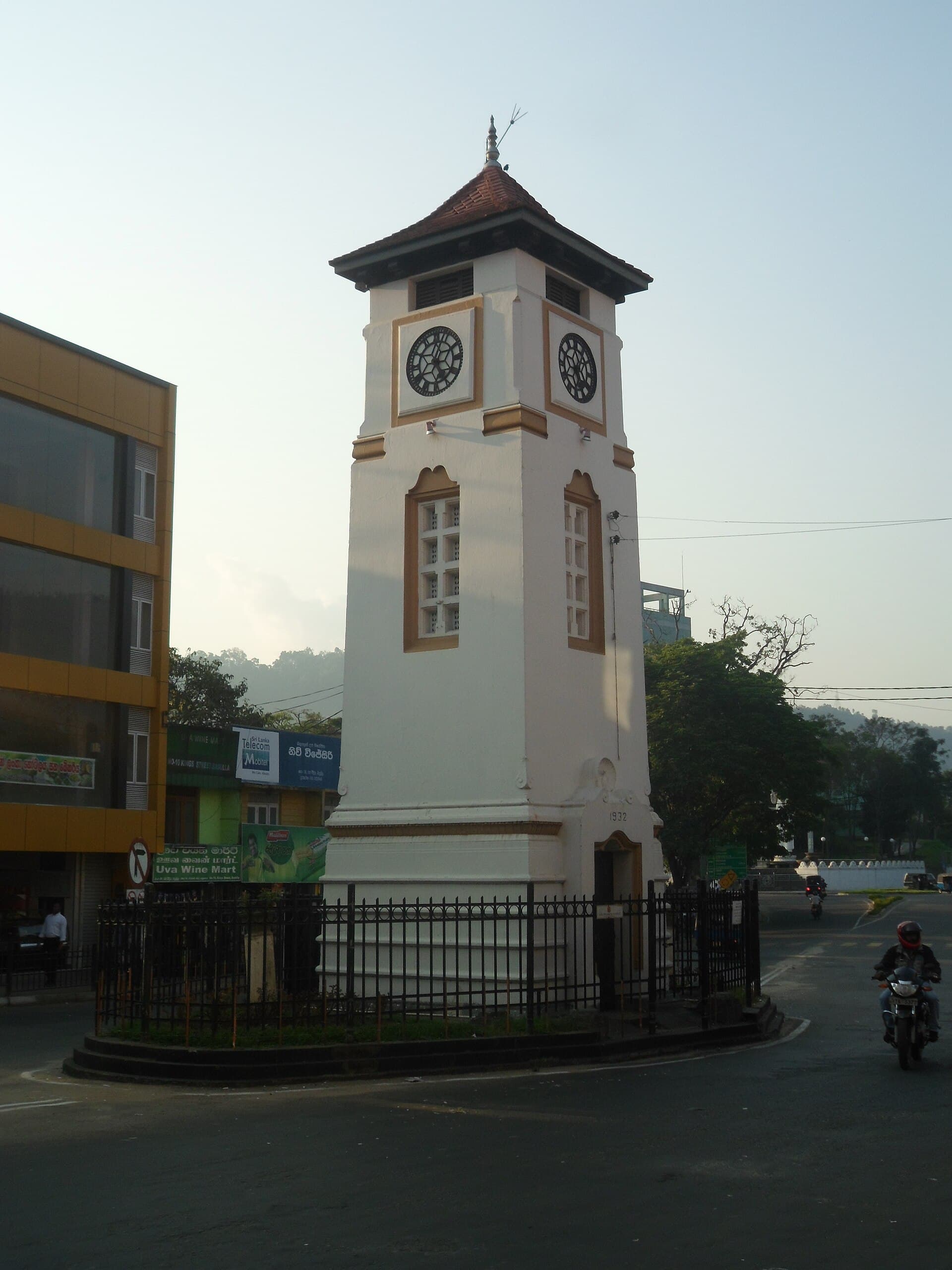
The Dowa Rock Temple offers a blend of religious heritage and fascinating history, including a legendary tunnel used by King Walagamba. Explore the colonial past at the Old Welekade Market, a bustling hub housed in a historic British-era building. The Badulla Clock Tower, built in 1932, stands as a central landmark. Beyond the city, the Namunukula Mountain Range provides expansive views and hiking opportunities, while numerous tea factories offer tours to learn about the tea-making process.
The best time to visit Badulla for warm-weather activities and clear views is generally from early January to late March. During this dry season, rainfall is low, and temperatures are pleasant. While Badulla is beautiful year-round, the wetter season typically lasts from April to December, with November being the rainiest month. The period from June to August also experiences lower rainfall, making it another good option for exploring the outdoors.
Badulla is approximately 230 km from Colombo. It is well-connected by road, and the scenic train journey from Kandy or Nuwara Eliya to Badulla is a highlight for many, offering expansive views of the hill country. Within the city and for nearby attractions, tuk-tuks and buses are readily available for transport. While Badulla has basic tourist infrastructure, it is a quieter base compared to more bustling destinations. Accommodation ranges from charming guesthouses amidst tea estates to modest hotels within the town. It is generally a safe and welcoming destination, but standard travel precautions are always advisable.
Badulla in Korean, in Chinese or in Hebrew — and 29 more languages, every stop narrated by a native voice. The widest language range of any self-guided audio tour.
Available in: