La Puerta Superior (Obertor)
Examine el fresco de la Puerta Superior; descubrirá más que una figura sagrada.
La historia completa se desbloquea en el tour
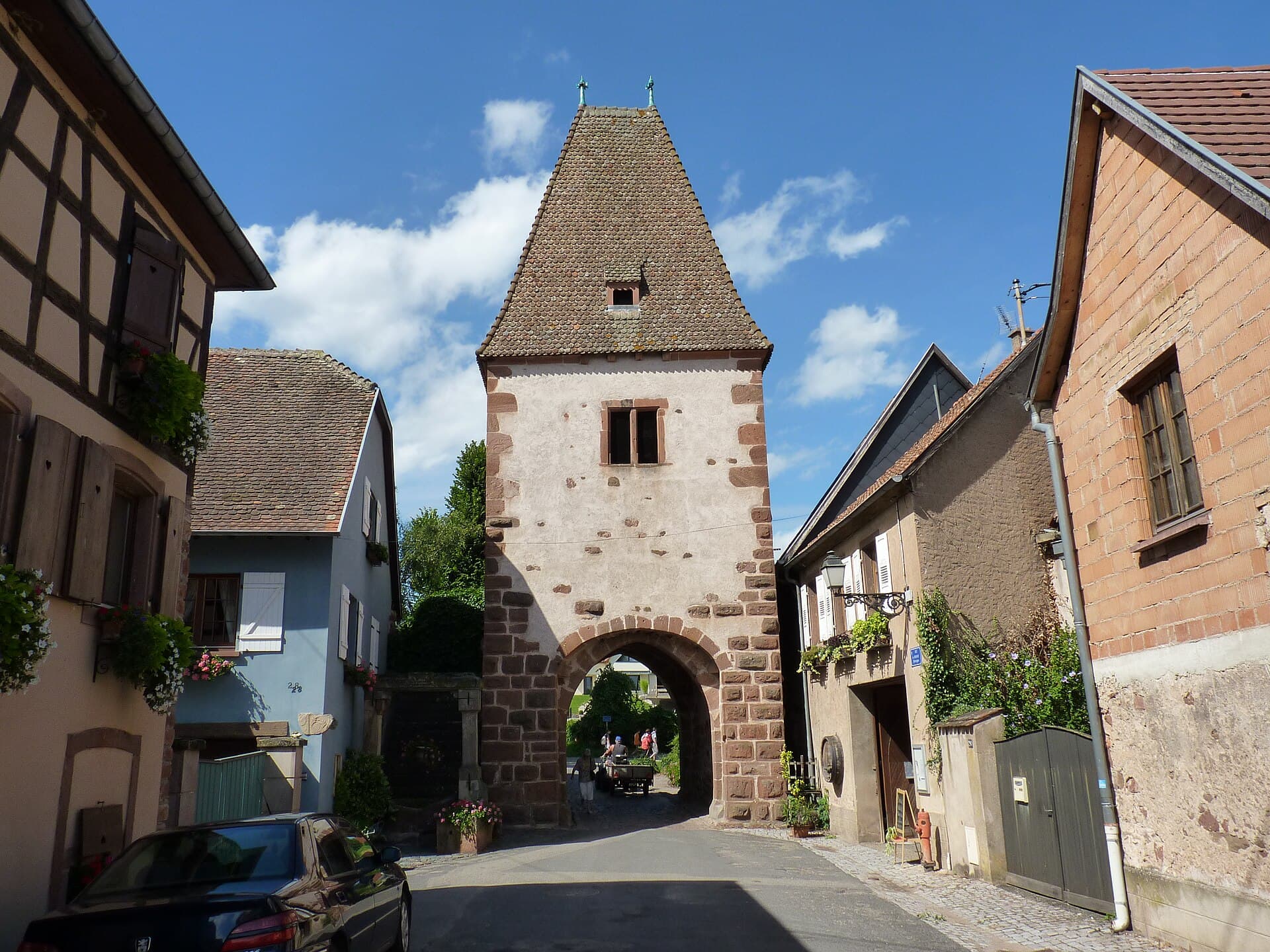 Bernard Chenal / CC BY-SA 4.0, via Wikimedia Commons
Tour de audio autoguiado de Boersch — ruta GPS a pie, reproducción offline, narración en 32 idiomas.
“Donde las antiguas murallas se encuentran con la elegancia renacentista, a lo largo de la ruta del vino de Alsacia.”
No las postales. Las historias que ni los locales conocen — al oído, justo donde ocurrieron.
Examine el fresco de la Puerta Superior; descubrirá más que una figura sagrada.
El antiguo convento benedictino de Saint-Léonard salvaguarda un inesperado patrimonio artístico.
A un corto viaje de Boersch, la aldea de Klingenthal alberga un sorprendente pasado industrial.
Descubre todos los secretos de Boersch
Cada dirección, cada revelación al completo — a tu oído, justo donde ocurrió.
Eliges tus paradas. Caminas. La voz te revela lo que los demás ignoran.

Tu tour de audioguía por Boersch te espera — elige tus lugares, tu idioma y empieza al llegar.
ComprarLume incluye una guía de realidad aumentada. Levanta el móvil y su cámara muestra la calle que tienes delante, con una flecha luminosa sobre la imagen real que siempre apunta a tu próxima parada — sin mapas que descifrar, sin giros equivocados. Como todo en Lume, funciona completamente sin conexión.
Boersch, una cautivadora ciudad medieval a lo largo de la Ruta del Vino de Alsacia, invita a los visitantes a viajar en el tiempo. Rodeada de viñedos y suaves colinas, esta comuna en el departamento francés del Bajo Rin ofrece una convergencia de defensas medievales y arquitectura renacentista. Sus murallas bien conservadas y tres puertas perdurables ofrecen una conexión tangible con su pasado, mientras que encantadoras casas de entramado de madera, muchas adornadas con los símbolos de antiguos oficios, bordean sus estrechas calles.
El carácter distintivo de Boersch se enriquece aún más con sus componentes separados: la propia ciudad medieval, la antigua colegiata de Saint-Léonard y el pueblo industrial de Klingenthal. Esta combinación crea un destino donde la historia, el arte y las tradiciones vinícolas se entrelazan. La elevación de la ciudad de aproximadamente 230 metros ofrece agradables vistas del Piamonte alsaciano circundante.
Aunque Boersch mantiene una atmósfera serena, está lejos de estar aislada. Sirve como punto de entrada a la región más amplia de Alsacia, ofreciendo un acceso conveniente a otras ciudades notables y maravillas naturales. La esencia de Boersch reside en su capacidad para transportarte a otra época, proporcionando una visión de la vida alsaciana a través de su legado perdurable.
Los inicios de Boersch se remontan a más de 3.000 años, con descubrimientos arqueológicos de 1925, incluyendo un hacha de piedra y fragmentos de cerámica, que indican una presencia neolítica. El nombre 'Bersa' o 'Berse', registrado por primera vez en 1109 con la fundación del cercano monasterio benedictino de Saint-Léonard, sugiere una etimología celta o incluso prerromana, posiblemente significando 'enrejado de mimbre', 'empalizada' o 'aguas rápidas'.
Para el siglo X, el Gran Capítulo de la Catedral de Estrasburgo había establecido una corte señorial en Boersch, y la importancia económica del vino ya era evidente, con un viñedo señorial situado en un área conocida como Weingarten. En 1340, Boersch obtuvo el estatus de ciudad y se construyeron murallas defensivas a su alrededor. Estas fortificaciones, originalmente con cuatro puertas, fueron esenciales para la defensa de la ciudad.
La era medieval presentó su cuota de dificultades para Boersch. En 1385, la ciudad fue tomada, saqueada y en gran parte devastada por el conde Enrique III de Saarwerden, y la iglesia también sufrió un incendio. Posteriormente, el obispo de Estrasburgo, Guillaume de Diest, hipotecó repetidamente la ciudad para saldar sus deudas. Para 1466, el señorío de Boersch se transfirió definitivamente del obispado al Gran Capítulo, permaneciendo bajo su control hasta la Revolución Francesa.
El siglo XVI trajo un período de florecimiento, evidente en la arquitectura renacentista que aún adorna la ciudad. Sin embargo, esto fue seguido por la destrucción durante la Guerra de los Treinta Años, particularmente en 1622 y 1632. Después de estos conflictos, Boersch se convirtió en una ciudad francesa, compartiendo el destino de Alsacia dentro del Reino de Francia. Un desarrollo significativo en el siglo XVIII fue el establecimiento de la Manufactura Real de armas blancas en Klingenthal en 1730, una iniciativa de Luis XV para asegurar la autosuficiencia de Francia en armas.
Alrededor de 1900, la antigua colegiata de Saint-Léonard experimentó un resurgimiento cultural, evolucionando hacia un centro artístico e intelectual vital en Alsacia. Patrocinadores como Anselme Laugel y artistas como Charles Spindler, célebre por su marquetería, formaron el 'Cercle de Saint-Léonard', contribuyendo a una renovación de la identidad alsaciana. Hoy, la principal actividad económica de la ciudad sigue siendo la viticultura, con los viñedos continuando dando forma a su paisaje y cultura. El legado perdurable del pasado de Boersch es visible en su arquitectura, desde las puertas medievales hasta el Ayuntamiento renacentista y el histórico Pozo de los Seis Cubos.
Comience su exploración en la Place de l'Hôtel de Ville, donde la arquitectura renacentista llama la atención. El Ayuntamiento en sí mismo es una estructura notable con una escalera de caracol encerrada en una torreta. Enfrente, el Pozo de los Seis Cubos, datado en 1617, se erige como un hito distintivo, restaurado en 2009 para revelar su revestimiento de arenisca. Este pozo, de aproximadamente 8 metros de profundidad con 4 metros de agua, fue construido por Jacob Zumsteg.
Pasee por las estrechas callejuelas para descubrir las bien conservadas murallas y puertas medievales, construidas alrededor de 1340. Tres de las cuatro puertas originales permanecen: la Puerta Inferior (Niedertor) al este, la Puerta Superior (Obertor) al sur y la Puerta Trasera (Aftertor) al norte. La Puerta Superior está adornada con una pintura de San Medardo, el patrón de la ciudad, mientras que la Puerta Inferior contiene una estatua de la Virgen. Mientras camina, observe las numerosas casas de entramado de madera, muchas de ellas mostrando antiguos emblemas comerciales. No pase por alto la antigua casa de los Caballeros Teutónicos, que data de 1499.
A poca distancia del centro de la ciudad, el antiguo convento benedictino de Saint-Léonard ahora alberga los talleres de marquetería Spindler, un sitio significativo para el Art Nouveau alsaciano. Para una perspectiva histórica diferente, visite Klingenthal, una aldea establecida por Luis XV para una manufactura real de armas blancas, que ahora cuenta con un museo dedicado a su pasado industrial.
Las estaciones de transición de primavera (abril a junio) y otoño (septiembre a octubre) ofrecen condiciones ideales para visitar Boersch. Durante estos meses, el clima es generalmente agradable y las multitudes son más ligeras en comparación con la temporada alta de verano. La primavera trae consigo pueblos en flor y viñedos verdes, mientras que el otoño presenta gloriosos colores otoñales y la vendimia. El verano (julio y agosto) también es una buena época, con clima cálido y pueblos animados, aunque puede ser más concurrido. El invierno (enero a marzo) es más tranquilo, con precios más bajos y menos visitantes, pero muchas atracciones pueden operar con horarios reducidos.
Boersch está situada en el departamento del Bajo Rin de la región de Grand Est de Francia, aproximadamente a 39 km de Estrasburgo. La forma más sencilla de llegar a Boersch es en coche, con estacionamiento disponible cerca del casco antiguo, aunque puede ser un desafío durante los períodos de mayor afluencia. Las opciones de transporte público desde Estrasburgo incluyen un servicio de autobús directo (línea 257) desde la Plaza Les Halles hasta la Rue des Lilas, con un tiempo de viaje de aproximadamente 59 minutos.
Explorar el centro histórico de Boersch se realiza mejor a pie, por lo que se recomienda llevar calzado cómodo para navegar por las calles adoquinadas. Si bien no hay una oficina de turismo dedicada en Boersch, a menudo se puede encontrar información a través de los recursos turísticos regionales. Las opciones de restaurantes, aunque atractivas, pueden ser limitadas, por lo que se recomienda planificar las comidas con anticipación. Para aquellos interesados en los acontecimientos locales, los mercados de verano se celebran en la Place de l'Hôtel de Ville de julio a agosto, exhibiendo artesanías y especialidades locales.
Boersch en coreano, en chino o en hebreo — y 29 idiomas más, cada parada narrada por una voz nativa. La mayor variedad de idiomas de cualquier audioguía autoguiada.
Disponible en: