Humanist Library
A giant's rib is said to be among the ancient texts.
Full story unlocks in the tour
 Poudou99 / CC BY 3.0, via Wikimedia Commons
Self-guided audio walking tour of Sélestat — GPS route, offline playback, story-driven narration in 32 languages.
“Where history is not just preserved, but profoundly alive.”
Not the postcards. The stories even locals don't know — whispered in your ear, right where they happened.
A giant's rib is said to be among the ancient texts.
Beneath a Romanesque church, a mysterious face from centuries past awaits.
An ordinary accounting ledger holds the secret to a global tradition.
Discover every secret of Sélestat
Every address, every reveal in full — in your ear, right where it happened.
You pick your stops. You walk. The voice reveals what the others miss.


Lume has a built-in augmented-reality guide. Hold your phone up and its camera shows the street ahead of you, with a glowing arrow laid over the real view that always points to your next stop — no map to puzzle over, no wrong turns. Like everything in Lume, it works fully offline.
Sélestat, a city cradled in the heart of Alsace, France, offers a blend of medieval character and Renaissance intellectualism, positioned between the Vosges Mountains and the Rhine River. This "City of Art and History" holds a significant place in Alsatian heritage, revealing a wealth of historic buildings and a remarkably preserved past.
Once a prosperous imperial city and a center of Rhenish humanism, Sélestat's paved streets and historic architecture tell stories of centuries gone by. With its central location, it serves as an excellent base for exploring the broader Alsace region, including the nearby Wine Route and the grand Haut-Koenigsbourg Castle.
## From Roman Roots to Imperial Grandeur Sélestat's history stretches back to Roman times, with its existence attested as early as the 8th century, including a visit from Charlemagne in 775. Legend attributes the town's founding to a giant named Sletto, giving rise to its former German name, Schlettstadt.
The town truly began to flourish in the 11th century with the establishment of a priory. In 1217, Sélestat gained the prestigious status of a Free Imperial City of the Holy Roman Empire, which allowed it to build fortifications and collect its own taxes. This period marked the beginning of significant prosperity.
## A Hub of Humanism and the Décapole In 1354, Sélestat became a key member of the Décapole, an alliance of ten Alsatian imperial cities formed for mutual aid and defense. Its central location made it the headquarters for the league's archives and meetings. The 15th and 16th centuries saw Sélestat emerge as a significant center of Rhenish humanism, largely due to its renowned Latin school, founded in 1452. This intellectual ferment attracted scholars from across Europe, with figures like Beatus Rhenanus, a close friend of Erasmus, contributing to its reputation.
## French Annexation and Modern Revival Sélestat's fortunes shifted with the turmoil of the Reformation and the Thirty Years' War. In 1634, it was annexed by France, a status solidified by the Treaty of Nijmegen in 1678. Vauban, the famous military architect, rebuilt the town's walls between 1675 and 1691. However, with the conquest of Strasbourg in 1681, Sélestat's strategic importance diminished. The town experienced a period of relative decline until the 20th century, when efforts to promote its exceptional architectural and cultural heritage led to a renewed vitality. Today, Sélestat stands as a testament to its varied past, with 29 buildings listed as historic monuments.
Begin your exploration at the Humanist Library, a UNESCO Memory of the World site. Housed in a former wheat market, this architectural blend of old and new, designed by Rudy Ricciotti, safeguards a priceless collection of medieval manuscripts and 15th and 16th-century prints, including the personal library of Beatus Rhenanus.
Discover Sélestat's spiritual heritage with its two prominent churches. The Romanesque Sainte-Foy Church, dating from the 12th century, is the oldest building in town and showcases architectural influences from Lorraine and Burgundy. The Gothic Saint-Georges Church from the 13th-15th century also offers a glimpse into the town's past.
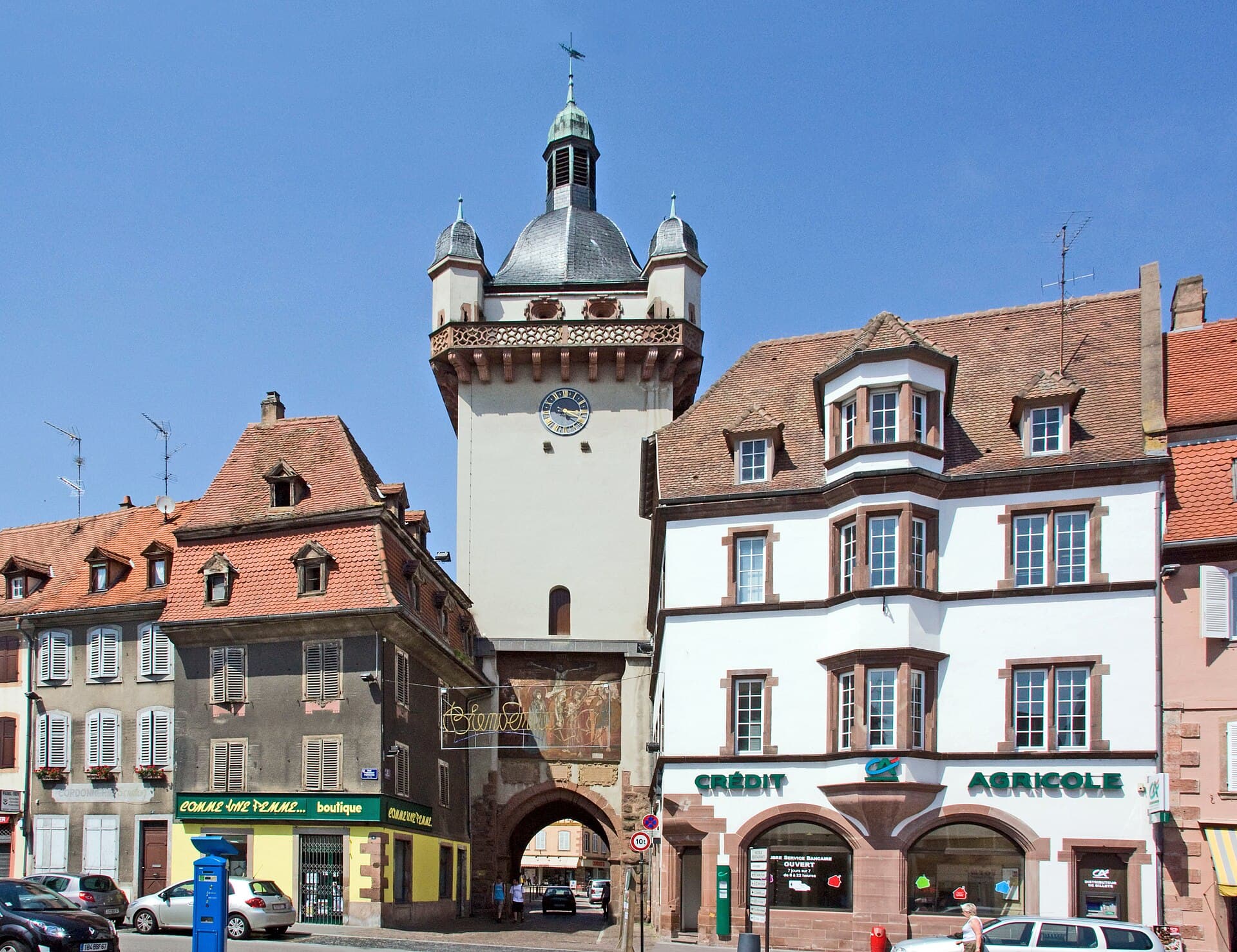
Walk through the historic heart to admire well-preserved mansions and the remnants of the medieval ramparts, such as the Tour de l'Horloge (Clock Tower) and the Witches' Tower. For a taste of local culture, visit the Maison du Pain d'Alsace (House of Alsatian Bread) or explore the contemporary art circuit. The surrounding natural beauty, including the Illwald forest and the Alsace Wine Route, offers opportunities for cycling and nature walks.
Sélestat is a destination that can be enjoyed year-round, with each season offering a different appeal. For pleasant weather and smaller crowds, consider visiting during spring (April to June) or fall (September to November). These seasons are ideal for exploring the vineyards and enjoying the golden hues of autumn. Summer (May to October) brings warm days perfect for relaxing, while December transforms the town into a Christmas fairytale, celebrating its unique connection to the Christmas tree tradition with festive markets and decorations.
Sélestat is easily accessible by train, with its station located a 10-minute walk from the town center and regular connections to Strasbourg, Colmar, and Mulhouse. Strasbourg Airport is approximately 45 minutes away by car or train. The town itself is quite walkable, with most attractions, shops, and restaurants within close proximity. The local currency is the Euro (EUR), and ATMs are widely available, with most places accepting credit cards. Consider a stay of at least one day to explore the town, with more time if you plan to discover the surrounding Alsace region.
Sélestat hosts various events throughout the year, including the Corso Fleuri (Flower Parade) in August and a Christmas Market in December. The contemporary art biennial, Sélest'Art, takes place in odd-numbered years, featuring monumental works displayed across the city.
Sélestat in Korean, in Chinese or in Hebrew — and 29 more languages, every stop narrated by a native voice. The widest language range of any self-guided audio tour.
Available in: