Daehan Dawon Tea Plantation
Beyond the celebrated terraced fields, a secluded path leads to a different kind of forest, one that murmurs of ancient spirits rather than tea leaves.
Full story unlocks in the tour
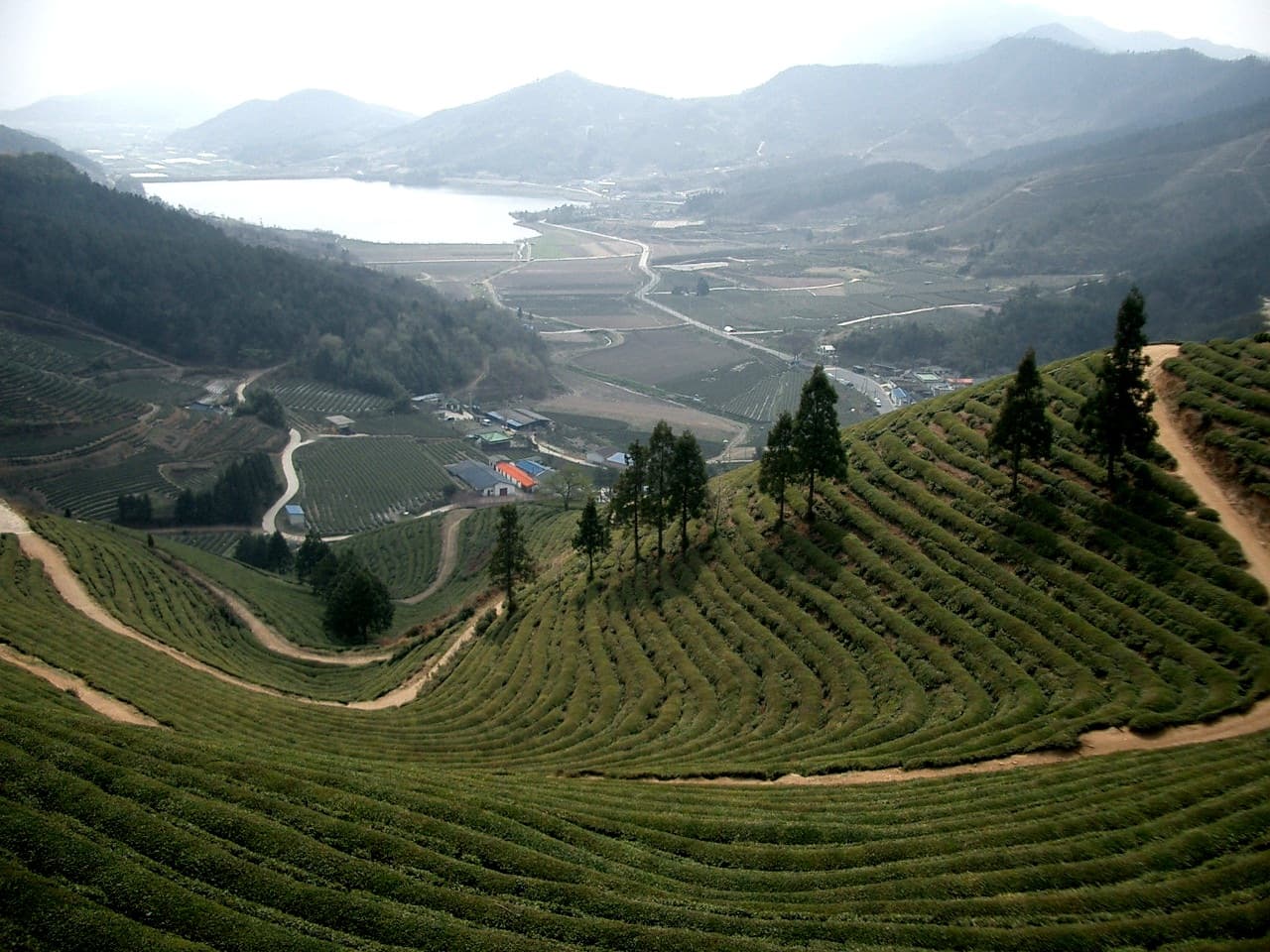 by Fred Ojardias / CC BY 2.0, via Wikimedia Commons
Self-guided audio walking tour of Boseong — GPS route, offline playback, story-driven narration in 32 languages.
“Where the rolling hills tell tales in shades of green.”
Not the postcards. The stories even locals don't know — whispered in your ear, right where they happened.
Beyond the celebrated terraced fields, a secluded path leads to a different kind of forest, one that murmurs of ancient spirits rather than tea leaves.
Boseong's standing for green tea is so firm that some tea companies claim their tea originates from other regions, when in reality, it comes from here.
The particular taste of Boseong's green tea is not merely about the plant; it arises from a specific atmospheric dance between land and sea.
Discover every secret of Boseong
Every address, every reveal in full — in your ear, right where it happened.
You pick your stops. You walk. The voice reveals what the others miss.

Your self-guided audio tour of Boseong is ready — pick your landmarks, choose your language, and start the moment you arrive.
BuyLume has a built-in augmented-reality guide. Hold your phone up and its camera shows the street ahead of you, with a glowing arrow laid over the real view that always points to your next stop — no map to puzzle over, no wrong turns. Like everything in Lume, it works fully offline.
Boseong, situated in South Jeolla Province, is widely recognized as the 'Green Tea Capital of South Korea.' This serene county is celebrated for its expansive, terraced green tea plantations that drape the rolling hills, creating a landscape of deep emerald. Travelers are drawn to Boseong not just for its visual splendor but also for the immersive experience it offers into Korea's tea culture. The air here often carries the scent of fresh tea leaves, inviting unhurried walks through the fields and chances to sample the region's esteemed brew.
Beyond the prominent tea fields, Boseong provides a quieter, more rural escape compared to bustling cities like Suncheon or Yeosu. It is a place to slow down, breathe in the crisp air, and appreciate the natural beauty and local hospitality. The town itself is modest, with low-rise streets, local eateries, and a friendly, communal atmosphere, making it an ideal base for exploring the surrounding landscapes and cultural treasures.
The cultivation of wild tea in the Boseong region dates back as far as the mid-300s BC. Green tea was formally introduced to Korea from China during the Silla Dynasty in the 600s AD. During the Goryeo Dynasty, tea farming was primarily concentrated around temples and for the royal court. By the Joseon Dynasty, tea began to grow naturally in the Jeolla and Gyeongsang provinces, including Boseong.
Boseong's ideal climate, characterized by ample rainfall, moderate temperatures, and significant daily temperature ranges, along with humid conditions near bodies of water, provides perfect conditions for cultivating high-quality green tea. The region's unique topography, situated about 100 meters above sea level with cool breezes and mist from the ocean, contributes to the distinct taste and aroma of its tea.
An official green tea plantation was first established in Boseong in the 1930s during the Japanese colonial period. However, this early plantation suffered significant damage during the Korean War. In 1957, Chang Young-seop undertook the monumental task of re-establishing the Daehan Tea Garden, which has since grown to become the largest and most famous green tea plantation in Boseong. In recent decades, the local government has actively supported the green tea industry through subsidies and collaborations with universities and research institutes to enhance tea quality and output. Local media efforts have also played a crucial role in promoting Boseong as the 'Green Tea Capital of the Country,' solidifying its reputation and attracting tourists.
Today, Boseong is the largest tea-producing area in South Korea, accounting for approximately 40% of the nation's total green tea production. This long and deliberate history has cemented Boseong's status as a cornerstone of Korean tea culture.
The Daehan Dawon Green Tea Plantation is the centerpiece of any visit to Boseong. Wander through the meticulously maintained terraced fields, taking in the serene landscape and the fresh scent of tea leaves. Do not miss the opportunity to climb to the various lookout points for expansive views, including glimpses of the distant sea on clear days. The entrance to the plantation features a beautiful cedar tree-lined forest path, offering a picturesque introduction to the tea fields.
Beyond the main tea fields, seek out the tranquil bamboo forest within the plantation grounds, a peaceful escape that offers a different natural beauty. For a deeper understanding of tea production, the Tea Museum of Korea provides insights into the history and cultivation of green tea in the region.
Consider a visit to Yulpo Beach, a nearby coastal spot where you can relax by the sea and even experience a unique green tea spa. For those interested in local life, the Boseong Traditional Market is a lively place to explore, offering fresh produce, local snacks, and handmade goods, and a chance to interact with friendly vendors. If you are traveling with family, the Bibong Dinosaur Park offers a fun, themed experience.
Boseong is lovely year-round, but the most favorable times to visit are late spring to early summer (April to June) or autumn (September to November). During these periods, the weather is mild and dry, with pleasant temperatures ranging from 15-25°C (59-77°F), ideal for exploring the tea fields and hiking. May and June are particularly recommended when the tea leaves are at their greenest. The annual Boseong Green Tea Festival typically takes place around late May, offering tea ceremonies and cultural performances. Avoid July and August due to high humidity and heavy rainfall. In winter, from mid-December to mid-January, the Boseong Tea Plantation Light Festival illuminates the fields, creating a unique visual experience.
Boseong is generally safe, but sturdy shoes are recommended for walking the tea fields, as paths can be slippery after rain. When visiting temples or traditional sites, dress modestly and respect local customs. Always ask permission before photographing residents.
From Seoul, you can take an express bus directly to Boseong (approximately 5 hours) or a train from Yongsan Station to Boseong Station (around 5.5 hours). From Gwangju, buses to Boseong take about 1.5 hours, with some express buses stopping directly at the Boseong Green Tea Fields entrance. From Suncheon, trains take about 58 minutes, and buses take approximately 1 hour. Once in Boseong, local buses run frequently between the town and the green tea fields, or taxis are readily available. Consider purchasing a transportation card for discounts on local bus fares.
Boseong in Korean, in Chinese or in Hebrew — and 29 more languages, every stop narrated by a native voice. The widest language range of any self-guided audio tour.
Available in: