Cantine Cerrato
Beneath Bovino's engaging streets lies a secret world, a network of ancient underground passages.
Full story unlocks in the tour
 Ettore Timi / cc by 2.5, via Wikimedia Commons
Self-guided audio walking tour of Bovino — GPS route, offline playback, story-driven narration in 32 languages.
“Where ancient stones recount ages of empires and brigands.”
Not the postcards. The stories even locals don't know — whispered in your ear, right where they happened.
Beneath Bovino's engaging streets lies a secret world, a network of ancient underground passages.
Among the sacred relics in Bovino, one stands out for its profound significance.
Observe the Cathedral's facade closely, and you will notice an intriguing asymmetry.
Discover every secret of Bovino
Every address, every reveal in full — in your ear, right where it happened.
You pick your stops. You walk. The voice reveals what the others miss.

Your self-guided audio tour of Bovino is ready — pick your landmarks, choose your language, and start the moment you arrive.
BuyLume has a built-in augmented-reality guide. Hold your phone up and its camera shows the street ahead of you, with a glowing arrow laid over the real view that always points to your next stop — no map to puzzle over, no wrong turns. Like everything in Lume, it works fully offline.
Bovino, an engaging village in Puglia's Daunia Mountains, invites you to step back in time. Recognized as one of Italy's Most Beautiful Villages, it offers a serene escape with its medieval character and expansive views of the Cervaro Valley. Situated at nearly 650 meters above sea level, Bovino provides a refreshing mountain atmosphere, a welcome contrast to Puglia's coastal warmth.
Wander through its labyrinthine streets, where every turn reveals ancient stone buildings, arches, and a remarkable collection of over 800 ornate stone portals. This hilltop town, with its profound and turbulent past, has preserved its authentic spirit, offering a glimpse into centuries of history, from Roman foundations to Norman strongholds.
## From Ancient Roots to Medieval Stronghold Bovino's history stretches back over two millennia, originating as a settlement of the Dauni people in 323 B.C. It faced early destruction during the Samnite Wars, only to be rebuilt by the Romans, who renamed it Vibinum. Historians even suggest that Hannibal may have camped near Bovino during the Second Punic War on his march to Cannae.
## Conquerors and Rebuilders The town's strategic location meant it was repeatedly conquered and rebuilt by various powers. After Roman rule, the Lombards took control, but Bovino was again destroyed during the Byzantine wars. The Byzantines, recognizing its potential, rebuilt the town, establishing the narrow, winding street layout that largely defines its historic center today. This rebuilding was so successful that Bovino became one of the longest-standing Byzantine strongholds during the Norman conquest of southern Italy.
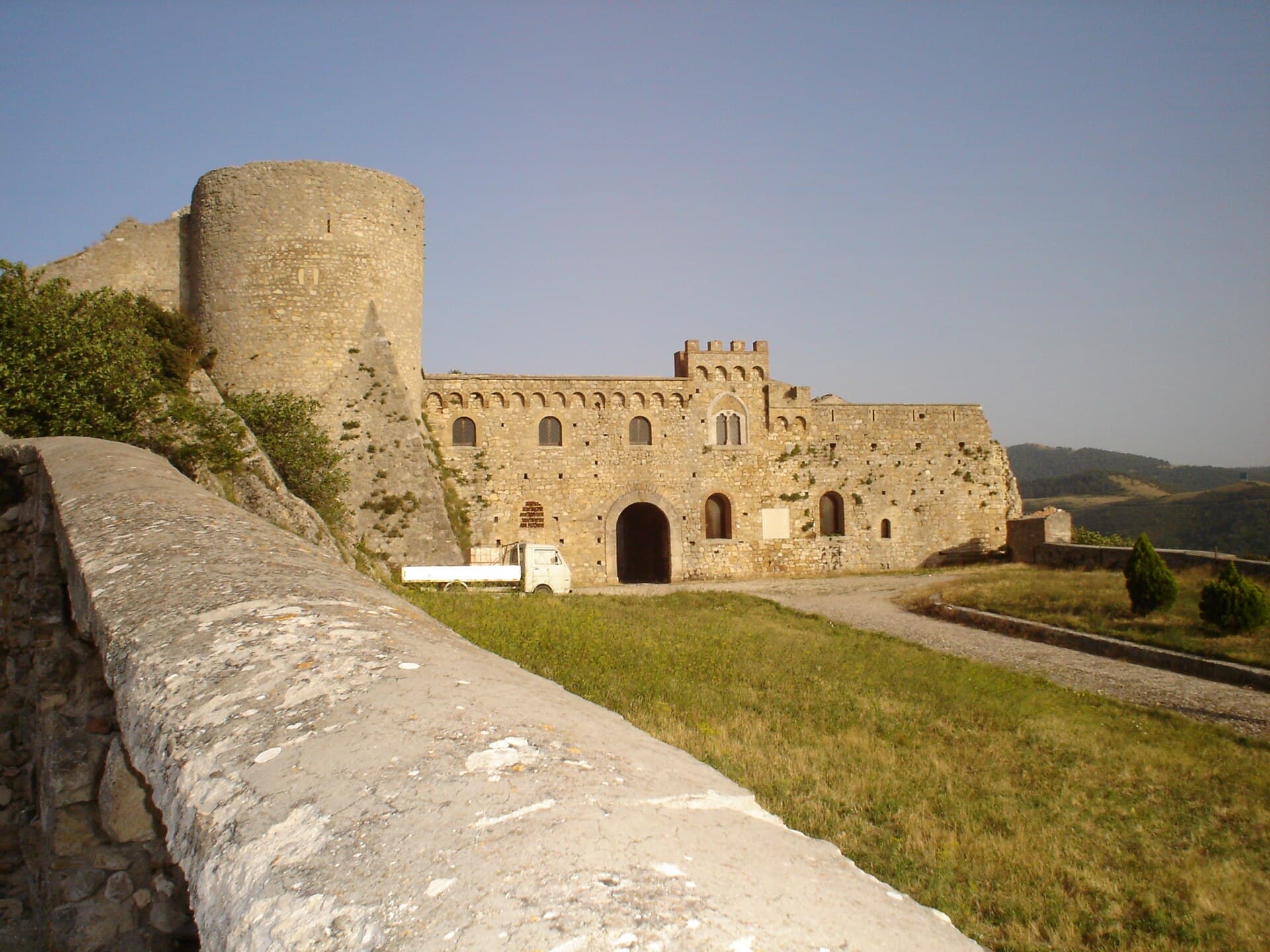
## Noble Residences and Periods of Peace In the 11th century, the Norman Castello Ducale was built on the ruins of a Roman fortification, later enlarged by Frederick II. By the 17th century, it had become the elegant residence of the Spanish Dukes of Guevara, hosting notable figures over the years. The 13th century brought a period of relative peace under Frederick II's kingdom.
## Brigands and Resilience The 19th century saw Bovino play a crucial role in connecting the Adriatic and Tyrrhenian Seas commercially. However, this era also brought the phenomenon of 'Brigandage,' a resistance movement fueled by the extreme poverty following Italy's unification. Despite these tumultuous periods, including a devastating bubonic plague in 1656 that reduced its population significantly, Bovino has maintained its medieval character and appeal. Today, it stands as a testament to resilience, with its ancient roots and layered history evident in every stone.
Begin your exploration at the Castello Ducale, a commanding Norman fortress that offers expansive views of the town and surrounding landscape. Within its walls, you will find the Diocesan Museum, home to ecclesiastical art and a revered relic: a thorn believed to be from Jesus' crown.
Descend into the heart of Bovino's historic center, a labyrinth of narrow, winding streets lined with ancient stone houses and an impressive 800 unique stone portals. The Cathedral Basilica of Santa Maria Assunta, an 11th-century Romanesque-Gothic masterpiece, is a focal point, notable for its asymmetric facade and a striking rose window. Do not miss the Chapel of St. Marco, also known as the 'Cappellone,' accessible from the Cathedral's right aisle.
For a deeper dive into local history, visit the Carlo Gaetano Nicastro Civic Museum in Pisani Palace, showcasing archaeological finds from various eras. Consider a visit to the Santuario di Santa Maria di Valleverde, a significant pilgrimage site with a connection to Pope John Paul II. While not always publicly accessible, the Cantine Cerrato, ancient Roman cisterns, offer a fascinating glimpse into Bovino's underground history by appointment.
The best times to visit Bovino are during spring and autumn (May, June, September, and October) when the weather is mild and pleasant for exploring the town and surrounding countryside. These months offer comfortable temperatures for walking and outdoor activities. While July and August are warm and lively with festivals, temperatures can be high, reaching an average high of 83°F (29°C) in July. Winter months are cooler and quieter, with average lows around 37°F (3°C) in February. Bovino hosts various festivals from spring through late autumn, with the main festival dedicated to Saint Mary of the Assumption taking place on August 29th.
Bovino is located in the province of Foggia, in the northern part of the Puglia region. The closest international airport is Bari Karol Wojtyła Airport (BRI), approximately 155 kilometers away, with a driving time of around 2 hours and 15 minutes. A stay of 1 to 2 days is generally sufficient to explore Bovino's main attractions, though longer stays allow for hiking in the Daunian Mountains and visits to nearby villages. While Bovino is a member of 'Italy's Most Beautiful Villages,' it is not typically overwhelmed with tourists, even during summer months. The town center is pedestrian-friendly, with narrow, winding streets best explored on foot. Many locals gather in the evenings in the central park, known as the 'Villa,' and along the main Corso. Local cuisine features typical Apulian products like Podolian caciocavallo cheese and Nero di Troia wine.
Bovino in Korean, in Chinese or in Hebrew — and 29 more languages, every stop narrated by a native voice. The widest language range of any self-guided audio tour.
Available in: