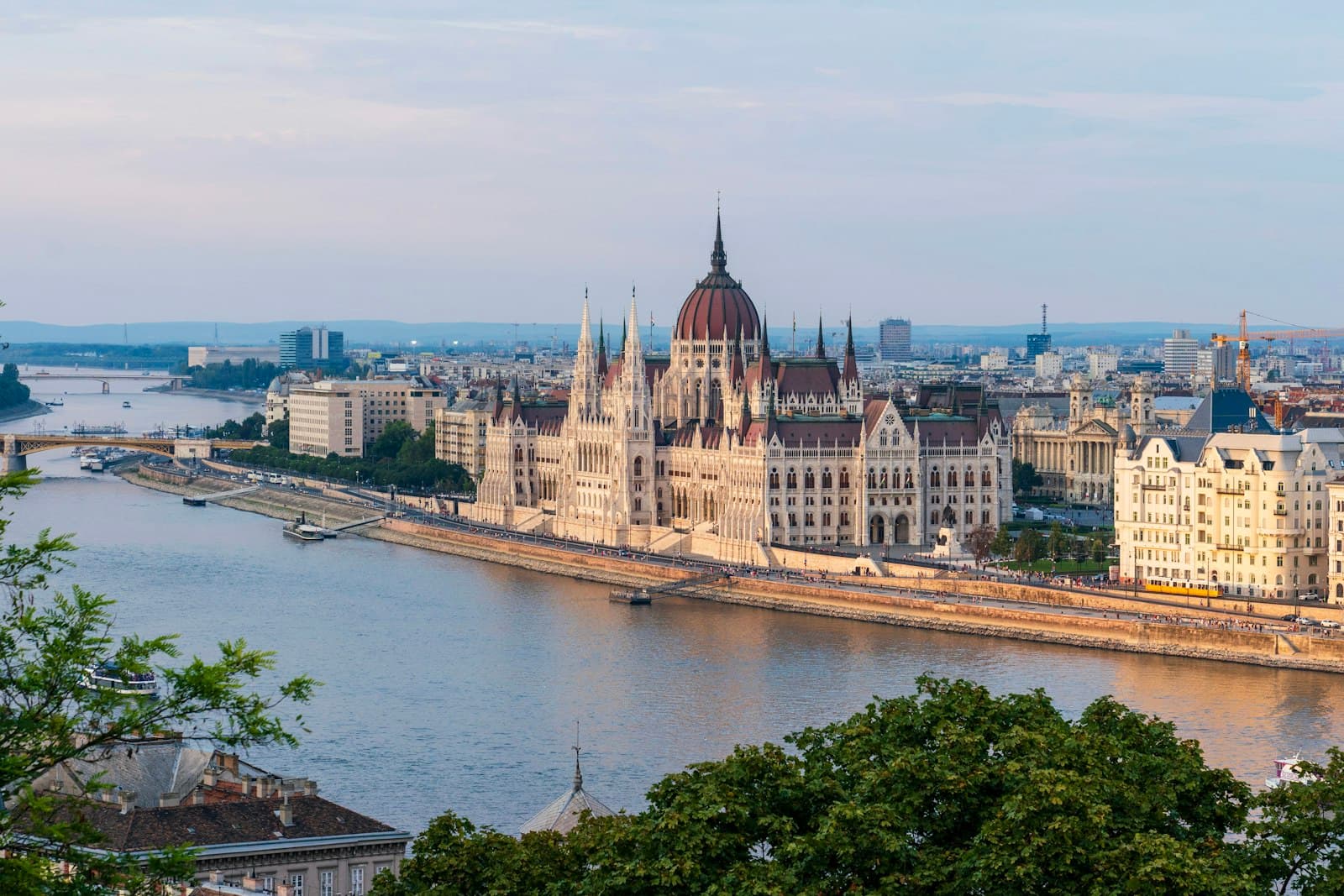
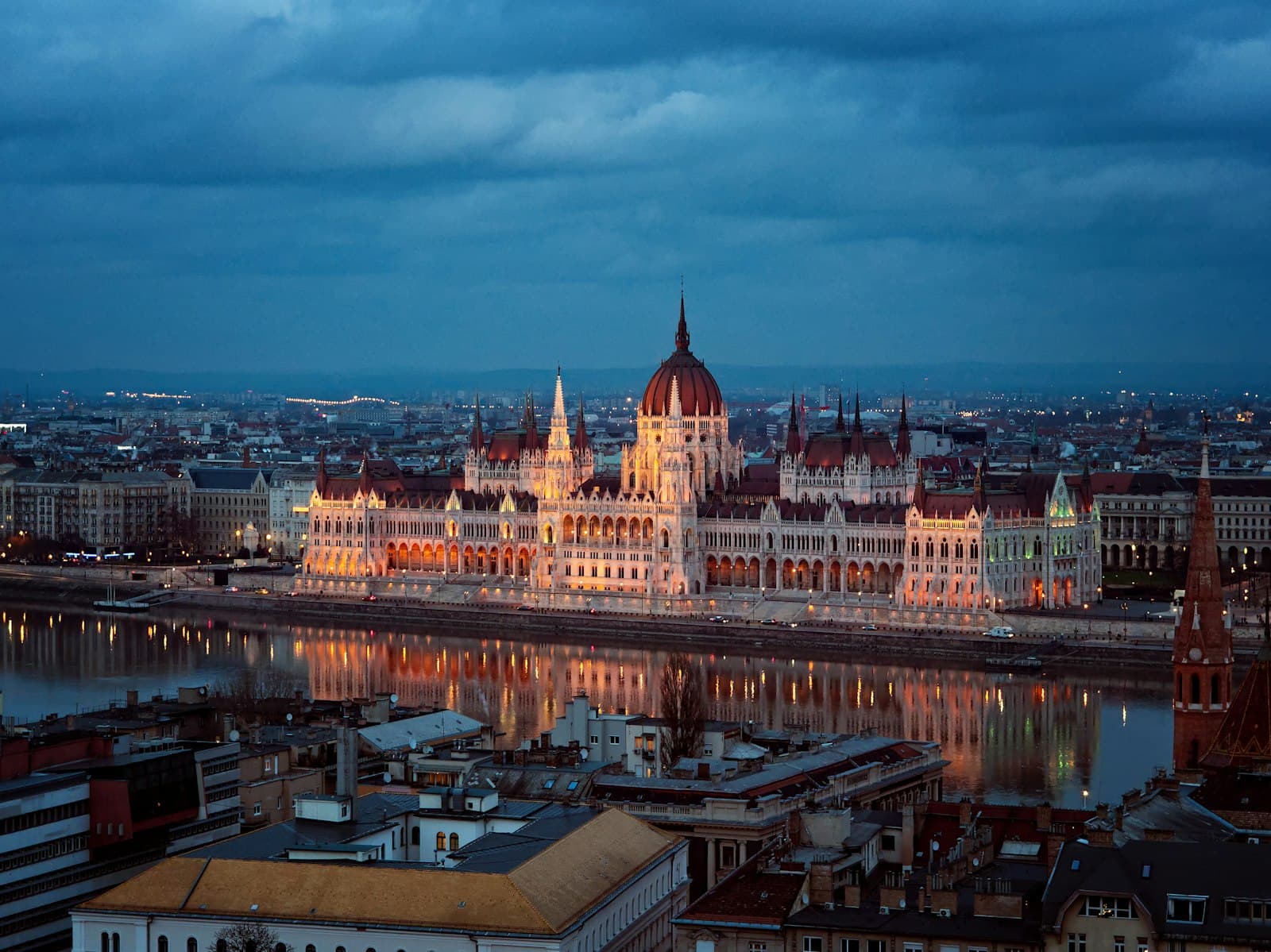
Das Parlamentsgebäude
Dieses prächtige Uferdenkmal, das perfekt ausbalanciert erscheint, verbirgt eine bewusste Asymmetrie in seiner weitläufigen Struktur.
Die ganze Geschichte wird in der Tour freigeschaltet
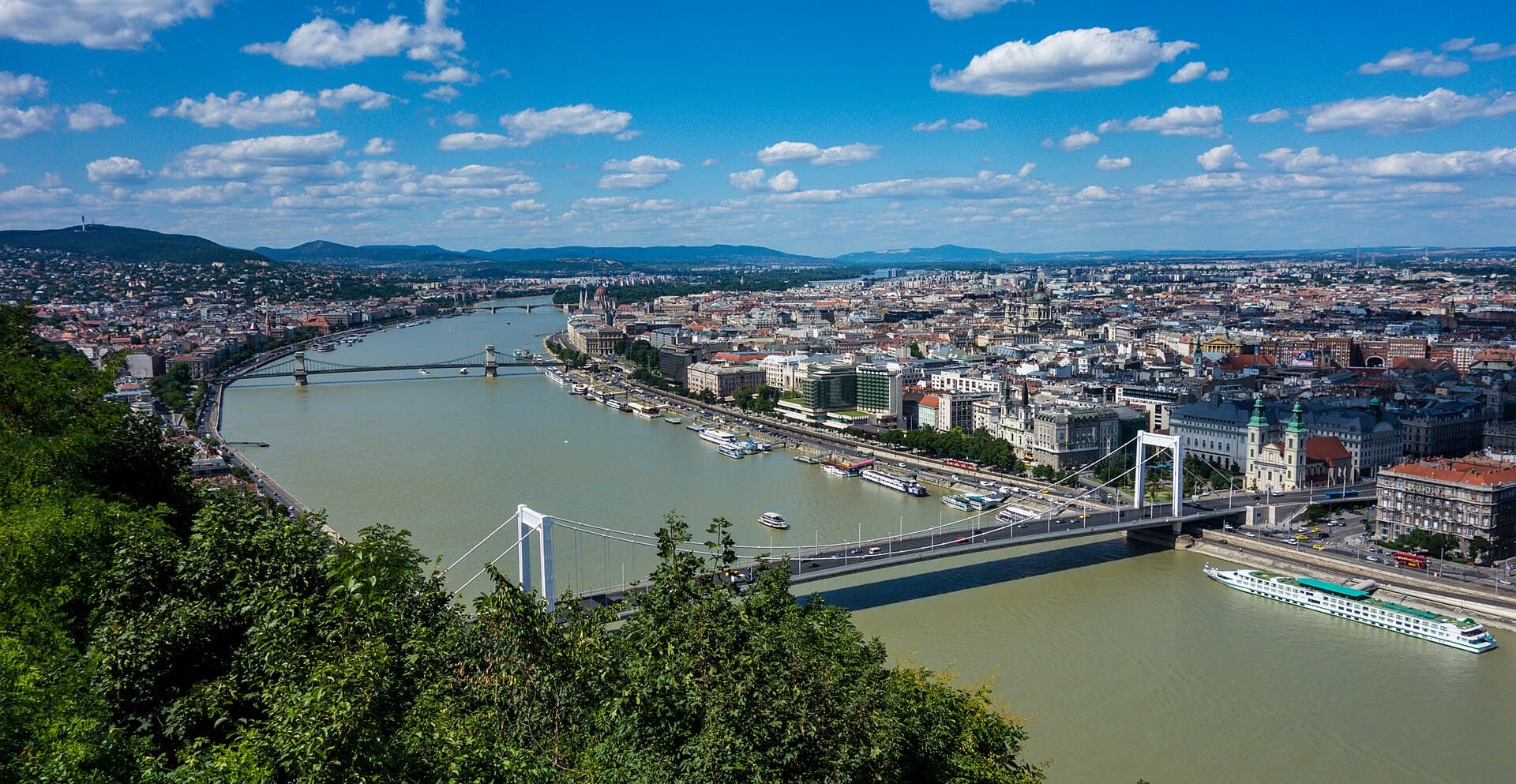 Visions of Domino / CC BY 2.0, via Wikimedia Commons
Selbstgeführte Audio-Walking-Tour durch Budapest — GPS-Route, Offline-Wiedergabe, erzählerische Narration in 32 Sprachen.
“Wo die Donau eine Stadt voller Geschichten formt, jede Fassade eine Erinnerung.”
Nicht die Postkarten. Die Geschichten, die selbst Einheimische nicht kennen – dir ins Ohr geflüstert, genau dort, wo sie geschahen.
Dieses prächtige Uferdenkmal, das perfekt ausbalanciert erscheint, verbirgt eine bewusste Asymmetrie in seiner weitläufigen Struktur.
Diese lebhaften Nachtlokale, gefüllt mit eklektischen Möbeln und Kunst, entstanden aus einem eher düsteren Ursprung.
Sechzig Paar Eisenschuhe säumen das Pester Ufer, eine düstere und eindringliche Erinnerung an ein schreckliches Ereignis.
Entdecke jedes Geheimnis von Budapest
Jede Adresse, jede Enthüllung vollständig – in deinem Ohr, genau dort, wo es geschah.
Du wählst deine Stationen. Du gehst. Die Stimme enthüllt, was andere übersehen.
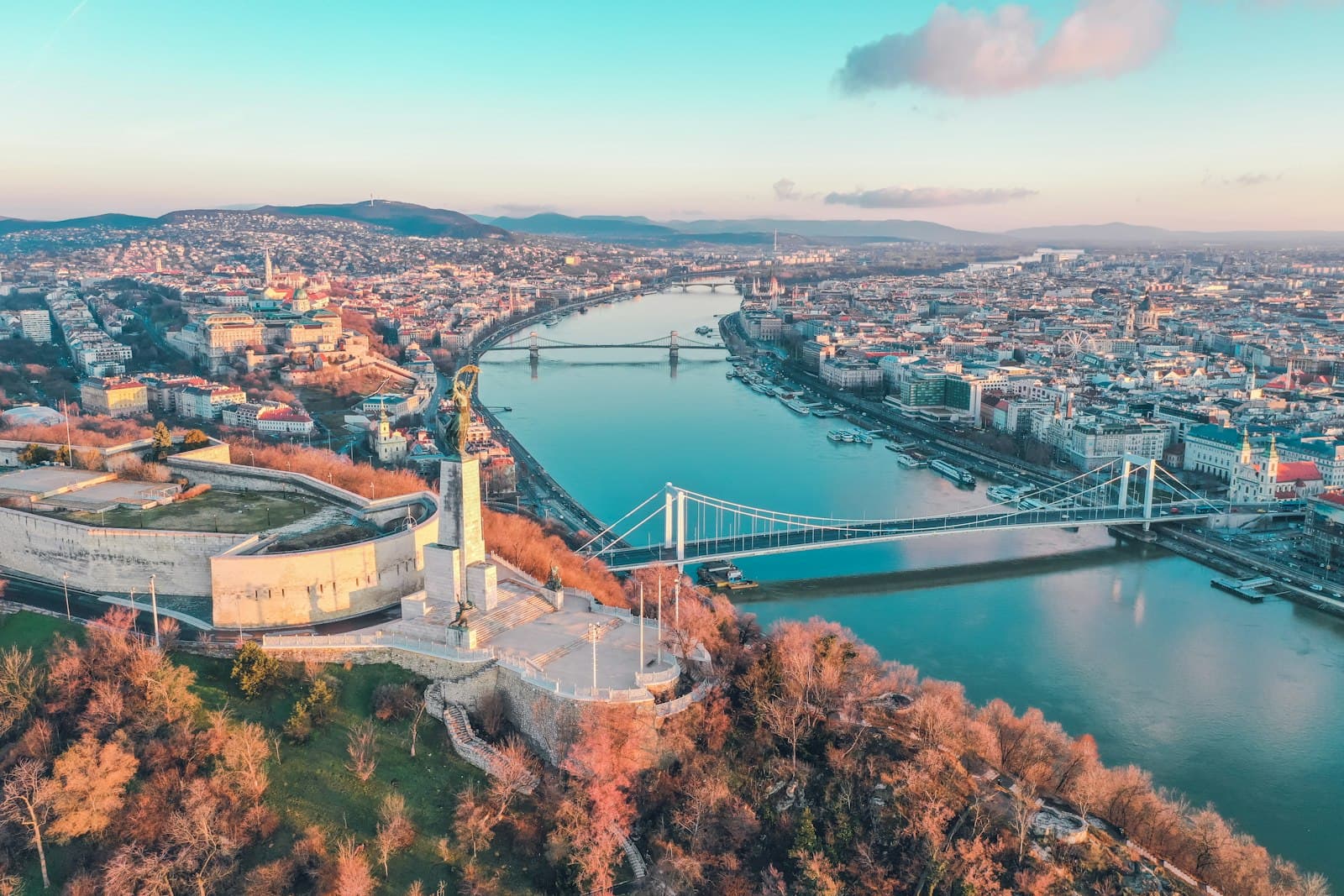
Deine selbstgeführte Audio-Tour durch Budapest ist bereit – wähle deine Sehenswürdigkeiten, deine Sprache und starte, sobald du ankommst.
KaufenLume enthält einen integrierten Augmented-Reality-Guide. Halten Sie Ihr Handy hoch: Die Kamera zeigt die Straße vor Ihnen, mit einem leuchtenden Pfeil über dem echten Bild, der immer auf Ihren nächsten Stopp zeigt — keine Karte zum Rätseln, keine falschen Abzweigungen. Wie alles bei Lume funktioniert es komplett offline.
Budapest, die Hauptstadt Ungarns, ist eine Stadt, die aus Geschichte, Kultur und natürlicher Schönheit gewebt ist. Gegründet im Jahr 1873 durch die Vereinigung dreier eigenständiger Städte – Buda, Óbuda und Pest – bietet sie eine einzigartige Dualität: den hügeligen, historischen Charakter von Buda am Westufer der Donau und den energiegeladenen Puls von Pest am Ostufer. Diese mitteleuropäische Metropole ist eine Weltstadt, die für ihr hochwertiges Humankapital und ihre Einstufung als eine der lebenswertesten Städte weltweit bekannt ist.
Budapest, oft als "Thermalbad-Hauptstadt der Welt" bezeichnet, liegt auf einem riesigen Netzwerk von Thermalquellen, die täglich 70 Millionen Liter warmes, mineralreiches Wasser produzieren. Diese therapeutischen Wasser werden seit Jahrhunderten genutzt, mit Badehäusern, die von historischen Bauten aus der osmanischen Zeit bis hin zu prächtigen Jugendstilkomplexen reichen. Neben seinen gefeierten Spas besticht Budapest durch seine Architektur, von barocken und neoklassizistischen Meisterwerken bis hin zu filigranen Jugendstilentwürfen, die an jeder Ecke visuelle Reize bieten.
Die Bedeutung der Stadt erstreckt sich auf ihre strategische Lage an der Kreuzung europäischer Handelsrouten, wobei die Donau als wichtige Wasserstraße dient. Budapest ist eine Stadt, die zur Erkundung einlädt, sei es beim Flanieren über ihre Prachtboulevards, beim Eintauchen in ihre turbulente Vergangenheit oder beim Erleben ihrer lebendigen zeitgenössischen Kultur.
Die Geschichte Budapests beginnt nicht als eine einzige Einheit, sondern als eine Sammlung von Siedlungen mit tiefen Wurzeln. Die frühesten bekannten Bewohner waren Kelten, deren Präsenz später von den Römern im 1. Jahrhundert zur Stadt Aquincum umgewandelt wurde, die als Hauptstadt von Pannonien Inferior diente. Nach der Besiedlung durch die Magyaren im Karpatenbecken um 896 n. Chr. erlebte die Region bedeutende Veränderungen, einschließlich einer verheerenden mongolischen Invasion im Jahr 1241.
Die unterschiedlichen Gebiete Buda, Óbuda und Pest entwickelten sich jahrhundertelang unabhängig voneinander, jedes mit seinem eigenen Charakter und seiner eigenen Topographie. Buda mit seinen Hügeln wurde für seine historischen Stätten bekannt, während Pest am flacheren Ostufer ein aktiveres Stadtleben entwickelte. Die türkische Besetzung, die 1541 begann, hinterließ eine unauslöschliche Spur, insbesondere in der Badekultur der Stadt. Viele städtische Gebäude wurden über Heilquellen errichtet, und einige türkische Bäder aus dieser Zeit, wie die Rudas- und Király-Bäder, sind noch heute in Gebrauch.
Ein entscheidender Moment kam im Jahr 1873, als Buda, Óbuda und Pest offiziell zur vereinigten Stadt Budapest verschmolzen. Diese Vereinigung markierte die Geburt der modernen Hauptstadt und förderte eine Periode rapider Entwicklung und architektonischer Pracht. Im späten 19. und frühen 20. Jahrhundert wurden viele der ikonischen Wahrzeichen Budapests errichtet, darunter das ungarische Parlamentsgebäude, das 1904 eröffnet wurde.
Budapest spielte auch eine bedeutende Rolle in der Geschichte des städtischen Verkehrs und eröffnete 1896 die erste U-Bahn-Linie auf dem europäischen Kontinent. Diese U-Bahn-Linie M1 Millennium ist noch heute in Betrieb und Teil eines UNESCO-Weltkulturerbes. Die Stadt erlebte im 20. Jahrhundert bedeutende Herausforderungen, insbesondere während des Zweiten Weltkriegs, als Teile der Stadt, einschließlich der Széchenyi-Bäder, beschädigt wurden. Budapest hat sich jedoch immer wieder aufgebaut und revitalisiert, seine vielschichtige Vergangenheit angenommen und gleichzeitig eine dynamische Gegenwart geschaffen.
Beginnen Sie Ihre Erkundung auf der Budaer Seite mit dem Burgpalast, einem historischen Palastkomplex, der einen atemberaubenden Blick auf die Donau und Pest bietet. Schlendern Sie durch die reizvollen Straßen des Burgviertels und besuchen Sie die Matthiaskirche, eine neugotische Kirche mit einem reich verzierten Inneren. Ganz in der Nähe bietet die Fischerbastei weite Ausblicke und ein märchenhaftes architektonisches Erlebnis.
Überqueren Sie die Donau zur Pestseite, um das ungarische Parlamentsgebäude zu bestaunen, ein ikonisches neugotisches Bauwerk, das eines der größten Parlamentsgebäude Europas ist. Ein kurzer Spaziergang entlang der Donaupromenade führt Sie zum ergreifenden Mahnmal Schuhe an der Donau. Entdecken Sie die St.-Stephans-Basilika, die größte Kirche Budapests, die mit beeindruckender Architektur und Blick auf die Stadt von ihrer Kuppel aufwartet.
Kein Besuch in Budapest ist vollständig, ohne seine Thermalbäder zu erleben. Das Széchenyi-Thermalbad, einer der größten Kurkomplexe Europas, ist ein erstklassiges Ziel für seine großartige Architektur und zahlreichen Becken. Für eine andere Atmosphäre erkunden Sie die Ruinenbars im jüdischen Viertel, wie das Szimpla Kert, die ein einzigartiges Nachtleben in umfunktionierten verlassenen Gebäuden bieten. Erwägen Sie eine malerische Straßenbahnfahrt mit der Linie 2 entlang des Pester Donauufers für malerische Ausblicke auf die Donau und ihre Brücken.
Die Übergangszeiten Frühling (März bis Mai) und Herbst (September bis November) gelten oft als die günstigsten Zeiten für einen Besuch in Budapest. In diesen Monaten ist das Wetter mild und angenehm, ideal für Besichtigungen und Outdoor-Aktivitäten, und die Stadt erlebt weniger Andrang als in der Hauptsaison im Sommer. Der Frühling bringt blühende Bäume und Festivals wie das Budapester Frühlingsfestival, während der Herbst angenehme Temperaturen und bunte Laubfärbung bietet. Der Sommer (Mai bis September) bietet warmes, sonniges Wetter und eine aktive Atmosphäre mit zahlreichen Festivals, kann aber auch voller sein. Der Dezember ist wegen seiner festlichen Weihnachtsmärkte ebenfalls eine beliebte Zeit.
Die offizielle Währung in Ungarn ist der Ungarische Forint (HUF), nicht der Euro. Obwohl Kreditkarten weit verbreitet sind, ist es ratsam, etwas Bargeld für kleinere Einkäufe und lokale Geschäfte mitzunehmen. Trinkgeld ist üblich und wird geschätzt, in der Regel 10-15 % für guten Service. Prüfen Sie jedoch immer, ob eine Servicegebühr bereits auf Ihrer Rechnung enthalten ist, insbesondere in Restaurants. Wenn keine Servicegebühr hinzugefügt wird, ist ein Trinkgeld von 10-15 % angemessen. In Bars und Cafés ist es üblich, die Rechnung aufzurunden oder pro Getränk einen kleinen Betrag zu hinterlassen.
Ungarisch (Magyar) ist die primäre Sprache in Budapest. Obwohl Englisch in Touristengebieten und bei jüngeren Generationen weit verbreitet ist, kann das Erlernen einiger grundlegender ungarischer Sätze Ihre Erfahrung bereichern. Budapest verfügt über ein effizientes öffentliches Nahverkehrssystem, einschließlich Bussen, Straßenbahnen und einer Metro, die die älteste U-Bahn-Linie Kontinentaleuropas ist. Fahrkarten für verschiedene Zeiträume (24, 48, 72 Stunden usw.) sind erhältlich und bieten unbegrenzte Fahrten mit öffentlichen Verkehrsmitteln, oft mit Ermäßigungen für Attraktionen.
Budapest — Koreanisch, Chinesisch, Hebräisch und 29 weitere Sprachen, jede Station von einer muttersprachlichen Stimme erzählt. Die größte Sprachauswahl aller selbstgeführten Audiotouren.
Verfügbar auf: