Palais Royal de Gödöllő
Après les Habsbourg, le palais a connu une période de transformations inattendues. Il n'a pas toujours été une grande résidence royale.
L'histoire complète se débloque dans le tour
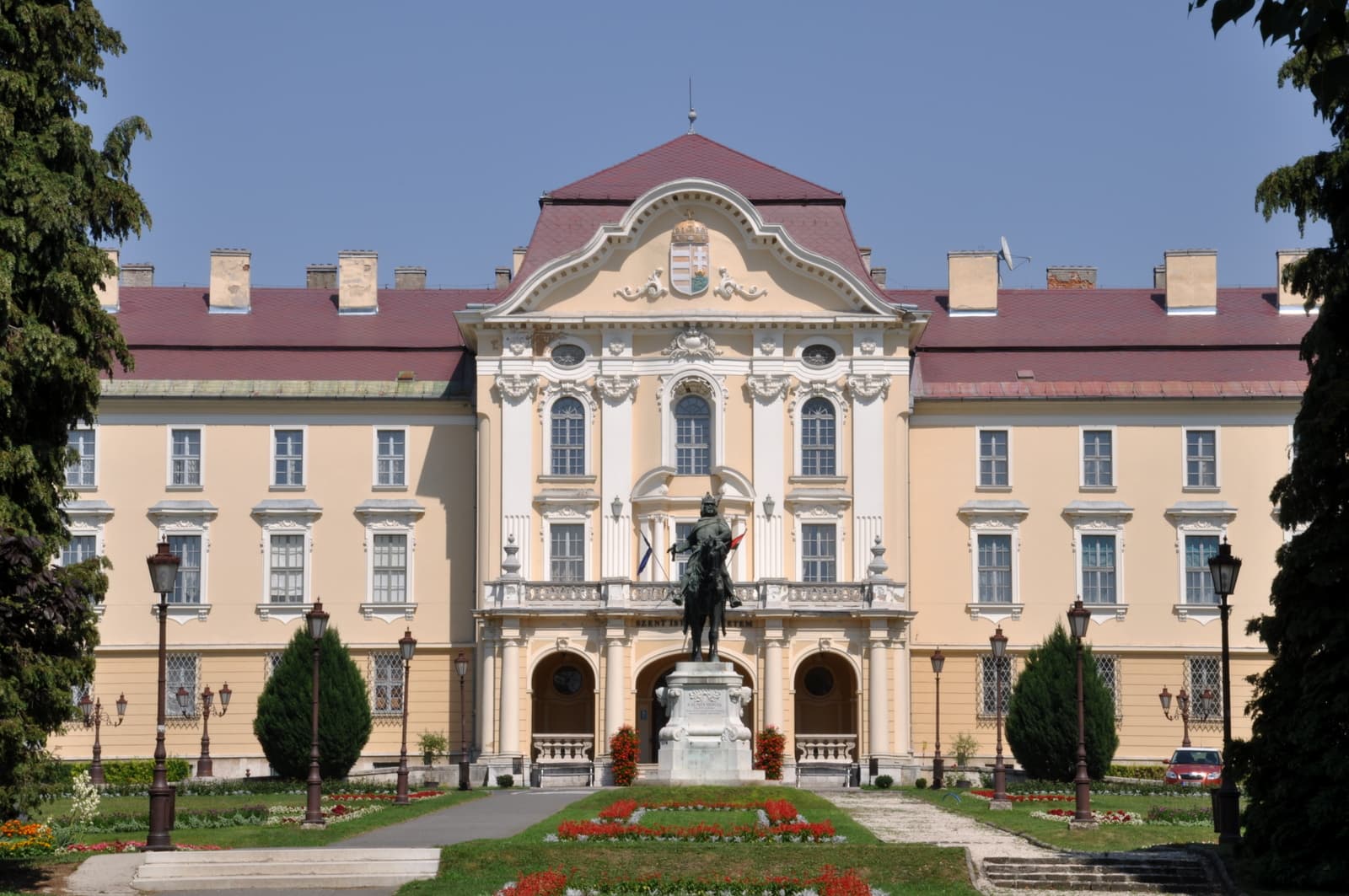 VinceB / CC BY-SA 3.0, via Wikimedia Commons
Visite audio autoguidée de Gödöllő — parcours GPS à pied, lecture hors ligne, narration en 32 langues.
“Là où la grandeur impériale rencontre le charme discret, Gödöllő dévoile ses récits de reines, de scouts et d'époques oubliées.”
Pas les cartes postales. Les histoires que même les habitants ignorent — soufflées à l'oreille, là où elles se sont passées.
Après les Habsbourg, le palais a connu une période de transformations inattendues. Il n'a pas toujours été une grande résidence royale.
Ce vaste espace vert, aujourd'hui un havre de paix, a des racines dans un but très pratique, et peut-être surprenant.
This expansive green space, now a tranquil retreat, has roots in a very practical, and perhaps surprising, purpose.
Découvrez tous les secrets de Gödöllő
Chaque adresse, chaque révélation en entier — dans ton oreille, là où elle s'est passée.
Tu choisis tes lieux. Tu marches. La voix te révèle ce que les autres ignorent.


Votre visite audioguidée de Gödöllő vous attend — choisissez vos lieux, votre langue, et lancez-vous dès votre arrivée.
AcheterLume intègre un guide en réalité augmentée. Levez votre téléphone : sa caméra montre la rue devant vous, avec une flèche lumineuse posée sur l'image réelle qui pointe toujours vers votre prochain arrêt — aucune carte à déchiffrer, aucun mauvais virage. Comme tout dans Lume, ça fonctionne entièrement hors-ligne.
À seulement 30 kilomètres au nord-est de Budapest, Gödöllő offre un mélange captivant d'histoire impériale, de parcs verdoyants et d'une atmosphère détendue et artistique. Facilement accessible par le train de banlieue ou un train direct depuis la capitale, c'est une excursion d'une journée idéale ou une évasion tranquille. La ville est réputée pour le grand Palais Royal de Gödöllő, un exemple d'architecture baroque hongroise qui fut la résidence d'été chérie de l'impératrice Élisabeth, affectueusement connue sous le nom de Sissi.
Au-delà du palais, Gödöllő invite à l'exploration de ses vastes espaces verts, y compris l'Arboretum de Gödöllő, et d'un charmant centre-ville parsemé de cafés et de boutiques locales. L'air pur de la ville et ses abondantes forêts contribuent à son attrait, en faisant l'une des localités les plus attrayantes autour de Budapest. Que vous soyez un passionné d'histoire, un amoureux de la nature ou simplement à la recherche d'une retraite sereine, Gödöllő promet une expérience mémorable.
L'histoire documentée de Gödöllő remonte à 1349, lorsque le roi Louis Ier de Hongrie a offert la localité et ses terres à Péter Pohárnok. Les premiers documents désignent la région sous divers noms, notamment Gudulleu et Gödöle, le nom officiel de Gödöllő étant adopté en 1868. Le village a connu plusieurs propriétaires pendant l'invasion turque au milieu du XVe siècle, un recensement de 1692 ne comptant que 26 familles.
Un tournant décisif dans le développement de Gödöllő est survenu avec Antal Grassalkovich Ier (1694-1771), un éminent noble baroque qui a fait de Gödöllő le centre de ses domaines. Entre 1744 et 1751, il a commandé la construction d'un splendide palais baroque, qui deviendra plus tard le plus grand château baroque de Hongrie et un monument architectural majeur. En 1763, Gödöllő a obtenu le statut de ville, ce qui lui a permis d'organiser un marché et de consolider son rôle de centre régional.
Après l'extinction de la lignée masculine de la famille Grassalkovich en 1841, le palais a changé de mains plusieurs fois avant d'être acheté par l'État hongrois en 1867. Il a ensuite été offert en cadeau de couronnement à l'empereur François-Joseph Ier et à l'impératrice Élisabeth (Sissi) d'Autriche, marquant le début de son « âge d'or » en tant que résidence royale. Sissi, en particulier, adorait Gödöllő, y trouvant réconfort et liberté loin des formalités de la cour viennoise. Elle a adopté la langue et les traditions hongroises, et ses appartements dans le palais étaient décorés dans ses nuances préférées de violet et de lilas, symbolisant son indépendance.
La ville a également joué un rôle dans la Révolution hongroise et la guerre d'indépendance de 1848-1849, servant de quartier général à Lajos Kossuth et à ses généraux après la bataille d'Isaszeg. C'est ici que Kossuth a formulé la Déclaration d'indépendance.
Au début du XXe siècle, Gödöllő est devenue le siège de la seule colonie d'artistes organisée de la période de la Sécession hongroise (1901-1920). Elle a également accueilli le 4e Jamboree Scout Mondial en 1933, réunissant 25 792 scouts de 54 nations. Entre les deux guerres mondiales, le palais a servi de résidence à Miklós Horthy, régent de Hongrie. Cependant, après la Seconde Guerre mondiale, le palais a connu une période de déclin, étant utilisé comme caserne soviétique puis comme maison de retraite, jusqu'à ce que d'importants efforts de restauration commencent en 1985.
Aujourd'hui, Gödöllő est également reconnue pour l'Université Szent István (aujourd'hui l'Université hongroise d'agriculture et des sciences de la vie), une institution majeure d'enseignement agricole en Hongrie, dont le campus principal se trouve dans la ville.
L'attraction principale de Gödöllő est le Palais Royal de Gödöllő, également connu sous le nom de Palais Grassalkovich. Ce grand palais baroque propose des visites de ses intérieurs opulents, y compris les suites royales et la salle de cérémonie, qui ont été méticuleusement restaurées. Les visiteurs peuvent se plonger dans la vie de l'empereur François-Joseph Ier et de l'impératrice Élisabeth, explorant leurs anciens appartements et découvrant l'histoire du palais du XVIIIe au XXe siècle. Le complexe du palais comprend également un théâtre baroque restauré, un manège et des écuries royales.
Autour du palais se trouvent de vastes espaces verts, notamment le Parc du Palais (Alsó Park et Felső Park) et le Parc Erzsébet, parfaits pour des promenades tranquilles. L'Arboretum de Gödöllő, une réserve naturelle de 347 hectares, est une autre attraction naturelle importante, offrant un environnement calme et boisé avec une collection diversifiée d'espèces d'arbres et d'arbustes. C'est un excellent endroit pour se connecter avec la nature, avec des sentiers de randonnée, des foyers désignés et une aire de jeux.
D'autres sites notables incluent le Musée de la ville de Gödöllő, hébergé dans le manoir historique Hamvay, qui présente la colonie d'artistes de Gödöllő et l'Art nouveau hongrois. La Salle d'attente royale de la gare, conçue par Miklós Ybl, abrite également une exposition sur l'histoire des transports. Pour une perspective historique unique, envisagez de visiter le Bunker Horthy près du palais.
Les meilleurs moments pour visiter Gödöllő sont le printemps (avril à juin) ou l'automne (septembre à octobre). Pendant ces mois, le temps est doux et les foules de touristes sont généralement moins nombreuses. Le printemps apporte des fleurs en pleine floraison et des températures confortables, idéales pour explorer les jardins du palais et l'arboretum. L'automne offre un temps agréable et de riches couleurs automnales. Les étés (juin à août) sont chauds mais peuvent être caniculaires, avec des précipitations plus élevées, bien qu'ils apportent également plus d'événements en plein air. Les hivers (novembre à mars) sont froids et souvent enneigés, avec certaines attractions potentiellement à horaires réduits ou fermées.
Gödöllő est facilement accessible depuis Budapest. Vous pouvez prendre le train de banlieue (HÉV) depuis la station Örs vezér tere, le trajet durant environ 45 minutes, ou un train direct depuis la gare Keleti de Budapest, qui prend environ 30 minutes. En voiture, l'autoroute M3 offre un accès direct. À Gödöllő, la plupart des sites principaux sont accessibles à pied depuis la place Szabadság. Des bus locaux sont disponibles, et une ligne de bus gratuite circule entre la gare et le supermarché Tesco.
La monnaie locale est le Forint hongrois (HUF), et les cartes de crédit sont largement acceptées dans les hôtels, les restaurants et les grands magasins, bien qu'il soit conseillé d'avoir de l'argent liquide pour les petits établissements. Pendant votre séjour à Gödöllő, pensez à essayer des plats hongrois traditionnels tels que le goulash, le poulet au paprika et le gâteau cheminée (kürtőskalács) dans les restaurants et cafés locaux. Le Palais Royal propose des visites guidées, et il peut être avantageux de vérifier les billets combinés pour les expositions spéciales.
Gödöllő en coréen, en chinois ou en hébreu — et dans 29 autres langues, chaque étape narrée par une voix native. La plus large gamme de langues de tous les audioguides autoguidés.
Disponible en :