Cripta de la Iglesia Dominicana (Fehérek templom)
Imagina la cripta de una iglesia, sellada por más de 150 años, donde el tiempo mismo se convirtió en preservador.
La historia completa se desbloquea en el tour
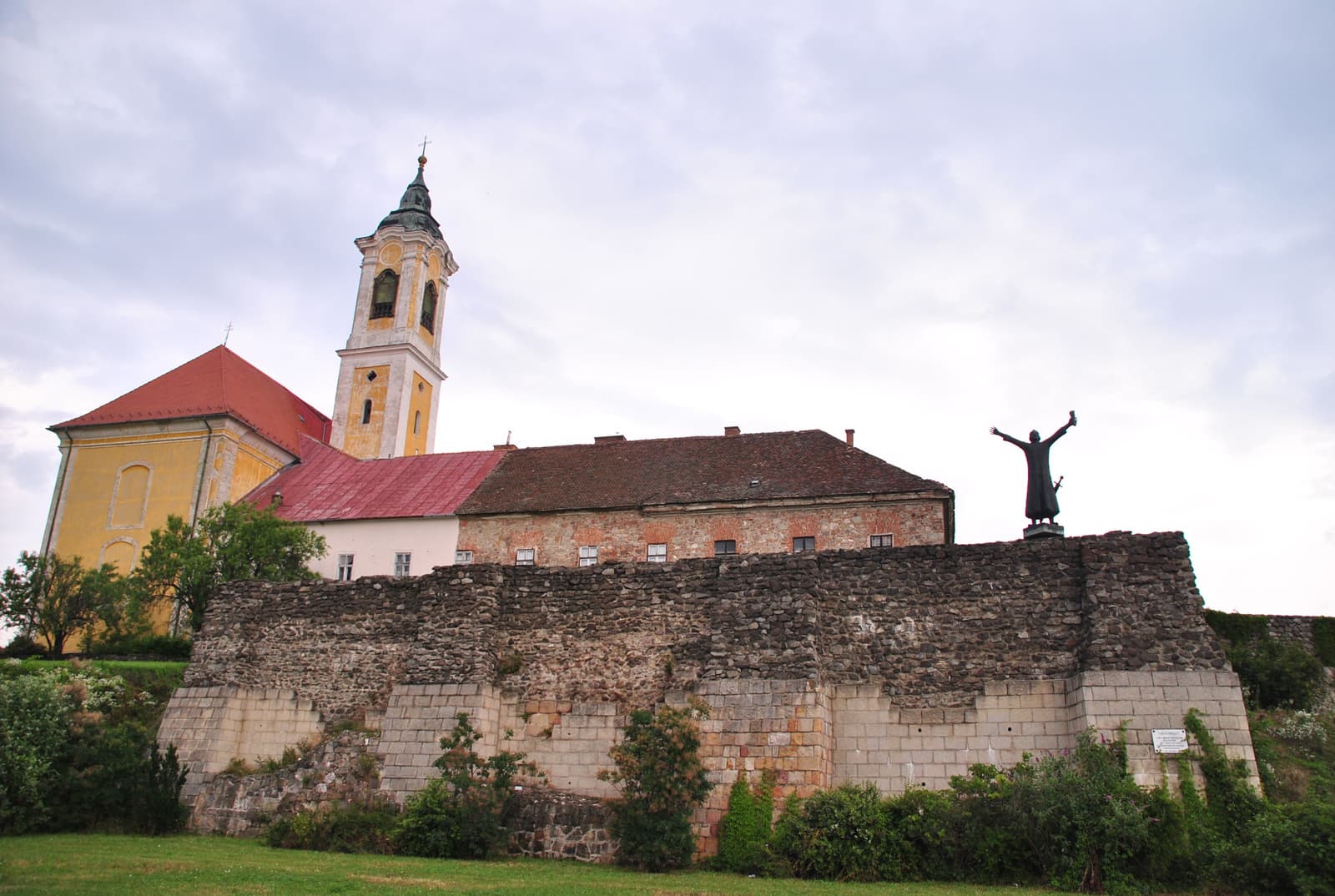 anna schwelung / CC BY 2.5 hu, via Wikimedia Commons
Tour de audio autoguiado de Vác — ruta GPS a pie, reproducción offline, narración en 32 idiomas.
“Más allá del bullicio de Budapest, Vác revela su grandeza barroca y vidas de antaño.”
No las postales. Las historias que ni los locales conocen — al oído, justo donde ocurrieron.
Imagina la cripta de una iglesia, sellada por más de 150 años, donde el tiempo mismo se convirtió en preservador.
La historia de las momias de Vác no es solo sobre la muerte; es una profunda ventana a la vida, y una batalla que aún se libra hoy.
El único Arco del Triunfo de Hungría fue construido en solo cinco meses para una visita real, pero la propia Emperatriz dudó en pasar por debajo.
Descubre todos los secretos de Vác
Cada dirección, cada revelación al completo — a tu oído, justo donde ocurrió.
Eliges tus paradas. Caminas. La voz te revela lo que los demás ignoran.


Tu tour de audioguía por Vác te espera — elige tus lugares, tu idioma y empieza al llegar.
ComprarLume incluye una guía de realidad aumentada. Levanta el móvil y su cámara muestra la calle que tienes delante, con una flecha luminosa sobre la imagen real que siempre apunta a tu próxima parada — sin mapas que descifrar, sin giros equivocados. Como todo en Lume, funciona completamente sin conexión.
Vác, una cautivadora ciudad en la orilla oriental del río Danubio, ofrece una atractiva mezcla de historia, arquitectura barroca e inesperados hallazgos arqueológicos. Situada a solo 35 kilómetros al norte de Budapest, proporciona un tranquilo escape de la actividad de la capital, lo que la convierte en un destino ideal para una excursión de un día o un fin de semana de ocio.
A menudo pasada por alto en favor de sus vecinos más reconocidos de la Curva del Danubio como Szentendre y Visegrád, Vác es una maravilla tranquila que recompensa a los viajeros curiosos con su atmósfera conservada del siglo XVIII y su distintivo patrimonio cultural. Desde su elegante plaza principal hasta su paseo junto al río, la ciudad irradia un encanto tranquilo y refinado.
La identidad de Vác está profundamente entrelazada con su historia milenaria como sede episcopal católica romana, un legado que ha moldeado su paisaje urbano y ha traído tanto prosperidad como destrucción. Hoy, los visitantes pueden explorar sus importantes sitios religiosos, admirar sus maravillas arquitectónicas y adentrarse en las fascinantes historias desenterradas de su pasado.
Los orígenes de Vác se remontan a la historia temprana de Hungría, con su nombre potencialmente derivado de un ermitaño llamado Wach, que vivió en la zona alrededor de 1074. La ubicación estratégica de la ciudad en el Danubio la convirtió en un asentamiento atractivo durante milenios. El rey Esteban I, el primer rey de Hungría, estableció Vác como una de las primeras sedes episcopales del país, una decisión que influiría profundamente en su desarrollo. El rey Géza I, que gobernó más tarde, construyó la primera iglesia aquí, dedicada a la Virgen María, y fue supuestamente enterrado dentro de sus muros en 1077.
La ubicación central de la ciudad también la convirtió en un objetivo frecuente durante los períodos de conflicto. Vác sufrió daños significativos durante las invasiones mongolas de 1241, con gran parte de su población masacrada. Tras la partida de los mongoles, el rey Béla IV supervisó la reconstrucción de la ciudad, invitando a colonos alemanes a repoblar la zona.
Los siglos XV y XVI vieron florecer Vác, convirtiéndose en un importante centro renacentista. Sin embargo, esta prosperidad fue interrumpida por la conquista otomana en 1541. El castillo de la ciudad se convirtió en una fortaleza fronteriza crucial para el Imperio Otomano, y la región fue testigo de numerosas batallas entre las fuerzas de los Habsburgo y los otomanos. Vác cambió de manos varias veces y sufrió repetidas destrucciones y saqueos, con sus edificios casi completamente arruinados y su población diezmada cuando finalmente fue liberada del dominio otomano en 1686.
El Vác que vemos hoy debe en gran parte su carácter al siglo XVIII, un período a menudo denominado su 'Edad de Oro'. Bajo el patrocinio de obispos ilustrados como Kristóf Migazzi y Mihály Althann, la ciudad experimentó una notable transformación. No solo reconstruyeron iglesias, sino que también rediseñaron todo el paisaje urbano, creando las grandes plazas y monumentos que definen el centro barroco de Vác. Esta era vio la construcción de la magnífica Catedral de Vác y el único Arco del Triunfo de Hungría, ambos testimonios de la renovada riqueza y ambición arquitectónica de la ciudad.
Vác continuó desempeñando un papel en la historia húngara, destacando por convertirse en el destino de la primera línea ferroviaria del país desde Pest en 1846. La ciudad también fue escenario de importantes acontecimientos durante la Revolución Húngara de 1848-49 y fue capturada por las tropas soviéticas durante la Segunda Guerra Mundial. Hoy en día, Vác sigue siendo un animado centro comercial y un popular lugar de veraneo, con su profundo pasado evidente en cada calle y edificio.
Comienza tu exploración en la Március 15. tér, la plaza principal de Vác, un exquisito ejemplo de planificación urbana barroca. Admira las elegantes mansiones rococó y barrocas que bordean la plaza, muchas de las cuales son monumentos protegidos. La Iglesia Dominicana, también conocida como la 'Iglesia Blanca', define el lado sur de la plaza, y su cripta guarda un secreto notable.
Justo al lado de la plaza principal, visita la Exposición Memento Mori en el Museo Tragor Ignác. Aquí, encontrarás algunos de los restos naturalmente momificados y sus ataúdes bellamente decorados descubiertos en la cripta de la Iglesia Dominicana, ofreciendo una visión única y conmovedora de la vida y la muerte del siglo XVIII.
Un corto paseo hacia el norte desde la plaza principal te lleva al Arco del Triunfo (Kőkapu), el único arco de su tipo en Hungría. Maravíllate con su escala e intrincados relieves, y busca la encantadora escultura en miniatura de Mihály Kolodko, que hace referencia de manera juguetona a una leyenda local.
La imponente Catedral de Vác (Váci székesegyház) en Konstantin tér es una vista significativa, notable por su fachada neoclásica temprana y su interior adornado con pinturas de F. A. Maulbertsch. Cerca del parque frente al Danubio, encontrarás la Iglesia Franciscana o 'Marrón' (Ferences templom), la iglesia más antigua de Vác, que se alza en el lugar del antiguo castillo.
Para una perspectiva diferente, da un paseo por el Malecón del Danubio, que ofrece vistas panorámicas y una atmósfera tranquila. Considera una visita a la Sinagoga renovada en Eötvös utca, un edificio de estilo romántico de 1864.
Las épocas más agradables para visitar Vác, y Hungría en general, son durante la primavera (abril a mayo) y el otoño (septiembre a octubre). Estas estaciones ofrecen un clima agradable, menos multitudes y temperaturas cómodas ideales para hacer turismo y actividades al aire libre.
La primavera trae flores silvestres en flor y una atmósfera refrescante, mientras que el otoño muestra hermosos colores otoñales y es perfecto para los entusiastas del vino debido a la temporada de cosecha de uvas. Los veranos (junio a agosto) son cálidos y populares, pero también traen mayores multitudes y precios más altos. Los inviernos (noviembre a marzo) son fríos y nevados, con menos turistas y tarifas de alojamiento más bajas.
Vác es fácilmente accesible desde Budapest. La forma más eficiente de llegar a Vác es en tren desde la estación Budapest Nyugati, con servicios frecuentes que tardan aproximadamente 45 minutos. Desde la estación de tren de Vác, el centro de la ciudad está a una sencilla caminata de 5 a 10 minutos.
La mayoría de las principales atracciones de Vác están a poca distancia unas de otras en el centro de la ciudad. Si bien los pagos con tarjeta son ampliamente aceptados, es aconsejable llevar algo de efectivo para tiendas más pequeñas o mercados. Dejar una propina del 10-15% en los restaurantes es costumbre si el servicio no está incluido.
Para información y asistencia local, el Centro de Información Turística se encuentra en Március 15. tér 17. Vác es una ciudad apta para niños, ciclistas y perros, que ofrece diversas actividades para familias y entusiastas del aire libre.
Vác en coreano, en chino o en hebreo — y 29 idiomas más, cada parada narrada por una voz nativa. La mayor variedad de idiomas de cualquier audioguía autoguiada.
Disponible en: