The Philumenistic Museum
Bystrzyca Kłodzka contains a singular institution, the only one of its kind in Poland. What curious pursuit does it commemorate?
Full story unlocks in the tour
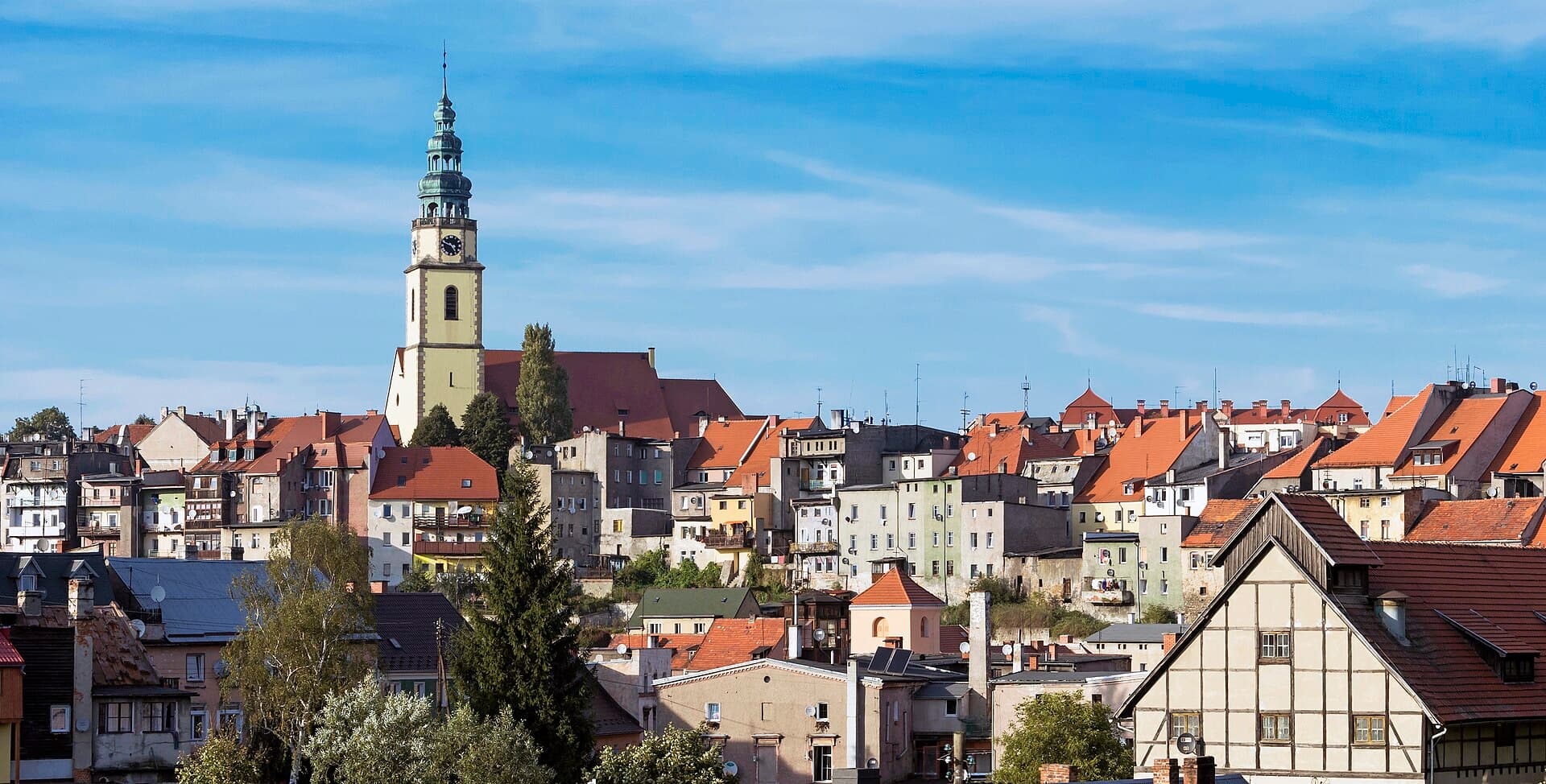 Jacek Halicki / CC BY-SA 3.0 pl, via Wikimedia Commons
Self-guided audio walking tour of Bystrzyca Kłodzka — GPS route, offline playback, story-driven narration in 32 languages.
“Where ancient walls embrace unexpected collections, and centuries unfold across terraced streets.”
Not the postcards. The stories even locals don't know — whispered in your ear, right where they happened.
Bystrzyca Kłodzka contains a singular institution, the only one of its kind in Poland. What curious pursuit does it commemorate?
In the Small Market Square stands a medieval marker of justice. What stark declaration does it bear, and what purpose did it serve?
One of Bystrzyca Kłodzka's defensive towers conceals a secret about its original purpose, far more somber than a simple lookout.
Discover every secret of Bystrzyca Kłodzka
Every address, every reveal in full — in your ear, right where it happened.
You pick your stops. You walk. The voice reveals what the others miss.


Your self-guided audio tour of Bystrzyca Kłodzka is ready — pick your landmarks, choose your language, and start the moment you arrive.
BuyBystrzyca Kłodzka, a compelling town in southwestern Poland's Lower Silesian Voivodeship, is a place where history feels immediate. Situated within the scenic Kłodzko Valley, at the confluence of the Bystrzyca and Nysa Kłodzka rivers, its singular terraced urban layout immediately captivates, earning it the designation 'Silesian Carcassonne'. Rows of red-roofed dwellings ascend the hillside, punctuated by medieval towers and gates, crafting a panorama reminiscent of Italian hill towns.
This appealing town, with a population just under 10,000, offers a passage through centuries of European history. Its well-maintained medieval defensive walls, historic market square, and a captivating array of architectural styles recount episodes of Bohemian kings, Hussite conflicts, and Silesian industry. Beyond its historical appeal, Bystrzyca Kłodzka serves as an excellent starting point for exploring the surrounding Sudetes Mountains and the broader Kłodzko Land, making it an engaging destination for both history enthusiasts and those who appreciate the natural world.
## From Slavic Settlement to Royal City Bystrzyca Kłodzka's origins extend back at least six millennia, with archaeological evidence of Lusatian culture remnants and Celtic settlements from the Roman Empire era. The area saw a Slavic settlement in the 11th century, likely named 'Bystřice' after the swift river. In the 13th century, Havel of Lemberk, a Czech castellan, brought German colonists to the region, establishing a settlement known as Habelschwerdt.
By 1319, Bystrzyca Kłodzka had been granted town rights and elevated to the status of a royal city under the Bohemian Crown, a testament to its strategic location on a vital trade route connecting Wrocław with Olomouc and Brno. This period saw a blossoming of crafts and trade, with the town quickly becoming an important center for cloth and linen production. Defensive walls were constructed around this time, further solidifying its significance.
## Tumultuous Centuries and Resilient Rebirths The town's prosperity was not without its trials. The 15th century brought the destructive Hussite Wars, which left Bystrzyca Kłodzka depopulated by plagues, partially burned, and damaged by floods. A significant fire in 1475 completely destroyed the town, but it remarkably reconstructed itself. The 16th century marked another period of economic expansion, including the construction of a water supply system.
The Thirty Years' War in the 17th century saw the town plundered multiple times by various warring factions, including Swedes, imperial troops, and even Polish Lisowczycy suppressing a peasant uprising. Following the war, Bystrzyca Kłodzka underwent forced re-Catholicization, leading to the departure of its Protestant inhabitants. The Silesian Wars (1740-1763) brought the region under Prussian rule, though Bystrzyca Kłodzka largely avoided major destruction. However, it was plundered by Austrians during the War of the Bavarian Succession (1778-1779).
## Industrial Growth and Modern Identity The 19th century ushered in a new era of development, with the establishment of the first match factory in 1860, followed by furniture factories. The railway line connecting Kłodzko to Międzylesie was completed in 1875, further enhancing its economic ties. Tourism also began to flourish, with inns and hotels appearing, and a network of hiking trails established by the Kłodzko Mountain Society.
During World War II, Bystrzyca Kłodzka was spared the widespread destruction that befell many other towns, largely due to the absence of significant industrial centers and the fact that the Kłodzko Valley was not captured by the Red Army until after Germany's capitulation. In 1945, the town became part of Poland, and its German inhabitants were displaced. In 1946, it was officially renamed Bystrzyca Kłodzka, reverting to its historic Polish name with the addition of 'Kłodzka' to differentiate it. Today, Bystrzyca Kłodzka continues to be a significant mountain resort and a popular tourist destination, known for its historical landmarks and natural beauty.
Begin your exploration in the Old Town, where the medieval urban layout remains remarkably preserved. Wander through its narrow, evocative streets and stone steps, which recall the atmosphere of an Italian town. The Market Square (Plac Wolności), with its distinctive trapezoidal shape, forms the heart of the Old Town, overlooked by the impressive Neo-Renaissance Town Hall from 1853-54, featuring fragments of sgraffito. In front of the Town Hall stands the monumental Holy Trinity Monument, a Baroque masterwork from 1736.
Discover the town's defensive legacy by exploring the well-preserved medieval city walls. Key remnants include the Water Gate (Brama Wodna), the sole fully surviving city gate, and the Kłodzko Tower, which offers sweeping views from its summit. Do not overlook the Knight's Tower (Baszta Rycerska), another significant part of the fortifications. Just a short walk from the main square, the Small Market Square displays a historic pillory from 1556, a stark reminder of medieval justice.
For a truly singular experience, visit the Philumenistic Museum, the only one of its kind in Poland, dedicated to the history of matches and fire-making. Descend into the Underground Tourist Route, a fascinating journey through the cellars of a former brewery and city prison, revealing centuries of local history. Finally, for expansive vistas of the terraced town and the surrounding Bystrzyckie Mountains, ascend to Park Mountain (Góra Parkowa).
The most pleasant time to visit Bystrzyca Kłodzka for general outdoor activities extends from late June to late August, with a peak in the first week of August. During these summer months (June, July, August), temperatures are comfortable, ranging from 21°C to 23°C (70°F to 73°F), making it ideal for exploring the town and its natural surroundings. Anticipate a balance of sunny and rainy days, with moderate rainfall. June is particularly sunny, offering approximately 7.9 hours of sunshine daily. Spring and summer are also when the town hosts various festivals and events, providing a lively cultural experience. For winter sports enthusiasts, the colder months transform the area into a winter landscape.
Bystrzyca Kłodzka is readily accessible by car via national road No. 33, connecting Kłodzko with the Polish-Czech border. From Wrocław, it is about a 100 km drive. The town is also well-connected by rail, with trains running from Wrocław and Kłodzko to Bystrzyca Kłodzka station. PKS buses also provide connections from Kłodzko.
Once in Bystrzyca Kłodzka, the compact Old Town is best explored on foot, with many attractions within a two-hour walking tour. While the terraced layout can present some inclines, the main market area is relatively flat and accessible. Paid parking is available, particularly around the market square. Tickets for attractions like the Kłodzko Tower, Water Gate, and the Underground Tourist Route can often be purchased jointly at the Tourist Information office in the Market Square. For dining, seek out restaurants around Plac Wolności (Market Square), where prices can be more favorable than in nearby resort towns.
Bystrzyca Kłodzka in Korean, in Chinese or in Hebrew — and 29 more languages, every stop narrated by a native voice. The widest language range of any self-guided audio tour.
Available in: