Hôtel de ville de Lwówek Śląski
L'actuel hôtel de ville de Lwówek Śląski, une impressionnante structure gothique-Renaissance, n'était pas le siège initial du gouvernement de la ville.
L'histoire complète se débloque dans le tour
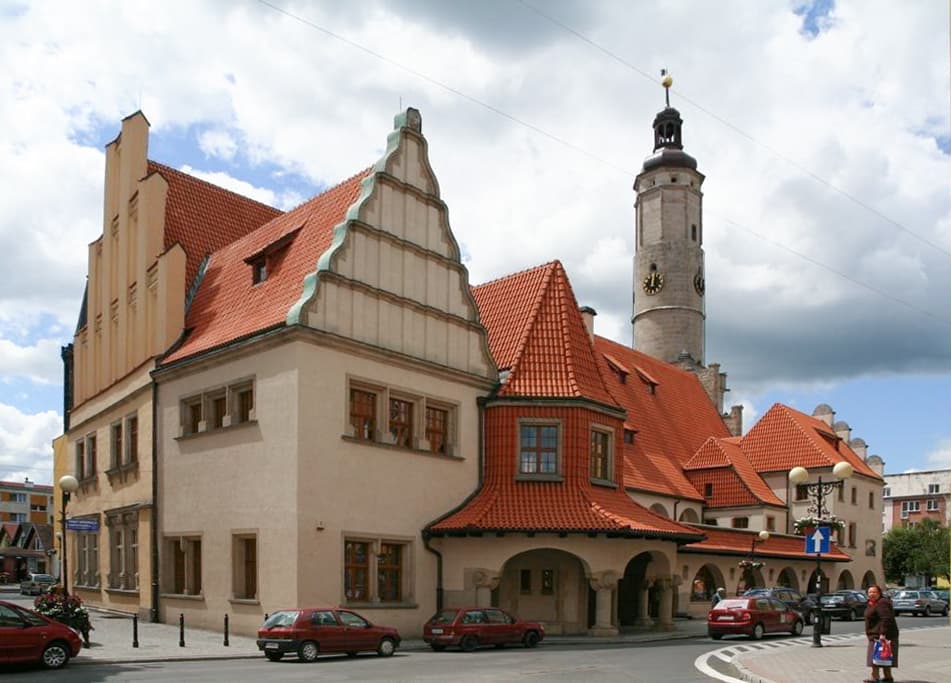 fot. P. Roczek. / CC BY 3.0, via Wikimedia Commons
Visite audio autoguidée de Lwówek Śląski — parcours GPS à pied, lecture hors ligne, narration en 32 langues.
“Là où la pierre ancienne et l'ambre ambré racontent les récits de l'ingéniosité silésienne.”
Pas les cartes postales. Les histoires que même les habitants ignorent — soufflées à l'oreille, là où elles se sont passées.
L'actuel hôtel de ville de Lwówek Śląski, une impressionnante structure gothique-Renaissance, n'était pas le siège initial du gouvernement de la ville.
Cette église gothique a été témoin de bien plus que de simples services religieux; elle a mené une existence étonnamment variée.
Lwówek Śląski abrite l'une des plus anciennes brasseries de Pologne, pourtant ses origines remontent bien au-delà de la date officielle de sa fondation.
Découvrez tous les secrets de Lwówek Śląski
Chaque adresse, chaque révélation en entier — dans ton oreille, là où elle s'est passée.
Tu choisis tes lieux. Tu marches. La voix te révèle ce que les autres ignorent.


Votre visite audioguidée de Lwówek Śląski vous attend — choisissez vos lieux, votre langue, et lancez-vous dès votre arrivée.
AcheterLume intègre un guide en réalité augmentée. Levez votre téléphone : sa caméra montre la rue devant vous, avec une flèche lumineuse posée sur l'image réelle qui pointe toujours vers votre prochain arrêt — aucune carte à déchiffrer, aucun mauvais virage. Comme tout dans Lume, ça fonctionne entièrement hors-ligne.
Lwówek Śląski, une ville de la voïvodie de Basse-Silésie, dans le sud-ouest de la Pologne, offre un voyage captivant à travers des siècles d'efforts humains, de grandeur naturelle et de culture locale distinctive. Située sur la rivière Bóbr, à environ 30 kilomètres au nord-ouest de Jelenia Góra, c'est un lieu où les fortifications médiévales se dressent comme des monuments durables de son passé stratégique, et où les merveilles géologiques révèlent une histoire plus profonde et ancienne. Connue comme la « Capitale polonaise de l'agate », la ville célèbre son patrimoine minéralogique avec un festival international annuel, attirant des passionnés du monde entier.
Au-delà de ses merveilles architecturales, Lwówek Śląski offre une évasion tranquille, idéale pour ceux qui recherchent une expérience polonaise authentique loin des centres touristiques animés. Sa situation dans la vallée de la rivière Bóbr offre un cadre pittoresque de formations rocheuses de grès et de sentiers de randonnée, invitant les visiteurs à explorer ses paysages culturels et naturels.
## Des mines d'or au centre urbain Lwówek Śląski compte parmi les plus anciennes villes de Silésie, ses origines remontant à un établissement qui s'est rapidement développé grâce à sa position avantageuse sur la Via Regia, une route commerciale médiévale cruciale reliant l'Europe occidentale à la Rus' de Kiev, et à l'exploitation des gisements d'or locaux. Le duc Henri Ier le Barbu de Wrocław a accordé à l'établissement d'importants privilèges dès 1209, y compris les droits de brasser de la bière, de pêcher et d'exercer une juridiction inférieure. En 1217, Lwówek Śląski a officiellement reçu les droits de ville de Magdebourg, devenant l'une des premières villes de Silésie à le faire, et son modèle municipal a influencé l'établissement d'autres villes du sud de la Pologne.
## Prospérité médiévale et fortifications La prospérité précoce de la ville a été alimentée par l'extraction d'or et d'argent, et en 1329, la population de Lwówek Śląski a atteint plus de 11 000 habitants, ce qui en faisait l'un des centres urbains les plus peuplés de Silésie. Aux XIIIe et XIVe siècles, des monuments distinctifs ont été érigés, notamment de solides murs défensifs avec les tours Lubańska et Bolesławiecka, l'hôtel de ville et les églises gothiques Sainte-Marie et Saint-François. La construction de ces formidables fortifications en pierre a commencé avant 1261, formant finalement un double circuit de murs unique, ce qui a valu à la ville le surnom de « Carcassonne polonaise ».
## Temps de troubles et de transformation Alors que les réserves d'or diminuaient au XIVe siècle, l'économie de la ville s'est orientée vers le commerce, l'artisanat (en particulier le tissage et la fabrication de tissus) et le traitement de la pierre. Le XIVe siècle a également vu Lwówek Śląski faire partie d'une alliance de villes silésiennes. Cependant, la Guerre de Trente Ans (1618-1648) a apporté d'immenses dévastations, dépeuplant et détruisant considérablement la ville. Malgré ces difficultés, Lwówek Śląski a continué d'évoluer. En 1327, elle a obtenu le droit de frapper ses propres monnaies, précédant Wrocław dans ce privilège. Plus tard, en 1392, après la mort de la duchesse Agnès, la ville, ainsi que le duché de Świdnica-Jawor, sont devenues partie de la Couronne de Bohême.
## L'ère napoléonienne et l'identité moderne La fin du XVIIIe siècle a vu des figures comme August-Wilhelm Neidhardt von Gneisenau, futur maréchal prussien, stationnées à Lwówek Śląski. Notamment, Napoléon Bonaparte lui-même a visité la ville en août 1813. Au XIXe siècle, les murs défensifs de la ville ont été progressivement démantelés, bien que certains fragments aient été rénovés dans les années 1930. Après la Seconde Guerre mondiale, Lwówek Śląski est devenue une partie de la Pologne et a été repeuplée, son nom ayant été officiellement changé en Lwówek Śląski en 1946 pour la distinguer de la ville perdue de Lwów. Aujourd'hui, la ville embrasse son patrimoine multiforme, accueillant fièrement l'été annuel de l'agate de Lwówek, le plus grand événement minéralogique de Pologne.
Lwówek Śląski offre un éventail captivant de sites qui témoignent de son passé long et varié. Commencez votre exploration sur la place du marché, dominée par le magnifique Hôtel de Ville Renaissance. Cette merveille architecturale, avec ses éléments gothiques et Renaissance, abrite un musée historique où vous pourrez vous plonger dans le riche patrimoine de la ville. Observez les détails complexes à l'intérieur, y compris l'ancienne salle des archives avec sa clé de voûte unique.
Marchez le long des murs défensifs médiévaux remarquablement conservés, souvent comparés à Carcassonne. Explorez les tours Lubańska et Bolesławiecka restantes, qui gardaient autrefois les portes de la ville, et découvrez le Bastion Archonati, un témoignage de l'architecture militaire médiévale avancée.
Visitez l'Église de l'Assomption de la Bienheureuse Vierge Marie du XIIIe siècle et l'Église Saint-François d'Assise. L'Église franciscaine, en particulier, possède une histoire fascinante, ayant servi à diverses fins profanes avant sa reconsécration.
Pour les amateurs de bière, une visite à la Brasserie de Lwówek est une expérience incontournable. Réputée être la plus ancienne brasserie de Pologne, elle perpétue une tradition brassicole vieille de 800 ans. Bien que les visites puissent nécessiter une réservation à l'avance pour les groupes, l'importance historique à elle seule vaut la peine d'être appréciée.
Au-delà du centre-ville, plongez dans la nature à la Suisse de Lwówek (Szwajcaria Lwówecka), une zone pittoresque de formations rocheuses de grès dans le Parc paysager de la vallée de la Bóbr, parfaite pour la randonnée et les vues panoramiques.
La meilleure période pour visiter Lwówek Śląski est pendant les mois les plus chauds, de la fin du printemps au début de l'automne (mai à septembre). Juillet est particulièrement animé car la ville accueille l'été annuel de l'agate de Lwówek, le plus grand événement minéralogique de Pologne, qui présente des expositions de minéraux de la région et du monde entier. Cette période offre également un temps idéal pour explorer les attractions extérieures, telles que les formations rocheuses de la Suisse de Lwówek et les sentiers de randonnée.
Lwówek Śląski est une ville relativement petite et paisible, ce qui en fait une destination idéale pour une excursion d'une journée ou une retraite tranquille. Bien qu'accessible en bus et en train, il est recommandé d'avoir une voiture pour une plus grande flexibilité dans l'exploration de la campagne environnante de Basse-Silésie et des sites naturels à proximité. L'hôtel de ville, qui abrite un musée, a des horaires de visite spécifiques, il est donc conseillé de les vérifier à l'avance, surtout pour les visites de week-end. Certaines attractions, comme la brasserie, peuvent nécessiter des visites de groupe pré-arrangées. La monnaie locale est le Złoty polonais (PLN). La plupart des établissements acceptent les paiements par carte, mais il est toujours bon d'avoir de l'argent liquide pour les petits achats.
Lwówek Śląski en coréen, en chinois ou en hébreu — et dans 29 autres langues, chaque étape narrée par une voix native. La plus large gamme de langues de tous les audioguides autoguidés.
Disponible en :