Musée Kargul et Pawlak
Au-delà de la célèbre clôture, un accord secret a scellé la rivalité à l'écran.
L'histoire complète se débloque dans le tour
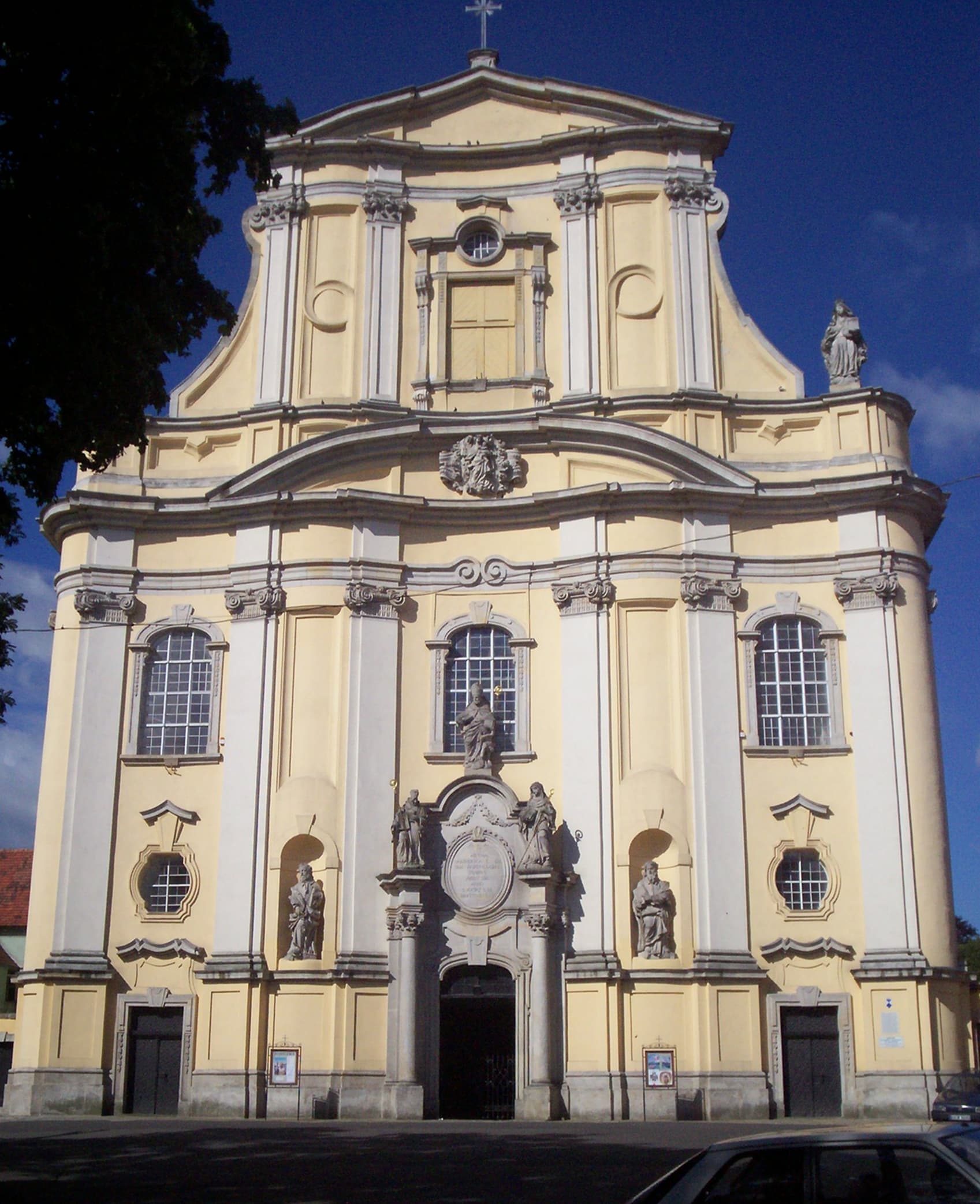 Platanacero / CC BY-SA 4.0, via Wikimedia Commons
Visite audio autoguidée de Lubomierz — parcours GPS à pied, lecture hors ligne, narration en 32 langues.
“Là où la comédie polonaise a trouvé son foyer et où l'histoire perdure dans les pierres anciennes.”
Pas les cartes postales. Les histoires que même les habitants ignorent — soufflées à l'oreille, là où elles se sont passées.
Au-delà de la célèbre clôture, un accord secret a scellé la rivalité à l'écran.
Le musée abrite un morceau d'histoire qui a voyagé depuis l'Ukraine.
La place de la ville n'est pas seulement pittoresque ; c'est un décor de film vivant.
Découvrez tous les secrets de Lubomierz
Chaque adresse, chaque révélation en entier — dans ton oreille, là où elle s'est passée.
Tu choisis tes lieux. Tu marches. La voix te révèle ce que les autres ignorent.


Votre visite audioguidée de Lubomierz vous attend — choisissez vos lieux, votre langue, et lancez-vous dès votre arrivée.
AcheterLume intègre un guide en réalité augmentée. Levez votre téléphone : sa caméra montre la rue devant vous, avec une flèche lumineuse posée sur l'image réelle qui pointe toujours vers votre prochain arrêt — aucune carte à déchiffrer, aucun mauvais virage. Comme tout dans Lume, ça fonctionne entièrement hors-ligne.
Dans les contreforts des Izera, en Basse-Silésie, Lubomierz est une petite ville polonaise qui occupe une place particulière dans le cœur des amateurs de cinéma polonais. Souvent surnommée le 'Hollywood polonais', elle est connue comme le principal lieu de tournage de l'emblématique trilogie comique 'Sami Swoi' (Tous Amis Ici) de Sylwester Chęciński. Cet héritage cinématographique a façonné l'identité de la ville, attirant les visiteurs désireux de pénétrer dans le monde des familles Kargul et Pawlak, en conflit.
Au-delà de sa célébrité sur grand écran, Lubomierz est une destination dotée d'un plan médiéval bien préservé, avec une place de marché distinctive et une architecture historique qui a survécu à la Seconde Guerre mondiale en grande partie intacte. Elle offre un mélange de patrimoine culturel et de beauté naturelle, ce qui en fait une étape intrigante pour ceux qui explorent la voïvodie de Basse-Silésie. De son musée du film à son festival annuel de la comédie, Lubomierz vous invite à découvrir ses histoires, réelles et fictives.
Les origines de Lubomierz remontent au XIIe siècle, lorsqu'elle fut fondée sur une route commerciale animée. Elle obtint les droits de ville en 1291 par le duc Bolko Ier le Strict, un moment important qui vit également la construction de murs défensifs. Pendant des siècles, jusqu'à sa sécularisation en 1810, Lubomierz fut une ville ecclésiastique privée sous la tutelle des nonnes bénédictines. Cette influence monastique contribua au développement précoce de la ville et laissa une marque indélébile sur son paysage culturel et architectural. La magnifique église baroque, fondée au début du XVIIIe siècle par l'abbesse du monastère bénédictin, témoigne de cette période.
La prospérité de la ville à l'ère moderne était également liée à son industrie textile. La Halle aux Draps du XVIe siècle, qui abrite aujourd'hui le musée Kargul et Pawlak, était autrefois le centre de la guilde des tisserands, un témoignage du rôle de Lubomierz en tant que centre régional de production de fil de laine. Des foires aux fils s'y tenaient régulièrement, avec des marchandises exportées dans toute l'Europe. Cependant, la révolution industrielle du XIXe siècle et l'essor de centres textiles plus importants dans la région ont finalement conduit au déclin de la prospérité du tissage de Lubomierz.
Le milieu du XXe siècle apporta un nouveau chapitre à l'histoire de Lubomierz : le cinéma. En 1967, le réalisateur Sylwester Chęciński choisit Lubomierz comme toile de fond pour son chef-d'œuvre comique, 'Sami Swoi'. L'immense popularité du film, et celle de ses suites 'Nie ma mocnych' et 'Kochaj albo rzuć', transforma Lubomierz en un site culturel. Ce lien cinématographique s'épanouit avec le Festival National du Film Comique, organisé pour la première fois en 1997, consolidant la réputation de Lubomierz en tant que 'capitale de la comédie polonaise'.
Votre visite à Lubomierz tournera sans aucun doute autour de son patrimoine cinématographique. Commencez par le Musée Kargul et Pawlak, situé dans l'historique Halle aux Draps du XVIe siècle. Vous y trouverez un trésor d'accessoires et de souvenirs de la trilogie 'Sami Swoi', y compris la clôture qui divisait les propriétés des familles en conflit, le fusil avec le 'verrou volant', et une grenade d'une tenue de fête. Le musée dispose également d'une salle de cinéma où vous pouvez visionner des extraits du film.
Sortez du musée et entrez dans le Coin Cinéma (Zaułek Filmowy), où des plaques commémoratives rendent hommage aux acteurs et aux autres productions cinématographiques qui ont honoré Lubomierz. Suivez le Sentier du Film de Lubomierz à travers la ville, marqué par des plaques à divers lieux de tournage, vous permettant de comparer le Lubomierz d'aujourd'hui avec des scènes des films. Ne manquez pas le Monument de Pawlak et Kargul près du musée, présentant des figures de cire des personnages bien-aimés.
La Place du Marché (Plac Wolności) elle-même est une attraction clé, avec son agencement médiéval préservé et l'impressionnant Hôtel de Ville de 1688. L'Église baroque de l'Assomption de la Bienheureuse Vierge Marie et de Saint-Materne, fondée au début du XVIIIe siècle, est un autre point fort architectural, offrant un aperçu du passé monastique de la ville. Explorez les charmantes rues, admirez les maisons de ville historiques et imprégnez-vous de l'atmosphère de cette ville cinématographique unique.
Le meilleur moment pour visiter Lubomierz est à la mi-août, lorsque la ville accueille le Festival National du Film Comique. Cet événement transforme Lubomierz en un centre de célébration cinématographique, avec des projections de films, des rencontres avec des acteurs et des réalisateurs, des concerts et diverses compétitions. Le temps pendant cette période est généralement agréable pour explorer la ville et profiter des activités de plein air. Si vous préférez une expérience plus calme, la fin du printemps ou le début de l'automne offrent des températures douces et moins de monde, permettant une exploration plus détendue des sites historiques et du sentier du film de la ville.
Lubomierz est une petite ville de la voïvodie de Basse-Silésie, située dans le sud-ouest de la Pologne. Elle est nichée dans les contreforts des Izera, offrant un cadre pittoresque. Bien que Lubomierz soit accessible en voiture, les options de transport en commun peuvent être limitées, il est donc conseillé de vérifier les correspondances à l'avance. Le musée Kargul et Pawlak est situé au centre, près de la place du marché, et est ouvert tous les jours, avec des horaires prolongés en juillet et août. Des frais d'entrée s'appliquent, avec des réductions disponibles pour les enfants et les seniors. Le site officiel du Centre Culturel de Lubomierz (lck.org.pl) fournit des informations à jour sur les horaires du musée et les dates du festival. Bien que le polonais soit la langue principale, vous trouverez probablement des informations en anglais aux principaux points touristiques. La monnaie locale est le Złoty polonais (PLN).
Lubomierz en coréen, en chinois ou en hébreu — et dans 29 autres langues, chaque étape narrée par une voix native. La plus large gamme de langues de tous les audioguides autoguidés.
Disponible en :