Fornelli Pronti
Imagina una carnicería que se transforma en un restaurante al aire libre al caer la noche.
La historia completa se desbloquea en el tour
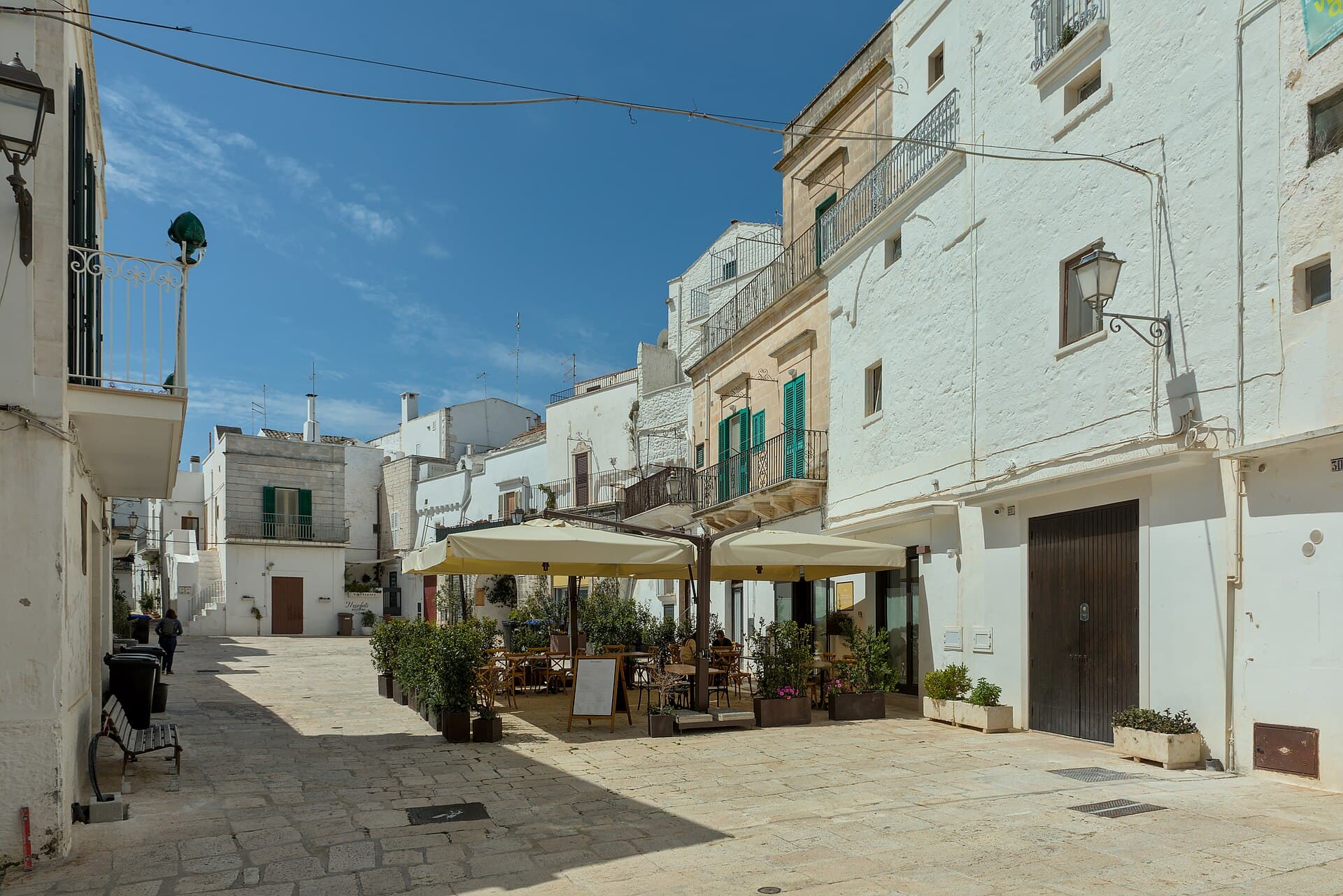 Benjamin Smith / CC BY-SA 4.0, via Wikimedia Commons
Tour de audio autoguiado de Cisternino — ruta GPS a pie, reproducción offline, narración en 32 idiomas.
“Donde los callejones encalados se encuentran con el aroma a carne a la parrilla y los olivos milenarios.”
No las postales. Las historias que ni los locales conocen — al oído, justo donde ocurrieron.
Imagina una carnicería que se transforma en un restaurante al aire libre al caer la noche.
Un lugar particular en Cisternino ofrece lo que muchos consideran la mejor vista panorámica de todo el Valle de Itria.
El centro histórico de Cisternino no fue diseñado por un arquitecto maestro, sin embargo, es considerado una obra maestra.
Descubre todos los secretos de Cisternino
Cada dirección, cada revelación al completo — a tu oído, justo donde ocurrió.
Eliges tus paradas. Caminas. La voz te revela lo que los demás ignoran.


Tu tour de audioguía por Cisternino te espera — elige tus lugares, tu idioma y empieza al llegar.
ComprarLume incluye una guía de realidad aumentada. Levanta el móvil y su cámara muestra la calle que tienes delante, con una flecha luminosa sobre la imagen real que siempre apunta a tu próxima parada — sin mapas que descifrar, sin giros equivocados. Como todo en Lume, funciona completamente sin conexión.
En una colina del fértil Valle de Itria de Puglia, Cisternino se alza como un pueblo encalado que cautiva con su carácter auténtico y su ritmo de vida más lento. A diferencia de sus vecinos más bulliciosos, este pueblo ofrece una visión genuina de las tradiciones puglieses, donde el aroma a carne a la parrilla se mezcla con el de los olivos milenarios. Su centro histórico, un laberinto de callejones estrechos y patios inesperados, invita a deambular sin rumbo, revelando siglos de historia grabados en su 'arquitectura espontánea'.
Cisternino ostenta la prestigiosa Bandera Naranja del Touring Club Italiano por su compromiso con la sostenibilidad, la hospitalidad y la preservación del patrimonio, y es reconocido como uno de 'I Borghi più Belli d'Italia' (Los Pueblos más Bonitos de Italia). Es un lugar donde el tiempo parece ralentizarse, animando a los visitantes a saborear los sabores locales, abrazar la vida comunitaria y absorber las vistas panorámicas del valle circundante.
La historia de Cisternino se remonta a la antigüedad, con evidencia que sugiere que el área estuvo habitada por cazadores-recolectores durante el Paleolítico. Más tarde, fue un asentamiento mesapio antes de convertirse en el municipio romano de Sturnium. Sin embargo, esta ciudad romana fue destruida por Aníbal durante sus campañas púnicas.
El renacimiento de la ciudad en los siglos IX-X d.C. vio su desarrollo alrededor de una primitiva iglesia prerrománica, más tarde reconstruida como la iglesia principal en el año 1000. Los monjes basilianos desempeñaron un papel crucial en su restablecimiento, construyendo una abadía que se convirtió en el núcleo de la floreciente ciudad medieval. Durante las dominaciones angevina y luego aragonesa del Reino de Nápoles, Cisternino fue fortificada con murallas y torres circulares, algunas de las cuales aún son visibles hoy.
El centro histórico de Cisternino es un testimonio de lo que los historiadores de la arquitectura llaman 'architettura spontanea' —arquitectura espontánea—. En lugar de ser diseñado por un solo arquitecto o según un plan rígido, el pueblo creció orgánicamente a lo largo de los siglos. Cada generación añadió a lo que existía, con casas que respondían a sus vecinos, creando un encantador laberinto de callejones encalados, escaleras exteriores y arcos. Este carácter único llevó al arquitecto japonés Hidenobu Jinnai a describir Cisternino como 'una gran obra maestra arquitectónica sin arquitectos'.
La posición estratégica de Cisternino en la meseta de las Murge, que ofrece brisas frescas y escapa del calor sofocante de las tierras bajas, la convirtió en un asentamiento ideal a lo largo de la historia. A lo largo de los siglos, ha sido influenciada por diversas culturas, incluidos romanos, sarracenos, españoles y normandos. Hoy en día, Cisternino es celebrada por su compromiso con la calidad de vida, adoptando la filosofía del 'Movimiento Lento', valorando la tradición sobre la tendencia y las conexiones humanas genuinas. Esta dedicación se refleja en su estatus como uno de los Pueblos más Bonitos de Italia y su premio Bandera Naranja por el turismo sostenible.
Comienza tu exploración en el centro histórico, un cautivador laberinto de edificios encalados, callejones estrechos y balcones llenos de flores. Permítete deambular, descubriendo patios y pintorescas plazas.
Busca el Mirador Panorámico (Belvedere di Piazza San Marconi o Villa Comunale) para disfrutar de vistas inigualables del Valle de Itria, un mosaico de olivos, viñedos y trulli. La Torre Grande, una torre de vigilancia normando-suaba que data de los siglos XII-XIV, se encuentra cerca de la entrada principal del casco antiguo y ofrece una visión del pasado defensivo de la ciudad. Junto a ella se encuentra la Chiesa Madre (Iglesia de San Nicola), una iglesia del siglo XIV con una fachada del siglo XVIII y cimientos del siglo VI.
No te pierdas el Ponte della Madonnina, que, a pesar de su nombre, no es realmente un puente, pero ofrece otro mirador panorámico. Para una experiencia culinaria única, visita uno de los famosos 'fornelli pronti' (restaurantes de carnicería) del pueblo, donde puedes elegir tu carne y hacer que la asen al momento.
Más allá del pueblo, considera explorar la Ciclovia del Acueducto Pugliese para un pintoresco paseo en bicicleta por el campo, pasando por puentes históricos como el Puente de Figazzano. Los alrededores también albergan olivos monumentales, algunos de miles de años, que ofrecen una conexión única con la antigua herencia agrícola de Puglia.
Cisternino es un destino para todo el año, ofreciendo encantos distintos en cada estación. Los meses más cómodos para un clima templado y menos multitudes son de abril a junio y septiembre. Durante estos períodos, los 'fornelli' funcionan a plena capacidad y el casco antiguo está más tranquilo. Julio y agosto son más cálidos y concurridos, con festivales y animadas actividades al aire libre, pero Cisternino maneja bien a los visitantes. El invierno ofrece una experiencia subestimada, con un casco antiguo tranquilo y la combinación atmosférica del humo del carbón y el aire frío de los 'fornelli'.
Un coche es esencial para visitar Cisternino y explorar el Valle de Itria, ya que no hay conexiones prácticas de transporte público al pueblo. Cisternino está aproximadamente a 70 kilómetros de Bari (aproximadamente 1 hora y 10 minutos en coche) y a 45 minutos del aeropuerto de Brindisi. El centro histórico es peatonal, así que aparca en los espacios gratuitos debajo del casco antiguo y sube a pie. Hay aparcamiento regulado en la calle (líneas azules) que se puede pagar a través de la aplicación EasyPark.
Cisternino es una excelente base para explorar pueblos cercanos como Locorotondo (10 minutos), Martina Franca (15 minutos), Alberobello (20-25 minutos) y Ostuni (25 minutos). Aunque los baños públicos pueden ser poco fiables, los bares y restaurantes suelen tener instalaciones para los clientes. Para una verdadera experiencia local, únete a la passeggiata (paseo) vespertina que suele comenzar en la Piazza Vittorio Emanuele.
Cisternino en coreano, en chino o en hebreo — y 29 idiomas más, cada parada narrada por una voz nativa. La mayor variedad de idiomas de cualquier audioguía autoguiada.
Disponible en: