Le nom de Donsol
Le nom de la ville a deux origines possibles, l'une ancrée dans la nature, l'autre dans un métier.
L'histoire complète se débloque dans le tour
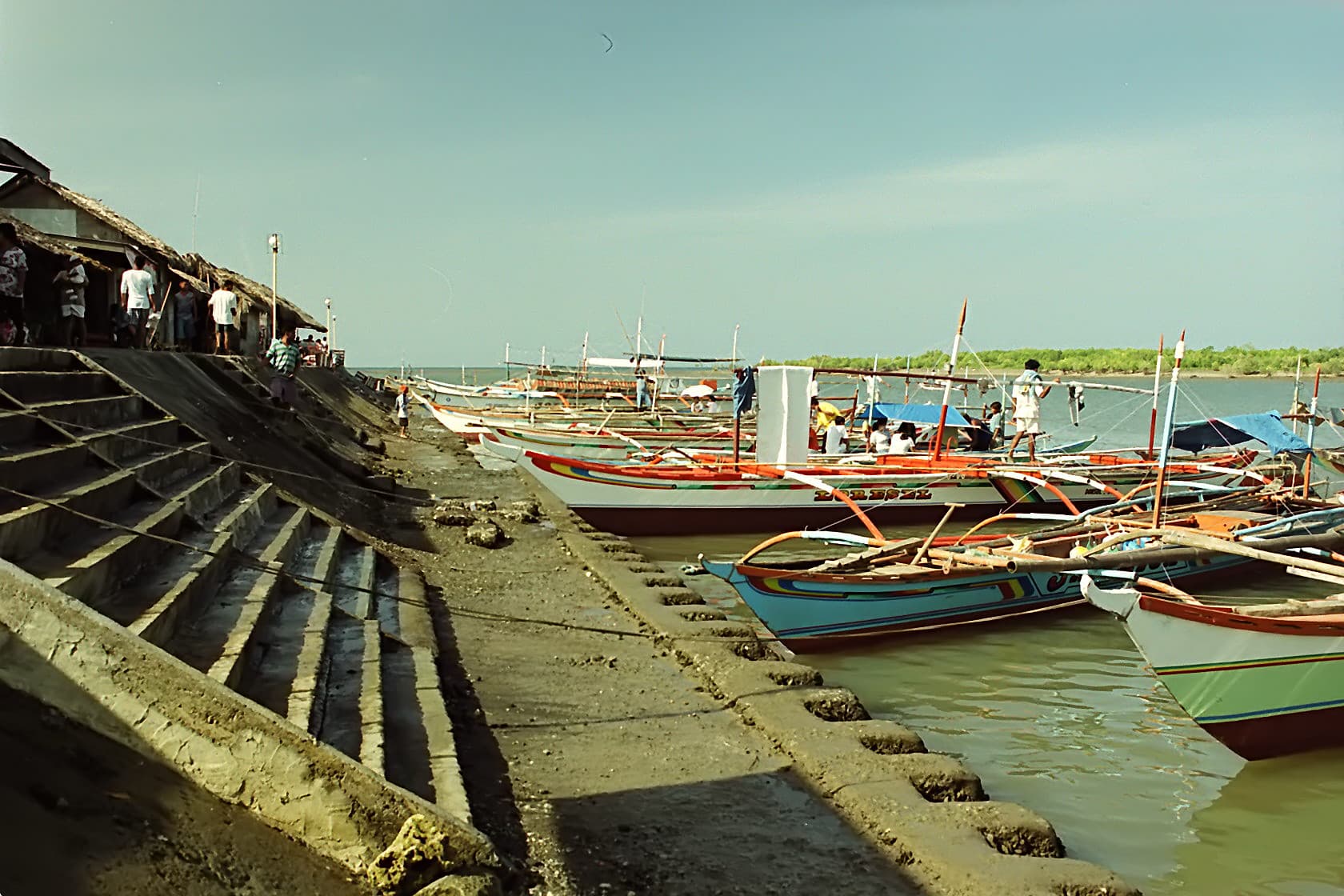 jackylim / CC BY-SA 3.0, via Wikimedia Commons
Visite audio autoguidée de Donsol — parcours GPS à pied, lecture hors ligne, narration en 32 langues.
“Là où les doux géants dérivent et les lucioles illuminent l'obscurité.”
Pas les cartes postales. Les histoires que même les habitants ignorent — soufflées à l'oreille, là où elles se sont passées.
Le nom de la ville a deux origines possibles, l'une ancrée dans la nature, l'autre dans un métier.
Donsol n'a pas toujours été un sanctuaire pour les requins-baleines ; les habitants les percevaient autrefois différemment.
Les personnes qui vous guident vers les requins-baleines ont un lien spécial et personnel avec ces merveilles marines.
Découvrez tous les secrets de Donsol
Chaque adresse, chaque révélation en entier — dans ton oreille, là où elle s'est passée.
Tu choisis tes lieux. Tu marches. La voix te révèle ce que les autres ignorent.

Votre visite audioguidée de Donsol vous attend — choisissez vos lieux, votre langue, et lancez-vous dès votre arrivée.
AcheterLume intègre un guide en réalité augmentée. Levez votre téléphone : sa caméra montre la rue devant vous, avec une flèche lumineuse posée sur l'image réelle qui pointe toujours vers votre prochain arrêt — aucune carte à déchiffrer, aucun mauvais virage. Comme tout dans Lume, ça fonctionne entièrement hors-ligne.
Donsol, une ville côtière de la province philippine de Sorsogon, a acquis une reconnaissance mondiale en tant que « Capitale mondiale du requin-baleine ». Ce village de pêcheurs autrefois tranquille s'est transformé en une destination écotouristique de premier plan après la découverte de ses agrégations saisonnières de requins-baleines en 1998. Ici, les visiteurs ont l'occasion unique de nager et de faire de la plongée avec tuba aux côtés de ces doux géants, connus localement sous le nom de butanding, dans leur environnement naturel, guidés par des directives de conservation strictes.
Au-delà des rencontres impressionnantes avec les requins-baleines, Donsol offre une expérience philippine plus discrète et authentique. La ville elle-même est simple et détendue, un endroit où la vie se déroule à un rythme tranquille. Les soirées apportent une autre forme de magie avec des excursions en bateau pour voir les lucioles, tandis que les îles voisines offrent des récifs coralliens animés pour la plongée avec tuba et la plongée sous-marine. Donsol est une destination pour les amoureux de la nature et ceux qui recherchent l'aventure équilibrée par la tranquillité, loin des foules animées des centres touristiques plus développés.
L'histoire de Donsol est profondément liée à son environnement naturel et à la résilience de ses habitants. Le nom de la ville lui-même proviendrait soit d'une plante médicinale indigène, « donsol » ou « dosol », soit du mot bicolano local désignant l'enclume d'un forgeron, 'donsolan', reflétant la vie communautaire primitive. Les premiers modes de peuplement dans la région ont été considérablement influencés par des menaces extérieures. Les pillards Moro de Mindanao, qui refusaient de reconnaître la domination espagnole, ont fréquemment envahi la côte de Bicol au XVIIIe siècle. Cela a forcé les habitants à abandonner leurs colonies côtières d'origine, conduisant à l'établissement de nouveaux emplacements plus sûrs plus à l'intérieur des terres, tels que Barangay Banuang Gurang, qui se traduit par « Vieille Ville ».
Le statut administratif de Donsol a évolué au cours des siècles. En 1668, elle a été décrétée municipalité indépendante sous la province d'Albay, une reconnaissance qui est intervenue après des années de croissance et l'établissement de divers édifices, dont une vieille église. Plus tard, en 1894, Donsol est devenue une partie de la province de Sorsogon nouvellement déclarée, reflétant le paysage politique changeant des Philippines.
Pendant des générations, Donsol est resté un village de pêcheurs tranquille, son économie étant largement basée sur l'agriculture et la pêche. Les habitants étaient conscients des grands requins qui fréquentaient leurs eaux, mais pendant plus d'un siècle, ces butanding ont été largement mal compris et même considérés comme dangereux. Le tournant est survenu en décembre 1997, lorsqu'une vidéo d'un plongeur local montrant des rencontres paisibles avec des requins-baleines est devenue virale. Cet événement unique, associé à un article de journal en mars 1998, a rapidement transformé Donsol en une destination écotouristique de renommée mondiale. Le gouvernement local, en partenariat avec le Fonds mondial pour la nature (WWF) Philippines, a rapidement établi les eaux municipales comme un sanctuaire de requins-baleines, imposant des directives strictes pour les interactions. Ce modèle pionnier d'écotourisme communautaire a non seulement protégé les requins-baleines, mais a également apporté une prospérité économique significative, élevant Donsol d'une municipalité de cinquième classe à une municipalité de troisième classe en cinq ans et offrant de nouveaux moyens de subsistance à de nombreux résidents.
L'attraction principale à Donsol est sans aucun doute l'interaction éthique avec les requins-baleines. Inscrivez-vous au bureau de tourisme de Donsol pour une orientation obligatoire, puis partez sur une bangka (bateau à balancier local) avec un Butanding Interaction Officer (BIO) formé pour faire de la plongée avec tuba aux côtés de ces magnifiques créatures. N'oubliez pas, c'est uniquement de la plongée avec tuba, pas de contact, et un maximum de six nageurs par requin pour assurer une rencontre responsable.
Après la tombée de la nuit, embarquez pour une sereine excursion en bateau pour voir les lucioles le long de la rivière Ogod. Un bateau à rames glisse à travers les mangroves, offrant un spectacle magique alors que des centaines de lucioles illuminent les arbres – une expérience tranquille d'une heure.
Pour les plongeurs certifiés, Manta Bowl à Ticao Pass est une visite enrichissante. Situé de l'autre côté de la baie, ce site de plongée réputé est une station de nettoyage pour les raies manta de récif et attire fréquemment des requins-baleines, des requins-marteaux et des requins-renards. Notez que la plongée sous-marine n'est pas autorisée dans la baie de Donsol elle-même.
Envisagez une excursion d'une journée à Legazpi (à environ 1h30) pour admirer l'emblématique volcan Mayon, célèbre pour son cône presque parfait. Associez cela à une visite des ruines de Cagsawa, où le seul clocher d'une église ensevelie se dresse sur fond volcanique. Des balades en quad vers la coulée de lave du Mayon sont également disponibles pour les aventuriers.
Enfin, prenez le temps d'explorer les plages tranquilles de Donsol comme Donsol Beach et Morong Beach, parfaites pour se détendre entre deux aventures. Vous pouvez également faire du kayak sur la rivière pour une perspective différente du paysage local.
La meilleure période pour visiter Donsol pour les rencontres avec les requins-baleines est pendant la saison sèche, de novembre à juin, avec des observations maximales entre février et mai. Pendant ces mois, les eaux sont plus calmes et le plancton, la principale source de nourriture des requins-baleines, est abondant. Bien que les observations soient plus fiables à ce moment-là, il est important de se rappeler qu'il s'agit d'animaux sauvages, et les rencontres ne sont jamais garanties. Pour une visibilité optimale et des eaux calmes pour la plongée avec tuba et la plongée sous-marine, visez mars à mai, lorsque les températures de l'eau sont d'environ 28°C (82°F) et que la visibilité peut atteindre jusqu'à 30 mètres (100 pieds). Le festival Apribada, célébrant les requins-baleines, a lieu la quatrième semaine de janvier.
Donsol est accessible principalement via Legazpi City. Volez à l'aéroport de Legazpi (LGP) depuis Manille ou Cebu, puis prenez une camionnette privée (environ 1h30, ~PHP 1750 / 35 USD) ou une camionnette partagée depuis le Grand Central Terminal (environ 1h30, ~PHP 100) jusqu'à Donsol. À Donsol, les tricycles sont le mode de transport le plus courant et le plus abordable pour les courts trajets (PHP 50-100 / 1-2 USD). Des locations de motos sont disponibles pour une exploration indépendante (environ PHP 400 / 15 USD par jour).
L'hébergement va des séjours chez l'habitant économiques aux petits complexes hôteliers, avec des options concentrées autour du centre d'interaction avec les requins-baleines et dans la région de Dancalan. Il est conseillé de réserver à l'avance, surtout pendant la haute saison. Il n'y a pas de distributeurs automatiques de billets à Donsol, alors retirez suffisamment d'argent avant d'arriver. Les dépenses quotidiennes pour un routard peuvent varier de 40 à 60 USD. Soyez attentif à vos affaires, et bien que les escroqueries soient rares, confirmez les prix des excursions en bateau à l'avance.
Donsol en coréen, en chinois ou en hébreu — et dans 29 autres langues, chaque étape narrée par une voix native. La plus large gamme de langues de tous les audioguides autoguidés.
Disponible en :