Ginkelse Heide
During a crucial WWII operation, thousands descended from the sky onto a tranquil heath near Ede. What transpired next profoundly shaped the war's trajectory in the Netherlands?
Full story unlocks in the tour
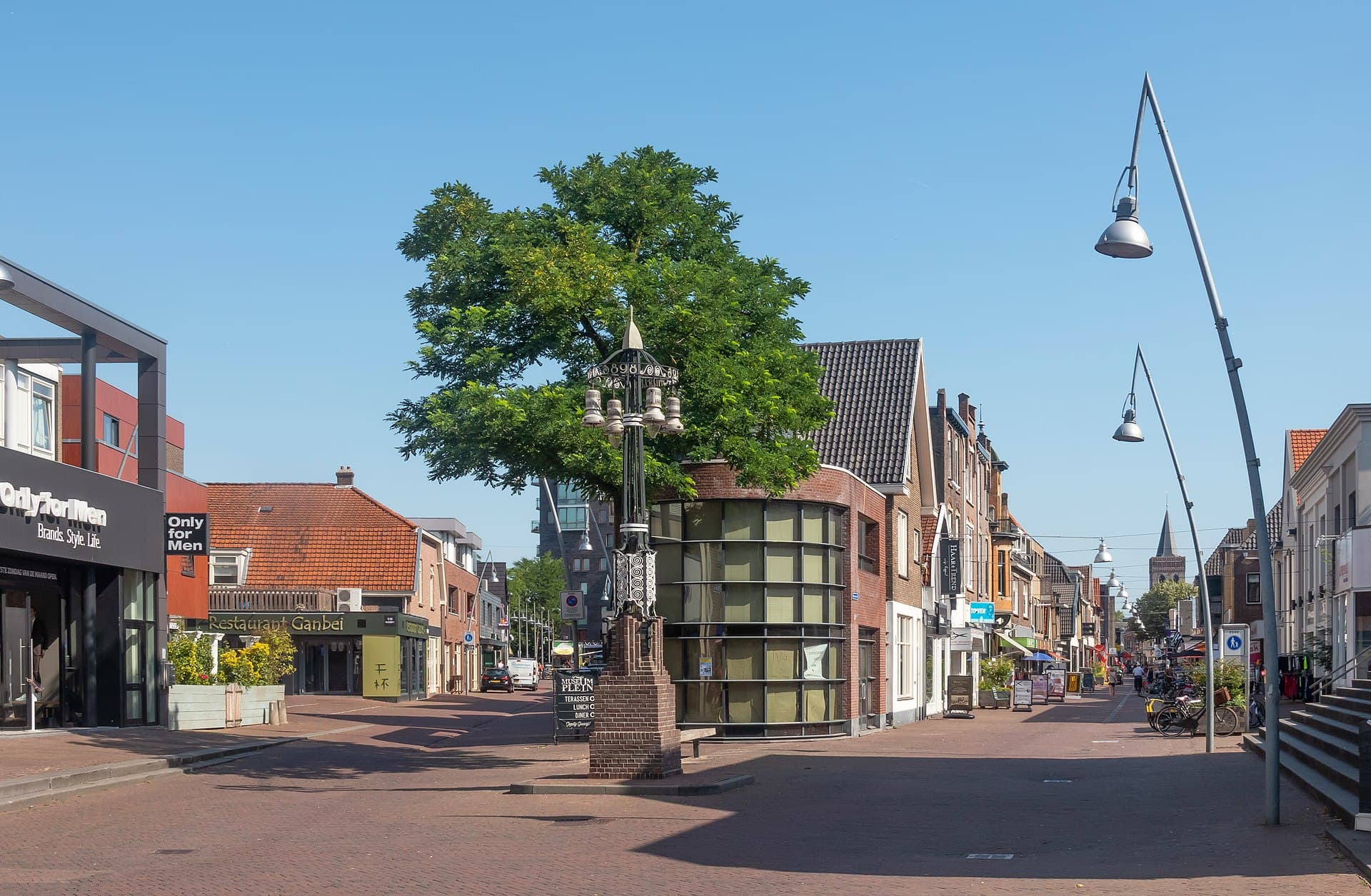 Michielverbeek / CC BY-SA 4.0, via Wikimedia Commons
Self-guided audio walking tour of Ede — GPS route, offline playback, story-driven narration in 32 languages.
“Where ancient forests murmur secrets and modern art finds its untamed home.”
Not the postcards. The stories even locals don't know — whispered in your ear, right where they happened.
During a crucial WWII operation, thousands descended from the sky onto a tranquil heath near Ede. What transpired next profoundly shaped the war's trajectory in the Netherlands?
Beyond its celebrated Van Gogh collection, this museum holds a secret that blurs the lines between human creation and the natural world. What unconventional mode of transport is offered to traverse its expansive grounds?
This 16th-century mill stands as a silent sentinel to centuries of Ede's agricultural past. But what distinctive feature allowed it to adapt to shifting winds?
Discover every secret of Ede
Every address, every reveal in full — in your ear, right where it happened.
You pick your stops. You walk. The voice reveals what the others miss.


Your self-guided audio tour of Ede is ready — pick your landmarks, choose your language, and start the moment you arrive.
BuyLume has a built-in augmented-reality guide. Hold your phone up and its camera shows the street ahead of you, with a glowing arrow laid over the real view that always points to your next stop — no map to puzzle over, no wrong turns. Like everything in Lume, it works fully offline.
Ede, a city in the central Netherlands province of Gelderland, serves as a gateway to the expansive and varied landscapes of the Veluwe region. This area is characterized by its abundant forests, sweeping heathlands, and even shifting sand dunes, offering a singular blend of natural beauty and outdoor activity. With a population exceeding 120,000, Ede itself is a mid-sized Dutch town that balances its urban amenities with a profound connection to its natural surroundings.
Travelers to Ede often use it as a base to explore the nearby Hoge Veluwe National Park, one of the most extensive and compelling national parks in the country. The city provides excellent infrastructure for cycling and hiking, with well-maintained paths that weave through forests, heathland, and farmlands, connecting to charming villages. Ede also holds a significant place in military history, particularly related to World War II, with several monuments and sites commemorating its role in the country's liberation.
## From Saxon Settlement to Modern Hub Ede's origins trace back to the 8th century, when it was established by the Saxons. For centuries, the area's history was intertwined with the broader narrative of the Gelderland province. The countship of Gelre, founded in the 11th century, gradually expanded its influence, eventually becoming a duchy in 1339. This strategic location, controlling major rivers like the Rhine, Waal, Meuse, and IJssel, played a crucial role in the later Middle Ages.
Like much of the Netherlands, Ede experienced periods of conflict and transformation. The region was temporarily occupied by Louis XIV in 1672, and later, portions fell under Prussian rule. It was also part of the Batavian Republic and the French Empire before becoming a province of the Kingdom of the Netherlands in 1815.
## A Wartime Legacy The 20th century brought significant challenges, particularly during World War II. While the Netherlands initially declared neutrality, it was invaded by Germany in May 1940. Ede played a poignant role in Operation Market Garden in September 1944, when Allied paratroopers landed on the Ginkelse Heide in an attempt to secure bridges leading to Arnhem. This ambitious operation, though ultimately unsuccessful in its immediate goals, is a deeply remembered part of Ede's wartime history, commemorated annually with airborne landings and monuments.
## Post-War Development and Natural Preservation Following the devastation of the war, the Netherlands, including Ede, embarked on a period of intense reconstruction and economic stabilization. The town's economy, once reliant on industries like rayon manufacturing and military bases, has evolved. Today, Ede's economy is increasingly focused on national tourism, driven by its proximity to the Veluwe's natural beauty, and education, with connections to the nearby Wageningen University.
Efforts to preserve and enhance the natural landscape have also been a significant part of Ede's recent history. The Veluwe, with its unique geological formations shaped by glaciers some 200,000 years ago, is a testament to the region's ancient past. Modern initiatives, such as the creation of wildlife crossings, aim to reconnect fragmented habitats and ensure the long-term health of the area's diverse flora and fauna.
Ede offers a compelling blend of nature, art, and history. Begin your exploration at the Hoge Veluwe National Park, where you can cycle on free white bicycles through pine forests, heathlands, and sand drifts, and keep an eye out for local wildlife like red deer and wild boar. Within the park, the Kröller-Müller Museum houses the world's second-largest collection of Vincent van Gogh paintings, alongside an impressive sculpture garden featuring 160 works.
For a deeper dive into local history, visit the Historical Museum Ede, which provides insights into the area's heritage. The Airborne Monument on Ginkelse Heide stands as a poignant reminder of Ede's role in Operation Market Garden during World War II. You can also explore the former Maurits Barracks, now transformed into a World War II museum and cultural center.
Do not overlook the 15th-century Oude Kerk and the historic Doesburger Mill (1507), a testament to traditional Dutch craftsmanship. For a distinctive experience, embark on an exploration game tour at De Doolhof, a singular local landmark. If you are seeking a quirky photo opportunity, venture to nearby Lunteren to find the Geographic Center of the Netherlands. Finally, consider a visit to Radio Kootwijk, an impressive Art Deco former radio station with a fascinating past.
The best time to visit Ede for warm-weather activities and enjoying the natural landscapes is from late June to early September. During these months, temperatures are mild and pleasant, averaging around 20-22°C (68-72°F). For those seeking fewer crowds and potentially lower prices, the shoulder seasons of May and September to November offer a good balance of comfortable weather and quieter attractions. The Heideweek festival in the last week of August is a particularly lively time, coinciding with the blossoming of the purple heather. While winter (December to March) is colder with shorter daylight hours, it can offer a peaceful experience with fewer tourists.
Ede is easily accessible by car via the A12 and A30 motorways. The city's main train station, Ede-Wageningen, offers direct intercity connections to major cities like Utrecht (25 minutes), Amsterdam (1 hour), and Arnhem. A smaller station, Ede Centrum, is located in the town center and served by regional trains.
Navigating Ede is convenient, especially by bicycle, given the generally flat terrain and excellent network of bicycle lanes and paths. Local buses are frequent and connect to various parts of the city and surrounding villages, including routes to Hoge Veluwe National Park. Taxis and ride-sharing services like Uber are also available. For exploring the national park, consider utilizing the complimentary white bicycles provided at its entrances.
Ede offers a range of accommodation options, from hotels and bed and breakfasts to bungalow parks and campsites. The main shopping streets, Grotestraat and Maandereind, provide a variety of stores, and a lively market is held on Saturdays.
Ede in Korean, in Chinese or in Hebrew — and 29 more languages, every stop narrated by a native voice. The widest language range of any self-guided audio tour.
Available in: