Imagerie d'Épinal
Les "Images d'Épinal" colorées étaient autrefois un outil puissant, bien au-delà de la simple décoration.
L'histoire complète se débloque dans le tour
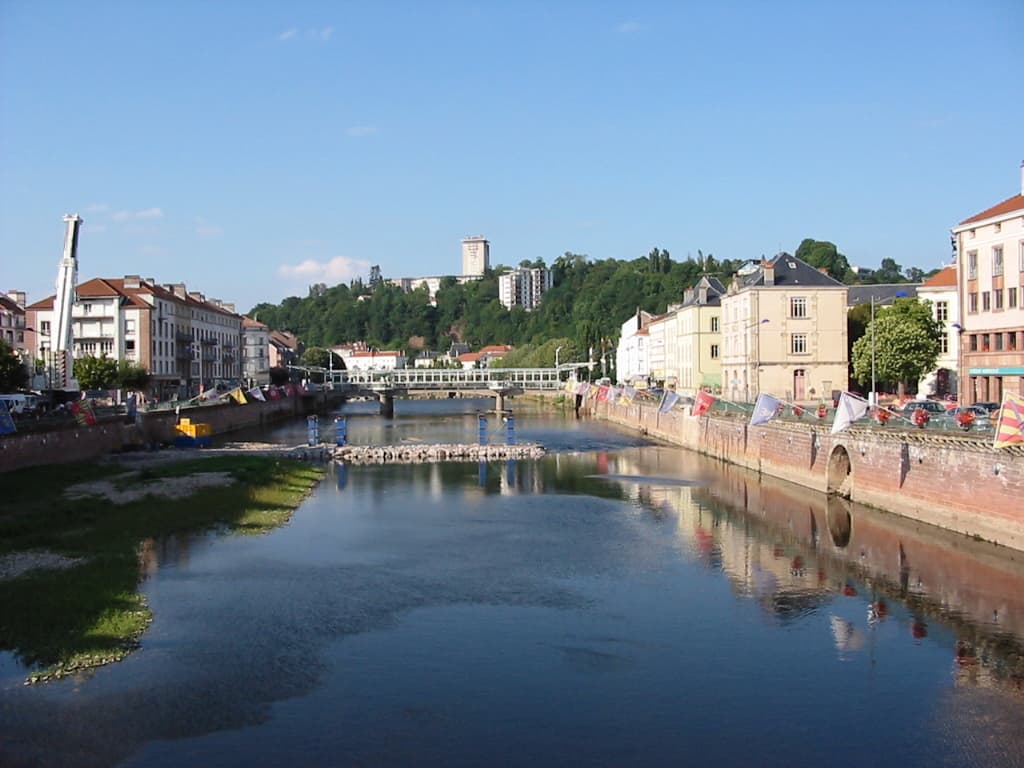 Unknown author / CC BY-SA 3.0, via Wikimedia Commons
Visite audio autoguidée de Épinal — parcours GPS à pied, lecture hors ligne, narration en 32 langues.
“Là où les estampes vibrantes rencontrent les échos médiévaux le long de la Moselle.”
Pas les cartes postales. Les histoires que même les habitants ignorent — soufflées à l'oreille, là où elles se sont passées.
Les "Images d'Épinal" colorées étaient autrefois un outil puissant, bien au-delà de la simple décoration.
Les ruines du château abritent une légende surprenante et spectrale.
Observez attentivement la plus ancienne arcade ici, et vous trouverez un clin d'œil subtil à une place parisienne bien plus grandiose.
Découvrez tous les secrets de Épinal
Chaque adresse, chaque révélation en entier — dans ton oreille, là où elle s'est passée.
Tu choisis tes lieux. Tu marches. La voix te révèle ce que les autres ignorent.

Votre visite audioguidée de Épinal vous attend — choisissez vos lieux, votre langue, et lancez-vous dès votre arrivée.
AcheterLume intègre un guide en réalité augmentée. Levez votre téléphone : sa caméra montre la rue devant vous, avec une flèche lumineuse posée sur l'image réelle qui pointe toujours vers votre prochain arrêt — aucune carte à déchiffrer, aucun mauvais virage. Comme tout dans Lume, ça fonctionne entièrement hors-ligne.
Épinal, préfecture du département des Vosges dans le nord-est de la France, présente un mélange d'allure historique et de splendeur naturelle le long de la Moselle. Réputée pour son héritage artistique, notamment les distinctives « Images d'Épinal », la ville invite à l'exploration de son passé médiéval et de ses espaces verdoyants. Avec une population d'environ 32 000 habitants, Épinal conserve une atmosphère accueillante, idéale pour ceux qui recherchent une expérience française détendue.
L'architecture de la ville s'étend des monuments médiévaux aux structures Renaissance et gothiques, le tout encadré par un paysage de forêts et de chemins de campagne. Épinal sert d'excellent point de départ pour découvrir la région plus vaste des Vosges, avec ses collines et ses vallées pittoresques. Les visiteurs peuvent facilement naviguer dans le centre-ville à pied, découvrant son caractère unique et ses offres culturelles.
## De « Spinal » à Place Forte Les origines d'Épinal remontent au Xe siècle, lorsque Thierry Ier, évêque de Metz, établit un monastère et construisit un château pour se protéger des pillards bourguignons. La ville était initialement connue sous le nom de « Spinal », un nom qui persiste dans le terme désignant ses habitants, les « Spinaliens ». Au Moyen Âge, Épinal était devenue un centre politique et économique important au sein des territoires de Lorraine, d'Alsace, de Bourgogne et de Champagne.
## Des Siècles de Conflits et de Créativité Le XVIIe siècle apporta des difficultés, la ville subissant la guerre entre la Lorraine et la France, une peste dévastatrice en 1629, et des attaques et sièges ultérieurs. En 1636, il ne restait plus qu'environ 1 000 habitants. Malgré ces défis, Épinal se rétablit et, en 1790, elle fut choisie comme capitale du département des Vosges nouvellement formé. Un moment charnière arriva en 1796 avec la création par Jean-Charles Pellerin de l'Imagerie d'Épinal, qui acquit une reconnaissance généralisée pour ses estampes populaires aux couleurs vives. Ces « Images d'Épinal » devinrent un phénomène culturel, menant à la création du Musée de l'Image.
## Croissance Industrielle et Résilience Moderne Après la guerre franco-prussienne (1870-71), Épinal connut un essor significatif de son industrie textile alors que des industriels de Mulhouse s'y installaient. La ville devint également une position de défense clé, faisant partie du système Séré de Rivières, visant à protéger la France d'une invasion allemande. En 1913, les soldats constituaient la moitié des 30 000 habitants de la ville. Bien qu'Épinal ait subi de lourds bombardements pendant la Seconde Guerre mondiale, elle a depuis préservé son cœur historique, mêlant rues et bâtiments anciens à des centres culturels modernes.
Commencez votre exploration dans la vieille ville animée, où vous pourrez flâner dans les rues anciennes et admirer les bâtiments en grès rose. La Place des Vosges forme le cœur du centre historique, avec des arcades qui abritaient autrefois des marchands et la Maison du Bailli de style Renaissance. À proximité, la Basilique Saint-Maurice, une structure gothique du XIe au XIIIe siècle, est remarquable pour son « portail bourgeois » du XIIIe siècle.
Aucune visite à Épinal n'est complète sans découvrir son héritage artistique au Musée de l'Image et à l'Imagerie d'Épinal. Le musée abrite l'une des collections les plus importantes au monde d'imagerie populaire imprimée, tandis que l'Imagerie, toujours active depuis 1796, offre un aperçu des techniques d'impression traditionnelles. Pour les amateurs d'art, le Mudaac (Musée départemental d'Art Ancien et Contemporain) présente une collection d'environ 33 000 œuvres.
Surplombant la ville se trouvent les ruines du Château médiéval d'Épinal, entourées d'un parc de 27 hectares. Le parc propose des sentiers de promenade, un jardin médiéval, un parc animalier et des aires de jeux. Vous pouvez également trouver le monument historique de la Tour Chinoise dans l'enceinte.
La meilleure période pour visiter Épinal afin de profiter d'un temps agréable et d'activités de plein air est de mai à septembre. Pendant ces mois, les températures sont généralement douces et il y a moins de pluie, ce qui est idéal pour explorer la ville et ses paysages naturels environnants. Juillet et août sont les mois les plus chauds, avec des températures diurnes moyennes d'environ 25-27°C, propices aux promenades sans chaleur excessive. Bien que décembre offre des marchés de Noël festifs, le temps est généralement froid et venteux, avec des températures allant de -1 à 5°C.
Épinal est facilement accessible en train, avec des services TGV depuis Paris prenant environ 2 heures et 15 minutes. Des liaisons ferroviaires régulières sont également disponibles depuis Nancy. En voiture, Épinal se trouve à environ 70 km de Nancy et 380 km de Paris. La ville offre diverses solutions de stationnement, y compris des options gratuites et payantes.
Pour se déplacer en ville, Épinal est compacte et facilement explorable à pied. Des services de bus locaux sont également disponibles. Les magasins sont généralement ouverts du lundi au samedi, de 10h00 à 19h00, bien que les petites boutiques puissent fermer pour une pause déjeuner entre 12h00 et 14h00. La plupart des magasins sont fermés le dimanche, à l'exception de certaines boulangeries et boutiques de souvenirs. Bien que les cartes bancaires soient largement acceptées, il est conseillé d'avoir de l'argent liquide pour les achats sur les marchés ou les petits souvenirs.
Épinal en coréen, en chinois ou en hébreu — et dans 29 autres langues, chaque étape narrée par une voix native. La plus large gamme de langues de tous les audioguides autoguidés.
Disponible en :