Florina Museum of Modern Art
The city's artistic spirit isn't just a recent development, but something woven into its very fabric, even influencing how its modern art collection came to be.
Full story unlocks in the tour
 Esslet / CC BY-SA 4.0, via Wikimedia Commons
Self-guided audio walking tour of Florina — GPS route, offline playback, story-driven narration in 32 languages.
“Where the Sakouleva River flows through a canvas of art and quiet resilience.”
Not the postcards. The stories even locals don't know — whispered in your ear, right where they happened.
The city's artistic spirit isn't just a recent development, but something woven into its very fabric, even influencing how its modern art collection came to be.
Beyond its tracks, the old railway station holds a less-traveled story about an unexpected, yet vital, role it played during a tumultuous period.
The river that bisects Florina isn't just a scenic element; it once played a surprising role in the city's winter traditions, beyond simply freezing over.
Discover every secret of Florina
Every address, every reveal in full — in your ear, right where it happened.
You pick your stops. You walk. The voice reveals what the others miss.


Your self-guided audio tour of Florina is ready — pick your landmarks, choose your language, and start the moment you arrive.
BuyLume has a built-in augmented-reality guide. Hold your phone up and its camera shows the street ahead of you, with a glowing arrow laid over the real view that always points to your next stop — no map to puzzle over, no wrong turns. Like everything in Lume, it works fully offline.
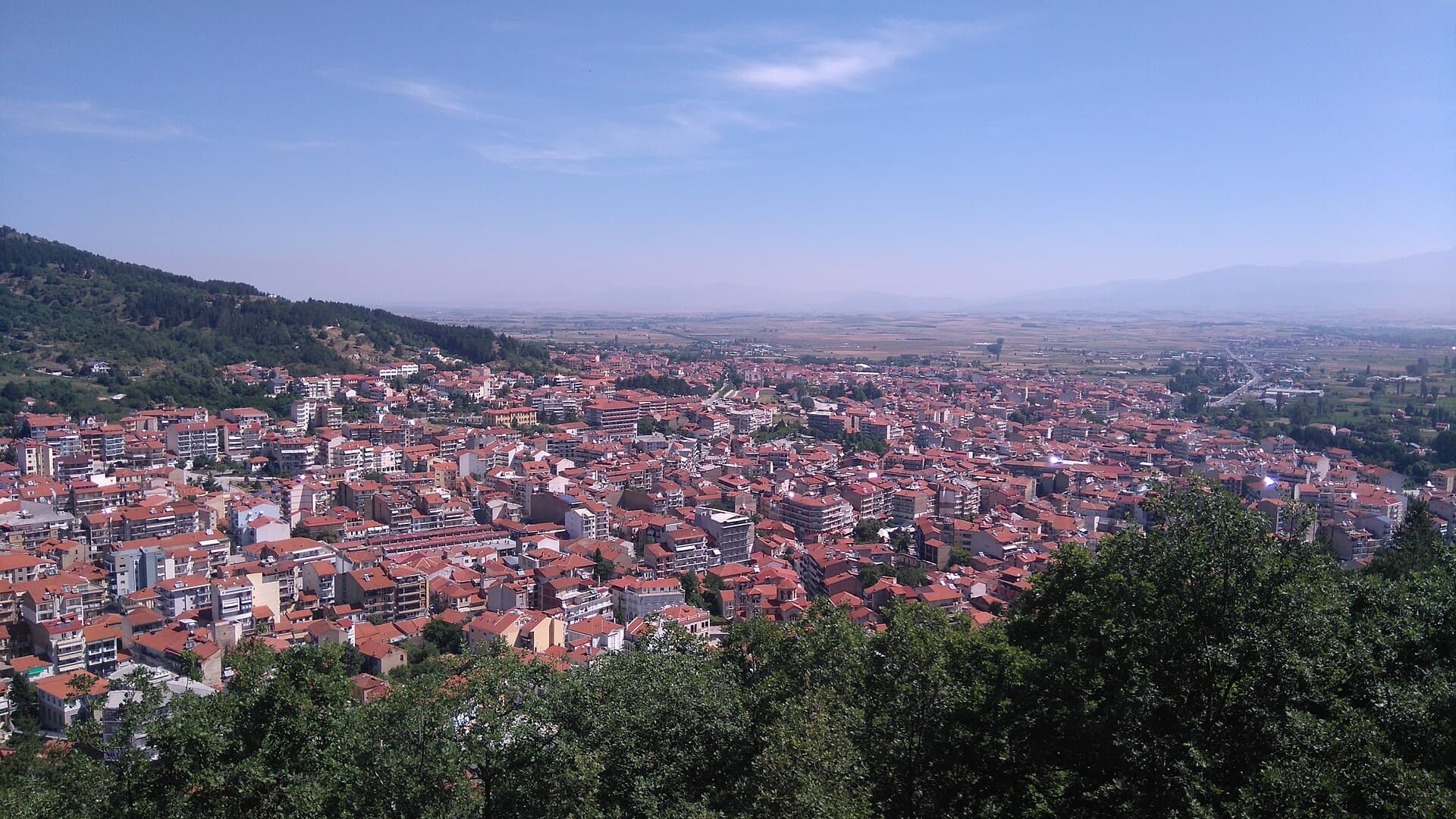
Florina, a city in western Macedonia, Greece, distinguishes itself with a unique character shaped by its mountainous surroundings and the Sakouleva River that meanders through its heart. Known for its distinct four seasons, Florina experiences particularly harsh winters, often blanketed in snow, which contributes to its picturesque, almost alpine, aesthetic. The city's architecture, with many buildings dating back to the early 20th century, reflects a blend of local Macedonian and neoclassical influences, often featuring vivid colors and intricate details.
The city is often referred to as the 'City of Artists' due to its flourishing artistic community and the presence of the School of Fine Arts, a department of the University of Western Macedonia. This artistic inclination is visible in the numerous galleries and public art installations scattered throughout the city. Beyond its visual appeal, Florina serves as a gateway to the Prespa Lakes and the surrounding national parks, offering a blend of cultural immersion and natural exploration.
## Early Settlements and Roman Influence Evidence suggests the area around Florina has been inhabited since antiquity, with archaeological finds indicating early settlements. During the Roman period, the region gained importance due to its strategic location along the Via Egnatia, a significant Roman road connecting the Adriatic coast with Byzantium. While Florina itself wasn't a major Roman city, its proximity to this vital route facilitated trade and cultural exchange, leaving behind scattered remnants of Roman presence.
## Ottoman Era and Macedonian Struggle Florina, like much of northern Greece, fell under Ottoman rule for several centuries, beginning in the late 14th century. During this long period, the city developed as a multi-ethnic center, with Greek, Ottoman, and Slavic communities coexisting. The late 19th and early 20th centuries were a tumultuous time, as Florina became a focal point in the Macedonian Struggle, a period of intense conflict and political maneuvering between various ethnic and national groups vying for control of Macedonia. The city changed hands multiple times before its eventual incorporation into the Greek state in 1912, following the Balkan Wars.
## 20th Century: Wars and Development The 20th century brought further challenges and transformations to Florina. The city played a significant role during both World Wars, particularly as a strategic location in the Macedonian Front during WWI. The interwar period saw efforts to modernize and rebuild, but development was again interrupted by World War II and the subsequent Greek Civil War, which deeply impacted the region. In the post-war era, Florina gradually recovered, establishing itself as an administrative and cultural center for the wider region of Western Macedonia, with a growing emphasis on education and the arts, culminating in the establishment of the School of Fine Arts.
Begin your exploration along the Sakouleva River, where old mansions with their distinctive architecture line the banks, many housing cafes and tavernas. A short walk will lead you to the Florina Museum of Modern Art, showcasing a compelling collection of contemporary Greek art, much of it from local artists. Do not miss the Archaeological Museum of Florina, which provides insights into the region's long history, from prehistoric times to the Byzantine era. For expansive views of the city and its surrounding mountains, ascend to the λόφος Αγίου Παντελεήμονα (Agios Panteleimon Hill), home to a church and a clock tower. The city's old market area offers a glimpse into local life, with traditional shops and a lively atmosphere.
Florina is captivating year-round, but each season offers a distinct experience. Winter, from December to February, transforms the city into a snowy wonderland, ideal for those who appreciate cold weather and picturesque, snow-covered landscapes. Spring (March to May) brings blooming flowers and milder temperatures, perfect for walking and exploring. Autumn (September to November) is characterized by vivid fall foliage and pleasant weather. Summer (June to August) is warm, making it suitable for exploring the nearby lakes and mountains.
Florina is accessible by road, with regular bus services connecting it to Thessaloniki and other major Greek cities. The nearest airport is in Kastoria (Aristotelis Airport), though Thessaloniki Airport (Macedonia Airport) offers more international connections. Within the city, walking is the best way to explore the central areas. Taxis are readily available for longer distances or trips to nearby attractions. Accommodation options range from boutique hotels in renovated mansions to smaller guesthouses. Local cuisine is hearty, featuring regional specialties like peppers, cheeses, and game.
Florina in Korean, in Chinese or in Hebrew — and 29 more languages, every stop narrated by a native voice. The widest language range of any self-guided audio tour.
Available in: