The Rogovo Rock Pools (Kolymbithres)
The natural rock pools between Megalo and Mikro Papingo hold a secret of an Ottoman ruler.
Full story unlocks in the tour
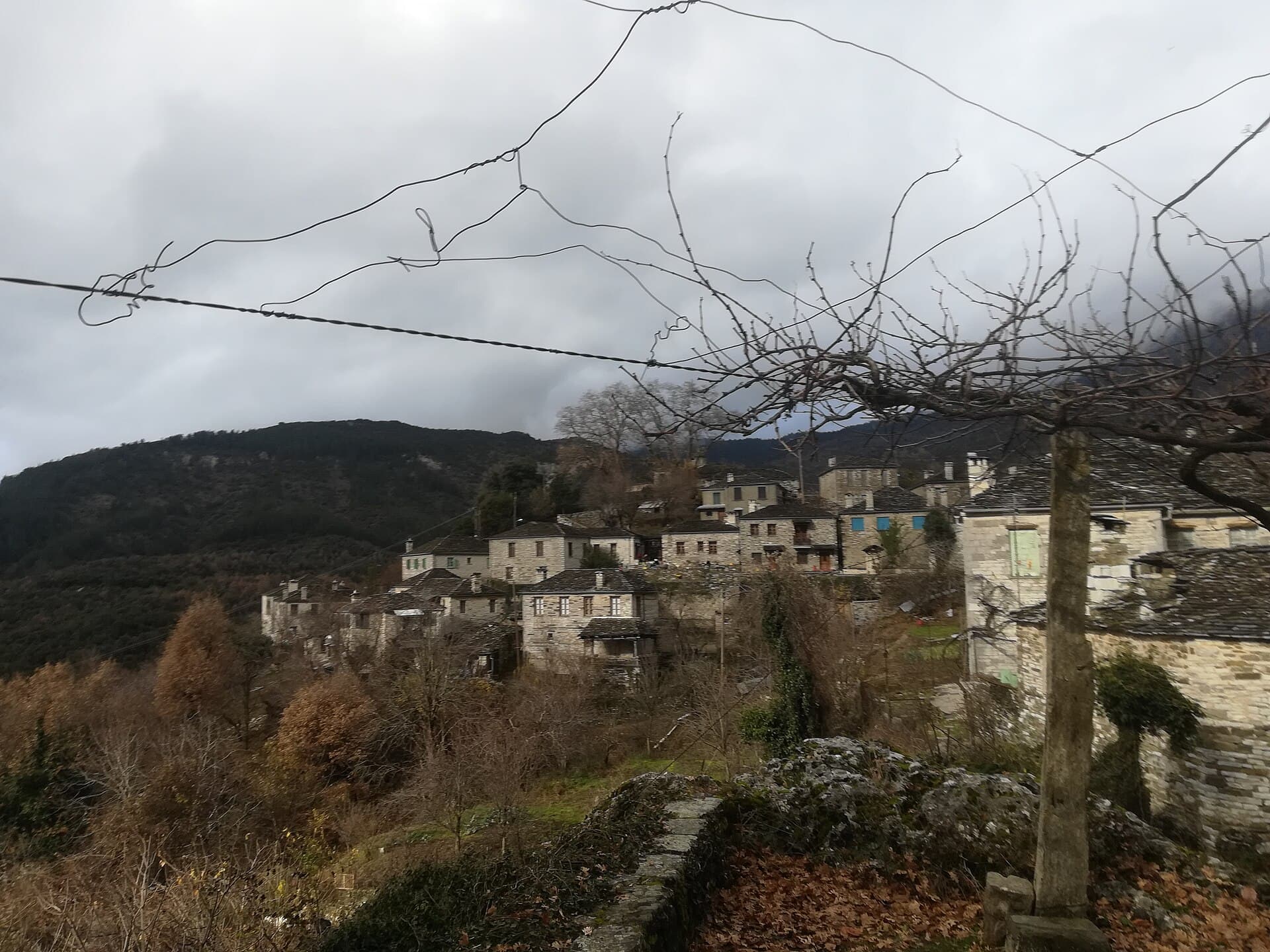 Vasilia x / CC BY-SA 4.0, via Wikimedia Commons
Self-guided audio walking tour of Papingo — GPS route, offline playback, story-driven narration in 32 languages.
“Where mountains meet myth and ancient stones tell tales.”
Not the postcards. The stories even locals don't know — whispered in your ear, right where they happened.
The natural rock pools between Megalo and Mikro Papingo hold a secret of an Ottoman ruler.
A prominent school in Papingo was founded by a local who became a director of a famous institution in the United States.
This church in Megalo Papingo stands on a foundation much older than its visible structure.
Discover every secret of Papingo
Every address, every reveal in full — in your ear, right where it happened.
You pick your stops. You walk. The voice reveals what the others miss.


Your self-guided audio tour of Papingo is ready — pick your landmarks, choose your language, and start the moment you arrive.
BuyLume has a built-in augmented-reality guide. Hold your phone up and its camera shows the street ahead of you, with a glowing arrow laid over the real view that always points to your next stop — no map to puzzle over, no wrong turns. Like everything in Lume, it works fully offline.
Papingo, a pair of villages known as Megalo Papingo (Greater Papingo) and Mikro Papingo (Lesser Papingo), offers a compelling destination within the Vikos-Aoos National Park in the Epirus region of Greece. At the foot of Mount Tymphe and its Astraka peak, the villages are celebrated for their distinct stone architecture, pedestrian lanes paved with local stone, and the dramatic presence of the Vikos Gorge, one of the deepest canyons in the world. This area is a designated UNESCO World Geopark, recognized for its exceptional geological and cultural significance.
The appeal of Papingo extends beyond its visual character, providing a tranquil escape for those seeking to connect with the natural world and its enduring stories. The villages serve as a starting point for exploring the varied ecosystems of the national park, from verdant forests to high alpine meadows. With its blend of established character and impressive natural surroundings, Papingo invites visitors to experience a distinctive corner of Greece, away from the more frequented coastal areas.
## Early Mentions and Ottoman Privileges Papingo's recorded history reaches back to 1325, with its initial mention by Byzantine emperor Andronikos III Palaiologos. In the early 15th century, the residents of Papingo were involved in local conflicts, and the Chronicle of the Tocco reports that Leonardo Tocco rescued them from a Turkish attack. After 1430, when the region came under Ottoman control, Papingo became the capital of Zagori.
The village experienced a period of considerable flourishing from the 15th to the 17th centuries. This was largely due to specific privileges granted to the Zagori region by the Ottoman Sultan, which permitted a degree of self-governance. These privileges encouraged development, including the establishment of a school and a library in the 18th century. During the 17th and 18th centuries, some locals became known as Vikos doctors, folk healers who utilized local herbs for various ailments.
## Decline and Revival The prosperity of Papingo began to recede in the 19th century when its administrative privileges were withdrawn after Epirus was taken over by Ismael Pasha. This led to a demographic decrease that continued through the 20th century, even after Epirus united with Greece following the Balkan Wars in 1913. The villages endured further hardship during the Second World War and the Greek Civil War, leading to near depopulation by the 1980s.
However, in recent decades, Papingo has seen a resurgence in population, largely driven by its increasing popularity as a destination for travelers. The villages have been acknowledged for their traditional architecture and natural splendor, leading to their designation as a protected traditional settlement and a UNESCO World Geopark. This renewed interest has led to the development of quality visitor infrastructure, drawing hikers, nature enthusiasts, and those seeking a relaxing yet adventurous stay.
Papingo is composed of two distinct villages, Megalo Papingo and Mikro Papingo, connected by a three-kilometer road. Both offer traditional stone houses, pedestrian lanes paved with local stone, and a timeless character. Wander the narrow alleys to admire the local architecture, characterized by stone and wood construction with grey stone roofs.
An engaging natural attraction is the Rogovo Rock Pools, also known as Kolymbithres or "Ovires." These natural swimming pools, formed by the erosion of limestone rocks by the Rogovo stream, offer clear, cool water and small cascades. They are situated between Megalo and Mikro Papingo.
For expansive views, visit the Byzantine-style Agia Paraskevi Monastery, dating back to the 18th century, located before entering Papingo. In Megalo Papingo, the Church of Agios Vlasios, built in 1852 upon the foundations of a much older church from 912, is a significant religious site with an impressive bell tower. Mikro Papingo is home to the 18th-century Church of the Archangels Michael and Gabriel, featuring a wooden reredos crafted by Epirotan artisans. The World Wildlife Fund Information Center, providing details on the region's flora and fauna, is also located in Mikro Papingo.
The most pleasant time to visit Papingo is from May to October, when the weather supports outdoor activities such as hiking. Spring (March-May) and early autumn (September-November) offer cooler temperatures and fewer visitors, making them excellent choices for exploration. Summer, particularly July and August, is suitable for high-altitude hikes and mountain explorations, though temperatures can be warm during the day. Even in summer, it is wise to pack warm layers as mountain temperatures can drop. Significant rainfall can occur throughout the year, with December typically being the wettest month and August the driest.
Papingo is approximately 60 kilometers (37 miles) from Ioannina, the capital of Epirus, and the drive takes about an hour. The road leading to Papingo is scenic but narrow and winding, requiring careful navigation. Upon reaching the villages, it is advisable to park your car at the community parking areas and explore the stone alleys on foot. Ioannina National Airport (IOA) is the closest airport, about 39.1 km away, with taxi services available. Public bus services to Papingo from Ioannina are limited, typically operating a few times a week, so checking schedules in advance is crucial. Renting a car from Ioannina is highly recommended for flexibility in exploring the wider Zagori region. Accommodations in Papingo range from traditional guesthouses and boutique hotels to mountain refuges, many offering an authentic experience with local hospitality.
Papingo in Korean, in Chinese or in Hebrew — and 29 more languages, every stop narrated by a native voice. The widest language range of any self-guided audio tour.
Available in: