The Stone Bridges of Zagori
These elegant arches, crafted without mortar, once communicated a secret language.
Full story unlocks in the tour
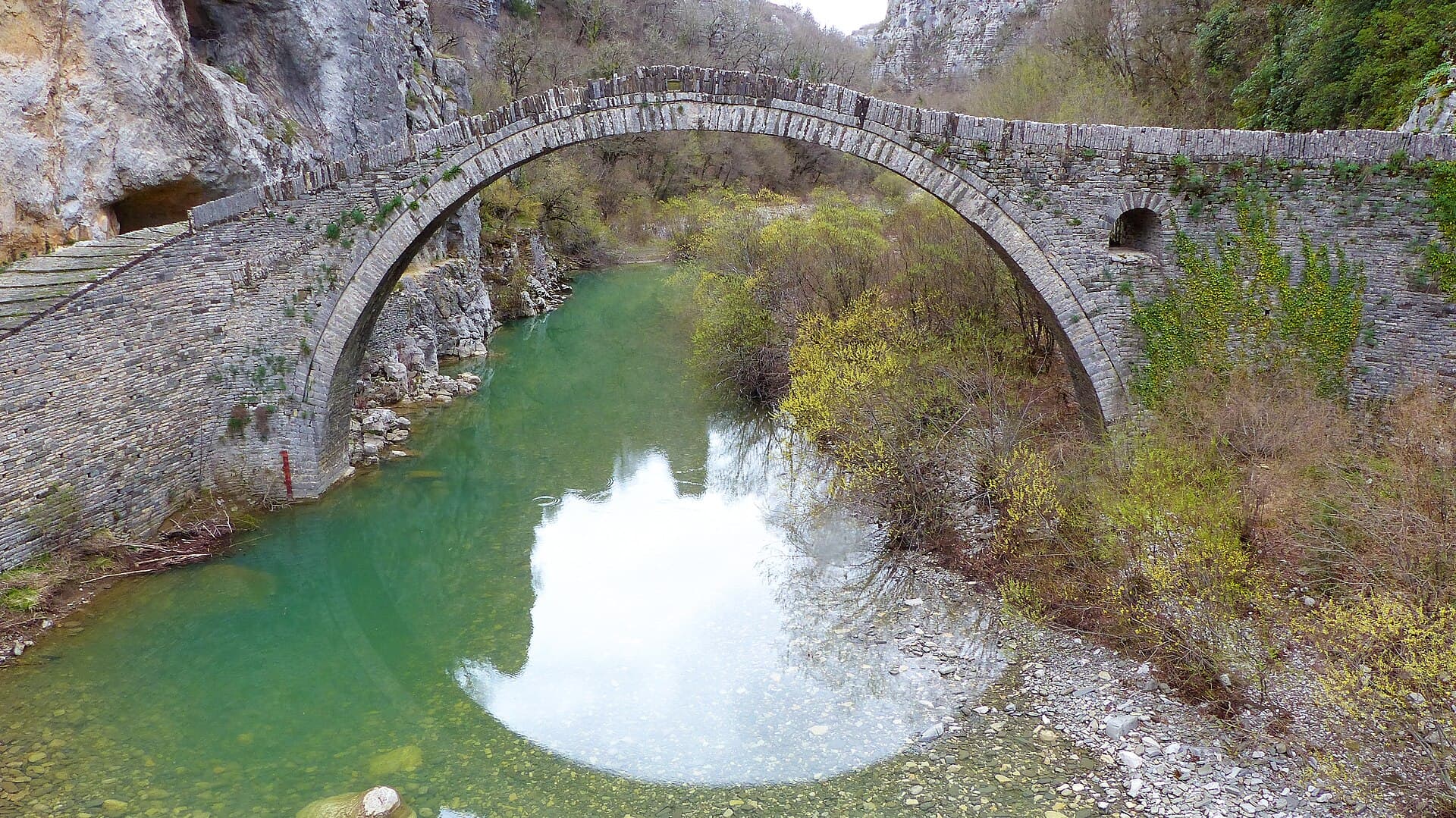 ChrLoukop / CC BY-SA 4.0, via Wikimedia Commons
Self-guided audio walking tour of Zagori — GPS route, offline playback, story-driven narration in 32 languages.
“Where stone bridges hold ancient whispers and mountains guard ancestral tales.”
Not the postcards. The stories even locals don't know — whispered in your ear, right where they happened.
These elegant arches, crafted without mortar, once communicated a secret language.
This imposing canyon, recognized by Guinness World Records, possesses a forgotten history of healing.
Beyond its striking views, this monastery, clinging to a cliff, once offered an unexpected escape route.
Discover every secret of Zagori
Every address, every reveal in full — in your ear, right where it happened.
You pick your stops. You walk. The voice reveals what the others miss.


Your self-guided audio tour of Zagori is ready — pick your landmarks, choose your language, and start the moment you arrive.
BuyLume has a built-in augmented-reality guide. Hold your phone up and its camera shows the street ahead of you, with a glowing arrow laid over the real view that always points to your next stop — no map to puzzle over, no wrong turns. Like everything in Lume, it works fully offline.
Zagori, a UNESCO World Heritage Site in northwestern Greece, is a captivating region where the Pindus Mountains meet a collection of 46 stone villages, known as Zagorochoria. The name Zagori itself, of Slavic origin, translates to 'beyond the mountains,' perfectly encapsulating its remote and awe-inspiring character. This area is a testament to nature's grandeur, featuring deep gorges, crystalline rivers, and dense forests that feel a world away from the bustling Greek islands.
Life here moves at a different pace, dictated by the rhythm of the mountains and the enduring traditions of its stone-built settlements. The villages, with their distinctive architecture of gray slate roofs and stone pathways, are harmoniously integrated into the rugged landscape. Zagori offers a unique blend of natural beauty and cultural heritage, making it an ideal destination for those seeking adventure, tranquility, and a glimpse into a bygone era.
It is a place where you might encounter more wildlife than people, with the Vikos-Aoös National Park being home to diverse bird species, brown bears, and foxes. The region's quiet roads and extensive network of trails, once used to connect isolated communities, now invite exploration on foot or by bicycle, revealing expansive views and unexpected wonders at every turn.
## Early Inhabitants and Ancient Kingdoms Evidence suggests human presence in Zagori dates back to the last ice age, approximately 15,000 to 17,000 years ago, with hunters temporarily visiting rock shelters along the Voidomatis River. Later, between 2500 and 2000 BC, ancient tribes known as Pelasgians inhabited the area, leaving behind old wall remains in villages like Vitsa and Skamneli. From the 9th to the 4th century BC, Zagori was part of the ancient kingdom of the Molossians, a Greek tribe of Epirus who eventually controlled the entire region. The Molossian royal house ruled from the ancient town of "Molossis," near modern Konitsa, where the Voidomatis, Aoös, and Sarantaporos rivers converge.
## Byzantine and Ottoman Eras: Autonomy and Prosperity From 1204 to 1337, Zagori was part of the Despotate of Epirus. It briefly returned to Byzantine rule in 1337 under Andronikos III Paleologos. During the Ottoman period, Zagori, along with the people of Ioannina, secured significant privileges through a treaty with the Ottoman army, even before the fall of Constantinople. These privileges, known as Surutia, granted Zagori considerable autonomy, allowing it to maintain its own government, military guard, and legal system in exchange for taxation and service in the Ottoman cavalry. This period, particularly the 18th and 19th centuries, marked Zagori's "golden age," characterized by economic prosperity and a flourishing cultural and intellectual life. Wealthy Zagorians, known as archontes, and expatriates who established successful commercial enterprises across Eastern and Central Europe, the Middle East, and Egypt, contributed to the region's affluence and supported Greek education. The commercial and organizational models of these expatriates were reportedly inspired by the Jewish community of Ioannina.
## Modern History and Enduring Heritage Zagori became part of modern Greece in 1912, following the liberation of Epirus and Ioannina from the Ottomans. The region's unique traditional architecture, characterized by stone-built houses and intricate stone bridges, reflects this period of economic affluence. Today, Zagori's 46 villages are recognized as a UNESCO World Heritage Site, preserving a cultural landscape that has adapted to its mountainous topography over centuries.
Zagori's landscape is dotted with sights that blend natural grandeur with human ingenuity. The Vikos Gorge is a highlight, recognized by Guinness World Records as the deepest gorge in the world in proportion to its width. Hiking its main trail, a 12-kilometer route between Monodendri and Vikos villages, offers a journey through ancient forests and past clear springs.
Another defining feature of Zagori is its numerous stone bridges, with over 80 surviving throughout the region. These 18th and 19th-century marvels, built without mortar by master craftsmen, once connected isolated villages and now serve as picturesque landmarks. Notable examples include the Kokkoris Bridge (also known as Noutsos Bridge) and the Plakidas Bridge. Many are easily accessible, often just a short walk from the road, making for an enjoyable 'scavenger hunt' for visitors.
For expansive views of the Vikos Gorge, the Oxya Viewpoint near Monodendri village is a popular spot. From Monodendri, a 600-meter path leads to the Agia Paraskevi Monastery, a 15th-century monastery clinging to a cliff, offering striking vistas into the gorge and housing ancient frescoes. The Voidomatis River, a tributary of the Aoös, is renowned for its exceptionally clear, cold waters, which can be explored through rafting or kayaking, or simply admired from its traditional stone bridges. The Stone Forest (Petrino Dasos), a collection of limestone rock pillars resembling petrified trees, can be seen en route from Monodendri to the Oxya viewpoint, offering a unique geological spectacle.
The best times to visit Zagori are spring (April-May) and autumn (September-October). These seasons offer mild temperatures ideal for hiking and exploring, with spring bringing abundant wildflowers and full-flowing rivers, and autumn showcasing vivid foliage. Summer (June-August) is also an option, though it can be warmer with more tourists. While winter transforms Zagori into a snow-covered landscape, it's quieter and suitable for those interested in winter sports or a serene, snowy retreat.
Exploring Zagori is best done by car, allowing you to navigate between its 46 villages and various natural attractions. Plan for at least two to three days to experience the region's stone pathways, traditional architecture, and scenic routes. Accommodation often consists of charming guesthouses in restored stone houses, many family-run, offering authentic hospitality. Villages like Monodendri, Papingo, and Aristi serve as excellent bases for exploration. Local tavernas provide opportunities to savor traditional Epirus cuisine, including regional cheeses like feta and graviera, along with classic Greek dishes. Given the mountainous terrain, especially when hiking, it's wise to be prepared for varied weather, as conditions can change rapidly. Always carry a detailed map or consider a guided tour for more challenging trails.
Zagori in Korean, in Chinese or in Hebrew — and 29 more languages, every stop narrated by a native voice. The widest language range of any self-guided audio tour.
Available in: