Konitsa Bridge
Beneath the elegant arch of Konitsa's stone bridge, a small bell hangs, not as decoration, but as a crucial warning.
Full story unlocks in the tour
 Pitichinaccio / CC BY 3.0, via Wikimedia Commons
Self-guided audio walking tour of Konitsa — GPS route, offline playback, story-driven narration in 32 languages.
“Where mountains meet myth, and rivers carve history.”
Not the postcards. The stories even locals don't know — whispered in your ear, right where they happened.
Beneath the elegant arch of Konitsa's stone bridge, a small bell hangs, not as decoration, but as a crucial warning.
The Aoos River, flowing through Konitsa, holds a distinction that makes it unique among many European waterways.
The surrounding 'Mastorochoria' villages of Konitsa are known for a specific craft that shaped the region's architecture and extended beyond Greece's borders.
Discover every secret of Konitsa
Every address, every reveal in full — in your ear, right where it happened.
You pick your stops. You walk. The voice reveals what the others miss.


Your self-guided audio tour of Konitsa is ready — pick your landmarks, choose your language, and start the moment you arrive.
BuyLume has a built-in augmented-reality guide. Hold your phone up and its camera shows the street ahead of you, with a glowing arrow laid over the real view that always points to your next stop — no map to puzzle over, no wrong turns. Like everything in Lume, it works fully offline.
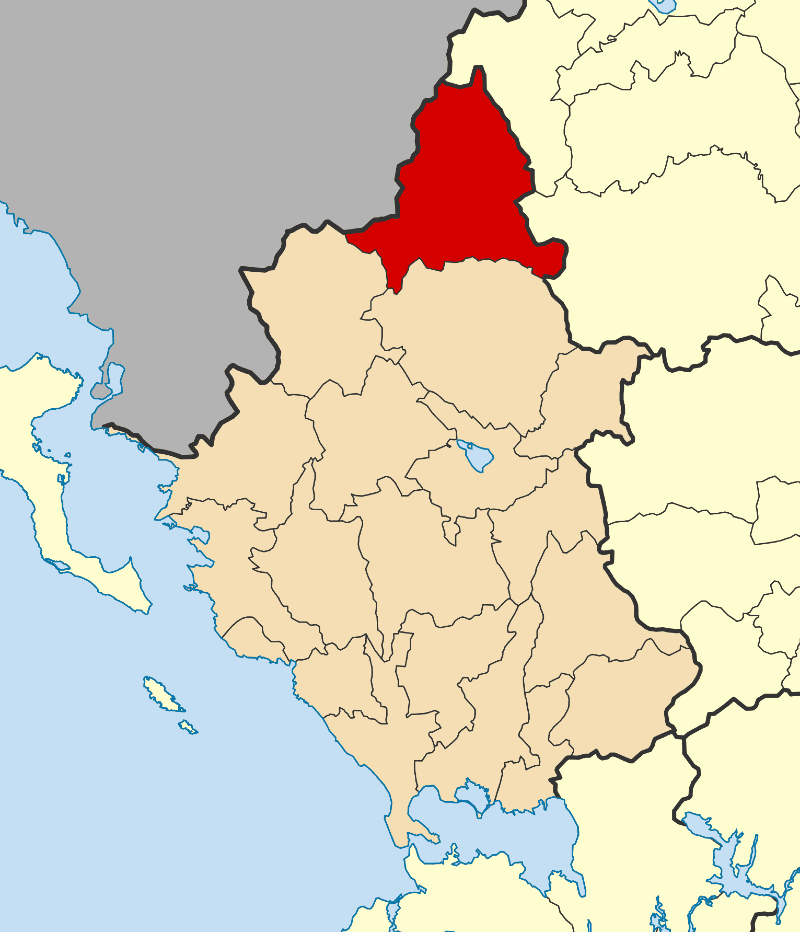
Konitsa, a town in the Ioannina regional unit of northwestern Greece, rests near the Albanian border at the foothills of the Pindus mountains. It is built amphitheatrically on the slope of Trapezitsa Mountain, offering broad views of the plain where the Aoos, Voidomatis, and Sarantaporos rivers converge. This evocative setting, with its stone buildings, traditional architecture, and cobbled pathways, lends Konitsa an authentic atmosphere. The town serves as a regional center for many smaller villages in the Pindus, providing shops, schools, and a public medical center.
Konitsa is a primary destination for those seeking outdoor adventures and a profound connection with the natural world. The surrounding area is a haven for enthusiasts of hiking, rafting, climbing, and other extreme sports, with the Vikos-Aoos National Park nearby. The town's identity is deeply intertwined with its mountainous terrain, rivers, and the skilled craftsmanship of its historical stonemasons. Visitors can explore impressive gorges, dense forests, and alpine landscapes, experiencing an unspoiled corner of Epirus.
The region of Konitsa has been inhabited since the Middle Bronze Age, with Proto-Greek populations present between 2100–1900 BC. Later, in classical antiquity, the area was part of the Molossian territory, and under the reign of Pyrrhus of Epirus (297–272 BC), strategically important forts were established. The town of Konitsa is first mentioned by its modern name in the Chronicle of Ioannina around 1380, noting the strengthening of its castle defenses by the local Despot of Epirus against impending attacks. It is believed that the castle, also known as the 'castle of Agia Varvara,' was either built or reconstructed around 1319, during a period when the Byzantine Empire briefly regained control of the Despotate of Epirus.
In the 15th century, Konitsa came under Ottoman rule, becoming part of the Sanjak of Ioannina and serving as an administrative center. During this period, the town experienced significant economic and cultural growth, partly due to favorable treatment as the homeland of Hamko, mother of Ali Pasha. The 19th and early 20th centuries saw the tekke of Konitsa become a center for culture, learning, and Albanian national activism against the Ottoman Empire. Konitsa was liberated in February 1913. Following the population exchange of 1925, many Muslim families departed, and refugees from Cappadocia settled in their place, leaving a lasting imprint on the town's character.
Konitsa faced tremendous hardships during World War II, suffering destruction from Italian forces and Albanian gangs in 1940-41. The Greek Civil War (1946–1949) also heavily impacted the region, with communist guerrilla units unsuccessfully attempting to capture the town in December 1947. Almost all buildings inhabited by Muslim Albanians were destroyed during this conflict. Despite these challenges, Konitsa has retained elements from its Byzantine, post-Byzantine, Ottoman, and modern Greek history, visible in its settlements, bridges, monasteries, and old buildings.
Konitsa offers a wealth of sights that blend natural beauty with historical significance. The iconic Konitsa Bridge, a single-arch stone bridge completed in 1870 by Ziogas Frontzos, spans the Aoos River at the entrance to the Aoos Gorge. Its impressive arch is considered one of the largest in the Balkans.
For those seeking spiritual solace or architectural interest, the Holy Monastery of Panagia Stomiou is a notable site, accessible via a hike from the Konitsa bridge. The Molivdoskepasti Monastery is another significant religious monument in the region. The Manor of Housein Sisko Bey, an 18th-century residence and a fine example of local architecture, stands in Konitsa's old town and is currently undergoing restoration.
Beyond the town, the natural landscape beckons. The Vikos-Aoos National Park is a haven for outdoor activities, encompassing the dramatic Vikos Gorge, one of the deepest gorges in the world. The Aoos Gorge itself is a spectacle of natural beauty. Adventurers can explore Drakolimni (Dragon Lake) on Mount Tymfi, an alpine lake accessible via hiking routes. Smolikas Mountain, Greece's second-highest peak, also offers hiking opportunities.
The best time to visit Konitsa for general outdoor tourist activities is from early June to mid-September, with a peak in the first week of July, when the weather is warm, dry, and mostly clear. For hot-weather activities like swimming, early July to late August is ideal. While summers are warm, winters are long, very cold, and wet, with the coldest month being January. Konitsa experiences significant rainfall, with December being the wettest month. May and September offer a good balance of pleasant weather, fewer crowds, and reasonable prices.
Konitsa is located 64 kilometers north of Ioannina, near the Albanian border. The nearest airport is Ioannina National Airport (IOA), approximately 39.1 km away. While there is no direct bus from Konitsa to Ioannina Airport, bus services with transfers take approximately 1 hour and 6 minutes. Driving from Ioannina Airport to Konitsa takes about 58 minutes. For those traveling from Athens, flying to Ioannina and then taking a bus or taxi is the fastest option, taking around 3 hours and 5 minutes.
Within Konitsa, the town is walkable, and many outdoor activities in the surrounding areas are accessible through local tour operators. It's advisable to wear sturdy shoes, especially when exploring the terrain around the Konitsa Bridge or embarking on hikes. Local products like tsipouro, wine, trahana, and spoon sweets can be found, reflecting the region's culinary identity.
Konitsa in Korean, in Chinese or in Hebrew — and 29 more languages, every stop narrated by a native voice. The widest language range of any self-guided audio tour.
Available in: