Les douves de Friesach
Friesach détient une distinction singulière parmi les villes autrichiennes, une qui pourrait vous surprendre concernant ses défenses médiévales.
L'histoire complète se débloque dans le tour
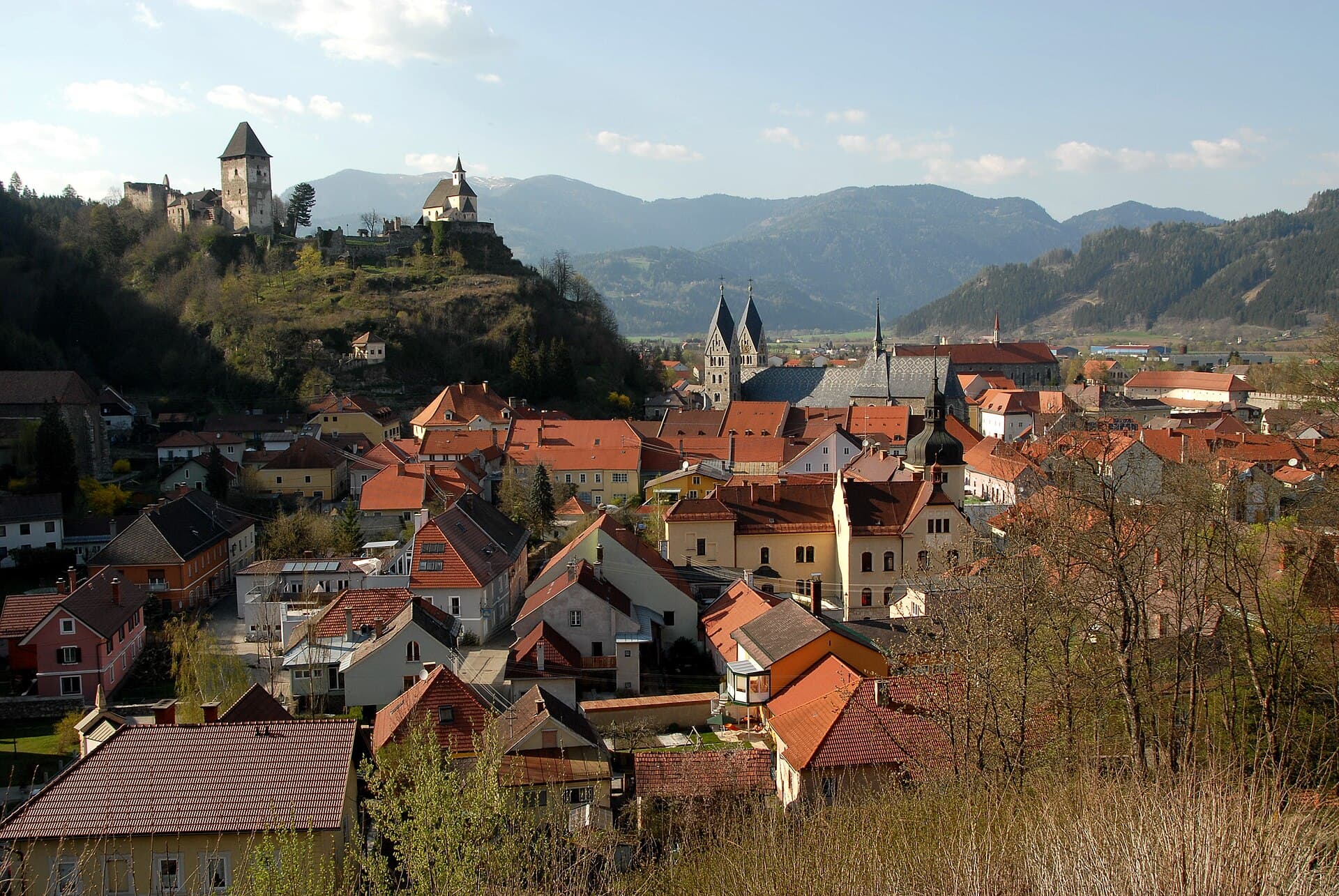 Johann Jaritz / CC BY-SA 4.0, via Wikimedia Commons
Visite audio autoguidée de Friesach — parcours GPS à pied, lecture hors ligne, narration en 32 langues.
“Là où les remparts anciens rencontrent les rythmes contemporains, et l'histoire coule dans des douves remplies d'eau.”
Pas les cartes postales. Les histoires que même les habitants ignorent — soufflées à l'oreille, là où elles se sont passées.
Friesach détient une distinction singulière parmi les villes autrichiennes, une qui pourrait vous surprendre concernant ses défenses médiévales.
Imaginez un château qui a accueilli royauté et croisés, mais qui a connu une fin enflammée non pas par un conflit, mais par hasard.
À une époque de construction rapide, un projet à Friesach adopte une vision à long terme, construisant un château comme si le temps lui-même avait reculé de plusieurs siècles.
Découvrez tous les secrets de Friesach
Chaque adresse, chaque révélation en entier — dans ton oreille, là où elle s'est passée.
Tu choisis tes lieux. Tu marches. La voix te révèle ce que les autres ignorent.

Lume intègre un guide en réalité augmentée. Levez votre téléphone : sa caméra montre la rue devant vous, avec une flèche lumineuse posée sur l'image réelle qui pointe toujours vers votre prochain arrêt — aucune carte à déchiffrer, aucun mauvais virage. Comme tout dans Lume, ça fonctionne entièrement hors-ligne.
Friesach, la plus ancienne ville de Carinthie, en Autriche, offre un voyage tangible au Moyen Âge. Son paysage urbain médiéval bien préservé témoigne de siècles d'existence, avec des fortifications comprenant un mur d'enceinte et les seules douves entièrement remplies d'eau d'Autriche. Située dans le nord de la Carinthie, à environ 40 kilomètres au nord de Klagenfurt, la position stratégique de Friesach sur une route commerciale entre Vienne et Venise a considérablement contribué à son importance historique.
L'attrait de la ville s'étend au-delà de ses défenses, avec des passages étroits révélant des trésors architecturaux tels que le Fürstenhof du XIIIe siècle et l'église paroissiale romane de Saint-Barthélemy. Friesach n'est pas simplement une collection de vieux bâtiments ; c'est une expérience historique vivante, invitant les visiteurs à explorer son passé tout en s'engageant dans des projets uniques et continus comme le chantier de construction de château médiéval. Avec une population d'environ 4 900 habitants, Friesach équilibre son identité historique avec une atmosphère accueillante et axée sur la communauté.
L'histoire de Friesach remonte à un acte de 860, la désignant comme la plus ancienne ville de Carinthie. Sa position stratégique sur une importante route commerciale reliant Vienne à Venise a alimenté son expansion, en faisant une ville marchande et un centre commercial significatif au Moyen Âge. La ville a prospéré sous l'archevêque Eberhard II de Regensberg (1200-1246), devenant la deuxième plus grande ville de l'archevêché de Salzbourg et la ville la plus importante de Carinthie.
Friesach frappait même sa propre monnaie, le 'Friesacher Pfennig' ou 'Frizatik', qui était largement utilisée dans les terres autrichiennes et hongroises au XIIe siècle et devint la pièce standard dans les Alpes orientales au XIIIe siècle. Les fortifications de la ville, y compris ses impressionnants murs d'enceinte et ses douves remplies d'eau, furent en grande partie établies vers 1300 après J.-C., suite à des défenses antérieures moins adéquates. Ces défenses étaient cruciales, car la ville et le château de Petersberg firent face à de nombreuses attaques et sièges au fil des siècles, y compris des tentatives de la maison ducale carinthienne de Sponheim et des occupations par les troupes hongroises.
La forteresse de Petersberg, un avant-poste stratégique clé, fut érigée pour la première fois vers 1076 par l'archevêque Gebhard de Salzbourg. Elle servit de résidence secondaire pour les archevêques de Salzbourg et de refuge lors des conflits. Des figures notables comme le roi Conrad III et Richard Cœur de Lion séjournèrent au château lors de leurs retours des Croisades. Bien que le château ait été modernisé à la fin du XVe siècle, son importance militaire diminua, et il fut en grande partie détruit par un incendie en 1673, tombant finalement en ruine. Friesach est restée sous le contrôle de Salzbourg jusqu'à la sécularisation de l'archevêché en 1803, date à laquelle elle est finalement devenue une partie de la Carinthie.
Commencez votre exploration sur la Hauptplatz, la place principale, avec ses façades historiques et l'ancien hôtel de ville. De là, vous pouvez observer la double muraille médiévale de la ville, ses tours, ses portes et ses douves caractéristiques remplies d'eau. Une promenade le long des fortifications de la ville offre une perspective unique sur l'une des défenses urbaines médiévales les mieux conservées d'Autriche.
Montez au château de Petersberg, dont les ruines abritent le musée de la ville de Friesach. Le musée, situé dans une tour résidentielle du XIIe siècle, présente des expositions sur l'histoire, la culture, l'exploitation minière et le commerce de la ville, de l'époque celtique et romaine au Moyen Âge. Ne manquez pas l'église et le monastère dominicains, datant du XIIIe siècle, connus pour leurs sculptures médiévales et la Madone en grès de Friesach. Le monastère dominicain est considéré comme le plus ancien de la région germanophone.
Pour une expérience vraiment immersive, visitez Burgbau Friesach, un chantier de construction de château médiéval où un nouveau château est construit en utilisant uniquement des méthodes traditionnelles du XIIe siècle. Ici, vous pouvez observer des tailleurs de pierre, des forgerons et des charpentiers au travail, acquérant une compréhension tangible de l'artisanat médiéval. Concluez votre visite par un arrêt à la confiserie Craigher, un atelier de chocolat familial réputé.
Friesach est plus agréable à visiter en juin, juillet et août, lorsque les températures sont confortables, allant de 21°C à 23°C. Ces mois offrent un bon équilibre entre journées ensoleillées et pluvieuses, idéales pour explorer la ville et ses attractions extérieures. Le Spectaculum zu Friesach, un festival médiéval, est un événement majeur, généralement organisé fin juillet. Le début de l'automne (mi-septembre à octobre) et la fin du printemps (fin avril à mai) offrent également un temps agréable avec moins de foules.
Friesach est située dans le district de Sankt Veit an der Glan en Carinthie, Autriche. La ville compte environ 4 900 habitants. Bien qu'il n'y ait pas de plan de mobilité urbaine durable formel, les autorités locales travaillent à l'amélioration des transports durables, y compris un service de bus à la demande pour relier le centre médiéval aux nouvelles zones de développement. La place principale de la ville, Hauptplatz, est un point central pour l'orientation. Des informations sur les sites et activités peuvent être obtenues auprès de l'office de tourisme local. Des options d'hébergement, comme la Villa Bucher, sont disponibles. La monnaie utilisée est l'Euro. Pour ceux qui sont intéressés par le festival médiéval, les billets pour le Spectaculum zu Friesach peuvent être achetés via Ö-Ticket ou directement au bureau municipal.
Friesach en coréen, en chinois ou en hébreu — et dans 29 autres langues, chaque étape narrée par une voix native. La plus large gamme de langues de tous les audioguides autoguidés.
Disponible en :