Plaza Principal de Gmünd (Hauptplatz)
Observe las fachadas de los edificios alrededor de la plaza principal; revelan más que una simple decoración.
La historia completa se desbloquea en el tour
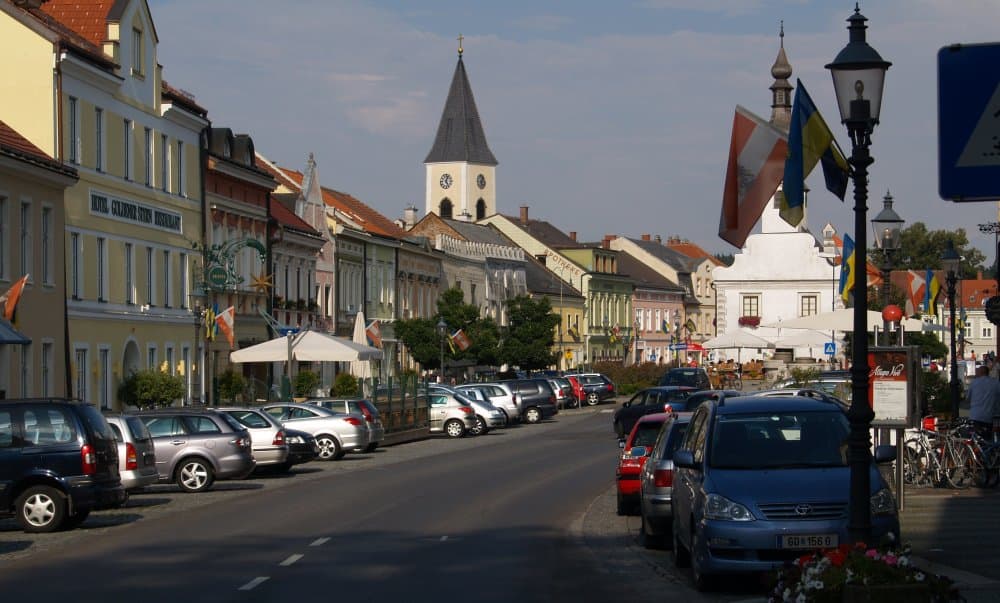 Gernot Arnberger Itworks / CC BY-SA 2.5, via Wikimedia Commons
Tour de audio autoguiado de Gmünd — ruta GPS a pie, reproducción offline, narración en 32 idiomas.
“Donde las piedras antiguas se encuentran con lienzos contemporáneos, y las narrativas fronterizas se despliegan.”
No las postales. Las historias que ni los locales conocen — al oído, justo donde ocurrieron.
Observe las fachadas de los edificios alrededor de la plaza principal; revelan más que una simple decoración.
Imagine un espacio sagrado tan integral que literalmente cedió el paso a una vía pública.
Esta estación aparentemente ordinaria guarda un pasado sorprendente, conectado con fronteras internacionales y una ciudad bifurcada.
Descubre todos los secretos de Gmünd
Cada dirección, cada revelación al completo — a tu oído, justo donde ocurrió.
Eliges tus paradas. Caminas. La voz te revela lo que los demás ignoran.
Tu tour de audioguía por Gmünd te espera — elige tus lugares, tu idioma y empieza al llegar.
ComprarLume incluye una guía de realidad aumentada. Levanta el móvil y su cámara muestra la calle que tienes delante, con una flecha luminosa sobre la imagen real que siempre apunta a tu próxima parada — sin mapas que descifrar, sin giros equivocados. Como todo en Lume, funciona completamente sin conexión.
Gmünd, una ciudad histórica en la región austriaca de Carintia, ofrece una atractiva mezcla de patrimonio medieval y una floreciente escena artística contemporánea. Situada donde convergen los ríos Lieser y Malta, y al borde del Parque Nacional Hohe Tauern y el Parque de la Biosfera Nockberge, Gmünd se presenta como un destino atractivo tanto para los entusiastas de la cultura como para aquellos que buscan la belleza natural.
Conocida como la 'Ciudad de los Artistas', Gmünd ha cultivado diligentemente el arte y la cultura durante más de dos décadas, ganando el Premio EDEN en 2011 por su desarrollo urbano sostenible. Su bien conservada arquitectura medieval proporciona un encantador escenario para numerosas galerías, talleres y eventos culturales durante todo el año.
Más allá de su toque artístico, Gmünd también tiene una importante relevancia histórica, desde sus orígenes como calzada romana hasta su inesperada conexión con los primeros días de los coches deportivos Porsche. Ya sea explorando castillos antiguos, participando en instalaciones de arte interactivas o simplemente paseando por sus pintorescas calles, Gmünd promete una experiencia enriquecedora y sorprendente.
Los orígenes de Gmünd se remontan a una calzada romana que una vez conducía desde el valle del Drava, a través del puerto de Katschberg, hasta Salzburgo. La ciudad misma fue probablemente establecida a mediados del siglo XIII por el Arzobispo Eberhard II de Salzburgo, sirviendo como un puesto fortificado dentro del Ducado de Carintia. Fue documentada por primera vez en 1252 y recibió privilegios de ciudad en 1346.
El imponente Castillo de Gmünd, que también data de mediados del siglo XIII, se alza sobre una colina por encima del casco antiguo. Este castillo soportó un asedio de siete años y la subsiguiente destrucción por las tropas del Rey Matías Corvino en 1487, para ser reconstruido entre 1502 y 1506 bajo el Arzobispo Leonhard von Keutschach. Se enfrentó a otro asedio durante la Guerra de los Campesinos Alemanes en 1525, aunque no fue capturado. El Arzobispo Wolf Dietrich Raitenau amplió aún más el edificio en 1607. Hoy, después de ser restaurado de un incendio en 1886, el castillo alberga representaciones teatrales, conciertos y conferencias.
Dentro de las murallas de la ciudad, el palacio barroco de la noble familia italiana Lodron, parientes y funcionarios de los arzobispos de Salzburgo, fue construido entre 1651 y 1654. La iglesia parroquial gótica de la Asunción de María fue consagrada en 1399, añadiendo al perdurable legado arquitectónico de la ciudad.
Un capítulo significativo en la historia de Gmünd se desarrolló después de la Primera Guerra Mundial. El desarrollo de la ciudad había sido grandemente influenciado por la inauguración en 1869 del Ferrocarril Emperador Franz Joseph, que conectaba Viena con Praga. Sin embargo, el Tratado de Saint-Germain de 1919 cedió la parte norte de Gmünd, conocida como Böhmzeil (la actual České Velenice), incluyendo la estación principal de tren, a Checoslovaquia. Esta división hizo necesaria la construcción de una nueva estación en Gmünd, transformándola en una estación fronteriza.
Durante la Segunda Guerra Mundial, Gmünd desempeñó un papel inesperado en la historia del automóvil. A partir de 1944, la oficina de ingeniería de Ferdinand Porsche tuvo su sede en Gmünd para evitar los bombardeos aliados. Fue aquí, entre 1944 y 1950, donde el hijo de Ferdinand, Ferry Porsche, junto con Erwin Komenda, diseñaron y construyeron los primeros coches deportivos Porsche 356, incluyendo el prototipo "No. 1" de 1948. Un museo privado de Porsche conmemora ahora este período, exhibiendo una colección de los primeros modelos Porsche 356.
Comience su exploración en la Plaza Principal (Hauptplatz) de Gmünd, un punto central rodeado de edificios históricos como el Antiguo Ayuntamiento y las distintivas Casas Esgrafiadas con sus fachadas decorativas. Desde allí, pasee por los callejones medievales para descubrir numerosas galerías y talleres abiertos, ya que Gmünd es celebrada como una 'Ciudad de los Artistas'.
Una visita al Castillo de Gmünd es esencial. Las ruinas de este castillo de mediados del siglo XIII ofrecen un vistazo al pasado de la ciudad y proporcionan vistas expansivas. El castillo también alberga eventos culturales y tiene un restaurante.
Sumérjase en el arte interactivo en el Pankratium Gmünd – Casa del Asombro, donde podrá experimentar la música a través de fascinantes experimentos que involucran la vista, el sonido y el tacto. Para los entusiastas del automóvil, el Porsche Automuseum Gmünd es una parada gratificante, que narra el tiempo del Profesor Ferdinand Porsche en Gmünd y la creación del primer Porsche 356.
No pase por alto la singular capilla dividida de Kreuzbichl, donde una antigua calzada romana literalmente biseca el edificio de la iglesia. La Stadtturmgalerie Gmünd es otro espacio de exposición significativo, que presenta obras de artistas de renombre internacional. Para aquellos interesados en la historia local, la exposición 'Eva Faschaunerin' en la antigua prisión ofrece un relato fascinante, aunque algo sombrío, de la vida rural del siglo XVIII y la historia de la última persona ejecutada en el distrito.
Fuera de la ciudad, el Parque Natural Blockheide ofrece una maravillosa oportunidad para explorar el paisaje único del Waldviertel, con impresionantes formaciones rocosas y pintorescos senderos. Para un viaje al pasado, considere un paseo en el Waldviertler Schmalspurbahn, un ferrocarril de vía estrecha que ofrece paseos en locomotora de vapor a través del pintoresco campo.
Gmünd es un destino para todo el año, cada estación ofrece una experiencia distinta. Para actividades de clima cálido como senderismo y exploración de parques naturales, de finales de junio a finales de agosto es ideal, con temperaturas máximas promedio de alrededor de 23°C (73°F). Los cielos están más despejados en julio.
La primavera (marzo a mayo) y principios de otoño (mediados de septiembre a octubre) ofrecen un clima agradable con menos multitudes, lo que los hace excelentes para hacer turismo y asistir a eventos culturales. Los inviernos (diciembre a febrero) son fríos, nevados y ventosos, con mínimas promedio de alrededor de -4°C (24°F), brindando oportunidades para deportes de invierno y disfrutar del ambiente festivo de Adviento.
Gmünd es accesible en coche a través de la B41 y en tren a través de la Franz-Josefs-Bahn. La estación de tren Gmünd NÖ sirve como estación fronteriza, con líneas de ancho estándar (operadas por los Ferrocarriles Federales Austriacos) y líneas de vía estrecha (ferrocarriles de Waldviertel) que divergen aquí. La estación fue modernizada de 2013 a 2017, haciéndola accesible para personas con movilidad reducida con ascensores y un sistema electrónico de información al pasajero.
La ciudad ofrece una variedad de alojamientos, desde acogedoras casas de huéspedes hasta hoteles. La oficina de información turística local, ubicada en la plaza del pueblo en el museo de vidrio y piedra, proporciona detalles completos sobre alojamiento, restaurantes y atracciones. Muchos estudios de arte y galerías están abiertos al público, a menudo sin cargo. El transporte público está bien desarrollado, y se recomienda planificar varias horas para explorar la ciudad.
Gmünd en coreano, en chino o en hebreo — y 29 idiomas más, cada parada narrada por una voz nativa. La mayor variedad de idiomas de cualquier audioguía autoguiada.
Disponible en: