Casa Batlló
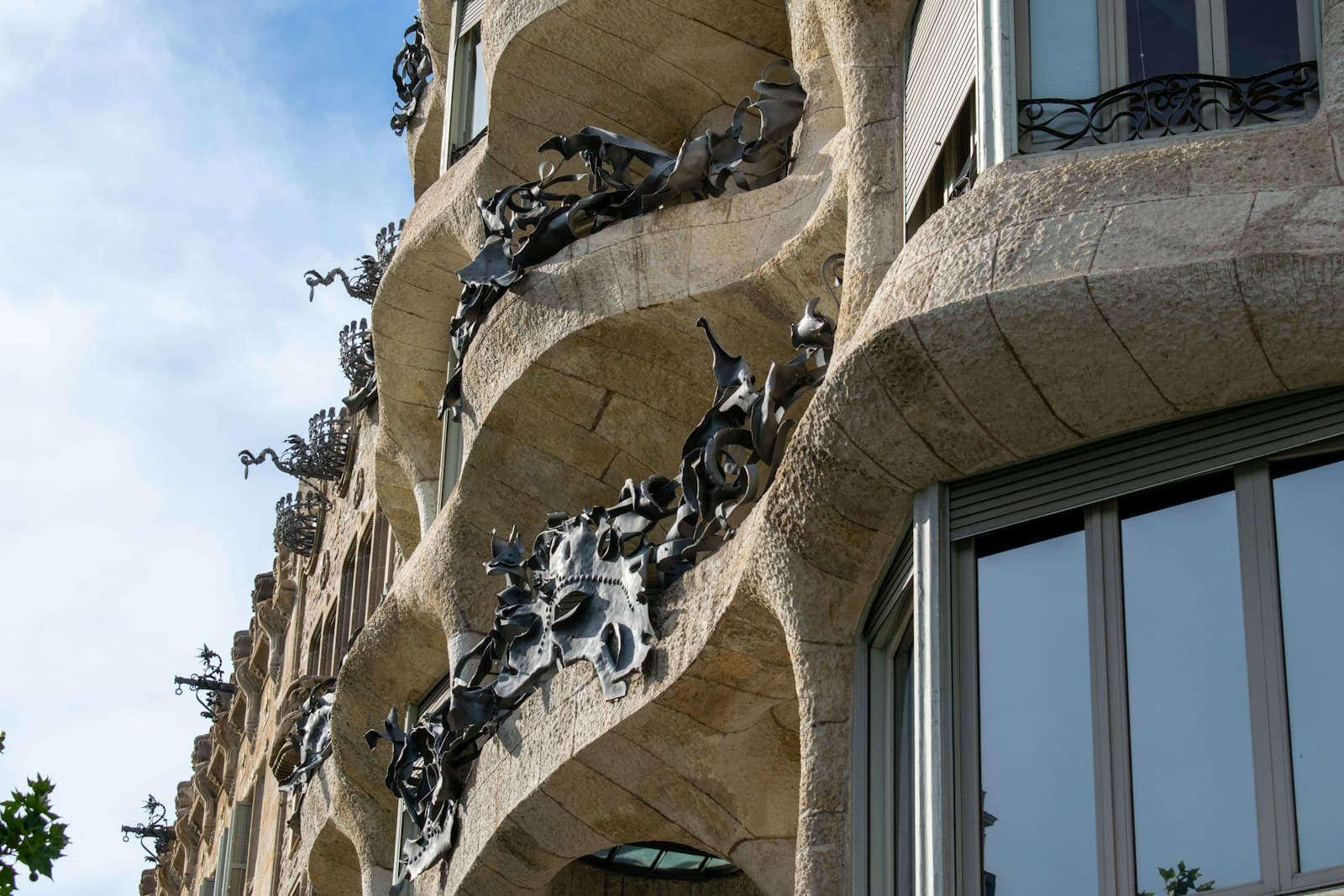
Le surnom local de la Casa Batlló évoque quelque chose de squelettique, pourtant son extérieur vibrant raconte une tout autre histoire.
L'histoire complète se débloque dans le tour
 Photo: Logan Armstrong / Unsplash
Visite audio autoguidée de Gaudí et les Modernistes — parcours GPS à pied, lecture hors ligne, narration en 32 langues.
“Les façades de Barcelone : une symphonie de Gaudí et du Modernisme à hauteur de rue.”
Pas les cartes postales. Les histoires que même les habitants ignorent — soufflées à l'oreille, là où elles se sont passées.
Le surnom local de la Casa Batlló évoque quelque chose de squelettique, pourtant son extérieur vibrant raconte une tout autre histoire.
Ce palais présente deux visages radicalement différents à la ville, presque comme s'il avait été conçu par deux architectes distincts.
À une courte distance des œuvres célèbres de Gaudí, les deux façades de cet immeuble offrent une conversation architecturale ludique.
Découvrez tous les secrets de Gaudí et les Modernistes
Chaque adresse, chaque révélation en entier — dans ton oreille, là où elle s'est passée.
Tu choisis tes lieux. Tu marches. La voix te révèle ce que les autres ignorent.


Votre visite audioguidée de Gaudí et les Modernistes vous attend — choisissez vos lieux, votre langue, et lancez-vous dès votre arrivée.
AcheterLume intègre un guide en réalité augmentée. Levez votre téléphone : sa caméra montre la rue devant vous, avec une flèche lumineuse posée sur l'image réelle qui pointe toujours vers votre prochain arrêt — aucune carte à déchiffrer, aucun mauvais virage. Comme tout dans Lume, ça fonctionne entièrement hors-ligne.
Plongez dans le quartier de l'Eixample à Barcelone, un témoignage de l'urbanisme du XIXe siècle et le cœur du Modernisme catalan. Cet élégant quartier, conçu par Ildefons Cerdà, a transformé la ville d'une forteresse médiévale en un chef-d'œuvre tentaculaire et lumineux. De larges boulevards et des coins chanfreinés offrent la toile de fond à un mouvement architectural qui a redéfini l'identité de Barcelone.
Cette promenade audio autoguidée vous invite à lever les yeux et à véritablement lire les façades de l'Eixample. Au-delà des sentiers battus, vous découvrirez un musée vivant où chaque détail – des ferronneries complexes aux mosaïques lumineuses et aux sculptures en pierre organique – raconte une histoire de rivalité artistique, de renouveau culturel et des esprits visionnaires qui ont façonné cette ville extraordinaire.
À la fin du XIXe siècle, Barcelone a connu une profonde transformation culturelle et économique connue sous le nom de Renaixença, un renouveau culturel catalan qui célébrait l'identité, la langue et les traditions artistiques distinctes de la région. Simultanément, un boom industriel a généré d'immenses richesses parmi les classes marchandes et manufacturières de la ville. Ces riches mécènes ont cherché à commander de nouveaux bâtiments ambitieux pour montrer leur statut et leur goût, offrant un terrain fertile à la naissance du Modernisme, la version catalane unique de l'Art Nouveau.
Alors que les mouvements Art Nouveau à travers l'Europe mettaient l'accent sur l'ornementation fantaisiste et les motifs naturels stylisés, le Modernisme catalan a intégré un sens plus profond de l'identité catalane, s'inspirant de l'architecture gothique médiévale et poursuivant l'innovation structurelle parallèlement à la beauté esthétique. Le quartier de l'Eixample, avec son plan en grille et ses réglementations de construction assouplies à la fin du XIXe siècle, est devenu l'épicentre de cette explosion architecturale. Cela a permis aux architectes d'expérimenter des façades variées, créant un esprit de compétition parmi les figures de proue de l'époque : Antoni Gaudí, Lluís Domènech i Montaner et Josep Puig i Cadafalch.
Cette rivalité est peut-être la plus vivement affichée sur le Passeig de Gràcia, en particulier dans le tronçon affectueusement connu sous le nom d'Illa de la Discòrdia (Pâté de maisons de la Discorde). Des bâtiments de ces trois architectes éminents se côtoient, chacun s'efforçant de surpasser les autres en innovation et en ornementation, créant un choc visuel saisissant de styles. Le nom lui-même est un clin d'œil ludique à la mythologique « pomme de discorde », symbolisant la compétition entre ces titans de l'architecture et leurs mécènes.
Votre voyage commence sur le Passeig de Gràcia, une grande avenue bordée de chefs-d'œuvre modernistes. Commencez par l'Illa de la Discòrdia, où trois géants de l'architecture – Gaudí, Puig i Cadafalch et Domènech i Montaner – présentent leurs visions distinctes. Ici, vous rencontrerez la Casa Batlló, la création d'inspiration marine de Gaudí avec sa façade ondulante, ses fenêtres ovales irrégulières et une mosaïque de carreaux de céramique brisés. À côté se trouve la Casa Amatller de Puig i Cadafalch, remarquable pour son pignon à gradins inspiré des maisons flamandes et ses détails complexes d'influence gothique. Le trio est complété par la Casa Lleó Morera de Domènech i Montaner, reconnue pour ses délicats reliefs floraux, ses vitraux et ses éléments sculpturaux.
Poursuivez votre exploration jusqu'à la Casa Milà, connue sous le nom de La Pedrera, le dernier bâtiment civil de Gaudí, caractérisé par sa façade en pierre ondulante, ses balcons en fer forgé et ses cheminées sculpturales sur le toit. Au-delà de ces icônes, découvrez la Casa de les Punxes (Casa Terradas) aux allures de château de Puig i Cadafalch, avec ses six tours pointues et ses briques élaborées. Ne manquez pas le Palau del Baró de Quadras, une autre création de Puig i Cadafalch, qui présente une façade néo-gothique saisissante sur l'Avinguda Diagonal et une façade arrière plus moderniste. Enfin, cherchez la Casa Comalat, conçue par Salvador Valeri i Pupurull, un bâtiment clairement inspiré des formes organiques de Gaudí, présentant deux façades distinctes et tout aussi captivantes. Tout au long du Passeig de Gràcia, observez les élégants lampadaires modernistes, souvent conçus par les mêmes architectes qui ont façonné les grands bâtiments.
Les façades modernistes de Barcelone peuvent être admirées toute l'année. Cependant, le printemps (avril-mai) et l'automne (septembre-octobre) offrent les températures les plus agréables pour la marche et moins de monde. Les matins tôt ou les fins d'après-midi offrent une lumière plus douce pour la photographie et une expérience plus sereine des détails au niveau de la rue. Les jours de semaine sont généralement moins fréquentés que les week-ends.
Cette promenade est mieux vécue à pied, vous permettant de faire des pauses et d'apprécier les détails complexes de chaque façade. Portez des chaussures confortables et apportez de l'eau, surtout pendant les mois les plus chauds. Beaucoup des bâtiments mentionnés sont des résidences privées ou des bureaux, donc si leurs extérieurs sont le centre d'intérêt, certains offrent un accès public limité aux rez-de-chaussée ou à des espaces d'exposition spécifiques. Consultez les sites web des bâtiments individuels pour connaître les heures d'ouverture actuelles et les éventuelles visites guidées si vous souhaitez vous aventurer à l'intérieur. Le Passeig de Gràcia est une artère principale, soyez donc attentif à la circulation et à la foule. Envisagez de télécharger une carte hors ligne pour naviguer facilement entre les arrêts.
Gaudí et les Modernistes en coréen, en chinois ou en hébreu — et dans 29 autres langues, chaque étape narrée par une voix native. La plus large gamme de langues de tous les audioguides autoguidés.
Disponible en :