Torre Llauder Roman Villa
Beneath Mataró's modern pulse lies a lavish Roman past, complete with opulent amenities.
Full story unlocks in the tour
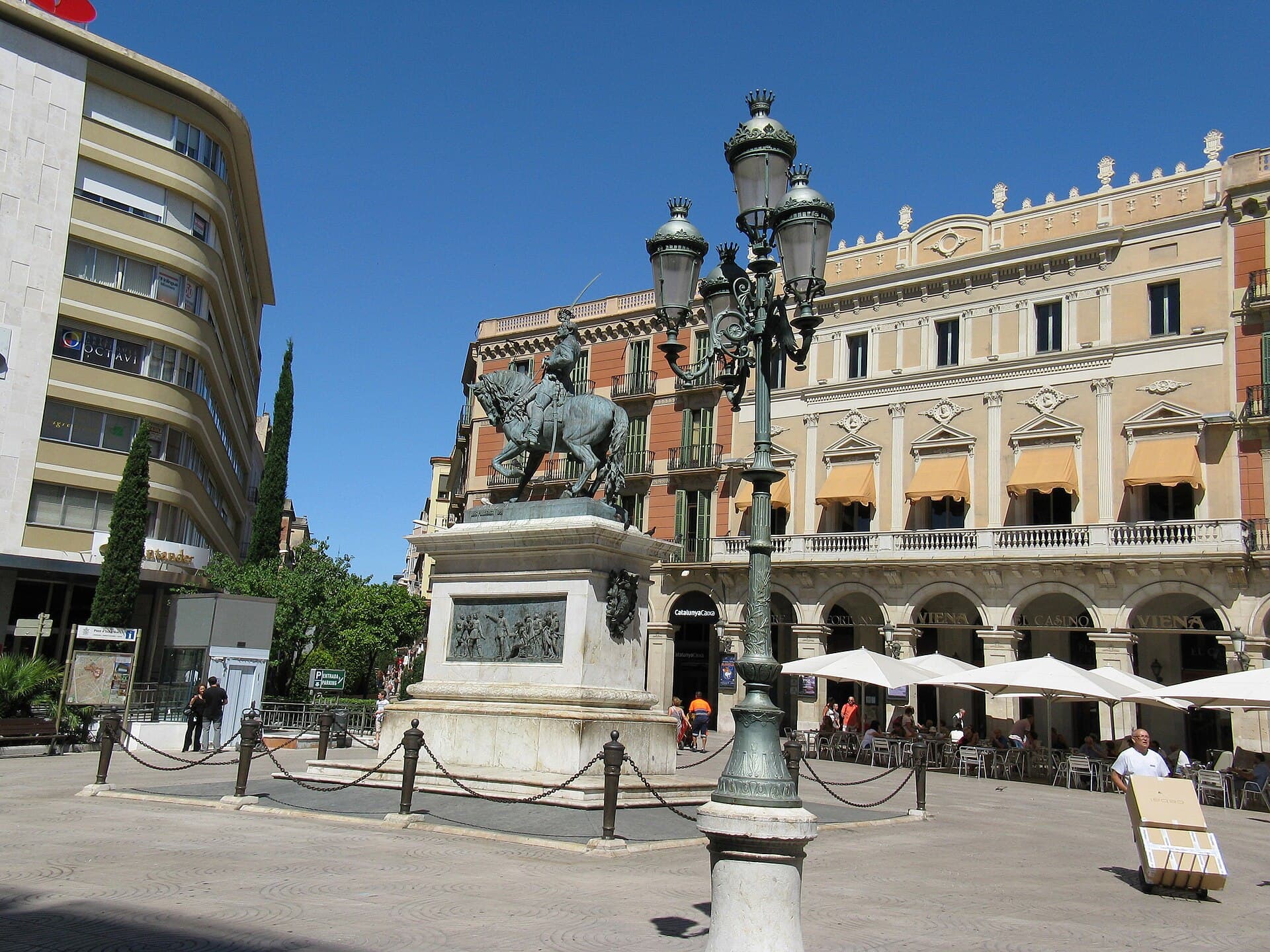 Photo of Reus, via Wikimedia Commons
Self-guided audio walking tour of Mataró — GPS route, offline playback, story-driven narration in 32 languages.
“Where Roman echoes meet Modernist whispers by the Mediterranean Sea.”
Not the postcards. The stories even locals don't know — whispered in your ear, right where they happened.
Beneath Mataró's modern pulse lies a lavish Roman past, complete with opulent amenities.
Spain's first mainland railway didn't start in a bustling metropolis, but a coastal town with a visionary merchant.
Before his grand Sagrada Familia, Antoni Gaudí first experimented with his iconic architectural style in an unexpected industrial setting here.
Discover every secret of Mataró
Every address, every reveal in full — in your ear, right where it happened.
You pick your stops. You walk. The voice reveals what the others miss.
Your self-guided audio tour of Mataró is ready — pick your landmarks, choose your language, and start the moment you arrive.
BuyLume has a built-in augmented-reality guide. Hold your phone up and its camera shows the street ahead of you, with a glowing arrow laid over the real view that always points to your next stop — no map to puzzle over, no wrong turns. Like everything in Lume, it works fully offline.
Mataró, the capital of the Maresme county in Catalonia, Spain, offers a compelling blend of ancient history, Modernist architecture, and Mediterranean life. Situated on the Maresme coast, just 30 kilometers northeast of Barcelona, it's a city that invites unhurried exploration. From its origins as the Roman city of Iluro to its pivotal role in Spain's industrial revolution, Mataró presents a unique narrative woven into its streets and buildings.
This coastal city, with a population of over 129,000, provides a calmer, more authentic experience than its bustling neighbor, Barcelona. Mataró offers sandy beaches, a significant marina, and a lively cultural scene, making it an ideal destination for those seeking relaxation, cultural immersion, and gastronomic delights.
## From Roman Iluro to Modernist Hub Mataró's story begins in Roman times, around 80 CE, with the founding of Iluro. This Roman city, built on a coastal plain, grew to become one of the most important centers in Roman Catalonia, managing an extensive territory. Archaeological remains, including sections of walls, public buildings, streets, and homes, lie beneath the modern city, with notable sites like the Torre Llauder Roman villa offering a glimpse into its prosperous past, complete with mosaics and thermal baths.
After the decline of the Roman Empire, Mataró re-emerged in 801 under the name Alarona, evolving into a medieval town centered around the Santa Maria Basilica. By the 15th century, it was annexed to the Crown, and a defensive wall was constructed between 1569 and 1600, largely following the line of the ancient Roman fortifications. The 18th century saw Mataró develop as a significant maritime province, with shipyards and a nautical school, becoming an economic hub through shipbuilding, naval trade, and the export of wines and textiles.
The 19th century marked a pivotal moment with the inauguration of Spain's first peninsular railway line, connecting Mataró to Barcelona in 1848. This innovation, spearheaded by local businessman Miquel Biada, fueled the Industrial Revolution in Mataró, transforming it into a major industrial city, particularly in textiles. This era also brought forth a Modernist legacy, with Mataró being the birthplace of renowned architect Josep Puig i Cadafalch, whose works, alongside Antoni Gaudí's first building, the Nau Gaudí, dot the city's architectural landscape.
## Mataró's Enduring Traditions Mataró's history is also reflected in its enduring traditions and festivals. The Mercat de Sant Ponç, a fair dating back to the 16th century, continues to celebrate herbalists and beekeepers each May. The city's most popular local festivity is Les Santes, celebrated at the end of July, honoring Saint Juliana and Saint Semproniana. Declared a Heritage Festival of National Interest, Les Santes is a display of local culture, featuring giants, parades, concerts, and fireworks, culminating in the lively 'Nit Boja' or 'Crazy Night'.
Begin your exploration in Mataró's historic center, a labyrinth of narrow streets and charming squares. The Basilica of Santa María stands as a spiritual and historical beacon, its Baroque and Neoclassical architecture housing the exquisite Capella dels Dolors, a masterpiece of Catalan Baroque painting by Antoni Viladomat.
For a journey into Mataró's Roman past, visit the Torre Llauder Roman Villa, where you can explore the remains of a luxurious 1st-century BC residence with impressive mosaics. The Mataró Museum further delves into the city's history, showcasing artifacts from Roman Iluro and exhibitions on its textile industry.
Modernist architecture is another highlight, with the Nau Gaudí being a significant stop. This former factory is Antoni Gaudí's first built work, an early display of his architectural genius. Do not overlook the works of local Modernist architect Josep Puig i Cadafalch, including the iconic Casa Coll i Regàs, a declared Cultural Asset of National Interest.
Stroll along La Riera, the city's social heart, lined with shops, cafes, and restaurants, offering a glimpse into daily Mataró life. The Port of Mataró is a bustling marina with over a thousand moorings, offering nautical activities and a selection of waterfront dining. And for a relaxing afternoon, Mataró's 2.2 kilometers of sandy beaches provide ample space to enjoy the Mediterranean Sea.
Mataró enjoys a mild Mediterranean climate, making it an appealing destination year-round. The most pleasant weather for general outdoor activities typically runs from late May to early August and again from mid-August to early October, with a peak in late June. For warm-weather activities like beach visits, the best time is from late June to late August, when temperatures average around 27°C (81°F). Summers are lively, filled with local festivals, notably Les Santes at the end of July. If you prefer fewer crowds and cooler temperatures, January and February offer a more relaxed atmosphere.
Mataró is conveniently located just 30-40 minutes northeast of Barcelona, making it an easy day trip or a great base for exploring the Maresme region. The easiest way to reach Mataró from Barcelona is by train via the R1 Rodalies-RENFE line, with a ticket costing around €5.5. The C-32 freeway also connects Mataró to Barcelona and Girona, and the C-60 links it to Granollers. If arriving by air, Barcelona's El Prat International Airport is approximately 40 minutes away.
Within Mataró, many of the main sights are easily accessible on foot, particularly in the compact historic center. For exploring further afield or reaching the port and beaches, the city has a local bus network. Mataró also offers a variety of dining options, from traditional Catalan cuisine focusing on fresh seafood and local produce like the Maresme Pea, to international flavors. Do not miss trying a 'Suquet de peix' (fish stew) or enjoying a vermouth in one of the old wineries.
Mataró in Korean, in Chinese or in Hebrew — and 29 more languages, every stop narrated by a native voice. The widest language range of any self-guided audio tour.
Available in: