Plaça de Sant Pere
Imagine a square so central to a town's identity that it's also known by a fiery nickname.
Full story unlocks in the tour
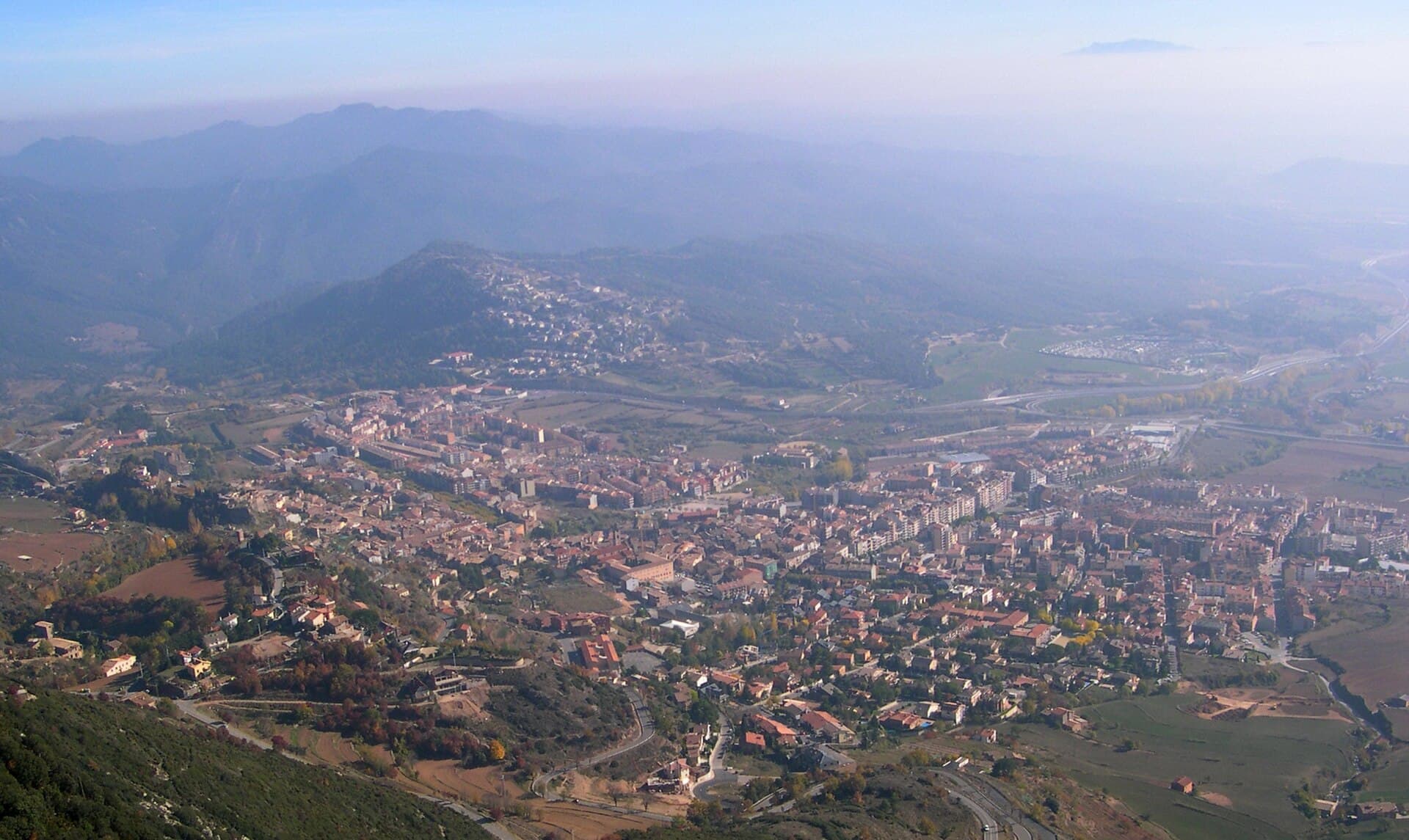 Pere López / cc by-sa 3.0, via Wikimedia Commons
Self-guided audio walking tour of Berga — GPS route, offline playback, story-driven narration in 32 languages.
“Where ancient traditions ignite the Catalan Pyrenees.”
Not the postcards. The stories even locals don't know — whispered in your ear, right where they happened.
Imagine a square so central to a town's identity that it's also known by a fiery nickname.
A shepherd, his ox, and a miraculous cherry tree—this isn't a fable, but the origin story of Berga's most revered sanctuary.
Beneath the modern streets of Berga lies a layer of history, hinting at a time when water was vital and industry was just beginning.
Discover every secret of Berga
Every address, every reveal in full — in your ear, right where it happened.
You pick your stops. You walk. The voice reveals what the others miss.


Your self-guided audio tour of Berga is ready — pick your landmarks, choose your language, and start the moment you arrive.
BuyLume has a built-in augmented-reality guide. Hold your phone up and its camera shows the street ahead of you, with a glowing arrow laid over the real view that always points to your next stop — no map to puzzle over, no wrong turns. Like everything in Lume, it works fully offline.
Berga, the capital of the Berguedà county in Catalonia, Spain, is a town where ancient traditions and natural beauty converge. Situated at the foothills of the Sierra de Queralt, it serves as a natural gateway between the mountains and the plains, offering expansive landscapes and a tranquil atmosphere. The town is internationally recognized for its unique Patum festival, a UNESCO Intangible Cultural Heritage event that transforms its streets into a spectacle of fire, music, and dance.
Beyond its famous festival, Berga invites visitors to explore a deep historical heritage, from medieval fortifications to engaging old town streets. The surrounding natural environment provides ample opportunities for outdoor activities, including hiking, climbing, and mushroom foraging in its forests. With its distinctive local cuisine and a welcoming atmosphere, Berga offers a deeply immersive cultural experience just a short distance from Barcelona.
## From Iberian Roots to Royal Dominion Berga's origins are rooted in antiquity, with evidence of Epipaleolithic settlements dating back 8,000 years. The town's name derives from the Bergistani, an ancient Iberian tribe who inhabited the area before the Roman conquest. The Bergistani famously encountered Hannibal in 218 BC and later resisted Roman rule twice, ultimately being defeated and many enslaved. The Roman writer Livy documented their main town, Castrum Bergium, believed to be the precursor to modern Berga.
## Medieval Contests and Feudal Shifts In 715, the area fell under Muslim control, a period that tradition suggests led to the total destruction of the population before its rebuilding by the Franks in the late 8th century. The Castle of Berga is first documented in 855, and by 905, Berga was the capital of a county independent from Cerdanya. Over centuries, the county's lordship shifted between the Peguera and Berga families. In 1117, the county was fully integrated into Barcelona, and in 1199, Berga was sold to King Peter II of Aragon, bringing it under royal dominion. The construction of a defensive wall in the 14th century was crucial for the town's development, though it also faced the ravages of the Black Death during this period.
## Wars, Rebellions, and Cultural Endurance The 15th century saw Berga supporting the Generalitat government during the Catalan Civil War. The town endured attacks by the French Huguenots in 1581 and was under French control until 1655, when it was besieged during the Reapers' War. During the War of the Spanish Succession, Berga sided with the Bourbons, earning the moniker 'botiflers' (turncoats) from those loyal to the Habsburgs. The 19th century was particularly turbulent, with Berga playing a significant role in the Carlist Wars, even becoming the definitive seat of the Carlist government in Catalonia by 1837. The town was granted the official title of 'city' in 1877 in gratitude for the loyalty of its liberal citizens. Despite losing much of its historical heritage during the 20th-century Civil War, Berga's most enduring cultural manifestation, the Patum festival, was recognized by UNESCO in 2005, celebrating over 600 years of history.
Begin your exploration at the Sanctuary of Queralt, set at 1,200 meters, offering wide-ranging views often referred to as the 'Balcony of Catalonia.' You can reach it by climbing 168 steps or using the inclined lift. The sanctuary's 18th-century Baroque interior is also worth seeing.
Descend into Berga's old town, where the Plaça de Sant Pere serves as the historic heart, a medieval square that hosts many local events, most notably the Patum festival. Nearby, you can find the Portal de la Magdalena, the only preserved medieval access point to the city. Explore Calle Ciutat to see the Modernist-style Casas de Tomàs Pujol (1925) and Barons (1904), both featuring interesting ceramic decorations. The Molí de la Sal, an emblematic house, points to medieval flour mills.
For history enthusiasts, the Castle of Sant Ferrán stands on a hill, its medieval fortifications transformed over centuries. Delve deeper into the town's past at the Centro de Interpretación de la Historia de Berga on Calle dels Angels. The Comarcal Museum also offers insights into the region's history. Do not miss the Pedret Bridge, a Gothic stone bridge from 1286 with a unique 'donkey's back' design. Finally, for a taste of Berga's most famous tradition, visit the Patum House to experience a glimpse of the festival year-round.
The ideal times to visit Berga are during late spring (April to May) and early autumn (September to October). During these 'shoulder seasons,' the weather is generally pleasant, with temperatures ranging from 50-68°F (10-20°C) in spring and 64-75°F (18-24°C) in early autumn, and the crowds are typically smaller than in peak summer. Spring is particularly rewarding for wildflowers and the famous Patum festival, which usually occurs in late May or early June. Autumn brings spectacular foliage and is prime mushroom foraging season, celebrated at the Berga mushroom fair in October. Summers (June to August) are warm, with highs of 77-86°F (25-30°C), making it suitable for mountain hiking, though afternoon thunderstorms are common. Winters (December to March) are cooler, with potential snow, offering a different experience and fewer crowds.
Berga is located in the province of Barcelona, Catalonia, and is easily accessible. The quickest way to reach Berga by public transport is by bus from Barcelona Nord bus station or stops along Passeig de Gràcia, with the journey taking approximately 1 hour 30 minutes to 2 hours. If driving, Berga is well-connected by road. For accommodation, Berga offers a variety of hotels, hostels, and vacation rentals to suit different budgets and preferences. Local cuisine in Berga is known for its strong personality, featuring artisan cured meats, cheeses, honey, and local produce like black peas and blat de moro escairat (a type of local corn). Dishes like enmascaradas potatoes (cooked with black butifarra) are typical. The region is also known for its mushrooms, especially during the autumn mushroom fair. English and Catalan are commonly spoken, with Spanish also widely understood. The local tourism office, Oficina de Turisme de Berga, located at Carrer dels Àngels 7, can provide further assistance and information.
Berga in Korean, in Chinese or in Hebrew — and 29 more languages, every stop narrated by a native voice. The widest language range of any self-guided audio tour.
Available in: