Botanical Garden
This tranquil expanse of greenery stands as a living testament to centuries of botanical study.
Full story unlocks in the tour
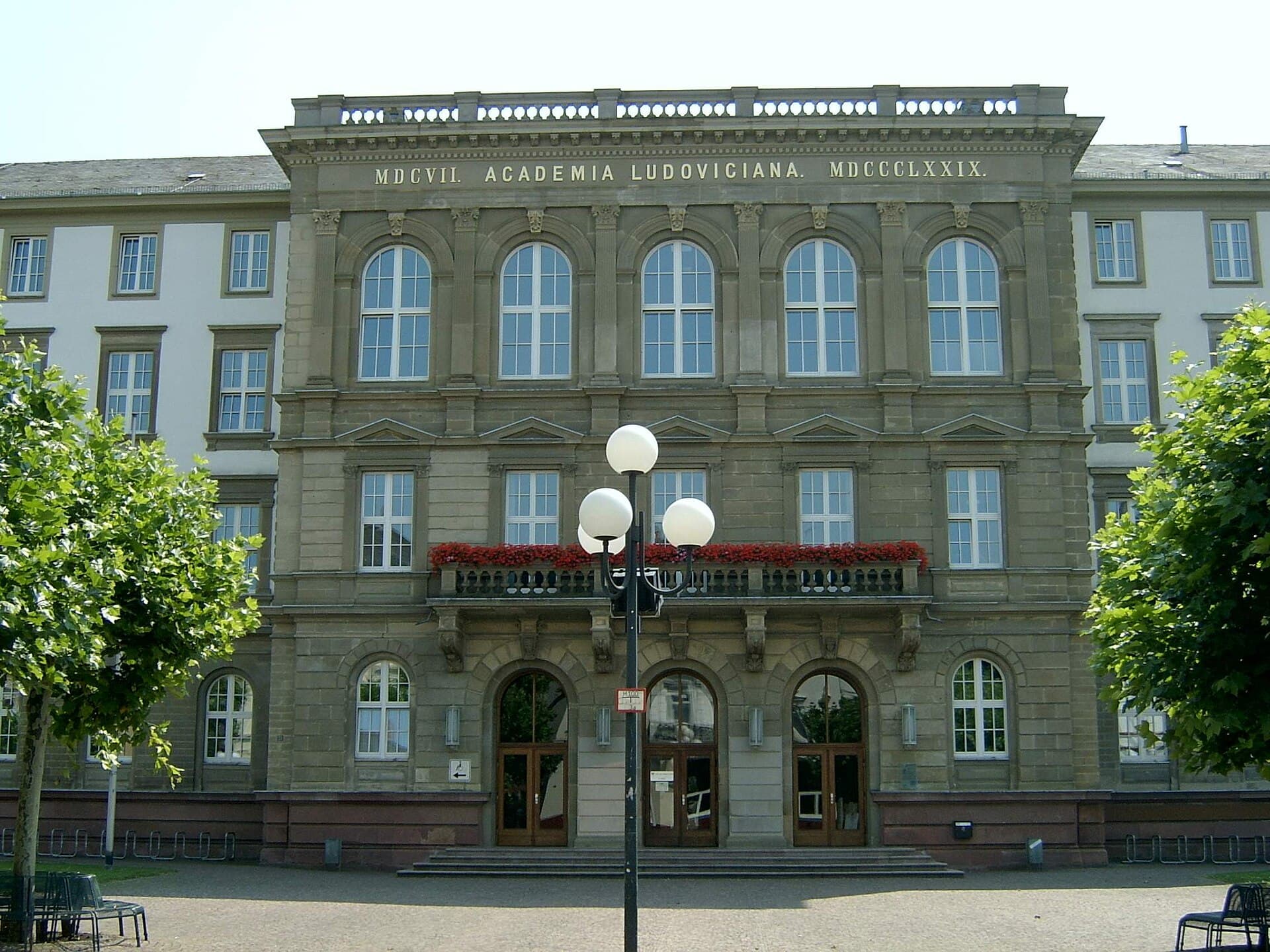 Ralf Lotys (Sicherlich) / CC BY 2.5, via Wikimedia Commons
Self-guided audio walking tour of Gießen — GPS route, offline playback, story-driven narration in 32 languages.
“Gießen: Where scientific inquiry meets a resilient spirit, and history unfolds in plain sight.”
Not the postcards. The stories even locals don't know — whispered in your ear, right where they happened.
This tranquil expanse of greenery stands as a living testament to centuries of botanical study.
The city's grand theater embodies a profound sense of civic pride, bearing a quiet inscription above its entrance.
Gießen possesses an unconventional, somewhat whimsical, unofficial landmark that commands attention.
Discover every secret of Gießen
Every address, every reveal in full — in your ear, right where it happened.
You pick your stops. You walk. The voice reveals what the others miss.

Your self-guided audio tour of Gießen is ready — pick your landmarks, choose your language, and start the moment you arrive.
BuyLume has a built-in augmented-reality guide. Hold your phone up and its camera shows the street ahead of you, with a glowing arrow laid over the real view that always points to your next stop — no map to puzzle over, no wrong turns. Like everything in Lume, it works fully offline.
Gießen, a lively university city situated on the Lahn River in central Hesse, Germany, presents an evocative blend of historical fortitude and contemporary ingenuity. While much of its historic core underwent reconstruction after extensive damage during World War II, the city has preserved its distinctive character, shaped by centuries of academic pursuit and scientific breakthroughs. With a substantial student population, Gießen pulses with youthful energy, balancing its intellectual heritage with a relaxed, verdant urban setting.
Beyond its academic renown, Gießen captivates visitors with its approachable charm and a wealth of lesser-known narratives. From its ancient botanical garden to its pioneering interactive museum, the city invites a deeper exploration. It is a place where one can trace the paths of Nobel laureates, uncover architectural curiosities, and experience a spirited cultural scene, all while savoring the scenic beauty of the Lahn valley.
Gießen's origins can be traced to 1152, when Count Wilhelm von Gleiberg erected a moated castle, around which a settlement began to coalesce. The city received its first mention in written records in 1197 and was officially granted city rights in 1248. In 1264, it came under the dominion of the Landgraves of Hesse, evolving into an important administrative and defensive outpost.
The city's trajectory was profoundly altered in 1607 with the establishment of the University of Giessen by Landgrave Ludwig V. Originally a Lutheran institution, its founding stemmed from religious disagreements with the Calvinist University of Marburg. This event marked Gießen's transformation from a center of trade and military into a distinguished nexus of science and education, drawing scholars and students from across Germany.
Gießen confronted significant adversities throughout its narrative, including a suspension of university instruction during the Thirty Years' War (1618-1648). The 19th century brought further modernization, and by 1902, the university counted over a thousand students. However, the 20th century proved particularly destructive. During World War II, intense Allied bombing in 1944 obliterated approximately 75% of Gießen, including most of its historic structures.
Following the conflict, Gießen embarked upon an extensive period of rebuilding and redevelopment. The university, which had suffered extensive damage, was re-established in 1957 and formally named Justus Liebig University in honor of the celebrated chemist who had taught there from 1824 to 1852. From 1945 until 2007, a considerable portion of the city served as the Giessen Army Depot, a major US military garrison. In 1977, Gießen was briefly merged with the neighboring city of Wetzlar to form the new city of Lahn, but this unpopular administrative reorganization was reversed in 1979. Today, Gießen stands as a testament to its endurance, a contemporary university city that respects its past while looking toward the future.
Begin your exploration at the Botanical Garden, Germany's oldest still on its original site, a serene expanse founded in 1609. Nearby, the Church Tower (Stadtkirchenturm) provides expansive views of the city and a poignant insight into its wartime narrative. Adjacent to the tower, the Leib'sches Haus, one of Hesse's most ancient half-timbered houses, offers a compelling look at Gießen's past through miniature models.
For a truly distinctive experience, visit the Mathematikum, the world's first interactive math museum, where hands-on exhibits render intricate concepts approachable and engaging for all ages. Delve into scientific history at the Liebig Museum, preserving the authentic 19th-century laboratory of Justus von Liebig, a pioneer in agricultural chemistry. Attend a performance at the Stadttheater Gießen, a graceful Neo-classical and Art Nouveau-influenced building with a compelling story of civic support. Do not overlook the distinctive 'Elefantenklo' pedestrian bridge, an unofficial city symbol. For a moment of quiet contemplation, visit the Old Cemetery, the resting place of Wilhelm Conrad Röntgen, the discoverer of X-rays.
The most agreeable time to visit Gießen spans the warmer months, from May through September. June, July, August, and September offer the most comfortable conditions for outdoor pursuits, with average daytime temperatures in July reaching approximately 25°C (77°F). While winters bring colder temperatures, with January lows around -1°C (30°F), Gießen remains a worthwhile destination, particularly for its indoor attractions like museums. Be prepared for consistent humidity and occasional rain throughout the year; therefore, an umbrella or light raincoat is always a sensible addition.
Gießen benefits from excellent public transport connections, featuring a local bus network and a central bus station. The city is also readily accessible by train, with Frankfurt less than an hour away. The Tourist Information office, located at Schulstraße 4, operates Monday to Friday from 9:00 a.m. to 6:00 p.m. and Saturday from 10:00 a.m. to 2:00 p.m. Many attractions are within comfortable walking distance in the city center. For a more thorough experience, consider a two-to-three-day itinerary to explore key sights and savor the local culinary offerings, which include traditional German dishes with a Hessian influence, as well as European and Asian options.
Gießen in Korean, in Chinese or in Hebrew — and 29 more languages, every stop narrated by a native voice. The widest language range of any self-guided audio tour.
Available in: