The Ibsen Museum (Reimann's Pharmacy)
Before he became the 'father of modern drama,' Henrik Ibsen was an apothecary's assistant in Grimstad. His time there, however, proved more dramatic than one might imagine.
Full story unlocks in the tour
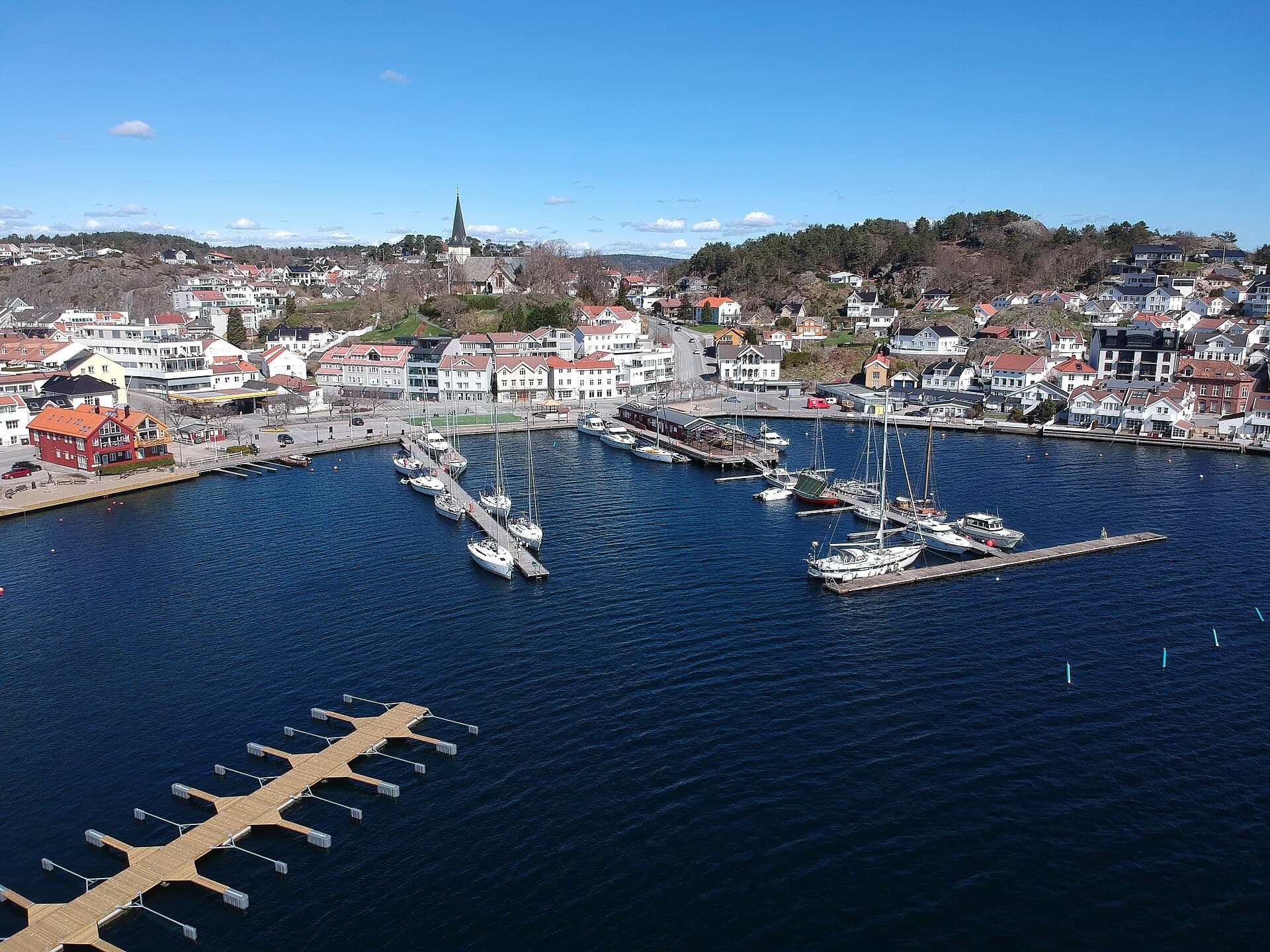 DarshanaAbeyrathna91 / cc by-sa 4.0, via Wikimedia Commons
Self-guided audio walking tour of Grimstad — GPS route, offline playback, story-driven narration in 32 languages.
“Where literary giants found their voice along a sun-drenched coast.”
Not the postcards. The stories even locals don't know — whispered in your ear, right where they happened.
Before he became the 'father of modern drama,' Henrik Ibsen was an apothecary's assistant in Grimstad. His time there, however, proved more dramatic than one might imagine.
The town now known as Grimstad once carried a different name, one that held a clue to its ancient origins before a linguistic mix-up changed it forever.
During the Napoleonic Wars, Grimstad's usually tranquil harbor transformed into a contested area, facing down a powerful naval force.
Discover every secret of Grimstad
Every address, every reveal in full — in your ear, right where it happened.
You pick your stops. You walk. The voice reveals what the others miss.


Your self-guided audio tour of Grimstad is ready — pick your landmarks, choose your language, and start the moment you arrive.
BuyLume has a built-in augmented-reality guide. Hold your phone up and its camera shows the street ahead of you, with a glowing arrow laid over the real view that always points to your next stop — no map to puzzle over, no wrong turns. Like everything in Lume, it works fully offline.
Grimstad, a coastal town in Southern Norway's Agder region, captivates with its harbor, white-painted wooden houses, and a network of narrow, winding streets. It's a place where maritime history intertwines with profound literary legacies, earning it the moniker 'the town of poets.'
Beyond its immediate appeal, Grimstad offers an engaging atmosphere, partly due to the University of Agder. Visitors can explore an archipelago of islands and islets, discover secluded beaches, and venture into the expansive Raet National Park, which protects a significant stretch of coastal nature. Whether drawn to its cultural heritage, its natural beauty, or the echoes of literary giants, Grimstad provides a tranquil yet engaging escape on the Skagerrak coast.
## From Grømstad to Smuggler's Haven Grimstad's origins trace back to the 16th century, first mentioned as a harbor. Its original name, Grømstad, derived from the old Grøm farm, with 'Gróa' meaning 'the growing one' and 'stoð' meaning 'port' or 'landing place.' The spelling later evolved into Grimstad.
In 1531, the town played an unexpected role in royal history when the deposed King Christian II of Denmark–Norway sought refuge in its harbor after his fleet was scattered by a tempest. He later surrendered to his rival, King Frederick I, under a promise of safe conduct that was tragically unfulfilled, leading to his lifelong imprisonment.
By 1622, the growing harbor and trading activities earned Grimstad 'ladested' status, granting it certain trading rights under the nearby town of Arendal. The town's maritime character deepened, and by 1747, it had become a recognized sailing community, with a reputation as a haunt for smugglers. This illicit activity even saw a dramatic confrontation during the Napoleonic Wars in 1811, when a British brig attempting to capture blockade runners was vigorously repulsed by the town.
Grimstad was eventually awarded 'kjøpstad' (market town) status in 1816 and established as a municipality in 1838. Unlike many other wooden towns in Norway that were rebuilt after devastating fires, Grimstad's lack of such an event allowed its original, irregular street pattern and narrow alleyways to largely remain, preserving its unique character.
## A Literary Crucible Grimstad holds a significant place in Norwegian literary history, having been home to two of its most celebrated authors: Henrik Ibsen and Knut Hamsun. Henrik Ibsen arrived in Grimstad around 1843 or 1844 as a 15-year-old apprentice pharmacist. During his six years here, he not only trained as a pharmacist's assistant but also began his literary journey, writing his very first play, Catilina, inspired by the town and its people. His time in Grimstad was formative, shaping the social critic and author he would become. The pharmacy where he worked is now the Ibsen Museum, the oldest of its kind in Norway.
Decades later, Nobel laureate Knut Hamsun settled on the Nørholm farm near Grimstad in 1918. He published several books during his time here, including his final work, On Overgrown Paths, which recounts his wanderings through the Grimstad moors while under house arrest after World War II. Today, Grimstad proudly embraces its identity as the 'City of Poets,' with their legacies vividly present throughout the town.
Grimstad's compact town center is best explored on foot, revealing charming pedestrian streets, white wooden buildings, and picturesque alleyways. The Ibsen Museum is a primary destination, housed in the original pharmacy where a young Henrik Ibsen worked and wrote his first play, Catilina. You can see his living and writing quarters, gaining insight into his formative years. For another literary connection, explore Hamsun's Trail, following in the footsteps of Knut Hamsun.
The Grimstad Church, a notable wooden church from 1880, sits on a hill overlooking the harbor, offering views of the town and bay. The Maritime Museum in Hasseldalen provides a glimpse into Grimstad's seafaring past, with interactive exhibits suitable for families. Beyond the town, the Grimstad archipelago beckons with its rocky islands, skerries, and secluded beaches, accessible by boat tours on vessels like the schooner Solrik or the fishing vessel Østerøy, or by renting your own boat or kayak. The expansive Raet National Park offers diverse coastal nature, ideal for hiking, cycling, and exploring unique landscapes like the Troll Forest with its twisted pine trees.
The best time to visit Grimstad for warm-weather activities is from late June to mid-August, when average daily temperatures are pleasant and skies are clearest. This period offers long days, ideal for exploring the archipelago and enjoying outdoor pursuits. However, September and October also provide a lovely experience with fewer crowds, autumn colors, and still-mild coastal temperatures. Spring, from March to May, sees Norway burst into bloom, with waterfalls boosted by meltwater, though weather can be variable.
Grimstad is approximately 275 kilometers southwest of Oslo and 47 kilometers east of Kristiansand. From Oslo, the drive takes about 3.5 hours via the E18 motorway, or you can take an express coach, which is a convenient public transport option. From Kristiansand, it's a short 35-minute drive or a regular local bus ride. Once in Grimstad, the town center is very walkable.
Norway uses the Norwegian Krone (NOK), and Grimstad operates on 230V/50Hz power with Type C/F sockets, so bring appropriate adapters. Vehicles drive on the right side of the road. Emergency numbers are 112 for police, 113 for ambulance, and 110 for fire.
Grimstad in Korean, in Chinese or in Hebrew — and 29 more languages, every stop narrated by a native voice. The widest language range of any self-guided audio tour.
Available in: